
This post may contain affiliate links. As an Amazon Associate I earn from qualifying purchases. If you choose to make a purchase, I may earn a small commission at no extra cost to you.
Choosing tires for a BMW X5 can feel tricky because the same SUV may need different fitments across trims, and your daily routes can range from wet highways to snowy side streets. A tire that feels sharp on dry pavement may ride stiffly or lose bite when temperatures drop.
Start with the tire size and load rating on your driver-door placard, then match the tire to your climate, driving style and need for run-flat support. Good options balance secure handling with comfort and tread life. The picks below cover the best tires for BMW X5 you can buy in 2026, with options for several common priorities.
Our Top Tires for BMW X5 Picks


More Details on Our Top Picks
Pros
- Responsive handling for an all-season tire
- Strong wet-road braking
- Light-snow traction
- Sport-focused design with lasting wear
Cons
- Not a substitute for a dedicated winter tire
- Firmer ride than a comfort-focused touring tire
The Michelin Pilot Sport All Season 4 brings a sporty feel to an X5 used mainly on paved roads. Michelin developed it for drivers who want lively steering and strong grip through changing weather, and its selection for the Chevrolet Corvette reflects its performance focus.
An asymmetric tread puts broad shoulder blocks to work during cornering, while a high-silica all-season compound maintains grip as temperatures shift. Its performance-focused tread design feels more responsive than a typical touring tire, giving you a more direct link to the road in everyday driving.
Wide grooves move water out from beneath the tread, and dense sipes add biting edges for light snow. You get reassuring wet-road braking and steady dry-road handling, though this is still an all-season tire rather than a dedicated winter design.
Michelin built the compound and tread to balance sporty handling with lasting wear. That mix lets you enjoy quick responses on winding roads without giving up year-round usability. The Michelin Pilot Sport All Season 4 suits an X5 driver who values steering feel as much as practical all-season grip.
Bottom line: Choose it for an X5 road setup that needs sharp handling across changing seasons. Skip it if deep-snow traction is your main need.
Pros
- Three-Peak Mountain Snowflake rating
- Strong wet and dry braking
- Useful traction in snow and slush
- Maintains grip as tread wears
Cons
- Directional tread limits rotation options
- Less focused on sporty steering feel
If your X5 sees cold weather and occasional snow, the Michelin CrossClimate2 brings more winter-minded design than a standard all-season tire. Its V-shaped tread channels water and slush away, while the Three-Peak Mountain Snowflake mark confirms its rating for severe snow conditions.
The thermal adaptive tread compound adjusts its grip as temperatures change, so the tire stays useful through warm and cold parts of the year. Michelin pairs that compound with 3D SipeLock technology, which creates biting edges for snow while keeping tread blocks stable on dry pavement.
On wet roads, the wide grooves help clear water from the contact patch, and the tread layout gives you confident braking. Dry-road braking also feels composed, and the tire maintains useful performance as the tread wears. Its directional pattern gives the CrossClimate2 a distinct look and a clear purpose in winter weather.
Michelin designed this tire to provide year-round service without asking you to switch to a winter set for every cold spell. It also carries a tread-life warranty, which suits drivers who put regular highway miles on an X5. The Michelin CrossClimate2 makes cold-weather confidence a central part of its design.
Bottom line: Pick it for an X5 that faces regular cold weather, slush, or light-to-moderate snow. Its directional tread calls for a more limited rotation pattern.
Pros
- Sporty steering response
- Strong wet braking
- Built-in tread wear gauge
- Light-snow traction
Cons
- Not designed for deep snow
- Less comfort-focused than a touring tire
In daily driving, the Goodyear Eagle F1 All Season feels built for drivers who enjoy a quick response from the steering. Its sporty tread pattern brings a more focused feel to an X5 on paved roads, while its all-season design keeps it useful beyond warm, dry days.
Goodyear shaped the tread to maintain grip in rain and light snow. The wet-braking design gives you added control during downpours, and the durable tread compound balances performance with longer wear. A built-in wear gauge lets you track how much tread remains without relying on guesswork.
That combination suits varied commutes and highway trips, where rain can arrive without warning. The tread also offers some grip in light snow, though it does not turn this tire into a deep-winter specialist. You get a sportier road feel without giving up basic seasonal flexibility.
Goodyear backs the Eagle F1 All Season with a limited tread-life warranty. Its design works best on an X5 that spends most of its time on paved roads and benefits from lively handling. The Goodyear Eagle F1 All Season pairs that feel with features aimed at steady wear and clear feedback.
Bottom line: Choose this Goodyear for a road-focused X5 that needs sporty all-season handling. Look elsewhere if frequent deep-snow driving is part of your routine.
Pros
- Long treadwear coverage
- Designed for SUVs and trucks
- All-season road traction
- Suited to frequent highway use
Cons
- Not intended for serious off-road driving
- Less focused on sporty handling
The Alenza name centers on road-focused tires for trucks and SUVs, and the Bridgestone Alenza Prestige brings that approach to an X5. Its all-season design favors steady everyday performance, making it a practical option for highway trips and routine city driving.
Bridgestone gives this tire a radial construction and a tread compound built for long service. The 70,000-mile limited treadwear coverage is a key part of its appeal if you cover a lot of ground each year. Its all-season tread provides a familiar balance for dry roads and rain, rather than a narrow focus on warm-weather sport driving.
You get a tire aimed at the weight and road use of SUVs, with a design suited to paved routes. It should feel composed during regular highway travel, while the broad tread-life coverage supports longer ownership. The Alenza Prestige keeps its priorities simple: dependable seasonal use and extended tread life.
For an X5 that serves as a daily driver, that balance can matter more than a highly aggressive tread or sharp track-style response. Bridgestone positions the Alenza Prestige for truck and SUV use, which gives it a clear place in this roundup. It brings a long-wear focus to ordinary road miles.
Bottom line: Consider it for an X5 that racks up highway miles and needs an all-season tread with long-wear coverage. It is not the pick for a sporty, highly responsive feel.
Pros
- Comfort Ride Technology softens road impacts
- EcoPlus Technology targets lower rolling resistance
- Quiet touring-focused ride
- Strong wet-road braking
Cons
- Steering feels less sharp than a performance tire
- Not for severe winter conditions
Road noise can make a long X5 trip tiring, and the Continental CrossContact LX25 puts comfort near the center of its design. Its touring tread aims to keep the cabin calm while giving you steady year-round handling on paved roads.
Continental’s EcoPlus Technology uses a tread compound designed to lower rolling resistance, improve wet braking, and extend tread life. The tire also features Comfort Ride Technology, which helps soften the ride by reducing the amount of road impact that reaches the cabin.
Wide grooves and traction-focused tread details help the LX25 keep its footing in rain and light snow. Its handling feels predictable rather than sharp, which suits relaxed highway travel and regular commuting. Continental backs the tire with limited tread-life coverage of up to 70,000 miles.
The CrossContact LX25 gives an X5 a practical mix of comfort, wet-road control, and long-distance efficiency. Its quiet touring character suits drivers who spend more time cruising than pushing hard through corners. Continental CrossContact LX25 works best when smooth road manners matter as much as all-season traction.
Bottom line: Choose the LX25 for an X5 that spends long hours on paved roads and benefits from a quieter ride. Drivers seeking sharper cornering response may prefer a performance tire.
Pros
- Symmetric tread supports even wear
- Pitch sequencing reduces road noise
- Designed for SUVs and crossovers
- Long tread-life coverage
Cons
- Not suited to serious off-road terrain
- Deep-snow grip is limited
A computer-tuned symmetric tread gives the Pirelli Scorpion AS 4 a clear touring purpose for SUVs and crossovers. On an X5, that design favors steady road manners and even wear over an aggressive, track-inspired feel.
Pirelli uses optimized pitch sequencing to reduce tread noise and vibration as the tire rolls. The reduced-void tread pattern also leaves more rubber in contact with the road, which contributes to confident handling through changing weather.
The Scorpion AS 4 is built for year-round use on paved roads. Its tread pattern balances wet and dry traction, while the computer-tuned layout helps manage wear across the tread. Pirelli backs it with limited tread-life coverage of up to 70,000 miles.
For daily X5 duty, the tire’s focus on ride comfort and even wear can pay off over long commutes and highway trips. It does not aim to provide serious off-road grip, but its road-focused design fits a typical SUV routine. The Pirelli Scorpion AS 4 keeps noise control and lasting use in view.
Bottom line: Choose the Scorpion AS 4 for an X5 that mostly travels on paved roads and needs comfortable all-season service. Its tread is not meant for rough trails or deep snow.
Pros
- Strong dry-road grip
- Confident wet braking
- Responsive steering for an SUV
- Tread design targets lower road noise
Cons
- Not suited to snow or cold-weather driving
- Requires a separate winter setup in snowy climates
Dry-road grip is the main draw of the Michelin Pilot Sport 4 SUV, a high-performance summer tire built for SUVs. Its asymmetric tread and performance-focused construction give your X5 a direct, confident feel during quick turns and firm braking.
Michelin designed the tread for strong contact with dry pavement, while its wet-road pattern helps move water away from the contact patch. The reinforced SUV construction accounts for the demands of a heavier vehicle and helps keep the tire composed through fast changes in direction.
You can expect responsive steering and strong wet braking in warm conditions. Michelin also shaped the tread to reduce road noise and improve comfort, so the performance focus does not have to overwhelm everyday driving. The robust tread design supports longer use for a summer tire.
This tire makes the most sense as part of a seasonal setup, since summer compounds do not suit cold-weather driving or snow. Michelin Pilot Sport 4 SUV brings road grip and steering precision to an X5 that sees warm-weather use. It keeps the focus on pavement, where the tread can deliver its intended response.
Bottom line: Choose it for warm-weather performance in an X5 that sees spirited paved-road driving. Drivers who need one tire for winter conditions should look at an all-season option.
Pros
- Run-flat design supports limited driving after air loss
- All-season tread
- High-performance road handling
- Long tread-life coverage
Cons
- Firmer ride over sharp bumps
- Run-flat mobility has limits after a puncture
A puncture does not always have to leave your X5 stopped at the roadside. The Bridgestone DriveGuard Plus uses run-flat construction, with reinforced sidewalls that let you continue driving for a limited time after air loss.
That extra mobility comes from the tire’s supporting sidewall structure, which carries the vehicle when the tire loses pressure. It pairs that run-flat design with an all-season tread, giving you usable traction in changing weather without giving up the added mobility feature.
On ordinary drives, the DriveGuard Plus provides high-performance road handling for passenger vehicles. Bridgestone also gives it a tread-life warranty of up to 65,000 miles, so it is not focused on puncture support alone. Its tread balances year-round grip with steady road response.
Run-flat tires can feel firmer over sharp bumps because their sidewalls need to hold more weight after pressure loss. That trade-off may matter on an X5 where ride comfort ranks high, but the design offers useful peace of mind on routes far from a quick stop. The Bridgestone DriveGuard Plus combines that mobility with all-season use.
Bottom line: Consider the DriveGuard Plus if run-flat capability matters for your X5 and its tire setup supports that design. A comfort-first driver may prefer a conventional tire.
Pros
- Four grooves channel water away
- Micro-silica compound supports wet grip
- Stable high-speed cornering
- Low rolling resistance design
Cons
- Not designed for serious off-road use
- Deep-snow grip is limited
Four wide circumferential grooves give the Yokohama Geolandar X-CV a clear advantage in wet-road design. They channel water away from the contact patch to help your X5 maintain control when rain covers the road.
Yokohama uses an asymmetric three-rib tread layout to support crisp steering and stable cornering at speed. Its micro-silica compound pairs with end-locked polymers to improve wet grip while keeping rolling resistance low.
The Geolandar X-CV is a touring all-season tire for trucks and SUVs, with a design suited to paved routes. Its tread layout balances predictable handling with water evacuation, giving you a composed feel in wet weather. The three-rib pattern also provides a stable base for highway travel.
On an X5, this Yokohama is best understood as a road tire rather than an off-road option. The broad grooves give the tread a specific focus during heavy rain, while the silica compound supports grip across regular seasonal changes. Yokohama Geolandar X-CV brings that wet-road emphasis to everyday SUV use.
Bottom line: Choose the Geolandar X-CV for an X5 that often travels in rain and stays on paved roads. It is not built for rough trails or deep snow.
Pros
- Strong wet and dry braking
- Added traction in snow
- Designed for low road noise
- Long tread-life coverage
Cons
- Not a dedicated winter tire
- Less suited to severe snow
General’s G-MAX line brings a performance bent to the G-MAX AS-07, while its all-season tread adds useful grip beyond warm, dry roads. For an X5 driven through mixed conditions, it balances wet and dry braking with traction in snow.
The all-season tread pattern uses grooves and biting edges to maintain grip as the road gets wet or lightly snow-covered. General also designed the tire to keep road noise low, which helps preserve a comfortable cabin during longer drives.
On dry pavement, the AS-07 provides the firm braking expected from a high-performance all-season tire. Its wet-road braking gives you more control in rain, and its tread design offers an added measure of snow traction. General backs the tire with limited tread-life coverage of up to 50,000 miles.
The G-MAX AS-07 combines daily road comfort with a more assertive handling focus than a basic touring tire. It will not match a dedicated winter tire in severe snow, but the added snow traction makes it useful through lighter winter conditions. General G-MAX AS-07 brings a practical mix of grip and road manners to an X5.
Bottom line: Consider the G-MAX AS-07 for an X5 that needs all-season road grip with some light-snow ability. Choose a dedicated winter tire for regular severe snow conditions.
Factors to Consider When Choosing Tires for BMW X5
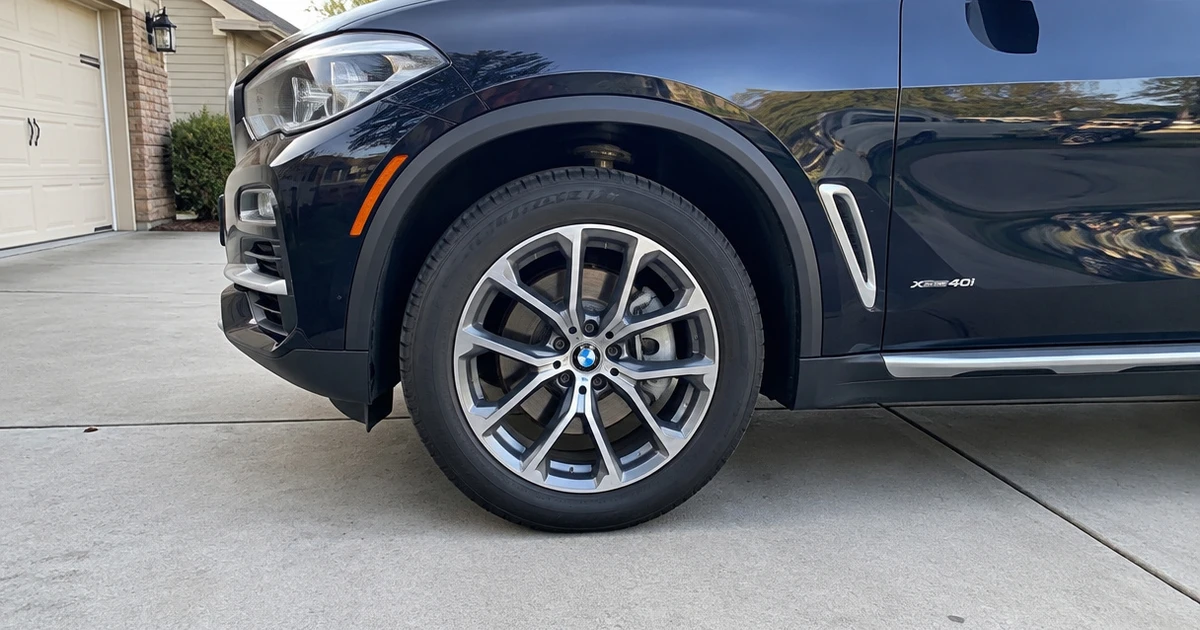
Your X5’s weight, power and wheel setup place real demands on its tires. Start with the vehicle’s fitment details, then weigh your weather, driving habits and comfort needs before choosing a tire type.
Correct Fitment and Size
Check the tire placard near the driver’s door and your owner’s manual before you shop. Match the full tire size, including width, aspect ratio and wheel diameter.
Some X5 setups use the same size on all four wheels, while others use wider tires at the rear. A tire that fits the wheel may still miss the vehicle’s required load or speed rating.
Use the table as a quick fitment check, not as a substitute for your vehicle’s placard. If you buy wheels or tires separately, confirm that the full setup works with your trim and brakes.
| Setup | What to verify | Why it matters |
|---|---|---|
| Same size front and rear | Matching size on all four corners | Allows more rotation patterns |
| Different front and rear sizes | Correct size for each axle | Supports the vehicle’s intended handling |
Load and Speed Ratings
The load index tells you how much weight each tire can carry. Choose a rating that meets or exceeds the one on the placard, especially if you often carry passengers, luggage or sports gear. A reinforced or extra-load tire may suit a heavy SUV, but the marking must still match your vehicle’s requirements.
Check the speed rating too. It describes the tire’s tested speed capability, not a safe driving target.
Match the recommended rating unless your vehicle maker or a qualified tire professional approves another option. Avoid mixing tires with different sizes or ratings across axles, since that can change how the X5 responds.
Weather and Tread Type
Choose a tire for the weather you face most often. All-season tires suit drivers who see mild winters and want year-round use.
Dedicated winter tires use cold-weather rubber and tread patterns that help them grip snow and icy roads. Summer tires focus on warm-weather handling and do not suit regular snow or near-freezing conditions.
- For mild climates, compare all-season tires with strong wet-road performance.
- For frequent snow and cold, look for the Three-Peak Mountain Snowflake symbol on a winter tire.
- For warm regions, a summer tire can sharpen dry-road response.
Think about your actual routes, not just your local forecast. If you drive through mountain passes or face long periods of snow, a dedicated winter set can offer more dependable cold-weather grip than a year-round tire.
Ride, Handling and Noise
A tire’s construction and tread pattern affect how your X5 feels on the road. Stiffer sidewalls can sharpen steering response, but they may also pass more bumps into the cabin. A touring-focused design often favors a calmer ride, while performance-focused tread may suit drivers who value quick steering and firm cornering.
Think about the roads you use most. Smooth highways make tire noise easier to notice, while rough pavement can expose a harsh ride.
Look for clear information about wet braking and road comfort, and check whether the tire suits your mix of city streets and highway miles. If possible, try a short drive before committing to a different tire type.
Run-Flat Needs and Replacement Planning
Run-flat tires let you continue driving for a limited distance after a puncture, which can help if your X5 lacks a spare. They may deliver a firmer ride than conventional tires. Check your vehicle’s equipment and manual before switching types, and confirm that you have a safe plan for a flat if you choose conventional tires.
Plan to replace tires in pairs at minimum, and keep the tires on each axle closely matched. On all-wheel-drive versions, large tread-depth differences can strain the drivetrain, so check the manual or ask a tire professional before replacing fewer than four. Rotate tires on the schedule your vehicle maker recommends, and follow any limits caused by different front and rear sizes.
Frequently Asked Questions
What tire size does a BMW X5 use?
Your X5’s correct size depends on its model year, trim, wheel package and whether it uses a same-size or staggered setup. Read the tire placard near the driver’s door and check the owner’s manual. Match the full size, load index and speed rating, not just the wheel diameter.
Can I use all-season tires on my BMW X5 year-round?
All-season tires can work year-round in areas with mild winters and occasional light snow. They do not offer the same cold-weather grip as dedicated winter tires on packed snow or ice. If your routes bring regular deep snow or freezing conditions, a separate winter set can give you more reliable traction.
Does my BMW X5 need run-flat tires?
Check your vehicle’s manual and current tire setup before changing to or from run-flats. Run-flat tires can let you drive a limited distance after a puncture, which helps when you do not carry a spare. Conventional tires may ride more comfortably, but you need a plan for handling a flat.
Can I replace only two tires on my BMW X5?
You can often replace tires in pairs, but the new tires should match the existing tires in size and type. All-wheel-drive systems may need closely matched tread depths across all four wheels. Check your manual or ask a tire professional to measure the tread before you replace only two.
How often should I rotate BMW X5 tires?
Follow the rotation schedule in your owner’s manual, since the right interval depends on your model and tire setup. Same-size tires may allow more rotation patterns than staggered fitments. Regular checks also help you spot uneven wear, pressure problems or alignment issues before they shorten tire life.