
This post may contain affiliate links. As an Amazon Associate I earn from qualifying purchases. If you choose to make a purchase, I may earn a small commission at no extra cost to you.
Your Kia Carnival carries family members and cargo through school runs, commutes, and long trips. The right tires help it stop securely in rain, stay composed on the highway, and keep cabin noise in check. Tire names and tread claims can make it hard to tell which traits matter for your routes.
Start with the size and load rating listed for your exact Carnival, then weigh wet grip against ride comfort, tread life, and local weather. A quiet touring tire may suit paved trips, while regular snow calls for stronger winter traction. The best tires for Kia Carnival you can buy in 2026 cover different needs, so you can match a set to your daily driving.
Our Top Tires for Kia Carnival Picks


More Details on Our Top Picks
Pros
- Three-Peak Mountain Snowflake severe-snow rating
- Directional tread channels water
- Strong wet- and dry-road braking
- Designed to retain grip as tread wears
Cons
- Directional tread can produce more hum on coarse pavement
The Michelin CrossClimate2 uses a directional V-shaped tread to channel water away from its contact patch and create biting edges for winter roads. Its thermal adaptive compound changes with road conditions, while the tire’s Three-Peak Mountain Snowflake marking confirms its severe-snow rating.
That mix gives a Kia Carnival driver year-round traction without giving up useful wet- and dry-road braking. Michelin also designed the tread to retain performance as it wears, a welcome trait for a family vehicle that spends long days on the road.
The 3D SipeLock technology adds interlocking sipes that flex for grip but stay stable during braking and cornering. On dry pavement, the CrossClimate2 feels composed and responsive; in rain, the directional grooves help clear water from the tread.
Michelin CrossClimate2 also brings a more winter-ready approach than a basic all-season tire. Its tread pattern can create more road hum on coarse pavement than a quiet touring design, but the added snow traction gives the tire a broader range of useful conditions.
Bottom line: The CrossClimate2 suits Carnival drivers who face rain, cold weather, and occasional snow throughout the year. Choose it for added winter traction without moving to a dedicated winter tire.
Pros
- 80,000-mile treadwear limited warranty
- Locking 3-D Sipes add wet-road biting edges
- Stable tread blocks during braking
- Built for long mileage
Cons
- No severe-snow rating for regular deep-winter travel
Long family commutes and frequent errands put tread life high on the list for many Kia Carnival owners. The Michelin Defender2 focuses on lasting mileage, and Michelin backs it with an 80,000-mile treadwear limited warranty.
Its redesigned all-season tread uses Locking 3-D Sipes to form many biting edges for grip on wet and dry pavement. Those sipes lock together under pressure, which keeps the tread blocks stable during braking and cornering instead of letting them flex too freely.
The result feels steady during everyday driving, with a tread layout built to handle changing weather without turning the tire into a loud, aggressive design. The Defender2 works well for the mix of city streets, highways, and wet roads that a minivan often sees.
Michelin’s long-wear focus makes this tire especially appealing if you keep your Carnival for years and rack up miles. It does not carry the Three-Peak Mountain Snowflake rating, so frequent travel through severe winter conditions calls for a more snow-focused tire.
Bottom line: The Defender2 fits high-mileage Carnival use, especially for drivers who value a long treadwear warranty. Look elsewhere if regular severe snow matters more than mileage.
Pros
- EcoPlus Technology balances efficiency and tread life
- Quiet tread pattern
- Short wet-road braking distances
- Responsive year-round handling
- Up to 70,000 miles of limited tread coverage
A calm cabin makes long family drives easier, and the Continental CrossContact LX25 puts quiet road manners near the center of its design. Its tread pattern keeps road noise down while giving the tire responsive handling for daily driving.
Continental’s EcoPlus Technology balances rolling resistance, tread life, and wet-road braking. That focus can help a Carnival driver manage fuel use while keeping dependable grip in rain, where the LX25’s short wet braking distances offer a practical benefit.
On dry pavement, the tire responds steadily to steering inputs instead of feeling loose or vague. The tread also wears evenly, and Continental offers up to 70,000 miles of limited tread life coverage, depending on the application.
The CrossContact LX25 brings a road-focused all-season feel that suits a minivan’s mix of passenger comfort and regular commuting. Its design favors pavement and wet-weather confidence over the added snow grip of a severe-snow-rated tire.
Bottom line: The CrossContact LX25 suits Carnival drivers who value a quiet cabin and steady wet-weather performance. It also makes sense for drivers who want a long treadwear warranty.
Pros
- 70,000-mile treadwear limited warranty
- All-season road traction
- Road-focused SUV tire design
- Radial construction
Cons
- Standard-load construction offers less reserve capacity than extra-load versions
Bridgestone’s Alenza line targets SUV and crossover drivers who want a road-focused tire, and the Alenza Prestige follows that all-season approach. Its radial construction and all-season tread suit the routine pavement driving that fills many Kia Carnival trips.
Bridgestone backs the tire with a 70,000-mile treadwear limited warranty, giving long-term use a clear place in its appeal. That coverage pairs with an all-season design for drivers who spend most of their time on regular roads rather than rough trails.
The Alenza Prestige takes a straightforward path: it focuses on everyday road traction and a long treadwear promise rather than highlighting specialized winter or off-road features. Its standard-load construction also suits drivers whose vehicle setup calls for that type of tire.
The tire’s SUV-oriented role makes it relevant to minivan owners looking for a road tire with extended treadwear coverage. The model does not offer the extra load reserve of an extra-load construction, so that detail matters for drivers whose vehicle calls for more capacity.
Bottom line: Consider the Alenza Prestige if your Carnival’s tire fitment calls for it and you value a long treadwear warranty. Its road-focused design suits drivers who spend most of their time on pavement.
Pros
- Quiet tread pattern with tuned pitch sequencing
- Symmetric design promotes even wear
- 70,000-mile limited treadwear warranty
- Composed all-season handling
Cons
- Not the right focus for regular severe-snow travel
The Pirelli Scorpion AS 4 focuses on quiet, smooth road manners for CUVs and SUVs, a useful quality in a family minivan. Its reduced tread void and tuned pitch sequence limit the pattern noise and vibration that can build during highway travel.
A computer-tuned symmetric tread also promotes even wear across the tire. Pirelli pairs that layout with a new-generation construction for composed handling through the changing conditions of everyday driving.
The Scorpion AS 4 feels suited to long paved routes, where stable handling and lower cabin noise matter more than an aggressive tread. Its all-season design gives Carnival drivers a practical option for commuting, school runs, and road trips in mild weather.
Pirelli backs the tire with a 70,000-mile limited treadwear warranty, adding a useful long-term benefit to its comfort focus. The tread pattern centers on road use, so drivers who regularly face severe snow should look for a tire with a more specific winter rating.
Bottom line: The Scorpion AS 4 suits Carnival drivers who spend most of their time on pavement and want a quiet ride. Its long treadwear warranty adds appeal for frequent road use.
Pros
- AquaTred grooves move water and slush
- Evolving grooves retain water channels as tread wears
- Severe-snow designation
- Comfort inserts reduce bumps and vibration
- Multi-pitch tread design limits road noise
Cons
- A dedicated winter tire suits harsh snow and ice better
Sweeping grooves give the Goodyear Assurance WeatherReady 2 a clear focus: moving water and slush out of the tread. Goodyear’s AquaTred Technology works with evolving traction grooves to maintain channels for water as the tire wears.
The specialized tread compound stays adaptable across seasons, and the tire carries a severe-snow designation. That gives a Kia Carnival driver more winter traction than a standard all-season design, while the groove layout also helps preserve wet-road control.
Comfort inserts in the tread soften bumps and vibrations, which takes some harshness out of broken pavement. Goodyear also varies the tread block sizes in a multi-pitch sequence to keep the pattern from creating a steady drone at highway speeds.
Steering stays controlled during lane changes, and the WeatherReady 2 gives wet-weather grip particular attention. Its winter rating adds useful flexibility, though a dedicated winter tire remains better suited to frequent travel in harsh snow and ice.
Bottom line: The Assurance WeatherReady 2 is a fit for Carnival drivers who deal with frequent rain and occasional snow. Its tread design also suits anyone who values a quieter, more controlled highway ride.
Pros
- Tuned for original equipment applications
- Responsive dry- and wet-road handling
- Low-noise tread design
- 60-day trial
Cons
- Less suited to regular severe-snow driving
Drivers who prefer a tire with an original-equipment focus may appreciate the Continental CrossContact RX. Continental tunes this all-season model for original equipment applications, with a tread design aimed at confident handling on dry and wet roads.
The responsive handling gives the tire a composed feel during everyday turns and lane changes. Its tread also aims to keep road noise low, a helpful trait when the Carnival cabin carries passengers over long stretches of pavement.
The CrossContact RX focuses on smooth road use rather than an aggressive tread. Continental offers a 60-day trial, giving drivers a chance to judge how its ride and handling suit their vehicle.
On dry pavement, the tire feels settled, while its wet-road traction gives it useful range for changing weather. The design centers on road comfort and handling, not the extra winter grip that a severe-snow-rated tire brings.
Bottom line: The CrossContact RX suits Carnival drivers who want composed road handling and a quiet ride. Consider it if an original-equipment style of tuning appeals to you.
Pros
- 2D and 3D sipes add cold-weather biting edges
- Micro-silica compound improves wet traction
- Quiet staggered multi-pitch tread
- 65,000-mile limited treadwear warranty for standard applications
Cons
- Not a substitute for a dedicated winter tire in deep snow
A mix of 2D and 3D sipes gives the Yokohama Geolandar CV G058 extra biting edges for cold roads, ice, slush, and light snow. Serrated outer grooves add more edges at the tread’s shoulders, giving the tire a winter-aware design without leaving its all-season role.
The micro-silica rubber compound improves wet-weather traction and supports long tread life. Chamfered ribs help the tread stay in even contact with the road, which can limit uneven wear during regular driving.
Yokohama also uses a staggered multi-pitch pattern to reduce road noise. In daily use, that makes the Geolandar CV G058 a calmer option for Carnival passengers, while its tread layout gives steady road manners through changing weather.
A 65,000-mile limited treadwear warranty covers standard and front staggered-fitment applications. The added cold-weather edges offer useful help in light winter conditions, but the tire cannot replace a dedicated winter design for frequent deep snow or ice.
Bottom line: The Geolandar CV G058 suits Carnival drivers who see rain and occasional light snow. Its quieter tread also works well for families who spend a lot of time on the road.
Pros
- TredLife Technology focuses on extended tread life
- Built-in wear gauge makes tread changes easy to see
- Quiet, comfortable ride
- All-season design for regular road use
Cons
- Not aimed at regular severe-snow driving
Goodyear’s Assurance MaxLife line puts tread life at the heart of its design, and the MaxLife 2 carries that focus into an all-season tire for crossovers and SUVs. Its TredLife Technology targets extended tread life for drivers who cover regular miles in a family vehicle.
A built-in wear gauge gives you a simple visual way to track tread condition. That feature makes tire wear easier to follow without relying only on how the tire feels on the road.
The Assurance MaxLife 2 also brings a quiet, comfortable ride for everyday driving. Its all-season design suits the mix of city streets and highway travel that a Kia Carnival often handles, with a focus on steady use rather than specialized winter traction.
The wear-focused design appeals to drivers who keep a vehicle for a long time and want a clear sign of how the tread changes. It remains a touring all-season tire, so regular severe-snow routes call for a more winter-focused option.
Bottom line: The Assurance MaxLife 2 suits Carnival owners who prioritize tread life and appreciate a built-in wear gauge. It fits routine commuting and family travel in mild weather.
Pros
- Full-depth sipes retain winter edges as tread wears
- Lateral voids clear slush
- Wide grooves move water away
- Variable Pitch Technology limits road noise
- Center rib supports responsive handling
Cons
- Dedicated winter tires suit frequent deep-snow driving better
Kumho gives the Crugen HP71 full-depth sipes and lateral voids to clear slush from beneath the tread. Those features keep winter traction in the design as the tire wears, a useful detail for Carnival drivers who meet occasional messy weather.
Wide circumferential grooves route water away from the tread, while micro-serrations add edges that bite into wet pavement. The strong center rib and reinforced shoulder blocks support even wear and quick steering response.
Kumho’s Variable Pitch Technology varies the tread block sequence to reduce the steady noise that can reach the cabin on longer drives. The Crugen HP71 feels road-focused, with a comfortable ride and responsive handling for daily trips.
Its all-season construction works across a range of regular road conditions, and the tread details give rain and slush clear attention. The HP71 does not replace a dedicated winter tire for frequent travel in deep snow or on ice.
Bottom line: The Crugen HP71 suits Carnival drivers who want a quiet road tire with useful wet-weather and slush traction. It fits daily driving where severe winter conditions remain occasional.
Factors to Consider When Choosing Tires for Kia Carnival
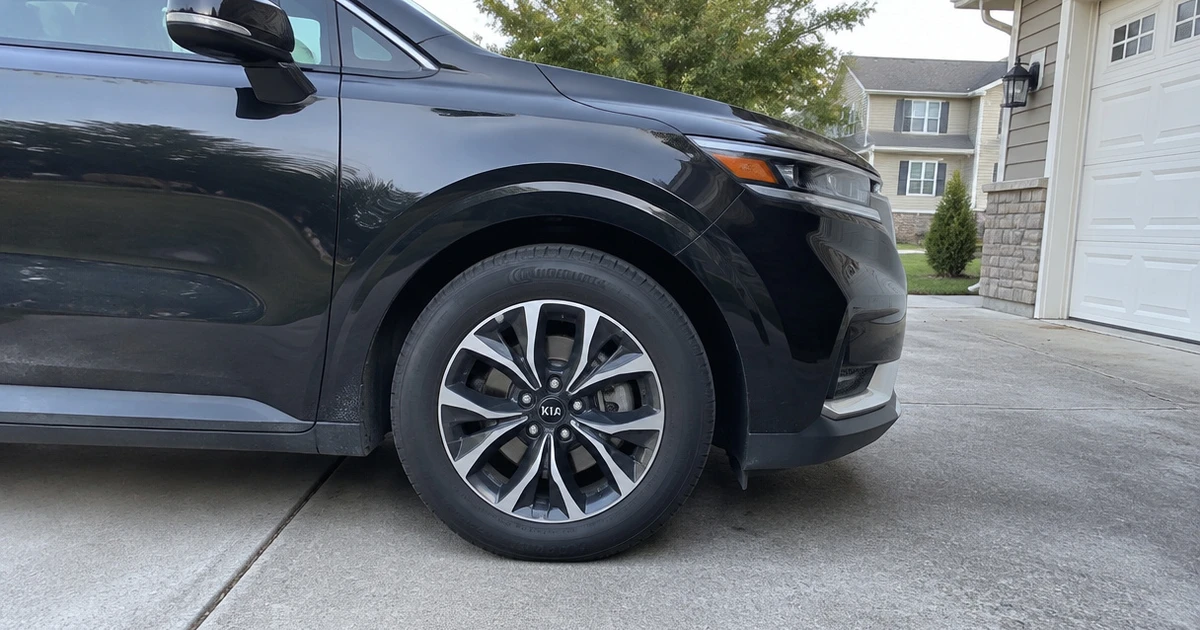
Your Carnival’s tires affect braking, grip, comfort, and wear. Start with your vehicle’s placard and driving pattern, then balance features instead of choosing by tread appearance alone.
Fit and Load Capacity
Begin with the tire size on the driver-door placard or owner’s manual, and match it exactly unless a qualified tire professional confirms an approved alternative. Check the load index and speed rating too. The load index tells you how much weight each tire can carry, and a minivan needs enough capacity for passengers and luggage.
Do not choose a lower rating than the vehicle maker specifies. Set cold pressure to the placard value, not the maximum molded on the tire sidewall.
Recheck pressure when temperatures change and before a loaded trip. Use the placard pressure as your baseline after the tire shop installs the set.
Wet-Road Grip
Rain performance deserves close attention because a loaded minivan needs predictable stopping grip on wet pavement. Look for a tire with wide circumferential grooves that move water away from the contact patch, plus smaller channels that add biting edges. A high UTQG traction grade can help you compare wet braking, but it does not rate snow performance or predict every road condition.
Favor independent wet-road test results when available, and replace worn tires before shallow grooves lose their ability to clear water. Keep pressure at the placard level because underinflation can affect steering and braking.
Seasonal Traction
Choose tires for the coldest weather you face regularly, not for a rare forecast. Standard all-season tires suit mild winters and warm months, while a tire with the Three-Peak Mountain Snowflake symbol meets a defined snow-traction test. That symbol does not make it equal to a dedicated winter tire on ice or in deep snow.
If your roads stay icy for weeks, use winter tires and switch back when the season ends. The M+S mark alone does not show that a tire passed the same snow test. Check local rules if you drive through mountain areas.
| Driving conditions | Tire type to compare | Feature to check |
|---|---|---|
| Mild winters | All-season | Wet grip and tread life |
| Frequent snow | All-weather | Three-Peak Mountain Snowflake symbol |
| Regular ice or deep snow | Winter | Cold-weather grip |
Ride Comfort and Noise
A tire’s tread pattern and casing affect how much road texture reaches the cabin. For quieter daily travel, look for touring designs with varied tread-block sizes, which can help break up repeating noise. A soft ride also depends on sidewall construction and pressure; no tread can mask a wheel that’s out of balance or a worn suspension part.
If possible, compare tires on the same road surface at the speed you use most. A tire can sound calm at city speeds and louder on the highway. Ask a tire shop about road-noise differences between the types that fit your Carnival.
Tread Life and Warranty
Treat a mileage warranty as a comparison point, not a promise of how long every set will last. Driving habits, road surfaces, pressure, alignment, and vehicle load all affect wear.
Read the warranty terms and check what records you need for a claim. A tire with a high treadwear grade may appeal to high-mileage drivers, but that grade does not tell you how it will perform in every condition.
Regular care helps you get even wear across the set. Build these checks into your routine:
- Check pressure monthly and before long trips.
- Rotate tires on the schedule in your owner’s manual.
- Inspect alignment after uneven wear or a hard curb impact.
Handling and Driving Feel
Think about how the van responds with passengers aboard. A tire with a stable center rib and firm shoulder blocks can feel more direct during lane changes, while a comfort-focused tread may ride softer and make less noise. Avoid choosing a sporty design just for sharper steering if you rarely drive briskly; grip and braking matter more in routine family use.
Keep all four tires matched in size and type, and replace them as a set when wear or damage calls for it. Mixing tire designs can change how the van handles, especially in rain. If you often carry a full load, check that the tire’s load rating meets the vehicle maker’s requirements.
Frequently Asked Questions
What tire size does a Kia Carnival use?
The correct size can vary by model year and trim, so check the tire placard on the driver’s door frame or your owner’s manual. Match the listed size, load index, and speed rating. If you want a different fitment, ask a qualified tire professional to confirm that it suits your vehicle.
How often should you rotate Kia Carnival tires?
Follow the rotation schedule in your owner’s manual, since the recommended interval can vary by vehicle. Regular rotations help the tires wear more evenly. Check for uneven wear at each rotation, too. If one tire wears faster than the others, ask a tire professional to check pressure, alignment, and suspension parts.
Are all-season tires enough for winter driving?
All-season tires can suit mild winters and occasional light snow, but they lose grip in sustained cold, ice, and deep snow. For regular winter conditions, look for tires with the Three-Peak Mountain Snowflake symbol or use dedicated winter tires. A snow symbol does not guarantee equal grip on ice.
What tire pressure should you use?
Use the cold tire pressure printed on the placard inside the driver’s door frame. Check pressure when the tires have not warmed from driving, and recheck it as temperatures shift. The number on the tire sidewall shows a maximum pressure, not the setting for everyday driving.
When should you replace Kia Carnival tires?
Use a tread-depth gauge and inspect the tires for cracks, bulges, punctures, and uneven wear. Replace tires when tread reaches the legal limit where you drive, and consider doing so sooner if wet-road grip drops. Ask a tire professional to inspect any damage that reaches the sidewall.