
This post may contain affiliate links. As an Amazon Associate I earn from qualifying purchases. If you choose to make a purchase, I may earn a small commission at no extra cost to you.
Choosing tires for a Kia EV6 can feel like a trade-off: you want a calm, quiet ride and dependable grip, but also want to protect the range you get from each charge. The EV6’s weight and quick electric torque put extra demands on its tires, while the wrong fit can affect handling, comfort, and wear.
The best tires for Kia EV6 you can buy in 2026 depend on your climate, commute, and driving style. A strong match has the right load rating and size, suits your roads, and balances traction with low noise and rolling resistance. The options below cover touring, all-weather, sporty, comfort, efficiency, and handling priorities, so you can focus on what matters most in your daily drive.
Our Top Tires for Kia EV6 Picks


More Details on Our Top Picks
Pros
- EV-focused construction targets lower rolling resistance
- i Sound Absorber foam reduces cabin noise
- Hankook claims longer tread life
- All-season tread suits varied road conditions
Cons
- Less focused on sharp performance handling
EV-focused noise control gives the Hankook iON evo AS SUV a clear purpose for the Kia EV6. Hankook’s i Sound Absorber foam reduces tire noise inside the cabin, where a quiet electric motor can make road sounds more noticeable.
The tire also uses an EV-focused tread and compound to balance grip with lower energy loss. That balance matters in an EV6, where tire rolling resistance can affect driving range and firm cornering forces put extra demands on the tread.
Hankook emphasizes longer tread life and reduced noise in this model. The company claims up to 25% longer tread life and 29% less noise, giving you a tire designed to stay quiet over time.
On daily drives, the all-season design suits changing road conditions without giving up the comfort you want from a touring tire. The Hankook iON evo AS SUV puts its attention on a calm cabin and EV-friendly efficiency rather than sharp, track-style responses.
Bottom line: Choose it for your EV6 if quiet driving and EV-specific design rank high on your list.
Pros
- Three-Peak Mountain Snowflake severe-snow rating
- Directional tread moves water away
- Thermal Adaptive Tread Compound suits varied temperatures
- Strong wet and dry braking
Cons
- Directional tread limits rotation patterns
Drivers who face wet roads, dry highways, and occasional snow can get year-round flexibility from the Michelin CrossClimate2. Its directional V-shaped tread moves water away from the contact area, while the Three-Peak Mountain Snowflake mark confirms its severe-snow rating.
Michelin’s Thermal Adaptive Tread Compound responds to changing temperatures, giving the tire useful grip across a broad range of conditions. The design also supports wet and dry braking, which makes it a practical option for EV6 owners who want one tire for varied seasons.
The CrossClimate2’s tread blocks and dense siping add biting edges for snow and slush. Michelin promotes its all-season performance even as the tread wears, and claims up to one extra year of tread life.
You may notice more road sound from its deep, directional tread than from a quiet touring-focused tire. The Michelin CrossClimate2 earns its place in an EV6 shortlist through its broad weather range and winter-rated traction.
Bottom line: Consider it for an EV6 that sees regular rain, changing temperatures, and occasional snow.
Continental CrossContact RX

Pros
- Tuned for original equipment use
- Responsive handling on dry and wet roads
- Tread design targets lower road noise
- Comfortable SUV touring character
Cons
- Not designed for severe winter conditions
- Less focused on sporty cornering
Continental tuned the CrossContact RX for original equipment use, with a focus on predictable handling and a smooth ride. Its SUV touring design brings a balanced feel to the Kia EV6, especially on daily commutes and longer highway trips.
The tread pattern works to maintain traction on dry pavement and wet roads. Responsive handling gives you steady steering feedback without pushing the tire toward an overly firm performance feel.
Continental also shaped the tread to cut road noise and keep the ride comfortable. That trait suits an EV6, where a quiet cabin can make tire hum stand out more than it might in a gas-powered SUV.
The CrossContact RX puts comfort and consistent road manners ahead of sporty responses. Continental offers a 60-day trial, and the Continental CrossContact RX provides a composed all-season character for drivers who value a calm drive.
Bottom line: Choose it for an EV6 that spends most of its time on paved roads and highways.
Pros
- Sporty steering response
- Asymmetric tread supports cornering
- All-season compound handles varied weather
- Designed for lasting performance
Cons
- Performance focus can reduce EV efficiency
- Less comfort-oriented than touring tires
The Michelin Pilot Sport All Season 4 brings a performance-first feel to an all-season tire. Its asymmetric tread uses broad shoulder blocks to support cornering, while its all-season compound maintains grip across changing weather.
You get more responsive steering than you would from a comfort-focused touring design. That sharper feel can suit an EV6 driver who enjoys brisk road driving and wants confident braking on wet or dry pavement.
Michelin developed this tire for sustained performance, not just a short burst of grip. Chevrolet chose it as the Corvette’s first all-season tire, a sign of the handling focus behind the Pilot Sport name.
Its high-performance design offers a different balance from an efficiency-first tire. The Michelin Pilot Sport All Season 4 gives you a lively response and year-round versatility, though it does not target maximum EV range.
Bottom line: Pick it for an EV6 if responsive handling matters more to you than maximizing range.
Pros
- SoundComfort foam reduces road noise
- Tread design targets wet and dry grip
- Reinforced sidewalls support steering response
- Built-in gauge tracks tread wear
Cons
- Not intended for deep-snow driving
Road hum can distract you in a quiet EV6, and Goodyear tackles that with SoundComfort Technology. The tire’s internal foam absorbs some road noise before it reaches the cabin, which can make long drives more pleasant.
Goodyear shaped the tread to provide responsive grip on wet and dry pavement. Its aerodynamic design and reinforced sidewalls also support steering response while helping absorb impacts from rough roads.
The ElectricDrive 2 targets longer tread life than its predecessor, an appealing trait for an EV that puts added weight and torque through its tires. A built-in wear gauge gives you a quick visual way to track tread depth and signs of uneven wear.
This tire keeps its focus on a quiet, efficient daily drive rather than aggressive cornering. The Goodyear ElectricDrive 2 brings EV-specific features to the Kia EV6, with comfort and usable all-season grip at the center.
Bottom line: Go with it if you want an EV-focused tire that keeps cabin noise in check.
Pros
- ENLITEN technology targets lower energy loss
- Reinforced sidewalls support stability
- All-season tread for varied conditions
- Durable design targets longer tread life
Cons
- Not a dedicated winter tire
- Less focused on sporty steering response
Low rolling resistance is a key part of the Bridgestone Turanza EV’s design. Bridgestone’s ENLITEN technology helps reduce energy loss, which can support driving range in a Kia EV6.
The tire pairs an optimized tread pattern with reinforced sidewalls for grip and stability. That structure matters in an electric SUV, where instant torque and added vehicle weight place extra demands on the tire.
As an all-season model, the Turanza EV suits everyday driving across changing road conditions. Its design also targets longer tread life, giving you a tire built for steady use rather than occasional performance driving.
Bridgestone keeps the emphasis on efficiency and a composed ride. The Turanza EV gives EV6 drivers an electric-vehicle-specific option that focuses on range, stable handling, and all-season usefulness.
Bottom line: Consider it for your EV6 if range and stable daily handling matter most.
Pros
- Low rolling resistance supports EV range
- All-season design suits varied daily driving
- Quiet-focused construction
- Michelin claims an extra year of driving
Cons
- Less sharp cornering response than performance tires
- Not designed for severe winter use
Michelin designed the e.Primacy around efficiency, making it a natural fit for EV6 drivers who want to limit energy use. Its low-rolling-resistance construction reduces the effort needed to keep the tire moving, which can help preserve battery range.
The all-season tread suits regular driving in varied weather, and the design also targets a quieter ride. That calmer feel works well in an electric vehicle, where less engine noise leaves more room for tire sounds.
Michelin promotes the e.Primacy as its most efficient premium all-season tire and says it can deliver an extra year of driving. The model also suits gas, hybrid, and electric vehicles, so its design does not rely on an EV-only setup.
The Michelin e.Primacy puts efficiency and comfort ahead of aggressive cornering response. Its priorities fit an EV6 used for commuting and longer everyday trips.
Bottom line: Choose it for an EV6 if you value range and quiet comfort over sporty handling.
Pros
- MaxTouch Construction spreads driving forces
- GreenPower Compound targets lower energy use
- Acoustic foam reduces tire noise
- 20,000-mile treadwear warranty
Cons
- Summer tread lacks winter capability
- Performance focus can reduce range
Michelin’s MaxTouch Construction spreads acceleration, braking, and cornering forces across the tread. That even contact can help the Michelin Pilot Sport EV maintain wear while delivering the sharp response you want from a high-performance tire.
Its GreenPower Compound uses an efficient rubber blend in the shoulder area to reduce energy use. Michelin also adds polyurethane acoustic foam inside the tire to reduce cabin noise, a useful touch in the quiet Kia EV6.
The Pilot Sport EV targets the extra demands of heavy, powerful electric vehicles. Its performance-focused tread and compound deliver responsive handling, while Michelin backs the tire with a 20,000-mile treadwear warranty and a six-year standard warranty.
This is a summer tire, so it fits warm-weather driving rather than winter use. The Michelin Pilot Sport EV puts handling first while still addressing range and cabin noise.
Bottom line: Pick it for an EV6 driven in warm weather when confident handling is your priority.
Pros
- Z grooves and wavy sipes support all-season grip
- Large shoulder blocks aid cornering
- Varied tread pitch reduces pattern noise
- Treadwear warranty up to 55,000 miles
Cons
- Not a substitute for a winter tire in severe snow
Yokohama uses Z grooves and wavy sipes to give the Advan Sport EV A/S biting edges across changing road conditions. Its all-season compound and tread channels support grip in rain and on dry pavement, giving the Kia EV6 a performance-oriented option for year-round driving.
Large outside shoulder blocks add support through corners, while the tire’s sidewall construction promotes steady handling. That layout gives you a more planted feel when you turn or change lanes.
Yokohama varies the tread pitch to reduce pattern noise, which can help keep the EV6 cabin more comfortable. An optimized contact patch also promotes even wear, and Yokohama’s Promise includes a treadwear warranty of up to 55,000 miles plus a 30-day satisfaction trial.
The Advan Sport EV A/S balances handling with everyday comfort. The Yokohama Advan Sport EV A/S makes its case through all-season traction and an EV-focused design.
Bottom line: Consider it for your EV6 if you want confident all-season grip with a sportier feel.
Pros
- Variable Pitch Technology limits tread noise
- Wide grooves move water away
- Full-depth sipes add winter traction
- Center rib supports steady handling
Cons
- Not specifically tuned for EV range
- Less focused on sporty cornering
Kumho’s Variable Pitch Technology changes the tread-block pattern to limit repeated road noise. That quiet touring design suits the Kia EV6, where tire sound can stand out inside the cabin.
Wide circumferential grooves move water away from the tread, while micro-serrations in the blocks add wet-road grip. Full-depth sipes and lateral voids also clear slush, giving the Crugen HP71 useful traction in winter weather.
A strong center rib and reinforced shoulder blocks support steady handling and even wear. Those features give you predictable steering on daily drives without shifting the tire into a hard-edged performance style.
The Crugen HP71 is a comfort-focused SUV all-season tire, not a model built specifically around EV range. The Kumho Crugen HP71 offers practical wet-weather design and a quiet ride for EV6 drivers who value touring comfort.
Bottom line: Choose it for an EV6 if quiet touring comfort and wet-road traction top your list.
Factors to Consider When Choosing Tires for Kia EV6
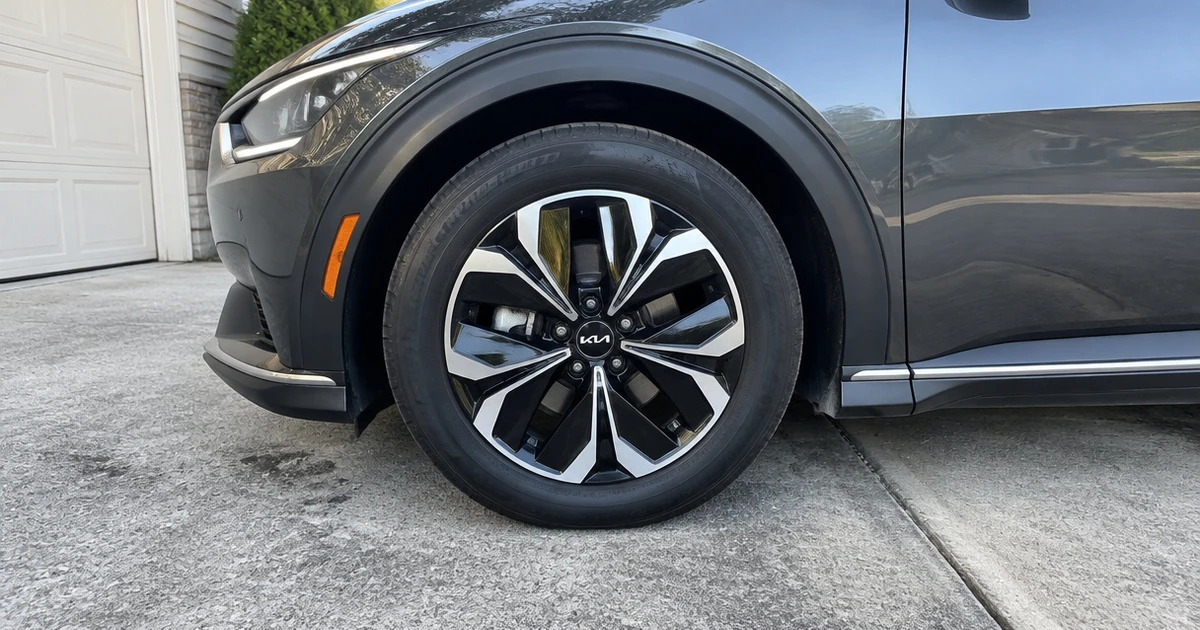
EV tires must support substantial weight and electric torque, but your choice also affects range, cabin noise, and wet-road control. Start with the vehicle’s approved fitment, then compare tire designs against your climate, routes, and comfort needs. Your priorities may also shift with the seasons and how often you charge away from home.
Size and Load Rating
Start with the tire size on the driver-door placard or in the owner’s manual, then match it to your wheel diameter. The sidewall code gives width, aspect ratio, and wheel diameter, and each part affects fit, ride, and handling. Do not choose by appearance or copy the size from a different wheel package.
The load index matters on an EV because the battery adds substantial weight. Match or exceed the required load index and keep the speed rating the vehicle calls for.
An XL marking can add load capacity, but you still need the correct size. Check all four tires together so the car keeps balanced grip and handling.
Range and Rolling Resistance
Every tire flexes as it rolls, and that movement uses energy from the battery. A low-rolling-resistance design can help an EV travel farther per charge, especially during steady driving, but speed, temperature, pressure, and route also shape range. Compare efficiency information for the exact tire when tire makers provide it, and keep pressure at the vehicle maker’s recommended cold setting.
Use this table as a starting point, not a promise. Tread pattern and rubber compound also affect performance.
| Main goal | What to compare | Keep in mind |
|---|---|---|
| Range | Rolling resistance | Check wet grip and load rating |
| Rain traction | Wet braking and water evacuation | Tread depth and pressure matter |
| Long service | Wear warranty and rotation guidance | Driving habits affect tire life |
Climate and Traction
Match the tread to the weather you face most often, not a rare storm. Touring all-season tires work for mild climates and mixed daily use, while winter tires give better cold-weather grip on snow and ice.
Use these clues before you buy, then check local winter-tire rules. Your usual roads matter more than occasional trips.
- Choose all-season tires for mild weather and occasional light snow.
- Look for the Three-Peak Mountain Snowflake symbol for severe-snow traction.
- Use dedicated winter tires for regular snow, ice, or sustained cold.
An all-weather tire can suit drivers who want one set year-round and need added snow traction. Look for the Three-Peak Mountain Snowflake symbol, which marks a tire that meets a severe-snow traction standard. Choose a dedicated winter set if ice and deep snow dominate your season.
Road Noise and Ride Comfort
An EV cabin can make tire hum more noticeable because the motor adds little engine noise. Look for a tread pattern that limits road sound, and read independent noise information when available. Pavement texture and speed still affect what you hear.
Some tire designs place sound-absorbing foam inside the casing, which can reduce certain cabin frequencies. A compliant sidewall can soften broken pavement, while a firmer design may feel more direct in turns. If you value comfort, prioritize a quiet touring design over sharp steering response.
Tread Life and Maintenance
EV torque and weight can wear tread faster, especially if you accelerate hard or run incorrect pressure. Check pressure monthly when tires are cold and before long trips, using the door placard rather than the maximum pressure molded on the sidewall. Rotate tires on the schedule in your owner’s manual, since front and rear wear can differ.
Inspect tread for uneven wear, cuts, or bulges, and replace tires before tread gets too low for safe wet braking. If the car pulls to one side or the tread wears more on an edge, ask a shop to check alignment and suspension. Good care helps you preserve grip and get more consistent wear from the set.
Steering and Handling
If you enjoy brisk driving, compare wet and dry handling results from reliable tire tests. A responsive tread and firm sidewall can give you clearer steering feel, but a sport-focused design may feel less comfortable on rough roads. Strong wet grip matters even if you mostly drive in dry weather.
Think about your regular routes before favoring a sharp, sporty feel. City streets with potholes call for a different balance than smooth roads and winding drives. Whatever your style, keep the tire’s load rating and approved fitment ahead of handling preferences.
Frequently Asked Questions
What tire size should you choose for an electric SUV?
Read the size and cold-pressure information on the driver-door placard, then confirm fitment in the owner’s manual. Match the wheel diameter and required load and speed ratings, since trim and wheel packages can change the right size for your vehicle.
Do electric vehicles need special tires?
You can use any tire that meets the vehicle’s approved size, load, and speed requirements. Some designs account for higher vehicle weight and instant torque, while lower rolling resistance can help limit energy use. Focus on a proper fit first, then balance comfort, grip, and efficiency for your routes.
How often should you rotate EV tires?
Follow the schedule in your owner’s manual because rotation timing depends on drivetrain and tire setup. Many drivers rotate at regular service intervals, often around 5,000 to 7,500 miles, but your vehicle’s schedule takes priority. Directional or staggered setups can limit rotation patterns.
Can low-rolling-resistance tires improve driving range?
A low-rolling-resistance tire can reduce energy lost as the tread flexes, which may help you travel farther on a charge. The effect varies with temperature, speed, pressure, road surface, and driving style. Keep wet grip, load rating, and winter needs in view rather than chasing efficiency alone.
Should you use winter tires on an electric SUV?
Choose all-season tires if your winters stay mild and snow remains rare. If you regularly face freezing temperatures, snow, or ice, dedicated winter tires give better cold-weather traction. All-weather tires offer a year-round option with added snow capability, but check for the severe-snow symbol and local rules.