
This post may contain affiliate links. As an Amazon Associate I earn from qualifying purchases. If you choose to make a purchase, I may earn a small commission at no extra cost to you.
Choosing tires for a Toyota Camry can feel simple until you compare tread types, ride comfort, and warranty claims. A poor match can wear quickly, sound loud on the highway, or lose grip in rain and cold. Trim and wheel setup also affect the size and load rating your car needs.
Start with the size and service description on the driver-door placard, then weigh your usual weather, commute, and comfort needs. A good tire should suit your Camry’s handling and carry the car’s load, with tread life that matches your annual mileage. This guide to the best tires for Toyota Camry you can buy in 2026 covers options for different driving priorities, from year-round commuting to sporty response and winter flexibility.
Our Top Tires for Toyota Camry Picks


More Details on Our Top Picks
Pros
- Locking 3-D Sipes add wet- and dry-road grip
- MaxTouch Construction promotes even tread wear
- 80,000-mile limited treadwear warranty
- Comfortable, stable highway manners
Cons
- Steering feels less sharp than a performance tire
- Deep snow calls for a dedicated winter tire
Locking 3-D Sipes give the Michelin Defender2 hundreds of small edges that grip wet and dry pavement. Their design helps the tread hold its shape as it wears, so your Camry keeps dependable braking through many miles of daily driving.
Michelin’s MaxTouch Construction spreads the forces of acceleration, braking, and cornering across the tread. That even contact supports long tread life, while the all-season tread pattern handles rain and light snow on regular commutes. You get a steady, predictable feel on the highway without giving up useful wet-road traction.
Michelin backs the Defender2 with an 80,000-mile limited treadwear warranty. Its long-wearing focus makes it a practical fit for Camry drivers who cover a lot of road and want fewer tire changes. The tread design leans toward calm touring manners, not sharp sports-car handling.
Bottom line: Get the Michelin Defender2 for a Camry you drive often, especially if long tread life and reliable wet braking matter most.
Pros
- EcoPlus Technology supports wet braking and tread life
- Quiet ride on paved roads
- Useful traction in light snow
- QuickView Indicators track tread performance
- 70,000-mile limited tread life warranty
Cons
- Not intended for severe winter conditions
- Steering response favors comfort over sport
For rainy commutes and occasional light snow, the Continental PureContact LS brings a useful mix of traction and touring comfort to your Camry. Continental’s EcoPlus Technology pairs an efficient tread compound with a design that improves wet braking and promotes longer tread life.
The tire feels composed on pavement, and its tread pattern keeps road noise low enough for relaxed highway trips. In light snow, the all-season tread gives you more bite than a warm-weather tire, though it does not take the place of a winter tire in harsh conditions.
Continental adds QuickView Indicators to the tread. As the tire wears, these visual markers show how its performance changes across wet, dry, and snowy conditions.
A 70,000-mile limited tread life warranty rounds out the package. The PureContact LS favors predictable daily driving over an especially sharp, sporty feel, which suits the Camry’s comfortable touring character.
Bottom line: The Continental PureContact LS suits you if your Camry sees wet roads, light snow, and plenty of quiet highway miles.
Pros
- 3PMSF severe-snow rating
- V-shaped tread channels water
- Strong all-season braking character
- Designed to retain grip as it wears
Cons
- More tread noise on some pavement
- Not a substitute for a dedicated winter tire in severe conditions
A distinctive V-shaped tread gives the Michelin CrossClimate2 its all-season character and channels water away from the contact area. Its 3PMSF severe-snow rating also sets it apart from basic all-season tires, giving your Camry useful traction when winter weather arrives.
Michelin uses a thermal-adaptive tread compound that stays effective across changing temperatures. The tread’s biting edges help with wet and dry braking, while its directional design gives the tire a sure-footed feel on rain-soaked roads. You get a confident option for year-round driving without switching to winter tires in areas with mild to moderate snow.
The CrossClimate2 keeps its grip as the tread wears, and Michelin backs it with a 60,000-mile limited treadwear warranty. Its firm, stable road feel works well on long trips, though the pronounced tread can make more noise on some pavement. The tire’s winter rating makes it especially useful when your Camry regularly faces snow, slush, and cold-weather roads.
Bottom line: Choose the Michelin CrossClimate2 for your Camry if winter traction matters but you want one tire for year-round driving.
Pros
- Multi-pitch tread pattern cuts road noise
- Tread compound resists irregular wear
- Tread design moves water and slush
- Comfortable touring character
Cons
- Less suited to sporty steering response
- Winter grip has limits in deep snow
Bridgestone builds the Turanza EverDrive around a multi-pitch tread pattern that reduces the steady hum tires can create on the highway. In a Camry, that quieter character suits long commutes and road trips where you want the cabin to stay calm.
The tread pattern moves water and winter slush away from the tire’s contact area. That gives you a more controlled feel on wet roads and in light winter conditions. A next-generation tread compound resists irregular and premature wear, which can help the tire deliver consistent handling over time.
The Turanza EverDrive favors smooth touring manners over an aggressive, sporty response. It feels suited to the Camry’s role as a comfortable daily sedan, especially if you spend hours on paved roads. Bridgestone’s design balances noise control with wet-weather confidence, rather than chasing the sharp turn-in you might want from a performance tire.
Bottom line: The Bridgestone Turanza EverDrive fits Camry drivers who value a quiet cabin and composed daily driving.
Pros
- Stable touring feel for daily driving
- Wide grooves help clear water
- All-season compound handles changing temperatures
- Tread design promotes even wear
Cons
- Limited grip in deep snow and on ice
- Less responsive than a summer performance tire
An optimized tread footprint gives the Pirelli P7 AS Plus 3 a steady feel through everyday turns and highway miles. Pirelli developed this all-season touring line for drivers who want predictable sedan handling along with useful wet-weather traction.
Its tread pattern uses wide grooves to move water away from the contact patch, while dense siping adds edges for grip on damp roads and light snow. The all-season compound stays flexible across changing temperatures, so your Camry can handle varied weather without a seasonal tire swap. It favors calm, even road manners over the quick response of a summer performance tire.
Pirelli also focuses the P7 AS Plus 3 on long tread life. The broad contact area helps spread driving forces across the tread, which can reduce uneven wear during normal use.
The result feels settled on a commute and remains comfortable on longer drives, with enough steering control for everyday routes. In cold weather, its traction works best on cleared roads rather than deep snow or ice.
Bottom line: Consider the Pirelli P7 AS Plus 3 for your Camry if you want balanced sedan handling and year-round road manners.
Pros
- Dynamic Response Technology sharpens steering
- Asymmetric tread balances dry and wet grip
- Responsive handling on winding roads
- Performs across multiple seasons
Cons
- Firmer ride than touring-focused tires
- Limited traction in severe winter conditions
Dynamic Response Technology helps the Michelin Pilot Sport All Season 4 deliver precise steering when you turn into a corner. Its performance-focused tread and compound give your Camry a more responsive feel than a comfort-first touring tire, while still covering a range of seasons.
Michelin uses an asymmetric tread pattern to balance dry-road grip with wet-weather traction. The tire holds its line well on winding roads and feels stable during quick lane changes. Chevrolet chose this all-season tire for the Corvette, which reflects its sporty design, though its character also suits a Camry driver who enjoys a more engaged drive.
The Pilot Sport All Season 4 stays useful beyond warm, dry weather, but it cannot match a dedicated winter tire on snow and ice. Its performance focus can also make rough pavement more noticeable in the cabin. Michelin designed this line for lasting performance, so you can enjoy responsive steering without treating it as a short-season summer tire.
Bottom line: Pick the Michelin Pilot Sport All Season 4 if you want your Camry to feel more responsive on curving roads.
Pros
- ComfortFlex Technology softens road impacts
- AquaChannel grooves move water away
- Tread pattern reduces road noise
- Built-in Wear Gauge tracks tread wear
- 65,000-mile tread life limited warranty
Cons
- Steering response favors comfort over sport
- Not designed for severe winter weather
Goodyear’s ComfortFlex Technology helps the Assurance ComfortDrive absorb road impacts for a smoother ride. That cushioned character suits your Camry on rough city streets and long highway stretches, where a calmer cabin can make everyday travel more pleasant.
AquaChannel grooves move water away from the tread to reduce hydroplaning risk in heavy rain. The tire also maintains traction in wet and cold conditions, giving you dependable all-season control on common routes. Its noise-reducing tread pattern cuts some of the sound that builds up at highway speed.
Goodyear adds a built-in Wear Gauge so you can track tread wear at a glance. The Assurance ComfortDrive comes with a 65,000-mile tread life limited warranty, giving it a clear long-distance touring focus. Its smooth steering and impact absorption favor comfort over the quick response you get from a sport-focused tire.
Bottom line: The Goodyear Assurance ComfortDrive suits you if a smooth, quiet ride matters more than sporty handling in your Camry.
Pros
- TriBLEND compound supports all-season use
- Wide grooves help clear water
- Adaptive 3-D sipes add wet-road biting edges
- 65,000-mile limited treadwear warranty
Cons
- Not rated for severe snow
- Less engaging steering than a performance tire
Yokohama’s TriBLEND compound gives the Avid Ascend GT an all-season foundation built for daily touring. The tire pairs that compound with an asymmetric tread pattern, giving your Camry stable road manners and useful grip as weather changes.
Wide circumferential grooves channel water away from the tread, while adaptive 3-D sipes create biting edges for wet roads and light snow. The Avid Ascend GT feels composed on the highway and handles everyday turns without a nervous response. Its touring design keeps the focus on steady comfort rather than sharp, track-like steering.
Yokohama backs the line with a 65,000-mile limited treadwear warranty. That coverage fits the tire’s emphasis on long-term use and routine commuting.
In winter, its all-season tread works best on roads that get cleared regularly, since it does not carry a severe-snow rating. The balance of predictable handling and tread life makes it an easygoing choice for regular Camry trips.
Bottom line: The Yokohama Avid Ascend GT is a fit for Camry drivers who want touring comfort and long tread life.
Pros
- Four center grooves channel water
- Highway tread pattern supports a comfortable ride
- 90,000-mile limited treadwear warranty on eligible versions
- Predictable handling for daily driving
Cons
- Deep snow and ice reduce its usefulness
- Steering feels less sporty than performance tires
Four center grooves give the Hankook Kinergy PT clear paths to move water away from the tread. That layout helps your Camry hold a steady feel on wet pavement and reduces the chance of hydroplaning during rainy commutes.
Hankook uses a computer-optimized highway tread design to balance all-season traction with a comfortable ride. The tire feels settled on long stretches of pavement, and its touring focus makes everyday driving easy and predictable. It does not chase the quick steering response of a performance tire, but it gives you composed handling for routine trips.
The Kinergy PT has earned a reputation as a high-mileage touring tire, and Hankook offers a 90,000-mile limited treadwear warranty on eligible T- and H-rated versions. Its all-season tread can handle light snow, but deep snow and ice call for more winter-focused traction. The design places practical road manners and long tread life ahead of sporty cornering.
Bottom line: The Hankook Kinergy PT suits high-mileage Camry drivers who value a comfortable ride and extended treadwear coverage.
Pros
- Replacement Tire Monitor tracks tread wear
- Visual Alignment Indicators flag uneven wear
- Symmetrical tread supports consistent handling
- Comfortable for routine highway driving
Cons
- Not rated for severe winter conditions
- Handling favors everyday comfort over sporty response
The General AltiMAX RT45 gives you built-in tread monitors that make wear easier to track over time. Its Replacement Tire Monitor changes as the tread wears, while Visual Alignment Indicators can reveal uneven wear patterns that may point to an alignment issue.
A symmetrical all-season tread helps the RT45 deliver consistent handling on everyday roads. Its radial construction and touring design give your Camry a stable, comfortable feel on commutes and highway drives. The tread can handle routine rain and mild winter conditions, though it lacks the severe-snow rating of a winter-focused tire.
General designed the AltiMAX RT45 for dependable daily use rather than sporty cornering. The contact pattern supports even wear, and the tread layout gives you predictable control through ordinary turns. Those practical features make the RT45 easy to live with during year-round driving on cleared roads.
Bottom line: Choose the General AltiMAX RT45 for your Camry if you value easy-to-read wear indicators and steady daily handling.
Factors to Consider When Choosing Tires for Toyota Camry
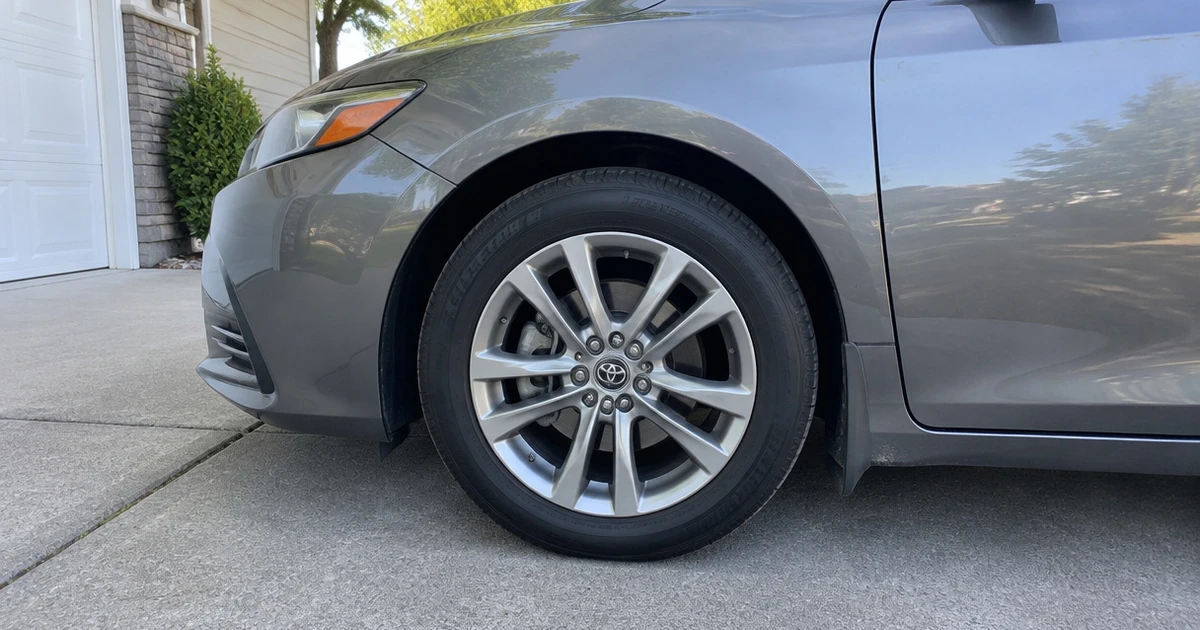
Your best choice depends on how you drive, where you live, and what your Camry’s placard allows. Start with fit and safety, then compare weather grip, ride feel, and expected wear.
Match the Approved Size
Use the size the driver-door placard or owner’s manual gives. The sidewall on your current tires offers a useful cross-check, but a previous owner may have chosen a poor replacement.
Match the full size code, load index, and speed rating, not just the wheel diameter. A tire with too little load capacity can run hot, while a different overall diameter can change speed readings and handling. If you change wheel size, ask a tire shop to confirm fit and stay within the approved range.
Set pressure to the placard value, not the maximum molded on the sidewall. Avoid mixing different sizes or construction types across axles, and follow the car maker’s guidance if you use a temporary spare.
Before buying, verify these details:
- Full tire size
- Load index
- Speed rating
Choose for Your Weather
Think about the coldest and wettest weather you actually face, not only the average forecast. All-season tires suit many mild climates, but their grip drops in freezing weather.
Winter tires use compounds that stay pliable in cold conditions and tread patterns that bite into snow and ice; fit four and change them when warm weather returns. Summer tires can sharpen handling on warm, dry roads, but they do not suit regular snow or near-freezing use. Some all-weather tires carry the three-peak mountain snowflake symbol, which marks performance against a defined snow-traction test.
The symbol does not make them equal to dedicated winter tires. If you face frequent snow but need one set year-round, compare all-weather options with dedicated winter tires.
| Tire type | Good fit | Main trade-off |
|---|---|---|
| All-season | Mild climates and daily driving | Less grip in severe winter weather |
| All-weather | Mixed seasons with occasional snow | Not a full substitute for winter tires |
| Winter | Regular snow, ice, and freezing weather | Seasonal tire changes |
Prioritize Wet-Road Grip
Rain grip depends on tread design, rubber compound, and tire condition. Grooves move water from beneath the contact patch, while small cuts in the tread blocks can add biting edges on wet pavement.
If you drive in heavy rain, choose a tire with a strong record for wet braking and handling, and keep its tread from wearing too low. Check the tread across the full width, since uneven wear can leave one shoulder with less grip.
A tread-depth gauge gives a clearer reading than a quick glance; replace a tire when it reaches the legal limit in your area, or sooner if wet stopping feels less secure. Correct pressure also helps the tread make even contact with the road.
Balance Comfort and Handling
Ride comfort depends on tread pattern, casing design, and how the tire matches your car’s suspension. Touring tires usually favor a calm ride and lower road noise, while performance-focused designs tend to give sharper steering at the cost of a firmer feel.
Read owner feedback and independent tests for noise and wet handling, and check whether a tire includes sound-reducing design features. Your pavement matters too: rough roads can make a quiet tire sound louder.
If comfort matters most, choose a touring pattern and keep pressure correct, since overinflation can make impacts feel harsher. Drivers who enjoy quicker steering may prefer a firmer tire, but should expect more road feel through the cabin.
Compare Tread Life and Care
Treadwear warranties help you compare the maker’s stated expectation, but they do not promise a tire will reach that mileage. Your driving speed, load, road surface, alignment, and tire pressure all affect wear.
Read the warranty terms for required rotations and records, plus any limits for mixed replacement tires. Rotate on the schedule in your owner’s manual, check pressure monthly, and ask a shop to inspect alignment if wear appears faster on one edge.
A long warranty can suit high-mileage drivers, while a softer, grippier tire may fit you better if steering response matters more than maximum life. Regular checks can also catch damage before it affects handling.
Frequently Asked Questions
What tire size does a Toyota Camry need?
Use the tire size and service description on the driver-door placard or in the owner’s manual. The right size can change by model year, trim, and wheel package, so do not rely on a generic fit chart alone. Match the load index and speed rating as well as the size.
Are all-season tires enough for winter driving?
All-season tires work for many drivers in mild climates and handle occasional light snow, but they lose grip as temperatures stay near freezing. All-weather tires add stronger snow ability, while dedicated winter tires suit regular ice and deep snow. Match your choice to local winters and change seasonal sets on time.
Should I replace two tires or all four?
Replacing all four keeps tread depth and handling more consistent. If only two tires need replacement, fit a matching pair on the same axle and follow the vehicle maker’s guidance. Large tread-depth differences can affect stability, so ask a tire shop to check the remaining tires before you decide.
How often should I check tire pressure?
Check pressure at least once a month and before a long trip. Measure when the tires are cold, then use the pressure on the driver-door placard rather than the maximum printed on the sidewall. Check all four tires, since changes in temperature can shift pressure over time.
How long do tires usually last?
Tire life depends on mileage, road surfaces, driving habits, pressure, and alignment, so treadwear warranties do not predict the exact lifespan. Inspect tread and sidewalls regularly, and replace tires when tread reaches the legal limit or damage affects safe driving. A shop can check aging or uneven wear.