
This post may contain affiliate links. As an Amazon Associate I earn from qualifying purchases. If you choose to make a purchase, I may earn a small commission at no extra cost to you.
Winter roads can make routine driving tiring, especially if your truck carries tools, pulls a trailer, or travels on untreated roads. All-season tires often lose grip as temperatures fall, while a heavy truck still needs traction to steer and stop on snow and ice.
A good winter tire uses cold-weather rubber and a tread that clears slush and grips snow, while matching your truck’s load rating. Studs can help on icy routes, but they add noise and may face seasonal rules.
The best winter tires for trucks you can buy in 2026 depend on your cargo and roads. The list below covers choices for different needs.
Our Top Winter Tires for Trucks Picks



More Details on Our Top Picks
Pros
- Aramid fibers strengthen the sidewalls against cuts and impacts
- Arctic Grip compound resists cuts and tears
- Aggressive tread grips snow and helps clear slush
- Built for winter use and truck loads
Cons
- Winter compound wears faster in sustained warm weather
Aramid fibers reinforce the sidewalls of the Nokian Hakkapeliitta LT3, adding resistance to cuts and impacts from rough winter roads. Its Arctic Grip compound also guards against cuts and tears while carrying heavy truck loads.
The aggressive tread gives the tire plenty of edges to bite into packed snow. Wide channels move slush away from the contact area, which helps reduce slushplaning when roads turn wet and messy.
You get a winter tire built for working trucks, not just occasional snow. Its tread pattern and winter compound focus on grip in cold conditions, while the tough sidewall construction adds durability on rutted or debris-strewn routes.
The Nokian Hakkapeliitta LT3 is intended for winter use, and its rubber is not suited to long stretches of warm weather. In cold conditions, the combination of Arctic Grip rubber and Aramid-reinforced sidewalls gives your truck traction and added protection where winter roads can be especially hard on tires.
Bottom line: Choose the Nokian Hakkapeliitta LT3 for a truck that faces deep snow, slush, and rough winter roads. Its reinforced sidewalls also suit routes where sharp debris can threaten tire damage.
Pros
- Designed for heavy-duty light truck winter use
- Handles snow, wet pavement, and icy conditions
- Built to improve on the Blizzak W965
- Designed for an extra winter season of use versus the W965
Cons
- Winter tread feels less composed on warm, dry pavement
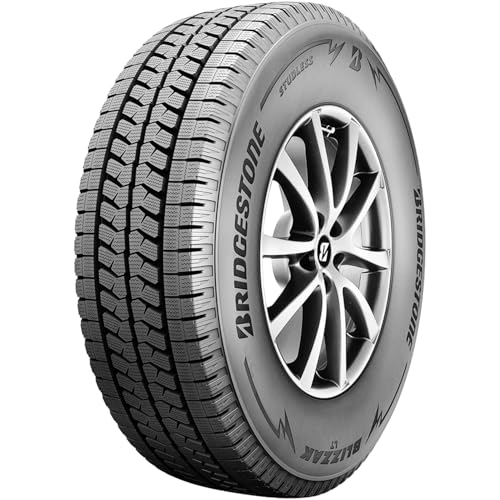
If your pickup carries heavy loads through snowy commutes or winter work routes, the Bridgestone Blizzak LT brings winter traction to a light truck tire built for demanding use. Bridgestone designed it to improve on the heavy-duty winter performance of the older Blizzak W965.
Its tread and rubber compound target grip on snow and wet pavement, with handling aimed at keeping a loaded truck controlled in changing conditions. The Blizzak LT also gives you useful traction on icy roads, where steady braking and predictable steering matter.
Bridgestone’s design focus includes longer-lasting winter performance, with the tire intended to deliver up to an extra winter season compared with the W965. That makes its tread life part of the appeal for drivers who put their trucks to work through more than one cold season.
The heavy-duty winter design suits pickup use better than a passenger-car winter tire. In daily driving, you get a tire built to handle winter roads while still serving a truck that sees regular work.
Bottom line: The Bridgestone Blizzak LT fits truck owners who need winter traction while carrying loads or working through cold months. It also suits drivers who value longer winter service from a heavy-duty tire.
Pros
- Multi-Cell compound disperses water from icy surfaces
- Bite particles add grip on ice
- Extra tread block edges improve snow and slush traction
- Even contact pressure aids stability
- Backed by Bridgestone’s Winter Tire Limited Warranty
Cons
- Winter-focused tread can feel soft on dry roads
Ice is where the Bridgestone Blizzak DM-V2 puts its design to work. Its next-generation Multi-Cell compound disperses the thin film of water on ice, giving the tread a better chance to hold its grip during braking and turns.
The tread pattern adds 15 percent more block edges than its predecessor. Those edges shear through snow and slush, while the tire’s bite particles add traction on slick ice.
Bridgestone also shaped the contact patch to spread pressure more evenly across the road. That helps the DM-V2 feel stable when your SUV or light truck changes direction on packed snow, and it supports confident braking in winter conditions.
This tire pairs winter traction with a Winter Tire Limited Warranty from Bridgestone. The mix of Multi-Cell compound, extra tread edges, and even road contact makes the DM-V2 a capable choice for drivers who regularly face frozen streets and snow-covered roads.
Bottom line: The Bridgestone Blizzak DM-V2 is a good fit for SUV and light truck drivers who face frequent icy roads. Pick it for its focused braking and grip features in winter weather.
Pros
- V-shaped tread channels snow and slush
- Full-depth sipes add winter biting edges
- Designed for SUVs and crossovers
- Compatible with electric vehicles
Cons
- Directional tread limits tire rotation patterns
A directional V-shaped tread gives the Michelin X-Ice Snow SUV a clear purpose on winter roads: move through snow and slush while maintaining useful contact with the pavement. Its tread design suits SUVs and crossovers, including electric models.
Michelin’s winter compound stays pliable in cold weather, while full-depth sipes create biting edges across the tread. Those small cuts help the tire hold traction as you brake or steer on snow and ice.
The X-Ice Snow SUV emphasizes controlled winter driving rather than an aggressive truck-tire feel. Its layout aims to keep the contact patch working across changing winter surfaces, from packed snow to wet, cold pavement.
You get the directional V-shaped tread and full-depth siping in a winter tire made for SUV use. The Michelin X-Ice Snow SUV brings that winter focus to drivers who want a composed ride and dependable traction through cold-weather months.
Bottom line: Consider the Michelin X-Ice Snow SUV for an SUV or crossover that needs steady winter grip and a composed ride. Its design also suits drivers of electric SUVs.
Pros
- Studdable tread adds the option of extra ice grip
- Directional pattern clears snow and slush
- DuraGen construction is built for truck use
- Winter-focused rubber works in cold conditions
Cons
- Added studs increase road noise
The General Grabber Arctic LT gives pickup and light truck drivers a studdable winter tread for routes where snow and ice stay on the road. Its directional pattern uses broad tread blocks and open grooves to find purchase in snow and move slush out of the way.
You can add winter studs for extra grip on icy surfaces. Without studs, the tread still uses biting edges and winter-focused rubber to give your truck traction in cold weather.
General’s DuraGen construction is built to handle the stresses of truck use, including rough surfaces and heavy work. That rugged design complements the stud-ready tread, so the tire can serve trucks that see both winter roads and demanding daily duty.
In real winter driving, the open tread gives snow somewhere to go instead of packing the surface flat. The Grabber Arctic LT keeps its focus on dependable traction and durable light truck use rather than a quiet, touring-style ride.
Bottom line: The General Grabber Arctic LT suits truck owners who want the option to add studs for icy roads. Its rugged build also fits work trucks that see rough winter routes.
Pros
- Winter compound stays flexible in cold conditions
- Dense siping adds snow and ice grip
- Tread channels slush and water
- Built for light truck use
Cons
- Steering feels less sharp on dry roads
For a work truck that spends winter days on snow-covered roads, the Toyo Open Country WLT1 brings a winter tread designed for light truck service. Its blocky pattern and dense siping create plenty of edges to grip snow and help maintain control on slick pavement.
The WLT1’s winter rubber stays flexible in cold weather, so the tread can keep working as temperatures fall. Grooves in the pattern channel away water and slush, helping your truck hold contact with the road through changing conditions.
Toyo built the Open Country line for truck use, and the WLT1 carries that focus into winter. Its winter tread compound and closely spaced sipes support traction on packed snow, while the sturdy light truck construction suits vehicles that carry tools or cargo.
On the road, the tire prioritizes winter control over sporty handling. It gives drivers a purpose-built option for cold-weather routes where snow traction matters more than sharp response on dry pavement.
Bottom line: The Toyo Open Country WLT1 suits work-truck drivers who regularly travel on snowy roads. Its winter-focused tread and truck-oriented build fit practical cold-weather use.
Pros
- Three-dimensional sipes add grip on snow and ice
- Directional tread increases road contact
- High-density compound promotes even wear
- Low-heat under-tread compound reduces rolling resistance
- Includes a 30-day trial satisfaction guarantee
Cons
- Directional tread limits tire rotation patterns
Three-dimensional sipes and tiny tread edges give the Yokohama iceGUARD G075 a detailed grip pattern for snow and ice. Its directional tread increases the area that meets the road, helping your SUV stay steady through winter turns and stops.
Yokohama uses a high-density rubber compound to improve road contact and promote even wear. The under-tread compound generates less heat, which increases tread stiffness and reduces rolling resistance.
The micro-edge sipes add biting points across the tread, while its directional layout moves snow and slush through the grooves. That combination brings the G075 a stable feel on winter roads without relying on a heavy-duty truck tread design.
Yokohama backs the tire with its standard warranty, which includes a 30-day trial satisfaction guarantee. The iceGUARD G075 brings together winter grip features and even-wear design for drivers who cover regular miles in an SUV through cold weather.
Bottom line: The Yokohama iceGUARD G075 fits SUV drivers who want winter stability and a tread designed for even wear. Its ice-focused features suit routes that regularly include frozen pavement.
Pros
- High sipe density grips snow, wet roads, and ice
- Pinned for optional number 15 studs
- Directional tread supports a comfortable ride
- Backed by a Winter Tire Limited Warranty
Cons
- Studs are not included
A high density of sipes gives the Firestone Winterforce LT plenty of biting edges for snow, wet pavement, and ice. Its directional tread guides the tire through winter conditions while keeping the ride comfortable for a light truck.
Firestone also pins the tread for optional number 15 studs, which add extra grip on icy roads when installed. The stud-ready design gives you a way to tailor the tire for especially slick winter routes.
The Winterforce LT is made for truck use, with a winter tread that focuses on traction rather than sporty response. Its tread blocks and sipes work together to find grip on packed snow, while the directional layout moves through slush.
A Winter Tire Limited Warranty backs the Winterforce LT. For drivers who face changing winter surfaces, its high sipe density and stud-ready tread offer two clear ways to build traction into a truck tire.
Bottom line: The Firestone Winterforce LT suits truck owners who want winter traction with the option to add studs. It fits drivers who see icy roads along with snow and slush.
Factors to Consider When Choosing Winter Tires for Trucks
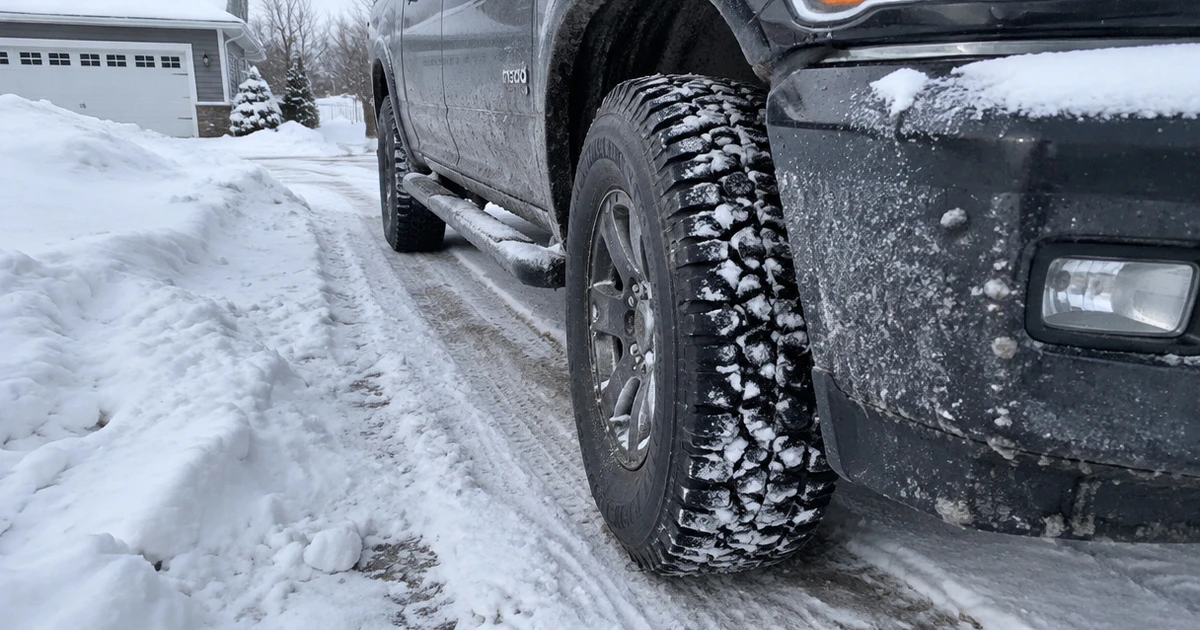
Start with your truck’s tire placard, then match winter performance to the roads you drive and the loads you carry. A tire that grips well but falls short on capacity or fit can cause problems, so check both before comparing tread designs.
Fit and Load Rating
Use the tire size and load rating on the driver’s door placard as your baseline. The load index must meet or exceed the truck’s requirement, and the speed rating should suit your usual driving. If you tow or haul often, check the manual for the correct pressure and load guidance instead of guessing from the tire’s appearance.
Many pickups call for LT tires, which suit higher working loads, while some lighter trucks use passenger-type tires. Do not switch tire type or size without checking approved fitments.
A taller or wider tire can rub, affect steering, or change speedometer readings. Keep the same size and construction at all four corners unless the vehicle maker specifies otherwise.
Winter Markings and Tread
Look for the three-peak mountain snowflake symbol, which marks a tire that meets a defined snow-traction test. The M+S marking alone does not show that the tire passed the same severe-snow test. Deep grooves move slush away, while dense sipes create extra biting edges on packed snow and ice.
Read tread design in light of your route. Open shoulders and wide channels help clear loose snow, while many small sipes help on hard-packed surfaces. No tread pattern removes the need to slow down on ice, and winter tires can still lose grip in standing water.
| Feature | What it indicates | What to check |
|---|---|---|
| Snowflake symbol | Tested snow traction | Look for it on the sidewall |
| M+S marking | General mud and snow design | Do not treat it as a severe-snow test |
Studs and Ice Grip
Studs can add grip on polished ice, steep frozen roads, and rural routes that stay slick for long stretches. A studdable tire lets you add metal studs when local rules allow; studded tires come with studs in place. Studs make more road noise and can wear pavement, so check local dates and restrictions before choosing them.
Use this quick comparison:
| Type | Best suited to | Main trade-off |
|---|---|---|
| Studless | Cleared roads and mixed winter travel | Less bite on glare ice |
| Studdable | Routes that get icy | Needs suitable local conditions |
| Studded | Frequent polished ice | More noise and road wear |
On cleared highways, a studless tire often rides more quietly. On routes with frequent glare ice, the added bite may justify the noise. Studs still cannot stop every slide, so leave space and brake gently.
Match Tires to Your Routes
Think about your regular routes, not just the worst storm. Deep snow calls for open grooves that clear packed snow; plowed highways call for balanced braking on wet pavement and snow. Frequent ice makes siping and ice grip a higher priority.
Four-wheel drive helps you get moving but cannot add braking grip. Fit four matching winter tires so both axles respond in a similar way through turns and stops.
A rear-only setup can upset handling when you steer or brake on slick pavement. Rank your main conditions before you shop:
- Unplowed roads and deep snow
- Plowed streets and wet pavement
- Frequent ice and frozen hills
Upkeep and Replacement
Winter tires need regular checks because cold weather drops pressure and heavy loads add stress. Measure pressure when the tires sit cold, then follow the door placard or manual rather than the maximum printed on the sidewall. Recheck after sharp temperature swings, and rotate tires on the schedule in the manual to help the tread wear evenly.
Inspect tread and sidewalls through the season, especially after gravel roads or curb strikes. Snow grip fades as tread wears; many drivers start shopping for replacements before the tread reaches 5/32 inch, since shallow grooves clear snow poorly. Clean and dry tires before storing them in a cool, dark place away from heat and sunlight.
Frequently Asked Questions
Do winter tires help a loaded or towing truck?
Yes, winter tires can improve cold-weather grip while you carry cargo or tow, but they do not raise the truck’s rated capacity. Keep the tire load index at or above the vehicle requirement, set pressure for the actual load as the manual directs, and leave extra stopping room because added weight increases stopping distance.
Should I fit winter tires on all four wheels?
Yes. Four matching winter tires help the front and rear axles grip in a more balanced way. Installing winter tires only on the drive axle can create uneven traction during cornering or braking. This matters on two-wheel-drive trucks as well as four-wheel-drive models, since every truck still needs control at all four corners.
Are studded winter tires better on ice?
Studs can add bite on polished ice, especially on rural roads that stay frozen, but they bring more noise and can wear pavement. Studless winter tires may suit drivers who spend more time on cleared roads. Check local rules before buying, because some areas limit stud use by season or prohibit it.
When should I install and remove winter tires?
Install them when temperatures regularly stay near or below 45°F (7°C), rather than waiting for the first major storm. Warm pavement wears winter rubber faster and can soften its handling, so switch back when spring brings lasting mild temperatures. Follow local rules for studded tires, which may have fixed use dates.
How much tread do winter truck tires need?
Winter traction drops as tread wears, even when the tire remains legal for road use. Many drivers begin planning replacement around 5/32 inch, especially if they face deep snow often. Check tread across the full width and replace a tire with damage, uneven wear, or tread depth below the level recommended for your winter conditions.