
This post may contain affiliate links. As an Amazon Associate I earn from qualifying purchases. If you choose to make a purchase, I may earn a small commission at no extra cost to you.
A BMW 3 Series can feel sharp and settled on the right tires, but the wrong set can make wet commutes noisy, soften steering response, or leave you short on cold mornings. Tire choices also vary by model year, wheel setup, and whether your car uses run-flat tires, so fit matters as much as the tread pattern.
Start by matching the tire size and load rating to your car, then weigh your usual weather against comfort, grip, and tread life. The best tires for BMW 3 Series you can buy in 2026 cover several driving styles, from spirited summer roads to daily trips through rain or snow. The options below help you narrow the choice to what suits your routes and priorities.
Our Top Tires for BMW 3 Series Picks




More Details on Our Top Picks
Pros
- Sporty all-season tread design
- Confident wet braking
- Reliable grip in light snow
- Built-in tread wear gauge
- 45,000-mile limited tread life warranty
Cons
- Light-snow grip does not replace a dedicated winter tire
- Less suited to deep snow
Goodyear Eagle F1 All Season brings a sporty tread design to year-round driving in your BMW 3 Series. Its all-season layout gives you confident grip in dry weather and light snow, while the compound balances traction with longer tread life.
Rain is where this tire’s wet-braking focus matters most. The tread channels water away from the contact area, giving you a steadier feel when you slow down on slick pavement.
A built-in wear gauge lets you see how the tread wears over time, so you can track its condition at a glance. Goodyear also offers a 45,000-mile limited tread life warranty, a useful match for drivers who put regular miles on their car.
The Eagle F1 All Season keeps a responsive, performance-oriented character without limiting you to dry-weather driving. It brings a practical mix of wet grip, light-snow ability, and wear-conscious design to everyday trips.
Bottom line: Choose it for a BMW 3 Series that needs sporty road manners and dependable grip through changing weather.
Pros
- High-performance all-season design
- Asymmetric tread balances cornering and water evacuation
- Responsive steering feel
- Corvette original-equipment selection
Cons
- Costs more in comfort than a touring-focused tire
- Not a substitute for a winter tire in heavy snow
If your BMW 3 Series still feels eager on a winding road, Michelin Pilot Sport All Season 4 keeps that sporty character in play across more of the year. Its high-performance all-season design pairs sharp road response with traction for wet roads and cooler conditions.
The tread uses an asymmetric layout, with different zones working to balance cornering grip and water evacuation. That gives you a confident, planted feel when you turn in, while the all-season compound broadens its usefulness beyond warm, dry days.
Chevrolet chose this tire as original equipment for the Corvette, which reflects its focus on performance rather than a soft touring feel. Michelin also built the line around long-lasting performance, so you can enjoy spirited driving without treating it as a short-lived summer tire.
On ordinary commutes, the Pilot Sport All Season 4 stays composed and responsive. Its mix of steering precision and year-round traction makes it a compelling fit for drivers who want their sedan to feel lively in more than one season.
Bottom line: Pick this Michelin for a performance-minded 3 Series that sees varied weather and frequent spirited drives.
Continental ExtremeContact DWS06 Plus

Pros
- SportPlus Technology for responsive handling
- Strong wet and dry braking
- Snow and ice traction
- Tread indicators track performance zones
- Up to 50,000-mile limited tread life coverage
Cons
- Winter grip cannot match a dedicated snow tire
- Sport-oriented tread may feel firm on rough pavement
Continental ExtremeContact DWS06 Plus puts useful weather cues right in the tread. Its Tuned Performance Indicators show D, W, and S marks that wear away as the tire’s tread changes, giving you a clear visual guide to its dry, wet, and snow performance.
Continental’s SportPlus Technology supports responsive handling and grip on both dry and wet pavement. Short braking distances give you added confidence in sudden stops, while the tread pattern also delivers traction on snow and ice.
That wider weather range suits a BMW 3 Series that sees more than clear summer roads. You get the steering response expected from an ultra-high-performance all-season tire, plus tread features that matter when rain or winter weather enters the picture.
The ExtremeContact DWS06 Plus also carries up to 50,000 miles of limited tread life coverage. Its distinctive tread design gives the tire a sporty look, and the performance indicators offer a practical way to keep tabs on how its abilities change with wear.
Bottom line: Consider this Continental for a 3 Series that needs sharp handling and more winter traction than a typical summer tire offers.
Pros
- Asymmetric tread supports handling and braking
- Four grooves move water and slush
- Dense siping boosts grip
- Reduced road noise and vibration
- 50,000-mile limited tread life warranty
Cons
- Snow traction falls short of a dedicated winter tire
Pirelli P Zero AS Plus 3 uses an asymmetric tread pattern to balance cornering, traction, and braking for performance sedans. Four wide grooves carry water and slush away from the tread, giving you added control on wet roads.
Dense sipes create more biting edges for grip, while their close spacing also limits road noise and vibration. That gives your BMW 3 Series a quieter ride without stripping away the responsive feel you want from a performance tire.
The P Zero AS Plus 3 has a 50,000-mile limited tread life warranty, so it pairs its sporty aims with coverage for regular driving. Pirelli designed the line for performance-oriented coupes and sedans, which suits the 3 Series’ balance of comfort and precise road manners.
In everyday use, you get a tire that handles rain with confidence and keeps cabin noise in check. Its tread layout brings together wet-weather control and a more refined ride for commuting or longer trips.
Bottom line: This Pirelli suits a 3 Series owner who wants performance handling with a quieter, more settled ride.
Pros
- Three-peak mountain snowflake certified
- V-shaped directional tread
- Strong wet and dry braking
- Designed for year-round traction
Cons
- Touring feel lacks the sharpness of a summer performance tire
- Not a dedicated winter tire
Michelin CrossClimate2 is built for drivers who face winter weather but still need dependable dry-road braking. Its directional V-shaped tread gives the tire a distinctive design, while the compound delivers traction across a broad range of conditions.
The three-peak mountain snowflake marking means the tire meets a recognized severe-snow traction standard. That makes the CrossClimate2 a useful option for a BMW 3 Series owner who regularly drives through snow, rather than only encountering an occasional dusting.
Michelin focuses on braking in both wet and dry weather, including as the tread wears. The tire’s touring character also suits steady commutes and longer drives, where predictable response matters more than an especially sharp, track-like feel.
CrossClimate2 brings a broader winter brief than a standard all-season design. Its mix of snow certification and year-round braking makes it a distinct choice for drivers who value cold-weather traction in their daily routine.
Bottom line: Choose CrossClimate2 if winter traction ranks high on your list and you prefer one tire for year-round driving.
Pros
- PeakLife compound focuses on long tread life
- 3D sipes add traction edges
- Open shoulders support grip
- Grooves resist hydroplaning
- 50,000-mile limited tread life warranty
Cons
- Less suited to severe winter conditions than a snow tire
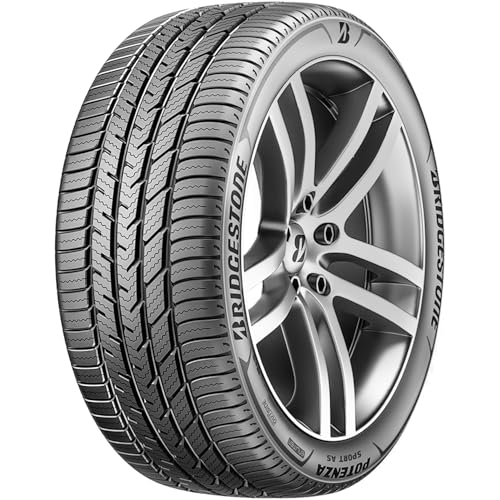
Bridgestone Potenza Sport AS combines an ultra-high-performance feel with tread features for changing weather. Its PeakLife compound focuses on long wear, giving your BMW 3 Series a sport-oriented option that does not center only on short-term grip.
Circumferential and lateral grooves channel water out of the tread to resist hydroplaning. Full-depth 3D sipes add biting edges, while the open shoulders help the tire hold traction across wet and dry roads.
The Potenza Sport AS carries a 50,000-mile limited tread life warranty, a notable part of its appeal for drivers who use their sedan every day. You still get a performance-focused tread design, but its compound and warranty give it a practical side for regular mileage.
On a commute, the tire’s all-season design gives you more flexibility than a warm-weather-only setup. Its tread details aim for secure wet-road response without giving up the handling character expected from the Potenza name.
Bottom line: Pick the Potenza Sport AS for a 3 Series that needs sporty response and long-wear coverage in one all-season tire.
Pros
- Strong dry grip
- Confident wet braking
- Precise high-speed control
- Bi-compound tread design
- Motorsport-derived design
Cons
- Summer compound does not suit snow or near-freezing conditions
- Shorter seasonal window than an all-season tire
Few summer tires suit spirited driving as clearly as Michelin Pilot Sport 4S. Its performance roots trace to endurance racing, and Michelin developed the design for strong road control at high speeds.
The tire uses a bi-compound tread with different rubber blends across its inner and outer sections. That layout balances wet braking with dry grip, giving you reassuring control when a fast road asks for both traction and a precise steering response.
For a BMW 3 Series, the Pilot Sport 4S brings a direct, connected feel to warm-weather drives. Michelin also uses a hybrid belt of aramid and nylon to support steering precision, a detail that suits drivers who notice how a tire responds through a turn.
Its reputation with performance car makers such as Mercedes-AMG, Ferrari, and Porsche reflects the tire’s focus on road handling. On dry pavement, the 4S gives you the grip and control expected from a max-performance summer design.
Bottom line: Choose the Pilot Sport 4S for warm-weather driving where steering feel and dry grip matter most.
Pros
- Run-flat sidewalls allow continued mobility after a puncture
- All-season traction
- 65,000-mile treadwear figure
- High-performance design
Cons
- Reinforced sidewalls can create a firmer ride
- Run-flat tires can cost more to replace
A puncture does not have to mean an immediate roadside stop with Bridgestone DriveGuard Plus. Its run-flat construction uses reinforced sidewalls to let you keep moving after a loss of air, giving your BMW 3 Series an added layer of mobility.
The tire also provides all-season traction, so you can use it for regular driving through changing weather. Bridgestone lists a 65,000-mile treadwear figure, which adds long-term use to the model’s run-flat purpose.
DriveGuard Plus pairs that reinforced structure with a high-performance focus. You get a tire built for drivers who value the ability to continue a trip after a puncture, along with an all-season tread for daily roads.
The design makes the most sense when keeping mobility after a flat matters to you. Its blend of run-flat construction and extended treadwear gives the line a practical role on a premium sedan used for commuting and longer journeys.
Bottom line: DriveGuard Plus fits a 3 Series driver who values puncture mobility and all-season use over a softer ride.
Pros
- Run-flat construction after a puncture
- All-season tread design
- Water-clearing circumferential grooves
- Touring focus for premium sedans
Cons
- Run-flat sidewalls can feel firm over rough roads
- Less focused on sporty steering response
Pirelli’s Cinturato line brings a touring focus to the Cinturato P7 All Season Run Flat. Its all-season tread and run-flat construction suit premium sedans, giving your BMW 3 Series a tire built for everyday travel with added mobility after a puncture.
The tread’s circumferential grooves move water away from the contact area, while its all-season layout gives you traction across changing road conditions. That combination serves daily commutes and highway trips, where calm road manners matter as much as dependable wet-road grip.
Run-flat sidewalls let you continue driving for a limited distance after losing air, so a puncture does not always leave you stranded where it happens. The design gives the P7 a practical role for drivers who value that extra mobility in a touring tire.
The Cinturato P7 All Season Run Flat favors a composed daily-drive character over an especially aggressive performance feel. It brings useful all-season traction and run-flat capability to the premium-sedan segment.
Bottom line: Choose this Pirelli for a 3 Series used mainly for commuting, especially if run-flat mobility matters to you.
Pros
- Strong wet and dry braking
- Snow traction
- Low road noise
- Up to 50,000-mile limited tread life coverage
Cons
- Snow grip does not match a dedicated winter tire
- Less suited to track-focused driving
Quiet road manners give General G-MAX AS-07 an appealing daily-driving character for a BMW 3 Series. General designed this ultra-high-performance all-season tire to pair low road noise with braking grip on both wet and dry pavement.
Its snow traction adds useful flexibility for drivers who see occasional winter weather. You get an all-season tread that reaches beyond fair-weather driving while keeping the tire’s performance focus intact.
General offers up to 50,000 miles of limited tread life coverage, giving the AS-07 a practical wear profile for regular commuting. The quiet ride also helps keep longer drives more settled, without taking away the tire’s high-performance purpose.
The G-MAX AS-07 brings together wet and dry braking, snow traction, and a comfort-minded sound level. That range makes it a versatile option for drivers who use their sedan through changing seasons and want a performance-oriented feel.
Bottom line: Consider the G-MAX AS-07 for a 3 Series that needs quiet daily manners, confident braking, and occasional snow traction.
Factors to Consider When Choosing Tires for BMW 3 Series
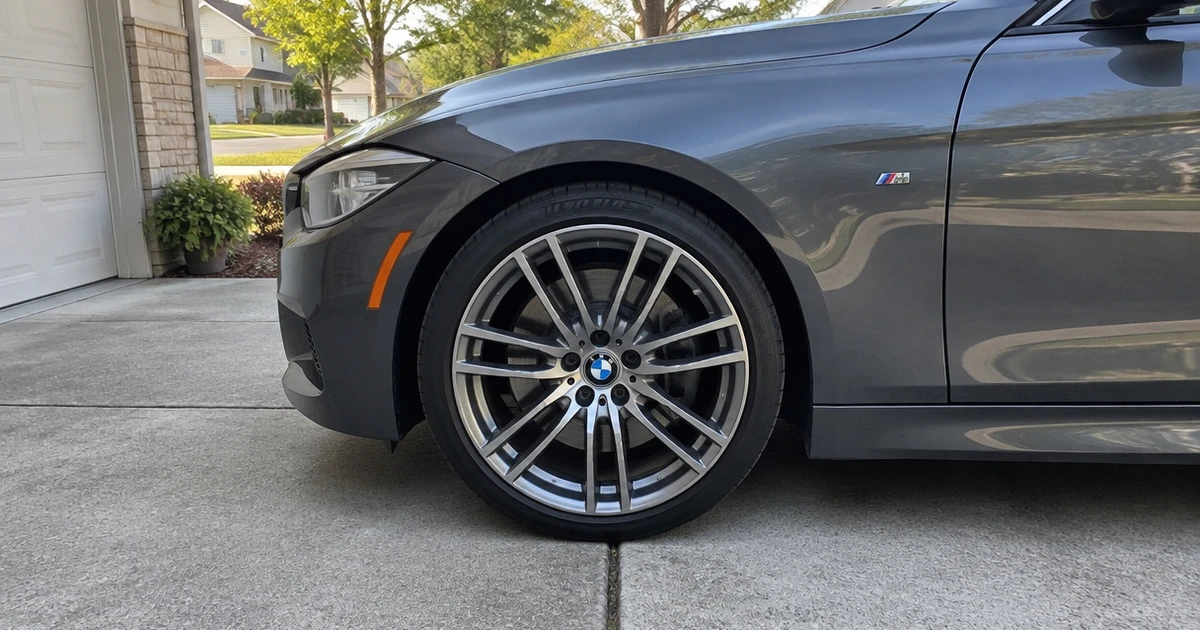
Your 3 Series needs tires that match its approved fitment and the roads you drive most. Use these checks to balance safe grip with the ride and response you expect from the car.
Fit, Load, and Speed Ratings
Read the tire size on the driver-door placard or in the owner’s manual, then match it to the wheel on your car. The size code gives the tire’s width, sidewall height, and wheel diameter. Some 3 Series versions use different sizes on the front and rear, so check both axles before you order or rotate tires.
Match the load index and speed rating to the car maker’s requirements, even if you want a softer ride or longer tread life. A lower rating can change handling and load capacity. Set cold pressure to the door placard, not the maximum molded into the sidewall, and check it regularly.
- Confirm the approved size for each axle.
- Keep load and speed ratings at or above the required level.
- Use the placard’s cold-pressure figure.
Season and Local Weather
Choose a tire for the weather you face most often. Summer tires suit warm conditions and can give you crisp steering, but their grip drops in cold weather.
All-season tires cover a wider range of mild conditions. Winter tires use tread and rubber designed for cold roads, including snow and ice.
If you see frequent snowfall but want one set year-round, look for the three-peak mountain snowflake symbol. It marks tires that meet a severe-snow traction standard, though it does not make them equal to dedicated winter tires on ice. Use this guide to compare common categories:
| Tire type | Best suited to | Main trade-off |
|---|---|---|
| Summer | Warm weather | Limited cold-weather grip |
| All-season | Mild, varied conditions | Less snow grip than winter tires |
| All-weather | Year-round use with some snow | May give up some warm-weather response |
| Winter | Cold weather and regular snow | Needs seasonal storage and changeover |
Wet Grip and Tread Design
Rain can expose weak spots in a tire quickly, especially on grooved roads or during hard braking. Look for tread channels that move water away from the contact patch and a design built for wet grip. If you drive through heavy rain, give wet traction more weight than a small gain in tread life.
Check the tread as it wears, since shallow grooves handle standing water less effectively. Replace tires when they reach the wear bars or the legal limit where you live.
Rotate them on the schedule in your owner’s manual, if your tire sizes allow it. A regular alignment check can also help prevent uneven wear.
Ride Comfort, Noise, and Handling
A tire’s design affects how clearly you feel the road and how much sound reaches the cabin. If your commute includes rough pavement, a touring-focused tire may feel calmer than a stiff performance tire. Tread pattern and rubber compound also affect road noise, so look for models designed for a quiet ride if you spend long hours on highways.
Wheel size matters, too. A shorter sidewall can make steering feel more direct, but it gives the tire less room to absorb sharp bumps.
If comfort matters more than quick turn-in, stay with an approved wheel and tire setup that offers a taller sidewall. Avoid changing sizes without checking the car’s fitment requirements.
Run-Flat Tires and Long-Term Care
Run-flat tires can let you continue driving for a limited distance after a puncture, which helps if your car has no spare. You must follow the tire maker’s speed and distance limits, and check the tire as soon as you can. A puncture does not always leave a run-flat safe to repair or use again.
Standard tires often give you a more forgiving ride, but you need a spare or a repair plan. Check your owner’s manual before switching, since the car’s tire pressure monitoring system and approved fitments matter. Keep tires in a matching set when possible, especially on all-wheel-drive cars, and check pressure and tread regularly to catch problems early.
Frequently Asked Questions
What type of tires work best for a BMW 3 Series?
Choose based on your local weather, driving habits, and the car’s approved fitment. Summer tires suit warm climates and sporty driving, while all-season tires work across a wider range of mild conditions. If you face regular snow or freezing roads, a winter-rated tire can give you more dependable cold-weather grip.
Do I need to replace all four tires at once?
Replacing all four at once gives you even grip and handling, especially on an all-wheel-drive car. If only one or two tires need replacement, check your owner’s manual for tread-depth limits and matching requirements. A tire shop can measure the remaining tread and help you decide whether a partial replacement is safe.
Can I use different tire sizes on the front and rear?
Some versions use a staggered setup, with different approved sizes on each axle. Follow the fitment shown on your car’s placard or in the owner’s manual. Do not mix sizes or change the wheel setup based only on appearance, since a mismatch can affect handling, clearance, and the car’s systems.
Are run-flat tires a good choice?
Run-flat tires can help you reach a safe place after a puncture when your car has no spare. They have limits on how far and how fast you can drive after losing pressure, and you should follow the tire maker’s directions. Standard tires may ride more comfortably, but you need a backup plan for a flat.
When should I switch to winter tires?
Switch when temperatures stay cold and your usual roads bring snow, ice, or freezing conditions. Winter tires use rubber that stays more flexible in the cold, which can help with grip and braking. Put them on before severe weather arrives, then return to your warm-weather set when spring conditions settle in.