
This post may contain affiliate links. As an Amazon Associate I earn from qualifying purchases. If you choose to make a purchase, I may earn a small commission at no extra cost to you.
Budget all-season tires have to cover a lot of ground: daily commutes, rainy roads, hot pavement, and occasional light snowfall. The challenge is finding a tire that feels steady and lasts without paying for performance you may not use.
Focus on wet-road control, ride comfort, tread life, and the weather you face most. Check the tire size and load rating your vehicle requires, then compare tread design and warranty terms with your driving habits. This guide to the best budget all season tires you can buy in 2026 covers options for different needs, from quiet touring to light-snow confidence and crossover grip, so you can narrow the field with a clear purpose.
Our Top Budget All Season Tires Picks




More Details on Our Top Picks
Pros
- Visual Alignment Indicators flag uneven wear patterns
- Replacement Tire Monitor tracks tread wear
- Symmetric pattern promotes even wear
- Predictable handling for daily driving
Cons
- Not intended for deep snow or ice
- Steering feels less sharp than a performance tire
The General AltiMAX RT45 pairs a symmetric tread with features that make wear easier to track. Its Visual Alignment Indicators reveal uneven wear patterns, while the Replacement Tire Monitor changes as the tread wears down.
The all-season tread handles everyday driving in dry weather and rain. A balanced layout gives you predictable steering, and the symmetric pattern promotes even wear across the tread.
On wet roads, the grooves channel water away from the contact area to help maintain grip. The RT45 delivers a composed ride for commuting and longer highway trips, with a touring feel rather than a sharp, sporty response.
General gives the AltiMAX line a reputation for practical touring performance, and the RT45 keeps that focus on steady handling and useful wear cues. The tread-monitoring features add a helpful visual check as the tire ages, while the all-season design suits varied everyday weather.
Bottom line: The RT45 fits drivers who want a dependable touring tire with clear wear indicators and steady year-round road manners. Choose it for commuting and highway use in mixed weather.
Pros
- Four center grooves channel water
- Computer-tuned tread supports a comfortable ride
- Steady handling for highway travel
- All-season design for varied weather
Cons
- Deep snow grip remains limited
- Steering response favors comfort over sport
For drivers who spend long stretches on the highway, the Hankook Kinergy PT puts comfort and steady all-season performance first. Hankook computer-tunes the tread pattern to balance a smooth ride with predictable road contact.
Four center grooves give rainwater a path out from beneath the tire. That channeling helps the Kinergy PT hold traction on wet pavement and reduces the risk of hydroplaning in standing water.
The touring tread keeps the drive calm on dry roads, while its all-season layout handles ordinary changes in weather. The Kinergy PT feels suited to routine commuting and long trips, with handling that favors stability over quick, sporty reactions.
Its design focuses on practical highway use instead of aggressive cornering. The four water-channeling grooves add confidence in rain, and the computer-optimized tread keeps comfort central to the tire’s character.
Bottom line: Pick the Kinergy PT for a quiet, relaxed touring feel on commutes and road trips. It suits drivers who value wet-road stability and comfort over sporty handling.
Pros
- Checkmark channels help clear water
- Stable, predictable everyday handling
- Tread pattern reduces road noise
- Backed by a 65,000-mile treadwear warranty
Cons
- Limited grip in deep snow
- Touring response feels less sporty
Rain is a key focus of the Cooper Endeavor’s tread design. Its water evacuation grooves work with angled checkmark channels to move water out of the contact area and keep more rubber on the road.
Cooper uses a predictable tread layout that gives the Endeavor stable handling in everyday driving. On wet streets, that balance supports confident braking and steering without giving the tire an overly firm touring feel.
The contemporary tread pattern also helps quiet the ride, which you may appreciate on longer drives. Cooper backs the Endeavor with a 65,000-mile treadwear warranty, giving this budget-friendly touring tire a useful long-term focus.
The Endeavor’s design puts rain traction, comfort, and steady wear ahead of sharp performance. Its checkmark channels give water another route away from the tread, while the quiet tread pattern keeps routine travel more relaxed.
Bottom line: The Cooper Endeavor suits drivers who face regular rain and want a quiet touring ride. It also appeals if a long treadwear warranty matters to you.
Pros
- Silica-rich compound balances grip and wear
- Four grooves drain water
- Interlocking sipes add wet-weather biting edges
- Tread design helps reduce road noise
Cons
- Deep snow traction is limited
- Touring handling is not sport-focused
A silica-rich tread compound gives the Kumho Solus TA51a its mix of wear life and wet-weather grip. Kumho combines high-dispersion silica with multifunctional polymers to maintain traction across a range of temperatures.
Four wide circumferential grooves move water away from the tread, while interlocking sipes add biting edges for wet and light snowy conditions. The tread ribs and grooves also break up road noise as they meet the pavement.
The Solus TA51a delivers the settled feel you want from a touring tire, with steady handling for daily driving. Kumho backs H-speed and higher versions with a 65,000-mile limited tread life warranty, and T-speed versions carry a longer warranty.
Its noise-breaking tread layout supports a calmer cabin, and the silica-rich compound balances wear with wet grip. The tire’s design favors everyday comfort and confident travel in changing weather.
Bottom line: The Solus TA51a is a good fit for drivers who want a quiet touring tire with strong wet-weather features. Consider it for regular commuting in mixed conditions.
Pros
- Rigid shoulder supports crossover handling
- Four wide grooves evacuate water
- 3D Canyon Sipes resist shoulder wear
- Silica-enriched compound supports wet grip
Cons
- Not intended for off-road trails
- Deep snow grip is limited
Crossovers put more demand on a tire’s shoulders, and the Falken Ziex CT60 A/S answers with a high-rigidity outer shoulder rib. That firm edge supports stable handling, while the asymmetric tread gives the tire different working zones across its face.
Polygonal grooves on the inner tread add edges that bite into wet pavement and light snow. Four wide circumferential grooves carry water away quickly, helping the tire maintain contact in heavy rain.
Falken uses 3D Canyon Sipes that interlock the shoulder blocks to resist irregular wear. A silica-enriched compound maintains grip across a broad range of temperatures and supports long tread life.
The Ziex CT60 A/S is tuned for crossover road use, with a blend of wet traction and stable cornering. Its rigid outer shoulder supports control, while the 3D Canyon Sipes help the tread resist wear at the edges.
Bottom line: The Ziex CT60 A/S suits crossover drivers who want stable road manners and dependable wet traction. It is a sensible fit for paved commutes and family trips.
Pros
- Computer-tuned tread reduces road noise
- Deep sipes add year-round biting edges
- Circumferential grooves channel water
- Up to 65,000-mile limited tread life warranty
Cons
- Not suited to severe winter weather
- Steering feel favors comfort over sport
Daily commutes and family trips feel more relaxed with the Firestone All Season’s quiet-road focus. Firestone computer-tunes the tread pattern to limit road noise, giving passengers a calmer ride on pavement.
Deep sipes cut across the tread to create extra biting edges for year-round traction. Circumferential grooves channel water away from the contact patch, which helps the tire hold its footing on wet roads.
The Firestone All Season serves a range of everyday passenger vehicles, including sedans, minivans, and crossovers. Its touring design gives you steady handling and a comfortable ride for routine driving in dry weather, rain, and light snow.
Firestone offers up to a 65,000-mile limited tread life warranty, depending on the tire’s size and speed rating. The deep sipe pattern and water-draining grooves give the tread useful tools for changing road conditions.
Bottom line: Consider the Firestone All Season for family driving that calls for a quiet ride and dependable wet traction. It fits daily use in areas with mild winter weather.
Pros
- Multiple biting edges support light-snow traction
- Wide grooves clear water and slush
- Stable shoulder blocks aid handling
- Backed by a 65,000-mile tread life warranty
Cons
- Limited traction on ice
- Steering response is not sport-focused
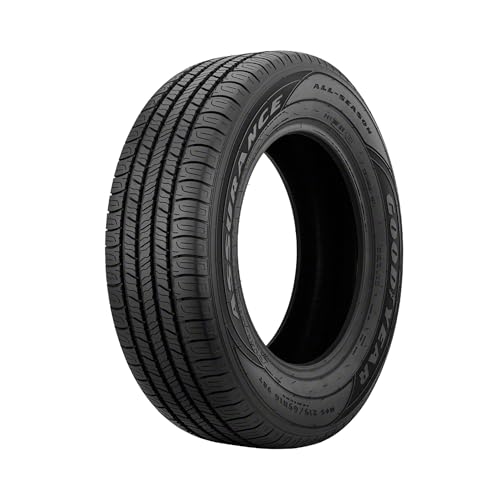
Goodyear’s Assurance line focuses on predictable everyday traction, and the Goodyear Assurance All-Season adds biting edges for changing weather. Its tread grooves move water and slush away from the road contact area.
Large shoulder blocks steady the tire through turns on dry and wet pavement. Across the tread, multiple edges help it find grip in light snow, making it more useful through mild winter conditions than a warm-weather tire.
An optimized tread pattern helps control road noise during routine trips. Goodyear backs the Assurance All-Season with a 65,000-mile tread life warranty, giving it a practical focus on both comfort and tread longevity.
The tire favors a stable touring feel over quick steering response. Its wide water-clearing grooves support wet-road traction, while the shoulder blocks give you a planted feel during ordinary turns.
Bottom line: The Assurance All-Season works for drivers who encounter rain and occasional light snow but do not need a dedicated winter tire. Its comfort-oriented tread also suits everyday commuting.
Pros
- Multi-wave sipes add wet-weather edges
- Circumferential grooves channel water
- Comfortable touring character
- All-season tread for varied conditions
Cons
- Not a dedicated winter tire
- Steering feel is comfort-oriented
Toyo gives the Extensa A/S II a touring tread layout built for year-round road use. Wide circumferential grooves channel water away, while multi-wave sipes add biting edges for wet pavement and light snow.
The tread blocks balance road contact with a calm ride, making the tire well suited to regular highway travel. Its all-season design handles dry roads and rain with steady, predictable behavior.
Toyo’s touring approach puts comfort and practical traction ahead of sharp, sporty steering. On everyday roads, the Extensa A/S II delivers a composed feel, with tread features that serve drivers through changing conditions.
The multi-wave sipes bring extra edges to the tread, and the circumferential grooves help clear water. That mix gives the tire a straightforward balance for commuters and longer trips.
Bottom line: The Extensa A/S II suits drivers who want a balanced touring tire for everyday pavement and highway travel. It fits areas with mild winter weather and regular rain.
Pros
- Quiet, smooth ride
- All-season traction for dry, wet, and snowy roads
- Low-rolling-resistance focus
- Comfortable touring handling
Cons
- Not designed for severe snow or ice
- Steering lacks sporty precision
Quiet running and fuel-conscious design shape the Laufenn G Fit AS-01’s everyday appeal. Its all-season tread balances road contact in dry weather, rain, and light snow with a smooth touring feel.
The tread layout uses broad channels to move water away from the contact patch. That drainage supports wet-road traction, while the block pattern keeps the tire’s response steady during routine driving.
Laufenn also tunes the G Fit AS-01 for low noise and a comfortable ride across changing road conditions. The tire’s all-season tread design makes it practical for daily use, and its focus on low rolling resistance can help limit the energy a vehicle uses to move.
Rather than a sharp performance tire, the G Fit AS-01 takes a calm approach to steering and handling. Its quiet tread pattern and even road manners make longer stretches behind the wheel more pleasant.
Bottom line: The G Fit AS-01 fits drivers who value a quiet ride and fuel-conscious daily performance. It works best for routine driving in mild winter conditions.
Pros
- Sport-oriented handling
- Sipes add all-season biting edges
- Water channels support wet-road traction
- Backed by a 70,000-mile treadwear warranty
Cons
- Ride may feel firmer than touring tires
- Not intended for deep snow or ice
Milestar gives the Weatherguard AS710 Sport a performance-oriented all-season character for passenger cars. Its tread design balances dry-road response with channels that move water away in wet conditions.
Sipes add extra biting edges for traction as the weather changes, while the tread pattern supports stable road contact. The tire’s extra-load construction suits drivers who need that added load capacity in a passenger tire.
Milestar backs the AS710 Sport with a 70,000-mile treadwear warranty, a substantial service-life promise for a tire with sport in its name. Its handling has a firmer, more responsive feel than a comfort-first touring design.
The Weatherguard AS710 Sport keeps an all-season focus without giving up its performance lean. Its wet-weather grooves and biting edges support everyday traction, while the treadwear warranty adds a practical reason to consider it for regular driving.
Bottom line: The Weatherguard AS710 Sport suits drivers who want a livelier feel from an all-season tire and value a long treadwear warranty. It is best for paved-road driving in varied but not severe winter weather.
Factors to Consider When Choosing Budget All Season Tires
Start with the roads you drive most and your vehicle’s tire requirements. A budget tire makes sense only if it fits correctly and gives you the grip, comfort, and service life your routine needs.
Vehicle Fit and Load Ratings
Find the tire size on your driver-door placard or in the owner’s manual. Match the full size, including width, aspect ratio, and wheel diameter, unless a tire professional confirms an alternate fit.
Check the load index and speed rating too. The load index tells you how much weight each tire can carry, while the speed rating indicates the speed range it can handle under standard conditions. Do not choose lower ratings than your vehicle requires.
If you often carry passengers or cargo, keep the required load capacity and check tire pressure before long trips. Drivers who tow should confirm the vehicle maker’s load guidance before changing tire types.
Wet Grip and Tread Design
Rain performance should rank high if you drive in a wet climate or commute at highway speeds. Look for open circumferential grooves and channels that move water away from the contact patch, along with tread blocks and sipes that help the tire grip on slick pavement.
Treat traction grades as one clue, not a complete wet-weather score: they do not capture every part of cornering or braking on your roads. Compare independent wet-braking or handling tests in the same tire size.
Deep grooves can clear water, but worn tread loses that ability, so replace tires before they reach their wear bars. Slow down on standing water because tread cannot prevent every loss of grip.
Climate and Snow Needs
All-season tires suit regions with mild winters and occasional light snow, but their rubber and tread usually lose grip as temperatures stay very low. For packed snow, ice, or frequent storms, compare severe-snow-rated all-weather tires or use dedicated winter tires.
Look for the three-peak mountain snowflake symbol if you need a tire that meets a defined snow-traction threshold. The mark identifies tires that meet a severe-snow standard, but it does not make one equivalent to a dedicated winter tire on ice or in deep cold. Use the table as a climate guide, then weigh your commute, hills, and ability to avoid storms.
| Tire type | Best fit | Main trade-off |
|---|---|---|
| All-season | Mild winters, occasional light snow | Less grip in severe winter weather |
| All-weather | Year-round use with regular snow | Less winter grip than a dedicated winter tire |
| Winter | Frequent cold, snow, or ice | Requires seasonal tire changes |
Tread Life and Warranty Terms
Warranty mileage helps compare expected tread life, but it does not promise how long every set will last. Driving style, alignment, inflation, road surface, and rotation all affect wear; read the mileage warranty rules for maintenance records, rotation intervals, and coverage limits.
Use the treadwear grade for a rough comparison, not a mileage forecast. It comes from standardized testing and works best as a clue among similar tires, while warranty terms may include prorated coverage or service requirements. Check these upkeep points before buying:
- Follow the rotation schedule in your vehicle manual.
- Check tire pressure at least monthly and before long trips.
- Get an alignment check if the car pulls or tread wears unevenly.
- Inspect tread and sidewalls during routine pressure checks.
Ride Comfort and Fuel Use
Comfort depends on casing, tread pattern, and how the tire matches your vehicle. If your commute includes long highway stretches, look for touring-focused designs and road-noise results from credible tests; an aggressive tread may add grip on loose surfaces but can sound louder on pavement.
Rolling resistance can affect fuel use, yet tire pressure and driving style matter too. Use the pressure your vehicle maker recommends, not the maximum printed on the sidewall, and avoid choosing a tire solely for a fuel-efficiency claim if it gives up grip or load capacity you need.
Drivers who carry cargo or travel on rough roads should favor durability and predictable handling over a small potential efficiency gain. Your vehicle manual can also clarify whether you need standard or reinforced tires.
Choosing a Budget Tire That Fits Your Roads
If you want a well-rounded daily tire, the General AltiMAX RT45 leads this group. Choose the Hankook Kinergy PT for highway comfort, the Cooper Endeavor for rain confidence, or the Kumho Solus TA51a for a quieter ride. Crossover drivers may prefer the Falken Ziex CT60 A/S, while the Firestone All Season puts family comfort first.
For regular light snow, look at the Goodyear Assurance All-Season. The Toyo Extensa A/S II suits balanced touring, the Laufenn G Fit AS-01 fits a fuel-conscious plan, and the Milestar Weatherguard AS710 Sport brings a sportier feel to a value-focused choice. Match your pick to your normal roads and local winter weather, then confirm its ratings fit your vehicle.
Frequently Asked Questions
Can budget all-season tires handle snow?
They can handle light snow while tread remains healthy and you drive gently, but they do not match winter tires on packed snow or ice. Check for the severe-snow symbol if storms come often, and leave extra room for stopping even with that mark.
Are all-season and all-weather tires the same?
No. All-weather tires use a design aimed at a wider range of winter conditions and often carry the three-peak mountain snowflake symbol. All-season tires suit milder climates, though some can handle occasional light snow. Check the symbol and your local weather needs rather than relying on the category name alone.
How often should you rotate all-season tires?
Follow the rotation schedule in your vehicle manual, since the right interval and pattern can vary by drivetrain and tire setup. Regular rotation helps tires wear more evenly; ask a tire shop to inspect alignment if you see uneven wear or feel the vehicle pull.
How can you tell when all-season tires need replacing?
Check tread depth, wear bars, and the tire’s condition. Replace a tire when tread reaches the wear bars, and have a professional inspect cracks, bulges, or repeated pressure loss. A tire can lose safe performance before the tread looks completely smooth, especially on wet roads.
Do budget all-season tires affect fuel economy?
Yes, tire design and rolling resistance can affect fuel use, but the effect depends on the vehicle and your driving. Keep pressure at the vehicle maker’s recommended level and compare efficiency alongside grip, comfort, and load capacity rather than using it as your only measure.