
This post may contain affiliate links. As an Amazon Associate I earn from qualifying purchases. If you choose to make a purchase, I may earn a small commission at no extra cost to you.
Choosing tires for a Corvette means balancing the car’s power and sharp responses with the roads and weather you face. A summer tire can make steering feel precise, but cold weather, heavy rain, rough pavement, or regular commuting may call for a different compromise.
Fit also matters: Corvette generations use specific sizes, axle setups, and load and speed ratings, so a tire that suits one car may not suit yours. This guide to the best tires for Chevy Corvette you can buy in 2026 compares options for daily driving, wet roads, changing seasons, and track use.
Use your door-jamb placard and owner’s manual as the starting point, then match the tire to your climate and driving habits.
Our Top Tires for Chevy Corvette Picks


More Details on Our Top Picks
Pros
- Bi-Compound tread balances dry grip and wet traction
- Aramid-and-nylon belt sharpens steering response
- Strong wet braking for a summer tire
- Proven original-equipment use on performance cars
Cons
- Limited grip in snow and near-freezing weather
The Michelin Pilot Sport 4S brings endurance-racing ideas to a road tire, with sharp steering and strong grip in warm weather. Its Bi-Compound tread uses different rubber compounds across the tread to balance dry cornering with wet-road traction.
Michelin’s Dynamic Response Technology uses an aramid-and-nylon belt to transmit steering inputs with precision. You feel that direct response when you turn into a corner or make a quick lane change.
Wide grooves move water away from the contact patch, while the tire’s summer compound delivers confident braking on wet pavement. On dry roads, it holds its line through fast bends without making the car feel vague.
Michelin Pilot Sport 4S has also earned original-equipment use on high-performance cars from brands such as Ferrari, Porsche, and Mercedes-AMG. That broad use reflects its mix of precise handling and everyday road manners.
Its warm-weather focus limits grip in snow and near-freezing temperatures. You get a rewarding balance for spirited road driving, though it does not suit year-round use in cold climates.
Bottom line: Choose it for a Corvette that sees spirited road use and warm-weather driving. It gives you precise steering without giving up wet-road confidence.
Pros
- SportPlus Technology supports responsive handling
- Confident braking on wet and dry pavement
- Limited tread-life coverage up to 30,000 miles
- Used in performance driving programs
Cons
- Summer compound loses grip in cold weather
Continental’s SportPlus Technology gives the ExtremeContact Sport 02 its blend of quick responses and confident braking. The tread and compound work across dry and wet pavement, so you can enjoy precise control without saving the tire for a track day.
Continental ExtremeContact Sport 02 feels composed through corners, with steering that responds cleanly as you build speed. Its wet-road grip also helps the car brake with confidence when rain interrupts a drive.
Continental backs this summer tire with limited tread-life coverage of up to 30,000 miles. That gives you a useful wear-life benefit in a category where tires often focus on outright grip.
Its balance has earned the tire a place in performance programs such as the AMG Driving Academy and ROUSH Performance. On a Corvette, that mix of predictable handling and wet braking suits spirited road drives as well as occasional performance use.
This is still a warm-weather tire, not a snow tire. Cold conditions can reduce its grip, so winter driving falls outside its strengths.
Bottom line: Pick this Continental for responsive summer driving with capable wet-road braking. It also suits you if tread life matters alongside handling.
Pros
- Tread design targets lower road noise
- Compound focuses on warm-up and wet grip
- Reinforced belt supports steering response
- Select versions offer noise or puncture technologies
Cons
- SUV-oriented version limits Corvette fitment
- Summer tread has little snow traction
A focus on road comfort sets the Pirelli P Zero PZ4 apart from many track-leaning summer tires. Pirelli shaped its tread to reduce road noise and rolling resistance, while a warm-up-focused compound brings wet-road grip into the mix.
The reinforced steel-belt construction gives the tire a firm base for steering response. Its rib layout keeps the tread supported through corners, helping the car feel settled when you carry speed through a bend.
Pirelli P Zero PZ4 is a performance summer tire, and its design aims to pair handling with a quieter ride. The compound warms up quickly, which can be useful when a drive starts on cool, damp pavement.
Across the PZ4 family, select versions offer Pirelli Noise Cancelling System, RunFlat, or SealInside features. Those options address cabin noise or mobility after a puncture, though they depend on the specific application.
The PZ4 version in this product line targets truck and SUV use, which limits its relevance to Corvette fitments. Its summer tread also offers little help in snow or freezing weather.
Bottom line: Consider the PZ4 if you need a performance tire for a compatible Corvette setup and value a quieter ride. Check the application carefully, since this version targets SUVs.
Pros
- Combination Grip Technology supports cornering
- Lightweight construction sharpens steering
- Temperature-stable compound suits hard driving
- Grip for both wet and dry roads
Cons
- Performance tread can wear quickly under hard use
- Poor choice for snow and freezing weather
Goodyear’s Combination Grip Technology gives the Eagle F1 SuperCar 3 its focus on cornering grip. A lightweight, racing-style construction sharpens steering response, so the tire reacts promptly as you guide the Corvette through a turn.
The Goodyear Eagle F1 SuperCar 3 uses a special rubber compound that handles temperature changes during hard driving. That consistency can help the tire maintain a predictable feel as you move between straights and corners.
Its tread and compound target both wet and dry performance, giving you more than a dry-track setup. On dry pavement, the tire’s strong grip suits fast cornering and firm inputs; in rain, it retains useful road control.
This is an ultra-high-performance summer tire with a racing influence. It favors handling over a soft, quiet touring feel, and frequent hard driving can wear its performance tread quickly.
Cold weather is another weak point for the summer compound. In snow or near-freezing conditions, you lose the grip that makes this tire appealing on warm roads.
Bottom line: Choose the Eagle F1 SuperCar 3 for warm-weather drives where cornering response matters most. It suits drivers who accept faster tread wear in exchange for a focused feel.
Pros
- Chevrolet selected it for Corvette all-season use
- Handles dry and wet roads
- Sipes add traction in light snow
- Offers broader seasonal use than a summer tire
Cons
- Less warm-weather grip than a dedicated summer tire
- Not suited to severe winter conditions
Chevrolet chose the Michelin Pilot Sport All Season 4 as the first all-season tire for the Corvette. That factory selection gives you a performance-focused option for owners who want more seasonal flexibility than a summer tire offers.
Michelin Pilot Sport All Season 4 uses an all-season tread compound and a performance-oriented pattern to balance dry handling with wet-road grip. Tread grooves channel water away, while sipes add biting edges for light snow.
On dry pavement, the tire keeps steering response lively enough for a sports car. In rain and cooler weather, its all-season design gives you a broader range of usable conditions than a warm-weather compound can handle.
The trade-off comes during hard driving in warm weather, when a dedicated summer tire can deliver more grip. Snow traction also has limits, so this tire does not replace a true winter tire in severe conditions.
For routine Corvette use, the combination of factory backing and seasonal range gives the tire a clear role. You can keep a sport-oriented feel without limiting every drive to warm, dry weather.
Bottom line: This Michelin fits Corvette owners who want one performance tire for changing seasons. It gives you useful cold-weather range while keeping the car’s sporty road feel.
Pros
- Near-slick tread delivers strong dry grip
- Quick response through corners
- Motorsport-derived compound suits track use
- Developed for high-performance sports cars
Cons
- Limited wet-weather margin
- Specialized tread wears quickly with hard use
Michelin built the Pilot Sport Cup 2 R for high-performance sports cars that spend serious time on track. Its near-slick tread pattern and motorsport-derived compound put dry grip ahead of comfort or all-weather range.
The Michelin Pilot Sport Cup 2 R responds quickly to steering inputs and holds firm through fast corners. Its broad tread blocks give the tire a focused feel as you brake, turn, and accelerate on a dry circuit.
Michelin developed this tire for some of the most exclusive sports cars, a sign of its narrow performance focus. On a Corvette, it can make track driving more direct by giving you a strong connection between steering input and tire response.
That track-first design brings real limits on public roads. The shallow tread offers less wet-weather margin, and the specialized compound wears faster than a typical road tire under frequent hard use.
Cold temperatures also work against the Cup 2 R. It performs best in warm conditions, where the tire can reach the operating range its design targets.
Bottom line: Save the Cup 2 R for a Corvette that sees frequent dry track sessions. It rewards drivers who put lap pace ahead of wet-weather range and long tread life.
Pros
- DWS indicators track dry, wet, and snow performance
- SportPlus Technology supports responsive handling
- Light snow and ice traction
- Limited tread-life coverage up to 50,000 miles
Cons
- Less sharp than a summer tire in warm weather
- Not a substitute for a winter tire in deep snow
The D, W, and S markers molded into the Continental ExtremeContact DWS06 Plus tread give you a clear way to track its performance as it wears. Each letter disappears as the tread loses the conditions-specific capability it represents.
Continental’s SportPlus Technology brings responsive handling to this all-season tire. The tread design and compound provide grip on dry and wet roads, with added traction for light snow and ice.
Continental ExtremeContact DWS06 Plus also offers limited tread-life coverage up to 50,000 miles. That longer coverage suits drivers who put regular miles on a Corvette and want an all-season tire with useful wear life.
Its braking and cornering feel stay composed across changing road conditions. Still, an all-season tire gives up some warm-weather sharpness compared with a summer-focused design, and its snow ability has limits.
The tread pattern adds a distinctive look without dropping its performance focus. You get a practical spread of road grip, seasonal range, and tread-life coverage in one tire.
Bottom line: Choose the DWS06 Plus if your Corvette sees changing weather and regular road use. Its tread indicators and snow traction add useful cues and capability as conditions shift.
Pros
- Rayon body ply supports steering response
- Solid center ribs aid cornering
- Silica compound grips in wet and dry conditions
- Silent Sipe Technology reduces tread noise
Cons
- Limited traction in snow and cold weather
Yokohama uses a rayon matrix body ply and solid center ribs to give the Advan Sport V107 a stable, direct feel. That structure supports steering response and cornering when you drive a Corvette at speed.
The Yokohama Advan Sport V107 pairs an ultra-micro silica compound with an asymmetric tread. The compound grips on wet and dry pavement, while the tread pattern balances contact across the tire during acceleration and braking.
Silent Sipe Technology reduces tread-pattern noise, which gives you a more comfortable cabin on ordinary drives. The tire’s shaped profile also supports stability at high speed, so its handling focus does not demand a harsh ride.
Yokohama’s Promise includes a 30-day satisfaction trial. That gives you a chance to judge how its steering feel and road noise suit your Corvette in everyday driving.
This summer tire has limited traction in snow and cold weather. Its performance range favors warm roads, where the compound can deliver the grip Yokohama designed it for.
Bottom line: The Advan Sport V107 suits Corvette drivers who want stable high-speed handling with less tread noise. Its summer focus fits warm-weather road use.
Pros
- Dynamic Taper Design maintains tread-block stiffness
- Silica compound grips wet and dry roads
- Asymmetric tread supports braking and cornering
- Resists block deformation under cornering loads
Cons
- Light truck and SUV version limits Corvette fitment
- Poor traction in snow and near-freezing weather
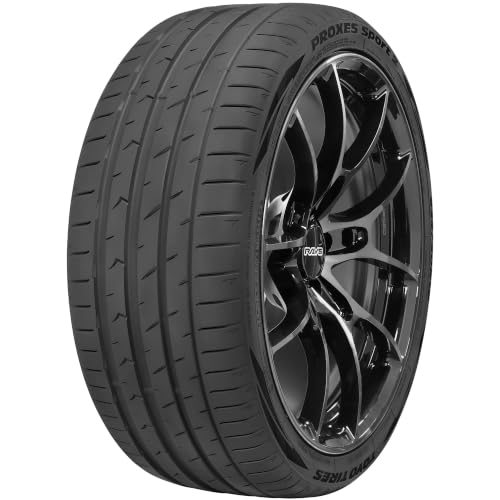
Toyo’s Dynamic Taper Design helps the Proxes Sport 2 keep its tread blocks firm under load. That shape spreads contact pressure across the tread, giving the tire a steady base for cornering and braking.
The Toyo Proxes Sport 2 uses an advanced silica compound to grip wet and dry pavement. Its asymmetric tread pattern keeps the tire’s contact patch working through acceleration, braking, and turns.
That combination gives you responsive handling on warm roads. The compound resists tread-block deformation in corners, which helps the car hold a cleaner line when you make quick steering inputs.
The Proxes Sport 2 is a summer performance tire, so its grip drops in snow and near-freezing temperatures. The version in this product line also targets light trucks and SUVs, which limits its fit for Corvette use.
Its design focuses on road contact and steering response rather than winter traction. The main appeal is a firm, connected feel on dry or wet pavement in warmer weather.
Bottom line: Consider the Proxes Sport 2 only if this version matches your Corvette’s approved fitment. Its design favors responsive summer handling, not winter use.
Factors to Consider When Choosing Tires for Chevy Corvette

Your Corvette’s tire choice shapes braking, steering, ride comfort, and how well the car copes with local weather. Check the vehicle’s original fitment first, then weigh your driving conditions against the tire’s strengths.
Fitment and Ratings
Start with the tire sizes on your driver’s door-jamb placard and in the owner’s manual. Corvette generations can use different front and rear sizes, and many have a staggered setup. Keep each axle in its specified size unless a qualified tire professional confirms a change fits the wheels, suspension, and vehicle controls.
Match the load index and speed rating too; those ratings show the weight and speed a tire can handle. Check whether your car requires run-flat capability. Correct fitment supports safe handling and helps preserve clearance and electronic system function.
Do not judge fit by outside diameter alone. A tire shop can verify an alternate setup before you buy.
Tire Type and Climate
Choose a tire category that suits the temperatures and roads you face most. Summer performance tires offer strong warm-weather grip, but their compounds can lose flexibility in cold conditions; some makers warn against using them near freezing. All-season tires trade some warm-weather response for a broader temperature range.
Winter tires use cold-flexible compounds and tread patterns for snow and ice, but they are not a year-round performance choice. Frequent rain makes wet braking and water evacuation worth checking. Use the table as a starting point, then check the tire maker’s climate guidance and local winter rules.
| Tire category | Best suited to | Main trade-off |
|---|---|---|
| Summer | Warm, dry roads | Weak cold-weather flexibility |
| All-season | Changing temperatures | Less warm-weather response |
| Winter | Snow and ice | Less suited to warm-weather use |
Grip and Handling
Grip depends on more than a sporty tread pattern. Choose a tire whose design balances dry cornering, wet braking, and predictable control as road conditions change. Stiff shoulders can sharpen response, but the wheel and car must accept the fitment.
For public roads, give wet grip and stable braking as much attention as dry cornering. Track drivers should check heat tolerance and follow the tire maker’s pressure guidance; hard laps can overheat a street tire.
A track-focused design may also sacrifice comfort or wet-weather safety. Consider your main use:
- Daily driving: balanced wet and dry grip.
- Spirited roads: precise, predictable steering response.
- Track sessions: heat tolerance and road-use status.
Ride Comfort and Wear
Decide how much ride firmness and road noise you can accept. Low-profile performance tires often pass more sharp impacts into the cabin because their shorter sidewalls flex less, and wide tread blocks can create more noise on rough pavement. A shorter sidewall may sharpen steering, but it gives less cushion over broken roads.
If you commute often, look for comfort and noise notes in independent tests, not just grip claims. Check the treadwear grade as a rough comparison among tires in the same category; it does not predict exact lifespan across different designs. Review any tread-life coverage and its conditions, then weigh it against your handling and wet-weather needs.
Installation and Pressure
Plan for installation and routine checks before choosing a replacement. Ask a shop to confirm wheel fit, TPMS sensor compatibility, and alignment. Use the cold pressure listed on the vehicle placard or in the owner’s manual, not the sidewall maximum.
Check pressure monthly and before longer drives, since low pressure can hurt handling and raise heat. Keep each axle matched, and follow the vehicle maker’s instructions if you change tire type or construction. Correct installation and pressure help the tire work as designed, especially under hard braking or fast cornering.
Tread Checks and Replacement
Inspect tread and sidewalls often, especially before a long trip or track day. Uneven wear can point to alignment, pressure, or suspension problems, so fix the cause before fitting fresh tires. Replace a tire with bulges, deep cuts, exposed cords, or cracking, and use tread depth as well as age to judge remaining service.
Many high-performance tires wear faster than touring tires, particularly with aggressive driving. Follow the tire maker’s service life guidance, and replace tires in matched pairs at minimum. With a staggered setup, front-to-rear rotation may not work.
Frequently Asked Questions
What tires work best for everyday Corvette driving?
For everyday use, pick a street tire that matches your climate, road conditions, and comfort needs. A summer tire suits warm weather and sharp handling, while an all-season option gives you more flexibility through cooler months. If snow or ice is common, use a winter tire during that season instead of expecting an all-season design to handle every condition.
Can I use all-season tires on a Corvette?
Yes, if their size, load index, and speed rating meet your Corvette’s requirements. All-season tires can suit drivers who face cool mornings or changing weather, though they usually give up some warm-weather steering response compared with summer tires. They do not replace winter tires on roads with frequent snow or ice.
Should I replace all four Corvette tires at once?
Replacing all four at once gives the car matching tread and handling across every corner. If you replace fewer, install matched tires on the same axle and follow the vehicle maker’s guidance on tread-depth differences. Staggered sizing can prevent front-to-rear rotation, so ask the tire shop to confirm the right replacement plan.
Can I switch from run-flat tires to standard tires?
Sometimes, but check your owner’s manual and speak with a qualified tire shop before switching. Run-flat tires can support limited driving after pressure loss, while standard tires cannot. A change can affect how you respond to a puncture and may require adjustments to your roadside plan or wheel setup.
What tire pressure should I use?
Set pressure to the cold tire figure on the driver’s door-jamb placard or in the owner’s manual. Check it before driving or after the car sits for several hours, since warm tires read higher. Do not use the sidewall’s maximum pressure as your target; that figure does not reflect your car’s recommended setting.