
This post may contain affiliate links. As an Amazon Associate I earn from qualifying purchases. If you choose to make a purchase, I may earn a small commission at no extra cost to you.
Choosing tires for a Chevy Tahoe takes more than matching a size. The SUV’s weight, available wheel packages, passengers, and towing duties all affect how a tire rides and handles. A quiet highway tire can feel very different from an all-terrain option on pavement, while winter grip depends on more than a rugged tread.
Start with the tire size and load rating on your door placard, then weigh your usual routes and weather against comfort, traction, and tread life. The best tires for Chevy Tahoe you can buy in 2026 should fit your real driving, not just look right in the driveway. The options below span highway travel, winter roads, towing, and light trails.
Our Top Tires for Chevy Tahoe Picks


More Details on Our Top Picks
Pros
- Long-lasting tread compound
- Even tread wear from MaxTouch Construction
- Quiet, comfortable road manners
- Reliable wet-road traction
Cons
- Limited grip in deep mud
Long tread life and a composed ride make the Michelin Defender LTX M/S2 a good fit for a Tahoe that spends most of its time on pavement. Its highway-focused tread gives you steady handling without the rough feel of a more aggressive off-road pattern.
Michelin uses an EverTread 2.0 compound to resist wear, while MaxTouch Construction spreads the tire’s contact forces across the tread. That even pressure helps the rubber wear more evenly during daily driving and long trips.
The tread also has plenty of biting edges for wet roads and light snow. It gives you dependable all-season traction for changing weather, though it does not have the open pattern you want for deep mud.
In regular driving, the Defender LTX M/S2 keeps road noise low and the ride comfortable. Michelin’s focus on quiet comfort is especially welcome in a full-size SUV, where a loud tire can wear on you over a long drive.
Bottom line: This is a well-rounded pick if you want durable highway performance and a calm ride for your Tahoe.
Pros
- TractionPlus Technology for wet-road grip
- Short wet-road braking
- Quiet highway manners
- Up to 70,000 miles of limited tread life coverage
Cons
- Not suited to deep mud or technical trails
For a Tahoe that spends its time on paved roads, the Continental TerrainContact H/T puts highway comfort and year-round traction first. Its tread pattern keeps a broad, steady footprint on the road, which suits commuting and long-distance travel.
Continental’s TractionPlus Technology combines tread design and compound features to improve wet grip and durability. The tire also delivers short braking distances on wet pavement, a useful trait when rain catches you in traffic.
The TerrainContact H/T stays composed across dry and wet roads, with a tread pattern that keeps road noise in check. You get a quieter cabin than you would from a more open off-road tread, along with traction for ordinary seasonal changes.
Continental offers up to 70,000 miles of limited tread life coverage on the line. That mileage focus fits drivers who want a highway tire for regular use, rather than a tread built around rocky trails or deep mud.
Bottom line: Choose this tire for a Tahoe that mainly sees highways, city streets, and wet-weather driving.
Pros
- QuietTrack Technology reduces tread noise
- High-silica compound for wet and winter grip
- Snow Vices add snow-biting edges
- 80,000-mile limited warranty
Cons
- Not a dedicated tire for severe winter conditions
A calm ride is a big part of the Bridgestone Alenza AS Ultra’s appeal. QuietTrack Technology reduces tread-pattern noise, which helps keep highway trips in your Tahoe more peaceful.
Bridgestone uses a high-silica compound to improve wet-road grip and winter traction. The tread’s Snow Vices add edges that bite into snow, giving you extra grip when roads turn slippery.
On dry pavement, the Alenza AS Ultra gives you predictable handling for daily trips and longer drives. Its all-season tread suits changing weather, though it does not replace a dedicated winter tire in severe snow.
Bridgestone offers an 80,000-mile limited warranty on the line, reflecting its focus on long tread life. The Alenza AS Ultra combines that durability with a smooth, quiet ride that feels at home on a family SUV.
Bottom line: This tire suits Tahoe drivers who value quiet highway travel and want extra grip for light snow.
Pros
- Full-depth sipes retain biting edges
- 3D sipe design for steady handling
- SUV-focused all-season tread
- Confident wet-road braking
Cons
- Limited traction in deep mud
Wet-road confidence is a key strength of the Pirelli Scorpion AS Plus 3. Its 3D sipe technology works with the tread pattern to keep handling steady on rainy pavement.
Pirelli uses full-depth sipes that maintain biting edges as the tread wears. That design gives you traction and braking support throughout the tire’s life, rather than relying only on shallow grooves near the surface.
The Scorpion AS Plus 3 also uses an all-season tread compound for dry and wet driving. Its SUV-focused design gives a Tahoe a settled road feel for daily errands and highway miles, without an aggressive tread that adds off-road noise.
Pirelli’s tread layout balances cornering control with year-round road grip. The pattern suits paved routes and occasional light dirt roads, but it lacks the open blocks you need for deep mud or rough trails.
Bottom line: Consider this Pirelli if wet-road control and predictable paved-road handling matter most in your Tahoe.
Pros
- Three-Peak Mountain Snowflake certified
- Directional tread moves water and slush
- Full-depth sipes add traction edges
- Strong wet and dry braking
Cons
- Directional tread limits rotation options
Michelin’s CrossClimate line is known for blending all-season comfort with winter-ready traction, and the Michelin CrossClimate2 brings that approach to a Tahoe. Its directional, V-shaped tread channels water and slush away from the contact area.
A thermal adaptive compound changes its grip with temperature, while full-depth sipes add biting edges across the tread. The tire also carries the Three-Peak Mountain Snowflake mark, which certifies it for severe snow service.
On dry roads, the CrossClimate2 offers firm braking and a stable feel. Michelin also emphasizes wet braking, so the tire works well through rainy stretches as well as cold-weather commutes.
The directional pattern gives this tire a distinctive tread layout, and its snow rating makes it a useful year-round option for drivers who face real winter weather. It still favors paved roads over rough trails or deep mud.
Bottom line: Pick the CrossClimate2 if your Tahoe needs one tire for wet roads, warm days, and regular winter driving.
Pros
- Mild all-terrain tread for gravel roads
- Road-focused feel for daily driving
- All-season design
- Shoulder blocks add loose-surface grip
Cons
- Limited traction in deep mud
If your Tahoe regularly leaves pavement for gravel roads or packed dirt, the Goodyear Wrangler Territory AT brings a mild all-terrain tread to the job. Its block-based pattern adds edges for loose surfaces while keeping highway driving central to the design.
The tread’s shoulder blocks give the tire extra contact with uneven ground, and its grooves clear water from the road-facing surface. That mix suits everyday driving, occasional rural routes, and light trail use without pushing the tire into a specialized mud-terrain role.
On pavement, the Wrangler Territory AT offers a more road-friendly feel than an extreme off-road pattern. Its all-season design serves ordinary changes in weather, while the tread gives you some added bite when a paved route turns to gravel.
This Goodyear fits the Tahoe’s mix of family use and occasional outdoor trips. It favors firm dirt and gravel over deep mud or rock crawling, where a more aggressive tread can find better purchase.
Bottom line: This Goodyear suits Tahoe owners who split their driving between pavement and occasional gravel or dirt roads.
Pros
- CoreGard Technology reinforces the sidewall
- Advanced Deflection Design helps deflect debris
- Serrated shoulders add mud and snow grip
- 50,000-mile limited treadwear warranty
Cons
- Tread noise can be noticeable on pavement
Sidewall toughness sets the BFGoodrich All-Terrain T/A KO3 apart. CoreGard Technology, developed for Baja racing, reinforces the sidewall, while Advanced Deflection Design helps turn away sticks and stones that could snag it.
BFGoodrich also uses a new all-terrain compound and tread pattern to handle gravel wear. The serrated shoulders and mud-phobic bars add grip in mud and snow, giving the tire useful bite when your Tahoe leaves paved roads.
The KO3’s tread blocks suit mixed driving, from gravel routes to everyday pavement. Its build favors durability in rough conditions, and BFGoodrich backs the line with a 50,000-mile limited treadwear warranty and a six-year standard limited warranty.
You get a tire with a clear off-road focus, plus a tread pattern that remains useful in ordinary driving. That combination gives the Tahoe extra confidence on rough access roads and in changing weather.
Bottom line: Choose the KO3 for a Tahoe that sees frequent gravel, mud, or rough access roads.
Pros
- Three-Peak Mountain Snowflake rated
- Heat Diffuser Technology manages sidewall heat
- Deep tread for mixed terrain
- Durable sidewall construction
Cons
- More tread noise than a highway tire
Snowy roads and rough trails call for a tire with more than a highway tread. The Falken Wildpeak A/T4W combines an all-terrain pattern with all-weather traction, and its Three-Peak Mountain Snowflake rating marks it for severe snow service.
Falken’s Heat Diffuser Technology moves heat away from the lower sidewall during demanding drives. That feature helps manage heat on long trips, while the tire’s deep tread and durable sidewalls handle gravel, rocks, and uneven ground.
The Wildpeak A/T4W works on highways as well as trails, so you can use it for everyday Tahoe driving without giving up rough-road grip. Its tread blocks and shoulder design provide edges for loose terrain, while the all-weather compound serves changing conditions.
Falken gives the tire a clear mix of trail ability and winter traction. Its more open tread can bring more road noise than a highway-focused tire, especially during long stretches of pavement.
Bottom line: The A/T4W fits Tahoe drivers who face snowy winters and often travel on gravel or rocky roads.
Pros
- Orange Oil compound for flexible grip
- Triple 3D sipes add biting edges
- Wide grooves channel water
- Highway-focused all-season tread
Cons
- Limited traction on rough trails
Yokohama’s Geolandar H/T G056 uses a highway tread for drivers who want long-wearing performance on a Tahoe. Its Orange Oil compound keeps the rubber flexible, adding grip across changing temperatures.
The tread uses Triple 3D sipes to create biting edges while keeping the tread blocks stable. Wide circumferential grooves move water away from the contact area, giving you a more secure feel on wet pavement.
The Geolandar H/T G056 focuses on paved roads, with an all-season pattern for daily driving and longer trips. Its block layout gives the Tahoe a steady road feel without the heavy off-road look of a trail-focused tread.
This Yokohama fits drivers who value highway use and wet-weather grip over rugged terrain performance. It handles ordinary paved routes well, but its tread does not offer the bite you need for deep mud or rocky trails.
Bottom line: The Geolandar H/T G056 suits Tahoe owners who spend most of their miles on paved roads.
Pros
- Comfort Balance Technology reduces road noise
- DuraGen Technology adds construction strength
- Responsive steering on wet and dry roads
- Up to 65,000 miles of limited tread life coverage
Cons
- Limited grip in deep snow
On long pavement stretches, the General Grabber HTS60 gives your Tahoe a highway tread focused on comfort and control. Its Comfort Balance Technology uses a cushioning layer beneath the tread to reduce road noise and smooth the ride.
General Tire’s DuraGen Technology adds strength to the construction, while StabiliTread Technology promotes a stable footprint. Those features pair with a tread pattern that delivers responsive steering and confident handling on both wet and dry roads.
The Grabber HTS60 also puts emphasis on wet braking, a practical benefit in rain and stop-and-go traffic. Its road-focused tread keeps cabin noise down, which makes daily commutes and family trips more comfortable.
General Tire offers up to 65,000 miles of limited tread life coverage on the line. This tire prioritizes pavement manners and wear life, rather than the open tread and loose-surface bite of a trail-focused design.
Bottom line: Choose the Grabber HTS60 if you want quiet highway driving, responsive steering, and wet-road braking for your Tahoe.
Factors to Consider When Choosing Tires for Chevy Tahoe
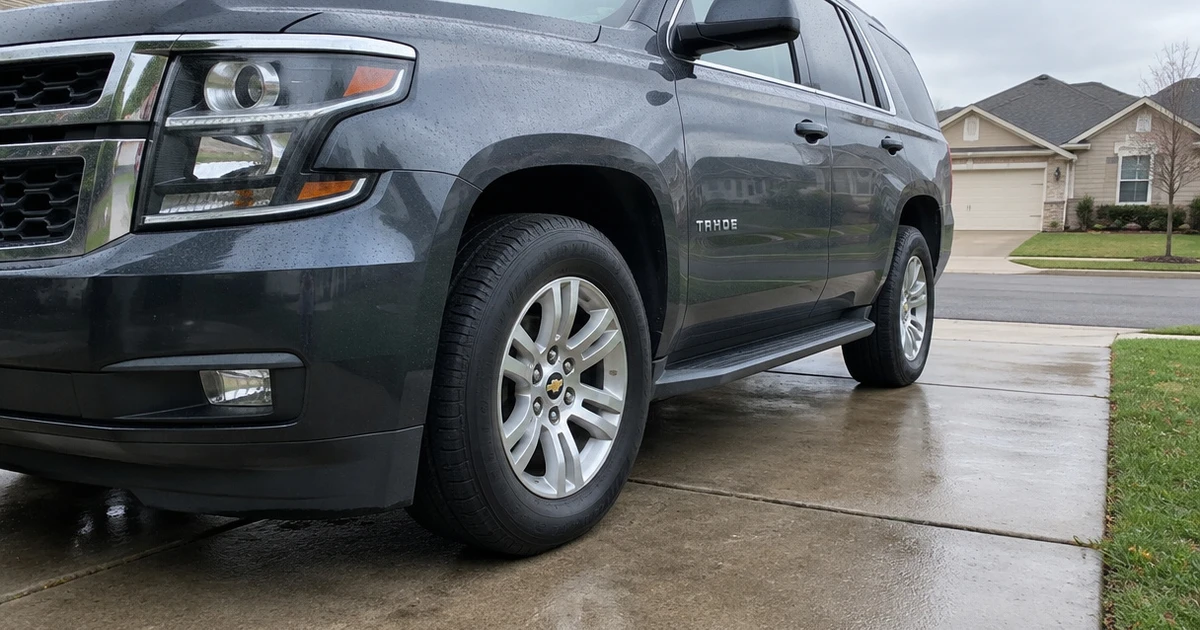
Your Tahoe may spend most of its time on pavement, but its weight and size make tire fit and load capacity especially important. Start with the vehicle’s approved fitment, then match the tread and construction to the roads, climate, and cargo you handle.
Fit and Load Capacity
Use the tire size on the driver’s door placard or in the owner’s manual as your starting point. Wheel size and tire dimensions can vary by trim, so do not guess or copy a size from another Tahoe. Keep the approved overall diameter unless a tire professional checks a change for clearance and speedometer effects.
Check the load index and speed rating along with the size. The load index tells you how much weight each tire can carry at its rated pressure, so match or exceed the vehicle’s requirement. A higher load range does not automatically improve handling, and an oversized tire can rub or affect braking.
| Driving use | Tire category | Main focus |
|---|---|---|
| Mostly paved roads | Highway all-season | Quiet ride and steady grip |
| Frequent gravel | All-terrain | More bite off pavement |
| Snow and ice | Winter tire | Cold-weather traction |
Choose a Tire for Your Routes
Start with the roads you drive most, not the rare trip you plan once a year. Highway-focused tread usually gives you a calmer ride and steady response on paved roads, while deeper, more open tread can help on gravel and dirt. Open tread can also add road noise and feel less settled on smooth pavement.
Choose an all-terrain pattern if your Tahoe regularly leaves pavement or needs extra bite on rough access roads. For mostly city and highway driving, an all-season highway tire often feels quieter and wears more evenly. Use this guide to match the tread to your routine:
- Daily commuting calls for a tire that stays calm on pavement.
- Frequent gravel roads favor more open tread.
- Rough trails call for stronger off-road traction.
Weather and Seasonal Grip
Climate should shape your choice as much as your route. Standard all-season tires handle mild winter conditions, but their rubber can stiffen in sustained cold and their tread may struggle in packed snow or ice. If snow and freezing temperatures recur, look for the Three-Peak Mountain Snowflake symbol; it marks tires that meet a specific snow-traction test.
Do not treat the M+S marking as equal to that symbol. Dedicated winter tires give you more cold-weather grip, but you need to change them as seasons shift and store the off-season set. In warm regions, a good all-season design can save that seasonal work.
Ride Comfort and Noise
Large SUVs put weight and height into play during turns and quick lane changes. Check that the tire matches the vehicle’s load and speed requirements, then look for a tread pattern and construction aimed at stable highway manners. A touring-oriented tire can reduce hum and soften small bumps, which helps if you cover long distances or carry passengers often.
Pay attention to comfort alongside wet braking and steering response, since a soft ride alone does not make a safe match. If your Tahoe tows, carries a full cabin, or hauls cargo, keep the vehicle’s recommended pressure and load limits in view. The tire sidewall’s maximum pressure does not replace the door placard setting.
Tread Life and Care
Tread-life warranties can help you compare similar tire types, but treat them as a guide rather than a promise of actual mileage. Driving style, alignment, road surface, inflation, and rotation habits all affect wear. Ask how the warranty handles uneven wear and what maintenance records you must keep before you rely on it.
Check pressure monthly and before long trips, using the vehicle placard as your target when tires are cold. Rotate on the schedule in your owner’s manual, and ask a shop to check alignment if the steering pulls or wear looks uneven. Replace tires before tread gets too low for dependable wet-road braking.
Frequently Asked Questions
What tire size does a Chevy Tahoe use?
Your Tahoe’s correct size depends on its model year, trim, and wheel package. Read the tire placard on the driver’s door jamb and check the owner’s manual before ordering. Keep the listed size, load index, and speed rating unless a tire professional confirms an approved alternative for your exact vehicle.
Are all-season tires enough for winter driving?
All-season tires work for mild winters and occasional light snow, but they lose grip in deep snow, on ice, and during long cold spells. If you face those conditions often, use tires built for winter traction and switch them when warm weather returns. Match the tire type to your local roads.
Can I put all-terrain tires on a Chevy Tahoe?
Yes, if the size, load index, and speed rating match the vehicle’s requirements. All-terrain tires make sense if you drive on gravel, dirt, or rough access roads. Their open tread can create more noise and a firmer feel on pavement, so they may not suit a Tahoe used mainly for highway commuting.
How often should I rotate my Tahoe’s tires?
Follow the rotation interval in your owner’s manual, since the right schedule can vary by model year and tire setup. Check tire pressure monthly and look at tread wear as you rotate. If one tire wears faster or the steering pulls, ask a tire shop to inspect alignment and suspension parts.
When should I replace my Tahoe’s tires?
Replace a tire when its tread reaches the wear bars or when damage, cracking, or uneven wear compromises safe driving. Wet grip often falls before a tire looks completely worn, so check tread regularly, especially before rainy or snowy seasons. A tire professional can inspect damage you cannot judge from the outside.