
This post may contain affiliate links. As an Amazon Associate I earn from qualifying purchases. If you choose to make a purchase, I may earn a small commission at no extra cost to you.
Choosing tires for a Dodge Challenger means balancing grip, ride comfort, and weather needs without losing the feel you expect from a powerful rear-wheel-drive coupe. The right set depends on your trim, wheel setup, local climate, and how often you drive hard. A tire that suits warm commutes may not give you the same control when temperatures drop or rain fills the road.
The best tires for Dodge Challenger you can buy in 2026 should match your factory fitment and suit how you use the car. Below, you’ll find options for year-round driving, summer performance, light winter weather, long tread life, and a quieter daily ride, plus practical checks to help you choose with confidence.
Our Top Dodge Challenger Tires Picks




More Details on Our Top Picks
Pros
- Sporty steering response across changing seasons
- Full-depth sipes add wet and cool-weather grip
- Chevrolet selected it for the Corvette
- Designed to retain performance over time
Cons
- Less suited to severe winter conditions than a dedicated winter tire
Year-round grip with a sharper steering feel gives the Michelin Pilot Sport All Season 4 its place at the top of this Challenger list. Its tread balances broad shoulder blocks for cornering with full-depth sipes that add bite on wet roads and in cooler weather.
Michelin designed this tire for drivers who want a sporty response without switching to a summer tire when seasons change. The rubber compound keeps its grip across a wider range of temperatures than a summer-focused compound, while the tread aims to retain performance over time.
On a Challenger, that mix suits everyday driving as well as quick turns on dry pavement. Steering feels direct, and the tire maintains a confident feel when rain interrupts a drive. It gives you sporty all-season control without making winter capability the main focus.
Chevrolet chose the Pilot Sport All Season 4 as the first all-season tire for the Corvette, a notable sign of its performance focus. The Michelin Pilot Sport All Season 4 brings that same balance of response and seasonal flexibility to a powerful road car.
Bottom line: Choose it for a Challenger you drive through changing weather and still want to feel responsive on dry roads.
Pros
- SportPlus Technology supports responsive handling
- Useful traction in wet weather, snow, and ice
- Tread indicators track dry, wet, and snow performance
- 50,000-mile limited tread life coverage
Cons
- Snow traction cannot match a dedicated winter tire
For a Challenger that sees rain and occasional snow, the Continental ExtremeContact DWS06 Plus brings a broad range of useful grip. Continental’s SportPlus Technology pairs responsive handling with tread designed to hold onto dry and wet pavement.
Its tread channels water away from the contact patch, while the design also gives you traction in snow and ice. The D, W, and S indicators in the tread show when its performance has worn past its intended level in dry, wet, or snow conditions. That gives you a simple way to track how the tire’s strengths change with wear.
On dry roads, the tire responds quickly to steering input and delivers short braking distances. Rain does not turn it into a soft, vague-feeling all-season tire, and its snow ability adds useful flexibility for cold-weather drives. The 50,000-mile limited tread life coverage also suits drivers who put regular miles on their Challenger.
The Continental ExtremeContact DWS06 Plus has a sporty tread appearance that fits the character of a muscle car. Its mix of road manners and seasonal traction makes it a practical choice for drivers who use their car in more than fair weather.
Bottom line: Choose this tire for a Challenger you drive year-round and want to keep composed in wet or wintry weather.
Pros
- PeakLife compound supports long tread life
- Full-depth 3D sipes maintain biting edges
- Grooves help move water from the tread
- 50,000-mile limited tread life coverage
Cons
- Less focused on dry-track performance than a summer tire
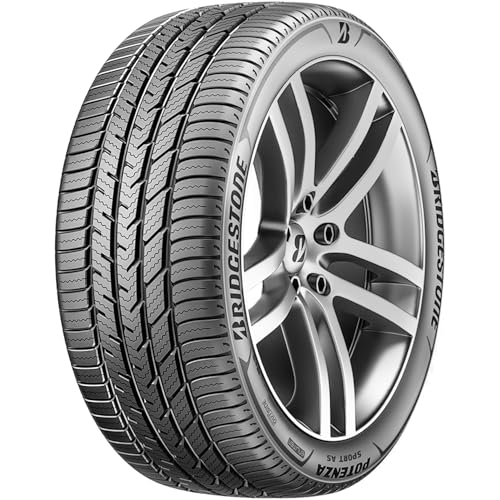
Bridgestone’s PeakLife tread compound gives the Potenza Sport AS a useful balance of sporty grip and lasting wear. The Bridgestone Potenza Sport AS also uses circumferential and lateral grooves to move water out from under the tread and reduce the chance of hydroplaning.
Its open shoulders and full-depth 3D sipes add grip across changing road conditions. Those sipes hold their edges as the tread wears, so the tire can keep its biting surfaces active over time. The design gives Challenger drivers a performance-minded feel without limiting the tire to warm, dry pavement.
In everyday driving, steering response feels crisp, and the tire holds a steady line through corners. Wet pavement brings out the value of its drainage grooves, while the all-season tread offers more flexibility than a summer-only design. Bridgestone backs the tire with 50,000-mile limited tread life coverage.
The Potenza Sport AS makes sense for drivers who want an athletic tire but also care about wear life. Its combination of groove design and deep sipes makes it suited to a Challenger that sees regular use in mixed weather.
Bottom line: Pick it for regular Challenger driving when you want sporty handling and a longer-lasting all-season tread.
Pros
- Bi-Compound Technology balances dry grip and wet braking
- Aramid and nylon belt supports steering precision
- Strong cornering control on warm pavement
Cons
- Summer tread is not suited to winter driving
- Cold temperatures reduce its intended performance
Michelin’s racing-derived design gives the Pilot Sport 4S quick steering response and strong grip on warm pavement. The Michelin Pilot Sport 4S uses Bi-Compound Technology, which places different rubber compounds across the tread to balance dry cornering grip with wet-road braking.
Its outer tread area focuses on dry grip, while the inner area uses compounds suited to wet conditions. Michelin also uses Dynamic Response Technology, which combines aramid and nylon in the belt to keep the tread stable under load. That structure gives a Challenger a more precise connection to the road when you turn in quickly.
On dry pavement, the tire feels planted through corners and stays composed at speed. Wet braking is another strength, giving you added confidence when rain hits during a drive. The race-bred construction reflects Michelin’s experience supplying tires for high-performance cars.
The Pilot Sport 4S is a summer tire, so its warm-weather grip comes with a narrow seasonal focus. Michelin’s Pilot Sport line has earned a strong reputation among performance-car makers, and this model brings that sharp, controlled feel to a street-driven muscle car.
Bottom line: Choose it for a Challenger driven mainly in warm weather, especially if you value precise steering and cornering grip.
Pros
- SportPlus Technology supports responsive handling
- Strong wet and dry braking
- Broad shoulder blocks support cornering grip
- 30,000-mile limited tread life coverage
Cons
- Summer compound is not intended for winter conditions
Short braking distances on dry and wet pavement are central to the Continental ExtremeContact Sport 02’s appeal. Continental’s SportPlus Technology pairs a responsive feel with a summer tread compound designed to deliver strong grip and useful tread life.
The asymmetric tread uses broad outer shoulder blocks to hold the road through corners. Its grooves help clear water from the contact patch, giving the tire a composed feel when pavement turns slick. For a Challenger, that mix supports confident steering without giving up wet-road control.
Continental backs the tire with 30,000-mile limited tread life coverage, a helpful feature for a performance summer tire. The ExtremeContact Sport 02 has also earned a place with performance-focused driving programs, including the AMG Driving Academy and ROUSH Performance.
On the road, the tire feels direct when you turn in and remains steady through faster corners. Its wet braking ability adds a practical layer to its warm-weather performance, while the tread design keeps the handling feel crisp. The Continental ExtremeContact Sport 02 fits drivers who want a dedicated summer tire for spirited road use.
Bottom line: This suits a Challenger that spends its driving season on warm pavement and needs dependable grip in both dry and wet weather.
Pros
- Rib design supports cornering response
- Warm-up-focused compound offers wet-road grip
- Tread tuning targets lower road noise
- Optional Pirelli noise and puncture technologies
Cons
- SUV-oriented application limits its relevance to many Challengers
The Pirelli P Zero PZ4 uses a rib-focused tread layout to sharpen cornering response. Pirelli pairs that structure with a reinforced steel belt, which adds support under load and gives steering inputs a more immediate feel.
Its compound targets warm-up and wet-road performance, so the tire reaches its working grip quickly and keeps a useful feel when rain falls. Pirelli also tunes the tread to cut rolling resistance and road noise, adding comfort during ordinary drives. On a Challenger, that blend can make daily road use feel less harsh than a track-first setup.
The P Zero PZ4 family also offers Pirelli Noise Cancelling System, RunFlat, and SealInside technologies on select versions. Those options extend the line’s appeal beyond grip alone, though the exact features depend on the version. The reinforced belt construction remains a key part of its responsive character.
Pirelli builds the P Zero line around high-performance road use, and the PZ4 carries that focus into a more refined package. Its SUV-oriented application narrows its relevance to Challenger builds designed around that type of tire.
Bottom line: Consider it for a Challenger build designed around this SUV-focused PZ4 application and a more comfort-minded performance feel.
Pros
- Reinforced shoulders support cornering grip
- Silica compound adds tread stiffness
- Circumferential grooves help channel water
- Quick steering response on dry roads
Cons
- Not designed for winter traction
- Firm performance focus can feel less comfortable on rough roads
Big shoulder blocks give the Nitto NT555 G2 a firm platform for cornering. Nitto reinforces those shoulder treads for added durability, which suits a Challenger driver who wants a tire that feels steady through hard turns.
The silica-based compound adds stiffness, helping the tread hold its shape as you load it through a corner. Circumferential grooves send water away from the contact patch to maintain traction on wet roads. The Nitto NT555 G2 uses those features to balance dry-road response with a measure of wet-weather control.
Steering feels quick and connected on dry pavement, and the tire holds its line under strong cornering loads. That direct feel works well with the Challenger’s muscle-car character. Its reinforced shoulder design gives the tread extra support where cornering forces press hardest.
The NT555 G2 is a performance-focused tire rather than an all-season option. Its strengths come through most clearly on warm roads, where the stiff compound and substantial shoulders support confident handling.
Bottom line: Choose the NT555 G2 for a Challenger driven mainly in warm weather, with cornering response high on your list.
Pros
- Asymmetric tread supports cornering control
- Quick steering response for street driving
- Designed for wet and dry traction
- Performance-focused design suits muscle cars
Cons
- Summer design offers little winter flexibility
An asymmetric tread gives the Mickey Thompson Street Comp a clear focus on handling and cornering. Its pattern lets the tire balance a stable outer shoulder with tread areas that move water across wet pavement.
Mickey Thompson designed the Street Comp for high-performance street use, with a strong emphasis on quick steering response. That direct feel fits a Challenger well when you want the front end to react cleanly to small steering inputs. The Mickey Thompson Street Comp also aims to deliver traction on both dry and wet roads.
On dry pavement, the tire feels eager through turns and holds a steady line. Its summer-oriented design gives it a performance-first character, while the tread layout retains useful wet-road grip. The asymmetric pattern is the key to its balance of cornering response and everyday street traction.
The Street Comp has a purposeful look that suits a muscle car without relying on appearance alone. It focuses on road handling rather than broad seasonal flexibility, so its strengths show most clearly in warm weather.
Bottom line: Pick the Street Comp for warm-weather Challenger driving where quick steering and a planted feel matter most.
Pros
- 4D Advanced Nano Technology supports compound flexibility
- Interlocking sipes add all-season grip
- Emerging grooves clear water as the tire wears
- 50,000-mile limited tread life coverage
Cons
- Light winter traction cannot match a snow tire
Falken’s 4D Advanced Nano Technology keeps the Azenis FK460 A/S compound flexible across changing temperatures. The Falken Azenis FK460 A/S uses interlocking sipes to add grip and support braking on dry roads, wet pavement, and light winter surfaces.
Emerging grooves push water out from the tread as it wears, helping preserve wet-road grip through the tire’s life. A high-grip chamfer in the tread also sharpens steering response on dry pavement. Those details give Challenger drivers an all-season tire with an athletic feel rather than a soft touring response.
In daily driving, the tread feels composed through corners and offers useful traction when conditions change. The design covers light winter weather, though it does not replace a dedicated snow tire. Falken backs the tire with 50,000-mile limited tread life coverage, which adds appeal for drivers who rack up miles.
The FK460 A/S brings Falken’s performance-tire focus into an all-season format. Its combination of flexible compound, water-clearing grooves, and interlocking sipes works well for a Challenger that sees varied road conditions.
Bottom line: Choose it for a Challenger you drive through changing seasons, including occasional light winter weather.
Pros
- Quiet ride for an all-season performance tire
- Designed for wet and dry braking
- Offers snow traction for added seasonal range
- 50,000-mile limited tread life coverage
Cons
- Not a replacement for dedicated winter tires
A quieter ride gives the General G-MAX AS-07 a useful edge for daily Challenger driving. Its all-season tread pairs water-clearing grooves with a performance-oriented layout, giving you a mix of wet-road control and responsive handling.
General designed this tire for grip in both wet and dry conditions, with snow traction for added seasonal range. The tread pattern helps move water away from the contact area, while its block design supports braking and cornering. The General G-MAX AS-07 also focuses on keeping road noise in check during ordinary highway travel.
That quieter character can make long drives in a Challenger more comfortable without stripping away the firm feel expected from a performance tire. General offers 50,000-mile limited tread life coverage, which suits drivers who use their car often and want a tire built for regular road miles.
The G-MAX AS-07 balances all-season use with a sporty tread design. It handles wet and dry pavement confidently and offers more cold-weather range than a summer tire, while its reduced road noise adds comfort to routine trips.
Bottom line: Choose the G-MAX AS-07 for a Challenger you use daily and want to keep comfortable through changing weather.
Factors to Consider When Choosing Tires for Dodge Challenger
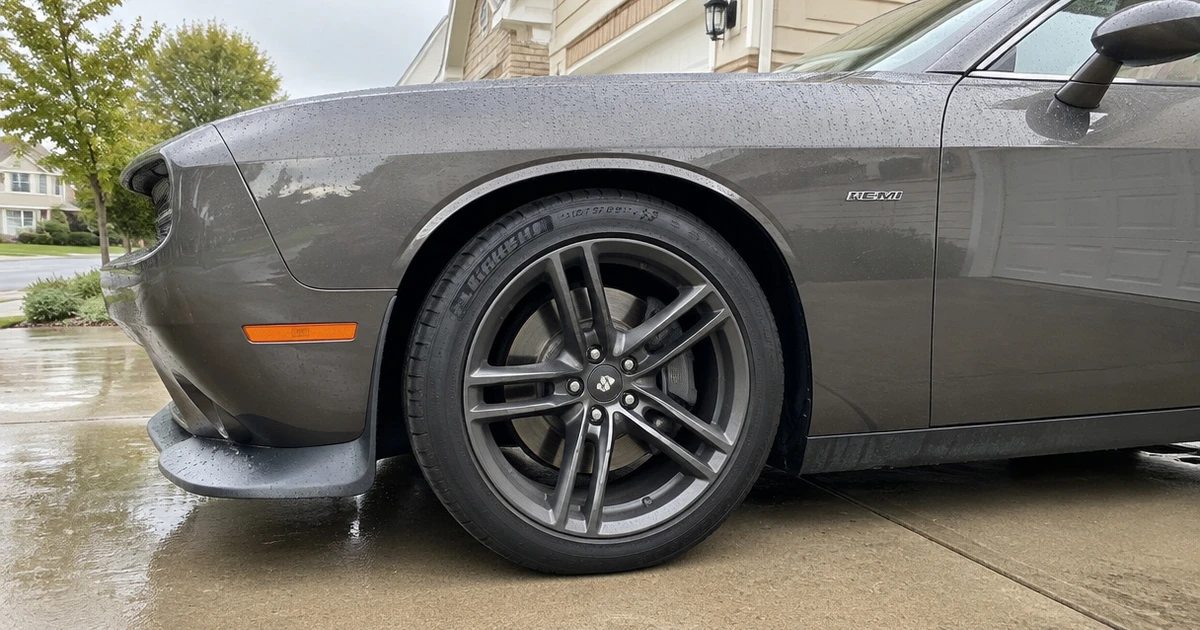
Start with your car’s approved fitment, then match your tire choice to your local weather and driving habits. Small differences in size, construction, and tread can affect grip, comfort, and tire life.
Fit and Load Capacity
Start with the size on the driver-door placard or in your owner’s manual. Match its load index and speed rating, too.
Challenger trims can use different wheel packages, and some setups place different sizes front and rear. A tire may fit the rim yet fall short of the car’s required load or speed rating.
Check the full setup before you buy. A staggered arrangement can limit rotation, while a square setup often allows more rotation patterns. Never choose a tire by wheel diameter alone, since overall diameter and clearance also affect fit.
- Front and rear tire size
- Load index and speed rating
- Wheel diameter and width
Weather and Season
Think about the coldest and wettest conditions you regularly drive through. Summer tires give you focused warm-weather grip, but their rubber can harden as temperatures fall. All-season tires cover a wider range of conditions and suit mild winters, though they cannot match a winter tire in deep snow or persistent ice.
If snow and freezing roads are part of your routine, a dedicated winter set can give you more control. For occasional light snow, check the tire’s winter-use markings and read its limits. A tread made to clear slush can feel less precise on dry pavement.
| Type | Best fit | Trade-off |
|---|---|---|
| Summer | Warm roads and sporty driving | Less suited to cold weather |
| All-season | Mixed weather and mild winters | Less snow grip than winter tires |
| Winter | Frequent snow and cold | Softer feel in warm weather |
Handling and Braking
For sharper steering and strong dry-road grip, look at performance tires with a tread pattern built for stable contact through corners. Wide tread blocks can help the tire respond to steering input, while open grooves help move water away from the contact area. Check wet-grip information as well as dry-road claims, since rain changes braking and cornering feel.
Use the speed rating listed for your car, or a higher one if the fitment allows it. A higher rating does not make public-road speeding safe. If you drive briskly on winding roads, choose a tire with confident wet braking and a firm steering feel, not just an aggressive tread look.
Ride Comfort and Noise
Your wheel setup affects how much tire sidewall sits between the rim and the road. A shorter sidewall can sharpen steering response, but it often sends more bumps into the cabin. If you use the Challenger as a daily driver, balance cornering feel with the comfort you want on rough roads.
Tread design also affects cabin noise. A tire with a more even tread pattern can sound calmer on long highway drives, while aggressive blocks may create more hum. Road surface and alignment matter too, so pay attention to uneven wear or a pull in the steering before blaming the tire alone.
Tread Life and Care
Look at treadwear information and any mileage warranty, but treat them as guides rather than promises. Driving style, road conditions, alignment, and tire pressure all affect how long a set lasts. The Challenger’s power can wear rear tires faster, especially if you accelerate hard or take corners at speed.
Check pressure when the tires are cold and use the figure on the door placard, not the maximum printed on the tire. Follow your manual’s rotation schedule and inspect the tread for uneven wear. Read warranty terms closely, since tire makers often require regular rotation and maintenance for coverage.
Frequently Asked Questions
What tire size does my Dodge Challenger need?
Use the tire size on the driver-door placard and confirm it in your owner’s manual. Match the load index and speed rating too, not just the diameter. Some trims use different front and rear sizes, so check all four positions before you order or mount a set.
How often should I replace my tires?
Check the tread and sidewalls regularly. Replace a tire when its tread reaches the wear bars or when you see damage such as a bulge, deep cut, or exposed cord. Age also matters, even if the tread looks usable, so ask a tire professional to inspect older tires.
Are all-season tires enough for winter driving?
All-season tires can handle mild winter weather, but they offer less control on packed snow and ice than dedicated winter tires. If you drive through frequent snow or freezing conditions, use winter tires for that season. For occasional light snow, check the tire’s winter-use markings and drive with extra care.
Can I use different tire sizes front and rear?
Only use different front and rear sizes if your car’s approved fitment calls for them. Some setups use staggered sizing, which can limit tire rotation. Check the placard and owner’s manual before changing sizes, since an incorrect fit can affect clearance, handling, and the car’s systems.
Do wider tires improve handling?
Wider tires can offer more contact with the road, but width alone does not guarantee better handling. Tire design, compound, pressure, and fit all matter. A tire that does not match the wheel or the car’s approved size can reduce control, so follow the factory fitment guidance.