
This post may contain affiliate links. As an Amazon Associate I earn from qualifying purchases. If you choose to make a purchase, I may earn a small commission at no extra cost to you.
Your Hyundai Ioniq 9 needs tires that can support a heavy electric SUV, put its instant torque to the road, and keep the cabin calm. The wrong set can add road noise, reduce wet grip, or wear quickly, while an efficiency-focused tire may give up some sharp handling. Fitment matters too, so start with the tire size and ratings approved for your vehicle.
To choose the best tires for Hyundai Ioniq 9 in 2026, match your local weather and driving habits with the right mix of range, comfort, traction, and tread life. The options below cover different needs, from all-season commuting to sharper steering and confident wet-weather driving, so you can narrow the field before you buy.
Our Top Tires for Hyundai Ioniq 9 Picks


More Details on Our Top Picks
Pros
- Sound Absorber foam reduces tire-cavity noise
- EV-focused design targets longer tread life
- SUV construction suits heavier electric vehicles
- All-season tread for year-round road use
Cons
- A dedicated winter tire offers better deep-snow traction
EV-specific tread engineering gives Hankook iON evo AS SUV its purpose: it pairs a long-wearing design with noise control that matters in a quiet electric cabin. Hankook’s Sound Absorber foam inside the tire reduces cavity resonance, which can make highway travel more peaceful.
The tire’s SUV-focused construction suits the weight and quick torque delivery common to electric crossovers. Its tread design also targets longer wear, a practical feature for an EV that puts steady demands on its tires.
On dry roads, the all-season tread gives you everyday grip and stable handling for commutes and longer drives. The iON evo AS SUV keeps its focus on quiet, efficient-feeling road manners rather than sporty cornering response.
Bottom line: Choose this tire for your Ioniq 9 if quiet highway travel and EV-specific wear design matter most.
Pros
- Three-Peak Mountain Snowflake rated for severe snow
- Directional tread clears water and slush
- Thermal-adaptive compound works across seasons
- Strong wet and dry braking focus
Cons
- A dedicated winter tire performs better in prolonged severe cold
If your Ioniq 9 faces rain, dry pavement, and winter roads, Michelin CrossClimate2 brings unusually broad all-season ability. Its directional, V-shaped tread channels water and slush, while the Three-Peak Mountain Snowflake rating confirms its severe-snow capability.
Michelin pairs that tread with a thermal-adaptive compound, which keeps the rubber working across a wide range of temperatures. Full-depth sipes add biting edges for wet and snowy roads, and the design maintains useful grip as the tread wears.
Braking feels like a core strength in both wet and dry conditions, and the tire’s stable road manners suit an SUV used for daily driving. CrossClimate2 can take you through changing seasons without asking you to swap to a different all-season tire as the weather shifts.
Bottom line: Pick Michelin CrossClimate2 if winter traction matters but you want one tire for year-round driving.
Pros
- 70,000-mile treadwear rating
- SUV-focused all-season design
- Performance-oriented road response
- Suitable for long-distance touring
Cons
- Lacks the severe-snow focus of a 3PMSF tire
Bridgestone’s Alenza line focuses on SUV road manners, and the Alenza Prestige brings that touring approach to all-season driving. Its 70,000-mile treadwear rating puts long service life at the center of the package.
The tire’s all-season tread targets steady grip on wet and dry roads, while its performance classification points to a more responsive feel than a basic utility tire. That balance can suit the Ioniq 9’s mix of family trips, highway miles, and everyday errands.
The Alenza Prestige uses a radial construction for a stable footprint and road feel. It is not an EV-specific model, but its SUV focus and long treadwear rating make it a practical option for drivers who value predictable touring behavior over sharp, sporty feedback.
Bottom line: Consider the Alenza Prestige if long tread life and calm SUV touring matter more than winter-specific grip.
Pros
- AquaTred grooves channel water and slush
- Severe-snow designation for winter traction
- Evolving grooves maintain water evacuation as tread wears
- Comfort inserts reduce bumps and vibration
Cons
- Touring-focused handling feels less sharp than a performance tire
Rain and slush are the main challenges Goodyear Assurance WeatherReady 2 works to manage. Its AquaTred Technology uses sweeping grooves to move water away from the contact area, and its severe-snow designation adds winter-road capability.
Goodyear’s evolving traction grooves keep water-moving edges in play as the tread wears. Comfort inserts soften bumps and vibration, while a variable-pitch tread pattern helps keep tire noise down on longer drives.
The WeatherReady 2 aims for composed handling in changing conditions, with tread features that address both wet pavement and light snow. That mix can make daily driving in a varied climate feel less demanding, especially when rain or slush covers the road.
Bottom line: Go with the WeatherReady 2 if wet-road grip and added snow capability rank high for your driving.
Pros
- Responsive steering from Dynamic Response Technology
- Asymmetric tread balances wet and dry grip
- Variable sipes add cold-weather traction
- Performance-focused all-season design
Cons
- Sporty tuning can pass more road texture into the cabin
Michelin’s Pilot Sport family brings a performance focus to the Michelin Pilot Sport All Season 4. Its asymmetric tread balances road grip with responsive steering, while Dynamic Response Technology uses a hybrid belt to help transmit steering inputs precisely.
The compound and tread design target grip in wet and dry conditions, with 360-degree Variable Sipe Technology adding edges for cold-weather traction. Chevrolet selected this tire for the Corvette, which reflects its performance-oriented character.
On an electric SUV, that focus can make the steering feel more direct during quick lane changes and winding-road drives. The Pilot Sport All Season 4 still handles year-round conditions, but it puts a livelier road feel ahead of a soft touring ride.
Bottom line: Choose this Michelin if you want sharper steering and all-season grip from your Ioniq 9 tires.
Pros
- Micro-silica compound boosts wet-weather traction
- Sipes and serrated grooves add cold-weather grip
- Multi-pitch tread reduces road noise
- 65,000-mile limited treadwear warranty for standard applications
Cons
- Not a severe-snow-rated choice for deep winter conditions
Yokohama Geolandar CV G058 combines winter-minded tread details with a quiet touring layout. Its 2D and 3D sipes create extra biting edges, while serrated outer grooves add grip on cold, slushy roads.
A micro-silica rubber compound improves wet-road traction and supports long tread life. Chamfered ribs keep more of the tread in even contact with the road, and the staggered multi-pitch pattern cuts down on repeating road noise.
That mix gives the tire a calm feel for highway travel and useful traction when rain or light snow arrives. Yokohama backs the G058 with a 65,000-mile limited treadwear warranty for standard and front staggered applications.
Bottom line: The Geolandar CV G058 suits Ioniq 9 drivers who want a quiet touring tire with some cold-weather grip.
Pros
- K-Silent Technology reduces tire noise
- High-strength design supports SUV loads
- Tread tuned for electric-motor torque
- Built for electric crossovers and SUVs
Cons
- Comfort-focused tuning gives up some sharp cornering response
A quiet cabin is part of the appeal of an electric SUV, and Kumho Crugen HP71 EV builds noise control into its design. Kumho’s K-Silent Technology uses sound-absorbing material inside the tire to reduce road noise.
The tire also uses a high-strength structure for the loads that electric crossovers carry. Kumho tunes its tread for the quick torque delivery of electric motors, with wear and grip in mind as power reaches the road.
Its SUV-focused design favors relaxed road travel over a sharp, sporty feel. The Crugen HP71 EV brings together that comfort-first approach with EV-specific construction, making it a useful option for keeping everyday driving quieter.
Bottom line: Look at the Crugen HP71 EV if a quieter ride and EV-focused construction are priorities.
Pros
- TredLife Technology targets longer tread life
- Built-in gauge shows tread wear
- All-season road control
- Quiet, comfortable touring character
Cons
- Touring tread feels less sharp during aggressive cornering
Goodyear Assurance MaxLife 2 puts extended tread life and easy wear checks at the heart of its touring design. Its TredLife Technology focuses on longer-lasting tread, while a built-in wear gauge gives you a visible way to follow tread wear.
The tire’s all-season design targets dependable road control in changing weather. Goodyear also tunes the tread for a quiet, comfortable ride, which suits the calm character many Ioniq 9 drivers want on daily trips.
MaxLife 2 favors steady touring manners over sporty steering response. Its wear gauge gives the tire a practical feature beyond basic road grip, and its comfort focus makes long drives less tiring for passengers.
Bottom line: Choose the Assurance MaxLife 2 if you value tread longevity and a simple visual wear gauge.
Pros
- Circumferential grooves evacuate water
- Full-depth sipes maintain slush traction as tread wears
- Variable Pitch Technology lowers tread noise
- Center rib supports quick handling
Cons
- Touring tread lacks the deep-snow ability of a dedicated winter tire
Kumho Crugen HP71 uses a detailed tread pattern to balance wet grip with a quiet ride. Wide circumferential grooves move water away, while micro-serrated tread blocks add extra edges for wet-road traction.
Full-depth sipes and lateral voids help clear slush from beneath the tread, preserving winter traction as the tire wears. A strong center rib and reinforced shoulder blocks support even contact and quick handling on the road.
Kumho’s Variable Pitch Technology changes the size and spacing of tread blocks to reduce repeating noise. The Crugen HP71 has a composed touring feel for everyday SUV driving, with tread features that cover wet roads and light winter weather.
Bottom line: The Crugen HP71 fits drivers who want comfortable SUV touring with useful wet-weather and light-winter traction.
Factors to Consider When Choosing Tires for Hyundai Ioniq 9
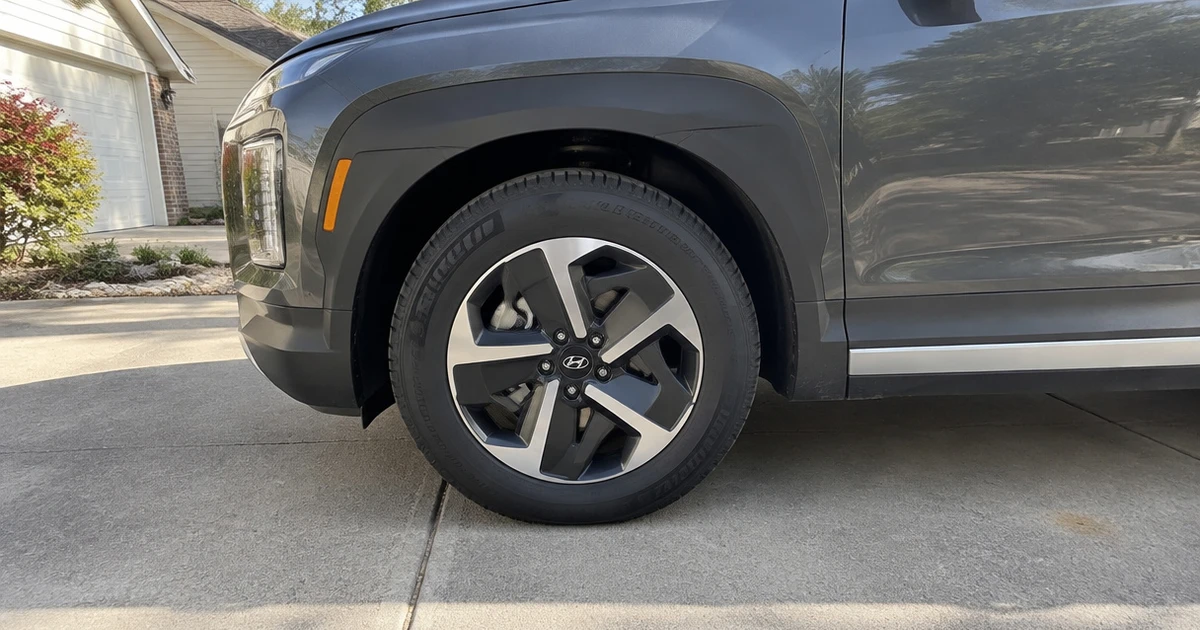
The right tires should match your vehicle’s approved fitment and the weather you drive in most. These factors can help you balance efficiency, grip, comfort, and wear.
Fit and Load Capacity
Start with the tire placard on the driver’s door jamb and the owner’s manual, then match the listed tire size, wheel diameter, load index, and speed rating. The load index matters on a large electric SUV because its battery adds weight, and passengers or cargo add more. Choose a tire that meets the vehicle maker’s requirements rather than relying on a size that merely fits the wheel.
Keep the same approved size across each axle, and avoid mixing tires with different designs or very different tread depths. If you switch wheel sizes, confirm that the full tire package keeps the correct overall diameter and clears the brakes and bodywork. A tire shop can verify fitment, but the door placard remains your starting point.
Efficiency and Driving Range
An EV can travel farther on a tire with low rolling resistance because it takes less energy to keep the tire moving. Look for an efficiency-focused design with a compound and tread pattern built to reduce energy loss, but compare that goal with your grip and ride needs. A highly efficient tire can feel less responsive than a performance-focused option, especially in hard cornering.
Use the vehicle’s energy-use display to compare changes after a tire swap, but keep your route, pressure, and weather as steady as you can. Correct cold pressure supports range and helps prevent uneven wear, so check it regularly instead of airing up by feel. If range matters most, prioritize efficiency and proper pressure over an aggressive tread meant for deep snow or rough roads.
Weather and Traction
Match tread and rubber to your local weather. All-season tires suit mild winters and regular rain, while all-weather tires add cold-weather grip and often carry a severe-snow service mark.
Dedicated winter tires give stronger traction in sustained snow and ice, but you need to change them as seasons shift. Summer tires focus on warm-weather grip and do not suit freezing conditions.
Broad grooves help clear water, while dense sipes add biting edges on wet or slick pavement. Use the table as a starting point and check local winter-tire rules before you choose.
| Tire type | Best fit |
|---|---|
| All-season | Mild winters and year-round use |
| All-weather | Mixed weather with colder conditions |
| Winter | Frequent snow, ice, and freezing weather |
| Summer | Warm weather and responsive handling |
Cabin Noise and Ride Comfort
Cabin noise stands out in an electric SUV because the drivetrain makes little sound to cover tire hum. A touring design with a closed shoulder, variable-pitch tread blocks, or sound-absorbing foam can help quiet the ride, though tire designs vary. If cabin calm ranks high, look for tires built with noise-control features.
Your wheel size also affects comfort: a larger wheel often leaves less sidewall to soften sharp bumps. If you drive on broken pavement, favor a taller approved sidewall and a comfort-focused tread over a sporty setup. Keep pressure at the placard value, since excess pressure can make the ride harsher and too little can harm handling.
Tread Life and Maintenance
Use treadwear warranties and ratings as comparison clues, not guarantees. Driving style, road surface, alignment, pressure, load, and climate all affect service life. The Ioniq 9’s weight and strong torque can speed wear during hard launches or cornering, so rotate tires on the schedule in your manual and inspect both shoulders.
Before you buy, compare these points:
- Warranty coverage and required maintenance records.
- Rotation intervals and treadwear indicators.
- Any road-hazard coverage.
A tire shop can check alignment if your vehicle pulls or wear looks uneven. Replace damaged tires promptly, and follow the manual and local rules for tread depth.
Frequently Asked Questions
Frequently Asked Questions
Do I need EV-specific tires for a Hyundai Ioniq 9?
You do not always need an EV-specific tire, but you do need one that meets the vehicle’s size, load, and speed requirements. EV-focused tires often use reinforced construction, low rolling resistance, and noise-control features. A standard tire can work if it matches the approved fitment and suits your driving conditions.
Are all-season tires enough for winter driving?
All-season tires work well for mild winters, but they may lose grip in frequent snow, ice, or very low temperatures. If you drive through harsh winters, look for tires with a severe-snow service mark or use dedicated winter tires. Check local rules, since some areas require winter-ready tires during certain months.
What tire pressure should I use?
Use the cold tire pressure listed on the driver’s door placard or in your owner’s manual. Do not use the maximum pressure printed on the tire sidewall as your target. Check pressure regularly, since temperature changes can affect it, and adjust it before a long trip or when you carry a heavy load.
How often should I rotate the tires?
Follow the rotation schedule in your owner’s manual, since the right interval can vary with the vehicle and tire setup. Regular rotation helps balance wear across the tires. Check tread depth and look for uneven wear at the same time, then ask a tire shop to inspect the alignment if one shoulder wears faster.
Should I replace all four tires at once?
Replacing all four at once gives you a matching set and consistent grip. If you replace fewer, match the new tires to the remaining tires as closely as possible in size, type, and tread depth. For an all-wheel-drive vehicle, follow the manual’s limits for tread-depth differences because the system may need closely matched rolling diameters.