
This post may contain affiliate links. As an Amazon Associate I earn from qualifying purchases. If you choose to make a purchase, I may earn a small commission at no extra cost to you.
Choosing tires for a Hyundai Santa Fe means balancing wet-weather grip, cabin noise, tread life, and the roads you drive each week. A poor match can make a family commute louder or leave you wanting more traction when rain, snow, or rough pavement hits. Start with your vehicle’s approved tire size, then narrow your choices by climate and driving habits.
The best tires for Hyundai Santa Fe you can buy in 2026 should suit your trim and local conditions, not just look good on a spec sheet. The options below cover quiet touring, long-lasting daily driving, severe-weather confidence, and light trail use, so you can focus on what matters most for your routine.
Our Top Tires for Hyundai Santa Fe Picks


More Details on Our Top Picks
Pros
- 3PMSF-rated for severe-snow traction
- V-shaped tread channels water
- Adaptable compound for changing temperatures
- Confident wet- and dry-road braking
Cons
- More road hum than some touring tires
A directional V-shaped tread gives the Michelin CrossClimate2 its distinctive look and helps channel water away from the contact patch. Its thermal-adaptive rubber compound stays flexible across changing temperatures, while the 3PMSF mark confirms it meets a severe-snow traction standard.
On a Santa Fe, that mix suits year-round driving through rain, dry pavement, and occasional snow. The tread’s many biting edges add grip in cold conditions, and Michelin builds the tire for confident braking on both wet and dry roads.
The Michelin CrossClimate2 also has a firm, sure-footed feel in changing weather. Its winter traction makes it a practical option if your trips include snowy roads, but it still works as a daily tire through warmer months.
Year-round traction is the main appeal here, along with the clear winter capability. The directional tread can produce more road hum than a quieter, highway-focused touring design.
Bottom line: Choose the Michelin CrossClimate2 for your Santa Fe if you want one tire for varied seasons and regular winter driving. It suits drivers who value snow traction without switching to a winter set.
Pros
- 80,000-mile treadwear warranty
- Locking 3-D Sipes add biting edges
- MaxTouch Construction promotes even wear
- Wet- and dry-road braking focus
Cons
- Limited traction in deep snow
If you put a lot of miles on your Santa Fe, the Michelin Defender2 centers its design on long tread life. Michelin’s 80,000-mile treadwear warranty backs that focus, and its all-season tread also targets reliable braking in wet and dry weather.
Locking 3-D Sipes create extra biting edges for traction while helping the tread blocks stay stable under braking. Michelin’s MaxTouch Construction spreads acceleration, braking, and cornering forces across the contact patch to promote even wear.
You get a road-focused tire for everyday errands and longer highway trips, with tread features built for both grip and mileage. The Michelin Defender2 is a sensible fit for drivers who would rather keep a familiar set on the vehicle for years than prioritize sharp handling.
Long-wearing tread is its defining strength, while the siping gives it useful wet-road grip. Its all-season design has less bite in deep snow than a tire built for severe winter conditions.
Bottom line: The Michelin Defender2 suits you if long tread life matters more than specialized winter grip. Its warranty and wear-focused construction make it a practical daily tire for a high-mileage Santa Fe.
Pros
- Comfort Ride Technology reduces road vibration
- EcoPlus Technology targets lower rolling resistance
- Wet braking and responsive handling
- Up to 70,000-mile treadwear coverage
Cons
- Not built for severe winter conditions
In daily driving, a quiet cabin can make your Santa Fe feel more relaxed, and the Continental CrossContact LX25 puts comfort near the center of its design. Continental’s Comfort Ride Technology uses an absorbing layer beneath the tread to reduce road vibration.
EcoPlus Technology works on fuel efficiency, wet braking, and tread life. Its rubber compound and tread design help reduce rolling resistance while keeping the tire responsive in rain, and Continental offers up to 70,000 miles of limited treadwear coverage.
On paved roads, the LX25 aims for a calm ride with predictable year-round handling. The wet-road focus is useful in rainy commutes, while its touring tread suits the steady pace of highway travel in a family SUV.
Comfort Ride Technology gives this tire a clear appeal for long drives, and the wet braking design adds everyday confidence. It does not carry the severe-snow focus of an all-weather tire.
Bottom line: Go with the Continental CrossContact LX25 if you want a quiet touring tire for commuting and family trips. It fits drivers who value cabin comfort and wet-road performance.
Pros
- Symmetric tread promotes even wear
- Pitch sequencing limits road noise
- Year-round handling for SUVs
- 70,000-mile treadwear warranty
Cons
- Limited grip on rough trails
For a Santa Fe that spends most of its time on pavement, the Pirelli Scorpion AS 4 focuses on smooth, composed road manners. Its computer-tuned symmetric tread pattern promotes even wear, while reduced tread voids help limit the air noise that reaches the cabin.
Pirelli also uses an optimized pitch sequence to reduce vibration and keep the ride quieter. The tread design supports year-round handling for SUVs and crossovers, giving you a road-oriented option for daily driving in changing weather.
The Pirelli Scorpion AS 4 comes with a 70,000-mile limited treadwear warranty, which suits drivers who want a tire for regular use over several seasons. Its controlled tread layout gives the tire a clean, understated design rather than an aggressive trail look.
Quiet pavement manners are the key draw, backed by a design that aims for steady wear. The road-focused tread offers little traction on rough, loose trails.
Bottom line: The Pirelli Scorpion AS 4 fits your Santa Fe if paved-road comfort matters most. Choose it for daily use and highway travel, not frequent off-road routes.
Pros
- 70,000-mile treadwear warranty
- All-season traction for SUV use
- Performance-oriented road design
Cons
- Standard-load construction limits heavy-duty use
Bridgestone’s Alenza line serves SUV and crossover drivers who want road-focused performance, and the Bridgestone Alenza Prestige brings that approach to all-season driving. Its radial construction and performance classification suit regular pavement use in a vehicle like the Santa Fe.
The tire pairs year-round traction with a 70,000-mile treadwear warranty. That coverage gives you a clear mileage target for a tire built to handle everyday driving, while its road-oriented design suits commutes and longer trips.
You get a standard-load tire for ordinary SUV use rather than a heavy-duty work tire. The Bridgestone Alenza Prestige keeps its focus on paved roads, where you can make use of its performance-oriented character and all-season tread.
Long treadwear coverage is a practical point in its favor. Its standard-load construction does not suit heavy truck-duty work or demanding hauling needs.
Bottom line: Consider the Bridgestone Alenza Prestige if your Santa Fe stays mainly on paved roads and you want long treadwear coverage. It suits everyday driving better than heavy work or rough trails.
Pros
- 3PMSF severe-snow rating
- AquaTred Technology moves water and slush
- Evolving grooves preserve water evacuation
- Comfort inserts reduce bumps and vibration
Cons
- Less capable than a winter tire on packed ice
AquaTred Technology gives the Goodyear Assurance WeatherReady 2 a clear wet-weather focus. Sweeping grooves move water and slush out from under the tread, while evolving traction grooves keep providing paths for water as the tire wears.
Goodyear uses an adaptable tread compound and gives this tire a 3PMSF severe-snow rating. That combination suits Santa Fe drivers who face rain, slush, and regular winter weather but still need an all-season tire for the rest of the year.
Comfort inserts reduce bumps and vibration while supporting steering control. A multi-pitch tread pattern varies the block sizes to keep road noise down, so the tire feels more at home on daily paved routes than on rugged terrain.
The Goodyear Assurance WeatherReady 2 brings wet-road grip and winter traction into one design. Packed ice can still call for the added grip of a dedicated winter tire.
Bottom line: Choose the Goodyear Assurance WeatherReady 2 if your Santa Fe faces frequent rain and snow. Its winter rating and comfort features suit drivers who want year-round use in changing weather.
Pros
- Sipes add grip in cold weather
- Micro-silica compound supports wet traction
- Multi-pitch pattern reduces road noise
- 65,000-mile warranty for standard fitments
Cons
- Lower treadwear coverage for staggered rear fitments
For drivers who spend most miles on the highway but still meet winter weather, the Yokohama Geolandar CV G058 adds extra biting edges to a crossover-focused tread. Its combination of 2D and 3D sipes and serrated outer grooves helps the tread find grip in cold weather, slush, and snow.
A micro-silica rubber compound supports wet traction, while chamfered ribs help maintain even contact with the road. Yokohama’s staggered multi-pitch tread pattern reduces road noise, giving your Santa Fe a quieter ride on paved routes.
The Yokohama Geolandar CV G058 balances wet-weather grip with everyday comfort instead of using an aggressive off-road tread. Yokohama backs standard fitments with a 65,000-mile limited treadwear warranty.
Quiet highway manners and cold-weather biting edges give this tire a useful mix for daily driving. Its warranty coverage drops for rear tires in staggered fitments.
Bottom line: The Yokohama Geolandar CV G058 suits your Santa Fe if you want a quiet road tire with added winter traction. It works best for paved driving rather than regular trail use.
Pros
- Traction Technology improves grip and durability
- Balances trail traction with road manners
- Wet-road grip
- 65,000-mile treadwear coverage
Cons
- More road noise than a touring tire
Continental builds the TerrainContact A/T2 for drivers who split time between pavement and trails. Its Traction Technology boosts grip and durability, while the tread design balances off-road traction with road manners for the drive back home.
The Continental TerrainContact A/T2 also targets wet-road grip, which matters when rain hits paved roads or damp trail surfaces. Its construction suits SUV owners who haul or tow and want a tire that can handle occasional trips onto unpaved routes.
Continental backs the tire with 65,000 miles of limited treadwear coverage. The bold tread gives your Santa Fe a more rugged look, though its all-terrain blocks create more road noise than a highway-focused touring tread.
On-road and trail balance is the central appeal here, with durability for more than routine commuting. It gives up some cabin quiet to gain its all-terrain tread character.
Bottom line: The Continental TerrainContact A/T2 fits your Santa Fe if you leave pavement for trails or unpaved roads. It also suits drivers who need an all-terrain tire for occasional hauling or towing.
Pros
- 3PMSF-rated severe-snow traction
- Full-depth 3-D locking sipes
- Tread design promotes even wear
- 60,000-mile warranty and 60-day guarantee
Cons
- Less capable in deep mud than mud-terrain tires
- More tread hum than touring tires
BFGoodrich built the Trail-Terrain T/A for SUV and crossover drivers who want a tire that can handle paved roads and unpaved routes. Its full-depth 3-D locking sipes stabilize the tread blocks and create biting edges for grip through changing weather.
The optimized footprint spreads contact across the road to promote even wear and a quieter ride. The all-season tread works in rain and snow, and the tire carries a 3PMSF severe-snow rating for added winter traction.
BFGoodrich backs the Trail-Terrain T/A with a 60,000-mile treadwear warranty and a 60-day satisfaction guarantee. Its rugged pattern fits a Santa Fe that sees gravel or dirt roads, though the tread can produce more hum on smooth pavement than a touring tire.
Full-depth locking sipes give the tire useful traction as the tread wears. Its moderate all-terrain pattern cannot dig through deep mud like a more aggressive mud-terrain design.
Bottom line: Choose the BFGoodrich Trail-Terrain T/A if your Santa Fe sees gravel, dirt roads, and changing weather. Its snow rating and tread warranty suit drivers who want occasional off-pavement use.
Pros
- Variable Pitch Technology reduces road noise
- Wide grooves evacuate water
- Full-depth sipes help clear slush
- Center rib supports responsive steering
Cons
- Not suited to regular rocky or muddy trails
A quiet ride is a key part of the Kumho Crugen HP71’s touring design. Kumho’s Variable Pitch Technology varies the tread block pattern to reduce road noise, while the center rib and shoulder blocks support steady contact and responsive steering.
Wide circumferential grooves move water away from the tread, and micro-serrations in the blocks add wet-weather grip. Full-depth sipes and lateral voids help clear slush, keeping winter traction features in the tread as it wears.
The Kumho Crugen HP71 suits a Santa Fe that spends most of its time on paved roads in mixed weather. Its tread balances wet-road control with an emphasis on ride comfort, while the center rib helps the vehicle respond cleanly to steering input.
Variable Pitch Technology gives this tire a clear focus on reducing cabin noise. Its touring tread is not built for regular rocky or muddy trail driving.
Bottom line: The Kumho Crugen HP71 works for your Santa Fe if you want a comfortable touring tire with wet-weather and slush traction. It fits mostly paved driving better than regular off-road use.
Factors to Consider When Choosing Tires for Hyundai Santa Fe
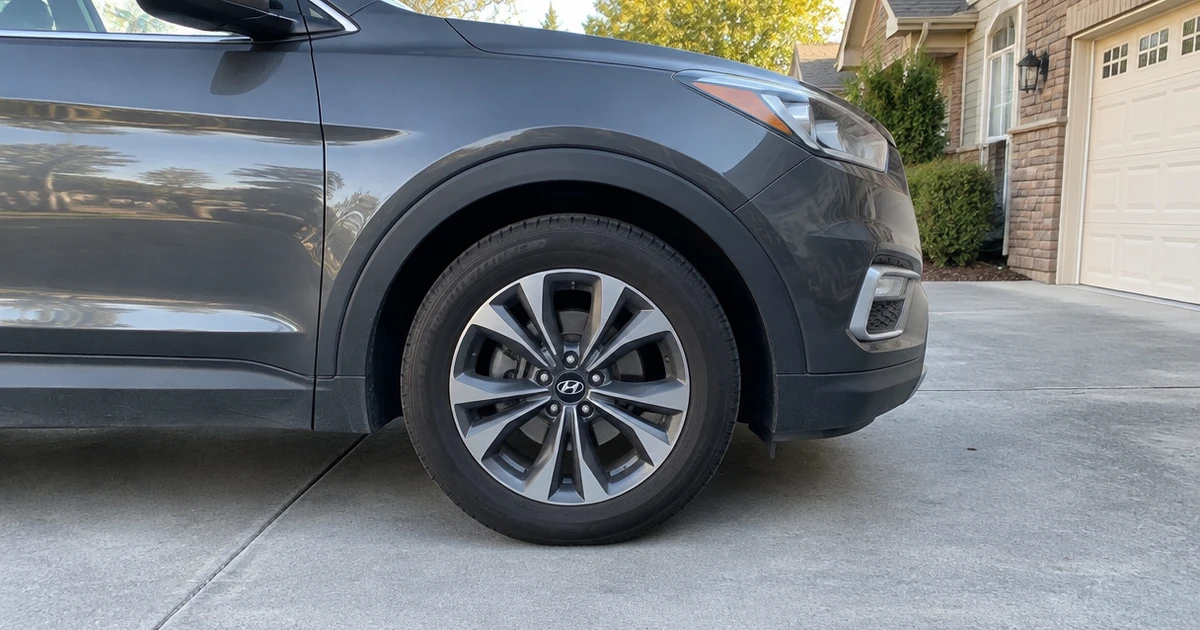
Start with the tire placard on the driver’s door jamb and the owner’s manual. They list the approved size, load index, speed rating, and cold pressure for your Santa Fe. Then match those requirements to your climate, roads, and comfort needs.
Size, Load, and Speed Ratings
Use the tire size on the driver-door placard or in the owner’s manual as your starting point. The code gives section width, sidewall aspect ratio, and wheel diameter. Keep those values unless a qualified tire professional confirms an approved alternative.
Also match or exceed the listed load index and speed rating. The load index matters on an SUV because each tire must carry the vehicle and its passengers or cargo safely.
Do not choose a tire only because it fits the wheel. A different overall diameter can affect speed readings and clearance. Before buying, check the complete size code and use the vehicle placard pressure, not the maximum pressure molded on the tire.
| Marking | What it identifies | What to check |
|---|---|---|
| First number | Nominal tire width in millimeters | Match the placard |
| Middle number | Sidewall height as a percentage of width | Match the placard |
| Final number | Wheel diameter in inches | Match your wheel size |
Climate and Seasonal Needs
All-season tires suit many drivers who face warm weather, rain, and only occasional light snow. Their compounds and tread patterns balance dry handling with wet grip and mild winter use, but they cannot match a winter tire on ice or packed snow. If your region sees long cold spells or regular storms, plan around seasonal tire changes or choose a tire with a severe-snow rating.
Look for the three-peak mountain snowflake symbol when you need a tire that meets a defined snow-traction standard. The mark does not promise equal grip on ice, so think about hills, untreated roads, and early-morning travel. In a mild climate, a good all-season tire can spare you seasonal swaps.
Wet Roads and Your Typical Routes
Think about where your Santa Fe spends most of its time. For wet commutes, look for circumferential grooves that move water away from the tread and small cuts that help the rubber hold on slick pavement. Deep grooves and open channels can also help on slushy roads, while a more aggressive tread can add grip on gravel but may raise road noise.
Your routine matters more than an off-road look. If you mainly drive paved roads, choose a touring-focused tread and keep winter capability in line with local weather. For frequent gravel, dirt, or maintained trails, seek a tire marked for that use, then check that its load and speed ratings still match your Santa Fe.
Ride Comfort and Road Noise
Ride comfort depends on more than the suspension. Tire construction, tread blocks, sidewall stiffness, and pressure all affect how much road texture and noise reaches the cabin. Touring designs often favor a smoother, quieter feel, while firmer or more open tread patterns can send more vibration and sound through the vehicle.
If cabin calm matters, compare tread designs and look for comfort-focused construction rather than choosing by appearance alone. Keep pressure at the placard setting; low pressure can make steering feel soft and build heat, while excess pressure can make bumps feel sharper. A short drive on familiar roads helps you notice changes after a tire swap.
Tread Life and Ongoing Care
Estimate value by how long a tire may serve your driving, not by a warranty figure alone. Treadwear ratings help compare tires under a shared test method, but they do not predict exact mileage in your vehicle. Read mileage coverage terms and follow rotation rules, since uneven wear or missed service can affect coverage.
Check tread depth and pressure often, and inspect for cuts, bulges, or uneven wear. Rotate tires on the schedule in your manual, and ask a shop to check alignment if one shoulder wears faster. Before buying, see whether the coverage requires service records and what tread depth ends a claim.
- Check pressure monthly and before long drives.
- Rotate on the schedule in your manual.
- Inspect sidewalls and tread for damage or uneven wear.
Frequently Asked Questions
What tire size does a Hyundai Santa Fe use?
Santa Fe tire sizes vary by model year, trim, and wheel package, so check the driver-door placard or owner’s manual for your vehicle. Match the full size code, load index, and speed rating. Do not rely on a tire size from a different Santa Fe unless the manual approves it.
Are all-season tires enough for a Hyundai Santa Fe?
All-season tires work for many drivers in mild climates and can handle rain plus occasional light snow. If your area gets frequent deep snow, ice, or long cold spells, dedicated winter tires usually provide stronger cold-weather traction. Check local conditions and your driving route before choosing.
When should I replace my tires?
Replace tires when tread reaches the wear bars, or sooner if you see cracking, bulges, or damage. Tread depth matters most in rain because worn grooves clear less water. Have a tire shop inspect uneven wear, since alignment or pressure problems can shorten tire life.
Should I replace all four tires at once?
For an all-wheel-drive Santa Fe, matching all four tires in size, type, and similar tread depth helps protect the drivetrain and keep handling consistent. Follow the owner’s manual for replacement rules. On a two-wheel-drive model, you still need matching tires on each axle and should replace pairs when needed.
What tire pressure should I use?
Use the pressure shown on the driver-door placard, measured when tires are cold. The number on the tire sidewall marks maximum pressure, not the target for your vehicle. Check pressure monthly and before long trips, since cold weather can lower it.