
This post may contain affiliate links. As an Amazon Associate I earn from qualifying purchases. If you choose to make a purchase, I may earn a small commission at no extra cost to you.
A lift makes room for larger tires, but the wrong set can rub at full steering lock, add road noise, or dull braking. You need tires that fit your wheels and suspension while matching your trails, weather, and miles.
Check tire dimensions and load ratings, then weigh tread grip against ride comfort. Aggressive mud patterns suit soft ground, while all-terrain designs often work better for daily driving. A lift alone does not guarantee clearance, so check at full steering lock and suspension travel.
This guide to the best tires for lifted trucks in 2026 covers six distinct needs. The NITTO Ridge Grappler All-Season leads as a mixed-road pick.
Our Top Tires for Lifted Trucks Picks


More Details on Our Top Picks
Pros
- Strong balance of road comfort and off-road grip
- Reinforced tread blocks help limit flex
- Staggered shoulders add trail traction
- Stone ejectors help guard the tread
Cons
- Louder than mild all-terrain tires
- Aggressive tread can reduce fuel economy
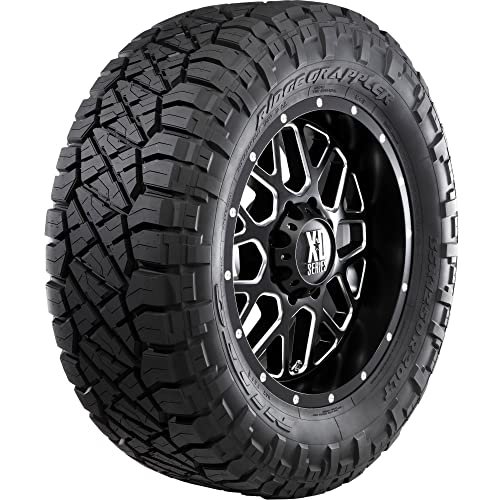
The NITTO Ridge Grappler All-Season earns the top spot among tires for lifted trucks because it balances trail grip with road manners you can live with every day. Its hybrid tread has a more aggressive look and feel than a mild all-terrain tire, without the full mud-tire focus.
Nitto builds the tread blocks on a reinforced foundation to limit flex, which helps the tire feel steady under load. Staggered shoulder lugs add bite off-road, while stone ejectors help keep rocks from digging into the tread. The Ridge Grappler All-Season handles dirt roads and rough trails with confidence, and its tread design stays more composed on pavement than many dedicated mud tires.
Owners often praise the mix of off-road traction and tolerable highway noise, though the tire still makes more sound than a mild all-terrain option. You can also expect the aggressive tread to affect fuel use. Regular rotation and proper alignment help manage wear over time.
Bottom line: Choose the NITTO Ridge Grappler All-Season if you want a lifted-truck tire that handles regular pavement well and still gives you useful grip on rough trails.
Pros
- Strong grip in mud and loose terrain
- Armor Tek3 construction adds structural strength
- Tread helps resist trapped stones
- Handles regular pavement use
Cons
- Loud on the highway
- Heavy tread can affect fuel economy
- Less comfortable for daily road driving
The Cooper Discoverer STT Pro All-Season earns its place for lifted trucks that spend serious time off pavement. This is a mud-terrain tire first, with a deep, open tread built to dig into soft ground and clear mud as the wheel turns.
Cooper uses its Armor Tek3 construction to add strength to the tire’s structure, and the tread design helps resist stone retention. Those features suit rocky routes as well as muddy trails. On pavement, the STT Pro All-Season gives you usable traction, but its large tread blocks bring more noise and a firmer feel than a road-focused all-terrain tire.
Owners tend to value its off-road grip and tough build over time, especially on trucks that see frequent trail use. Its weight and aggressive tread can make daily highway driving less comfortable and affect fuel use. You’ll get the best wear by keeping up with rotations and alignment.
Bottom line: Pick the Cooper Discoverer STT Pro All-Season if your lifted truck regularly tackles muddy trails and you accept extra road noise for that grip.
Pros
- Strong traction in mud and loose soil
- Open tread helps clear debris
- Durable casing construction
- Suited to demanding trail use
Cons
- Noticeable road noise
- Less comfortable on paved roads
- Aggressive tread may wear faster with poor maintenance
The General Tire Grabber X3 All-Terrain earns a spot for lifted trucks that need serious grip away from pavement. Despite the name, the X3 belongs to General Tire’s mud-terrain line, with a tread built to claw through soft ground and shed debris.
Its open tread channels help clear mud, while the block layout gives you edges to work with on loose trails. General Tire’s Duragen construction adds strength to the casing, and tread features help reduce stone buildup. The Grabber X3 All-Terrain favors off-road traction over a quiet highway ride, so expect more tread hum and a rougher feel than you’d get from a mild all-terrain tire.
Owners often value its dependable bite in mud and on rough trails. Over time, wear depends heavily on inflation, alignment, and rotation, especially if you use the truck on pavement every day. The X3 can feel like more tire than you need if your driving rarely leaves paved roads.
Bottom line: Choose the General Tire Grabber X3 All-Terrain if mud and rough trails matter more to you than a quiet ride on pavement.
Pros
- Hybrid tread suits road and trail use
- Side biters add off-road grip
- Three-ply sidewall resists trail damage
- Grooves help clear debris
Cons
- Louder than mild all-terrain tires
- Firm ride on pavement
- May affect fuel economy
The Mickey Thompson Baja ATZP3 All-Terrain earns its place among lifted-truck tires with a hybrid tread that suits drivers who split time between pavement and trails. It brings more off-road bite than a mild all-terrain tire, while keeping a more road-friendly role than a dedicated mud tire.
A cut- and chip-resistant compound helps the tread handle rough surfaces, and deep side biters add grip when the tire sinks into loose ground. PowerPly 3-ply sidewall construction adds a layer of defense against trail damage. Its multi-draft grooves help clear debris and support even wear, though the aggressive tread still creates more noise than a highway-focused tire.
Owners often appreciate its sturdy feel and useful traction on mixed terrain. The trade-off is a firmer, louder ride on pavement, with fuel use that can rise compared with milder tires. Keep up with tire rotations if your truck sees regular road miles.
Bottom line: Choose the Mickey Thompson Baja ATZP3 All-Terrain if you want a rugged tire for mixed driving and value sidewall strength on the trail.
Pros
- Aggressive tread finds grip in mud
- Built for demanding off-road use
- Open pattern helps clear loose ground
- Suitable for lifted truck setups
Cons
- Noisy on paved roads
- Less composed than mild all-terrain tires
- Wet-road braking needs care
The Firestone Destination M/T2 earns a place on this list for lifted trucks that need a hard-working tire in mud and rough terrain. Its open mud-terrain tread gives the tire room to find traction and push loose material away as you drive.
Firestone designed the tread for off-road use, with an aggressive layout that works well on muddy trails. The Destination M/T2 also has a sturdy build suited to the knocks that come with rough routes. On pavement, that same tread brings more noise and a less settled ride than a standard all-terrain tire, so it makes more sense if you use its off-road ability often.
Owners commonly value its strong trail traction and rugged feel over time. Like other mud tires, it asks for regular rotations and careful pressure checks to help manage tread wear. Wet pavement can also demand more care than it would with a road-focused tire, especially during hard braking.
Bottom line: Pick the Firestone Destination M/T2 if your lifted truck sees frequent mud and trail use, and you can accept a noisier pavement ride.
Pros
- More road-friendly than a mud tire
- Kevlar layer adds strength
- Durawall helps resist sidewall damage
- Useful traction in wet and snowy conditions
Cons
- Less grip in deep mud
- Not as aggressive as a dedicated trail tire
- Warranty terms include exclusions
The Goodyear Wrangler Adventure Kevlar earns its place for lifted trucks that spend more time on roads than deep trails. It gives you all-terrain tread with added reinforcement, making it a sensible choice if you want everyday manners without giving up useful off-road grip.
Goodyear uses a Kevlar layer to strengthen the tire, while Durawall technology helps resist sidewall cuts and punctures. Open shoulder blocks and traction ridges help clear mud and snow from the tread, and biting edges support grip on wet or icy roads. The Wrangler Adventure Kevlar feels less aggressive than a mud tire, which usually makes it easier to live with on pavement.
Owners often value its mix of road comfort and light off-road ability over time. A limited tread life warranty applies to eligible versions, subject to exclusions. Its tread and sidewall protection help on rough roads, but it cannot match a dedicated mud tire in deep, sticky terrain.
Bottom line: Choose the Goodyear Wrangler Adventure Kevlar if you drive your lifted truck daily and want added strength with practical all-terrain traction.
Factors to Consider When Choosing Tires for Lifted Trucks
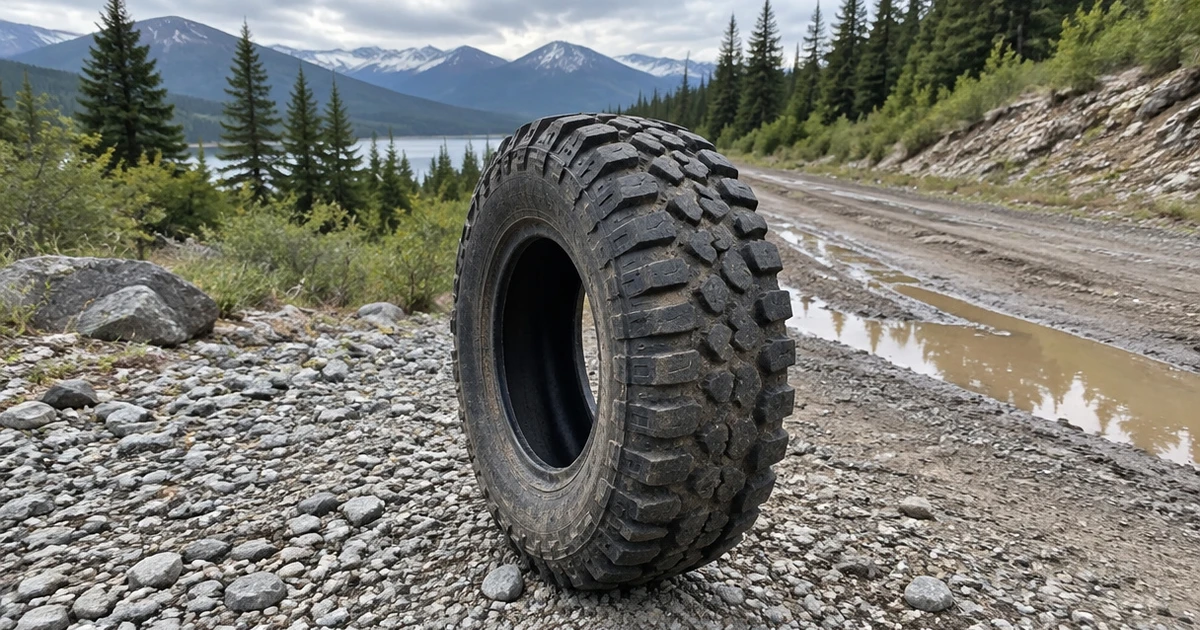
A lifted truck puts extra demands on tire fit and steering clearance, so start with your actual setup rather than a size that looks right. Match the tire to your load, roads, and weather, then confirm that your wheels and suspension can handle it.
Fit and Clearance
Read the full tire code on the sidewall and compare its diameter, section width, and wheel diameter with your current setup. A taller tire can hit the fender liner at full lock or compress into the wheel well, even when a lift adds static space. Wheel offset, alignment, bump stops, and suspension travel all affect clearance.
Ask a qualified installer to check steering lock and suspension compression, not just parked clearance. Also confirm the spare fits and ask if a much larger diameter calls for speedometer recalibration or changes gearing.
- Check clearance at full steering lock.
- Check space through suspension compression.
- Confirm the spare and speedometer plan.
Tread for Your Terrain
Choose tread for the ground you actually drive on. Open, deep lugs and wide voids shed mud, but they can hum on pavement and offer fewer biting edges on hard-packed snow.
Tighter all-terrain blocks usually roll more quietly and handle mixed roads well. Hybrid patterns sit between those styles, with larger shoulder blocks and open channels for trail use.
Look at shoulder design and tread siping as well as the center pattern. Sidewall lugs can help in ruts, while stone ejectors can reduce trapped rocks. Skip maximum mud grip if most of your miles fall on pavement.
| Tread type | Best fit | Main trade-off |
|---|---|---|
| All-terrain | Road and light trails | Less mud bite |
| Hybrid | Mixed roads and rough trails | Some added noise |
| Mud-terrain | Soft ground and deep ruts | More road noise |
Load Rating and Construction
Check the load index against your truck’s axle ratings and the loads you carry, including passengers, tools, and trailer tongue weight. The tire must meet the required capacity; a lift does not raise your truck’s payload or axle limits.
Compare the tire’s load range and construction, too. Passenger-type tires can ride softer, while LT tires often bring stronger casings for work and rough use, with more weight and a firmer ride.
Follow a pressure chart suited to the tire and actual load rather than using the sidewall maximum as your everyday target. Keep the speed rating at or above the vehicle requirement, especially if you tow or travel at highway speeds.
Road Comfort and Control
Lifted trucks already sit higher and may have changed steering geometry, so tire weight and tread pattern matter. Heavier tires can slow acceleration, add strain to brakes, and make the truck feel less responsive.
Aggressive tread can also send more vibration and noise into the cab. If you drive long highway miles, look for a balanced block pattern, a stable center rib, and siping that supports wet-road grip.
Check reports of feathering or cupping, but treat those patterns as possible alignment or pressure problems, not only tire flaws. A proper alignment and regular pressure checks help preserve handling and tread life.
Weather and Winter Traction
Do not assume an all-season label means a tire will work equally well in every winter. For frequent snow, check for the Three-Peak Mountain Snowflake mark, which signals a tested level of snow traction, then look at siping and independent winter testing. That mark does not make a tire a dedicated ice tire, and hard mud-focused tread can slide on packed snow.
If freezing rain and icy roads are regular, a dedicated winter tire often gives better control than a year-round off-road design. In warm climates, prioritize wet braking and heat performance; deep grooves alone do not guarantee grip on wet pavement.
Upkeep and Wear
Plan for rotations, alignments, and inspections as part of running large tires. Follow the tire maker’s rotation pattern when it fits your truck, and rotate sooner if you see uneven wear.
After installation, recheck lug torque on the schedule the installer gives you, and inspect sidewalls for cuts after rocky trips. Keep pressures matched across the axle unless your load calls for a documented adjustment.
Replace tires before worn tread or damage compromises safe use, and keep the spare in working condition. Check that the spare matches the rolling diameter closely enough for the drivetrain, especially on four-wheel-drive trucks.
Choosing the Right Tire for Your Lifted Truck
If you split your time between pavement and rough tracks, the NITTO Ridge Grappler All-Season is the most balanced place to start. Pick the Cooper Discoverer STT Pro All-Season for regular mud trails, the General Tire Grabber X3 All-Terrain for deep mud, or the Mickey Thompson Baja ATZP3 All-Terrain for a hybrid mix of road and trail traction.
The Firestone Destination M/T2 suits a work truck that sees mud, while the Goodyear Wrangler Adventure Kevlar fits daily driving and occasional dirt. Check load rating and clearance on your exact truck before buying; a good tread cannot make up for poor fitment.
Frequently Asked Questions
What size tires can you put on a lifted truck?
Your safe tire size depends on the truck, lift design, wheel width and offset, and suspension travel. Start with the vehicle’s approved fitment range, then have a shop check clearance at full steering lock and compression. A tire that clears while parked can still rub on a turn or over a bump.
Do lifted trucks need LT tires?
Not always. Match tire capacity to your truck’s axle ratings and the load you carry. LT construction can suit towing, heavy tools, and rough trails, but it often weighs more and rides firmer. A lighter passenger-type tire may suit an unloaded truck if it meets the required load and speed ratings.
Are mud-terrain tires good for daily driving?
They can work for daily use, but open lugs tend to add hum and may reduce wet-road or packed-snow grip compared with less aggressive patterns. If you drive mostly on pavement, choose a tread built for mixed use and keep pressures and alignment in range. Save the most open design for frequent mud.
Do bigger tires affect fuel use and braking?
Often, yes. Larger or heavier tires add rotating mass and can change effective gearing, so acceleration may feel slower and fuel use can rise. The speedometer can also read differently if tire diameter changes. Extra weight and altered gearing may affect stopping, so keep brakes, alignment, and tires in good condition.
Can all-terrain tires handle snow?
Many can manage light snow, but performance depends on tread design, rubber compound, and temperature. Check for the Three-Peak Mountain Snowflake symbol if you face regular winter conditions, then remember that it does not promise strong grip on ice. Dedicated winter tires usually give more control in severe cold and slick conditions.