
This post may contain affiliate links. As an Amazon Associate I earn from qualifying purchases. If you choose to make a purchase, I may earn a small commission at no extra cost to you.
Truck tires have to cover more than one kind of road. A tire that feels sure on gravel can sound tiring on the highway, while a road-friendly tread may struggle once mud, slush, or loose rock shows up. Your truck’s load, weather, and daily route all affect which trade-offs make sense.
Good all-terrain tires balance pavement comfort with dependable grip beyond the pavement. The best all terrain tires for trucks you can buy in 2026 vary by how often you leave the road and what conditions you face. The options below cover all-weather grip, snow traction, trail armor, quiet road manners, and wet-road control, so you can narrow the list to your truck and driving habits.
Our Top All-Terrain Tires for Trucks Picks



More Details on Our Top Picks
Pros
- CoreGard sidewall protection resists trail damage
- Deflection design helps guard against sticks and stones
- Serrated shoulders and mud-phobic bars add loose-surface grip
- 50,000-mile treadwear limited warranty
Cons
- Aggressive tread can create noticeable road noise
- Firm ride on rough pavement
The BFGoodrich All-Terrain T/A KO3 puts sidewall protection at the center of its design. Its CoreGard Technology draws on BFGoodrich’s Baja racing experience, while Advanced Deflection Design steers sticks and stones away from vulnerable sidewall areas.
A new all-terrain tread compound and pattern handle repeated gravel driving. Serrated shoulders and mud-phobic bars give you extra biting edges in snow and help clear mud from the tread. On rocky trails, the tough sidewalls add confidence when the route gets rough.
The KO3 also brings its aggressive tread to daily driving, with a design aimed at lasting through varied road and trail use. BFGoodrich covers it with a 50,000-mile treadwear limited warranty and a six-year standard limited warranty. Its mix of trail grip, sidewall defense, and everyday usefulness makes the KO3 a capable truck tire for changing conditions.
Bottom line: Choose the BFGoodrich All-Terrain T/A KO3 if you split your truck’s time between paved roads and demanding trails. It suits drivers who value strong sidewalls and a long treadwear warranty.
Pros
- Three-Peak Mountain Snowflake rating
- 3D Canyon Sipe technology adds snow and wet-road biting edges
- Heat Diffuser technology manages heat under heavy loads
- Deep tread and durable sidewalls
Cons
- Tread can add noise on the highway
- Heavy feel can dull steering response
For truck owners who face changing weather and rough access roads, the Falken Wildpeak A/T4W brings all-weather traction into a rugged all-terrain design. Its deep tread and sturdy sidewalls handle gravel, rocky ground, and muddy routes without giving up everyday road use.
Falken’s 3D Canyon Sipe technology adds biting edges for snow and wet pavement, and the A/T4W carries the Three-Peak Mountain Snowflake rating for severe snow service. Heat Diffuser technology moves heat away from the lower sidewall, which matters on long drives under heavy loads. You also get a tread pattern designed to hold up through a range of temperatures.
The Wildpeak A/T4W feels at home on highway stretches between trail runs, with tread depth that gives it room to work on loose ground. Its substantial tread blocks and sidewall build give the tire a planted feel when the road turns rough. Falken designed this line for drivers who need one set of tires to handle weather shifts and regular off-pavement travel.
Bottom line: The Falken Wildpeak A/T4W suits you if snow, heat, and rough roads all factor into your driving. Consider it for a truck that regularly carries loads or travels beyond paved roads.
Pros
- Three-Peak Mountain Snowflake rating
- 3D multi-wave sipes add biting edges
- Open grooves move water and loose material
- Staggered shoulders add grip on dirt and gravel
Cons
- Less suited to deep mud than open, mud-focused tread designs
- Tread can hum on pavement
Toyo uses an open tread pattern and 3D multi-wave sipes to give the Open Country A/T III traction across changing surfaces. The grooves clear water and loose material, while the sipes create extra edges that bite into wet roads and snow.
The Toyo Open Country A/T III carries the Three-Peak Mountain Snowflake symbol for severe snow service. Its tread blocks balance off-road grip with steady highway manners, so you can travel between town and trail without switching to a more specialized tire. Staggered shoulder blocks add grip when you turn onto loose dirt or gravel.
On wet pavement, the channels give water a path out from under the tread. On snow-covered roads, the many small biting edges help the tire find traction during starts and turns. Toyo’s all-terrain design also avoids an overly open, muddy tread layout, which keeps it better suited to regular road miles than a tire focused on deep mud.
Bottom line: If you drive through winter weather but still need a tire for everyday roads, the Toyo Open Country A/T III deserves a place on your list. It fits trucks that see regular gravel and light trail use as well.
Pros
- DuPont Kevlar reinforcement helps protect the tread
- Three-ply sidewall resists cuts and abrasions
- Durawall compound adds sidewall defense
- Biting edges improve snow traction
Cons
- Aggressive tread can sound loud on pavement
- Heavy construction can feel firm over bumps
DuPont Kevlar reinforcement gives the Goodyear Wrangler DuraTrac RT added protection against tread damage on rough routes. Its three-ply sidewall and Durawall compound resist cuts, scrapes, and punctures when sharp rocks or debris crowd the trail.
The DuraTrac RT’s tread pattern packs in biting edges for winter traction, and its shoulder lugs help the tire dig into loose ground. That combination gives you grip on snow-covered roads as well as dirt and gravel. The rugged tread also suits work trucks that leave pavement for job sites or unmaintained roads.
Goodyear backs the DuraTrac RT with a 50,000-mile tread life limited warranty, subject to exclusions. The tire’s reinforced construction gives it a purposeful feel under a truck, while its all-season tread design handles changing road conditions. Its combination of a tough sidewall and snow-biting tread makes the Wrangler line a familiar choice for drivers who regularly encounter rough terrain.
Bottom line: The Goodyear Wrangler DuraTrac RT fits your truck if puncture resistance and winter grip rank high on your list. It’s a practical match for work routes that mix pavement with rocky or snowy ground.
Pros
- Comfort Control Technology reduces noise and vibration
- MaxTouch Construction promotes even wear
- Tread compound resists gravel chips and tears
- Comfortable highway handling
Cons
- Less grip in deep mud than more open treads
- Not as suited to rocky, technical trails
The Michelin LTX A/T2 puts quiet road manners ahead of an especially aggressive tread. Michelin’s Comfort Control Technology uses a computer-optimized tread design to reduce noise and vibration, so you can spend long stretches on pavement without the constant rumble of a rugged tire.
MaxTouch Construction spreads acceleration, braking, and cornering forces across the contact patch to promote even wear. The all-terrain compound resists chips and tears on gravel, giving the LTX A/T2 more durability when your route leaves smooth pavement. Its tread still gives you useful traction on dirt roads and packed trails.
The Michelin LTX A/T2 handles daily highway travel with composed steering and a more settled feel than its chunky appearance suggests. You still get an all-season tread that can tackle light off-road trips, but its design puts comfort and long-term use near the front. Michelin’s combination of even-wear engineering and vibration control gives the tire a road-focused character without leaving gravel roads out of the picture.
Bottom line: The Michelin LTX A/T2 is a good fit if your truck spends most of its time on pavement and takes occasional gravel roads. Choose it for a quieter all-terrain ride with added chip resistance.
Pros
- Comfort Balance Technology reduces road noise
- Three-Peak Mountain Snowflake rating
- Rugged tread handles off-road driving
- Up to 60,000 miles of limited tread life coverage
Cons
- Tread can feel less precise during quick pavement turns
- Deep mud can pack into the tread
General designed the Grabber A/T X to keep road noise in check while giving your truck a rugged tread for off-road use. Comfort Balance Technology works to soften the ride and quiet the cabin, a useful trait when your daily route includes long stretches of pavement.
The aggressive tread pattern gives the General Grabber A/T X traction on loose ground, while its durable construction handles demanding trail use. The tire also carries a Three-Peak Mountain Snowflake rating for severe snow service. You get a tread design that can move between road driving and rougher conditions without feeling limited to one surface.
General offers up to 60,000 miles of limited manufacturer tread life coverage. That coverage, paired with the tire’s balance of road comfort and off-road traction, makes it a practical option for trucks that see regular use. The Grabber A/T X’s tread blocks look ready for the trail, but the cabin-focused design keeps daily trips from feeling like a constant off-road run.
Bottom line: Pick the General Grabber A/T X if you want trail traction without giving up a quieter daily ride. It suits trucks that see regular road miles and occasional snow or dirt.
Pros
- Reinforced block foundation limits tread flex
- Stone ejectors help protect the tread
- Staggered shoulder lugs add off-road grip
- Variable-pitch blocks manage road noise
Cons
- Aggressive tread still creates highway hum
- Deep tread feels less settled on smooth pavement
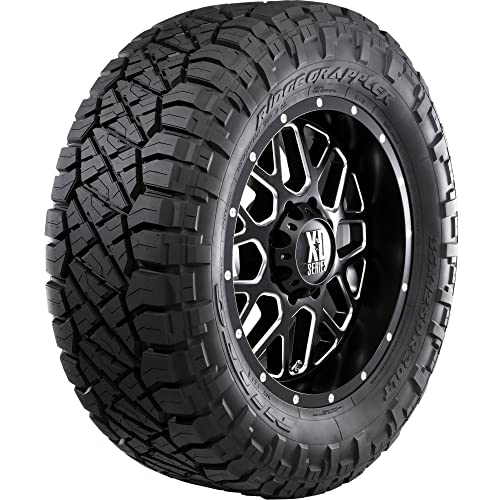
The Nitto Ridge Grappler blends an all-terrain pattern with the chunky blocks of a more aggressive trail tire. Its reinforced block foundation limits tread flex, while staggered shoulder lugs add grip when you steer through loose soil or climb over uneven ground.
Stone ejectors sit in the grooves to push out trapped rocks before they can drill into the tread. Nitto also uses a variable-pitch tread block layout to manage road noise, giving the Ridge Grappler a more civilized feel on pavement than its deep, rugged pattern might suggest. You still hear the tread at highway speeds, especially on smooth roads.
The Ridge Grappler has a strong visual presence, but its design also serves a purpose on the trail. The shoulder lugs reach into soft terrain, and the reinforced blocks help keep the tread stable under load. Nitto offers distinct sidewall designs on the Ridge Grappler line, adding another way to shape the look of your truck without changing its core hybrid-terrain character.
Bottom line: The Nitto Ridge Grappler suits you if you want a bold hybrid tread for trail driving and daily pavement. It works best for trucks that need more shoulder grip than a mild all-terrain pattern provides.
Pros
- Three-Peak Mountain Snowflake rating
- Endurocore construction adds strength for heavy loads
- Enduro compound resists cuts and chips
- 60,000-mile limited treadwear warranty
Cons
- Tread is less suited to sticky, deep mud
- Snow grip depends on road and winter conditions
The Yokohama Geolandar A/T G015 pairs all-terrain tread with a Three-Peak Mountain Snowflake rating for severe snow service. Its dense siping creates extra biting edges for winter roads, while the tread channels help move water away on wet pavement.
Yokohama’s Endurocore construction adds strength for trucks that carry heavy loads. The Enduro compound resists cuts and chips from gravel, so the tire can handle rough surfaces without giving up its all-weather focus. You also get a tread pattern that suits daily pavement travel as well as dirt roads and trails.
The Geolandar A/T G015 comes with a 60,000-mile limited treadwear warranty, and Yokohama includes a 30-day satisfaction guarantee. Those policies add value to a design that already covers a wide range of road conditions. Its winter rating and gravel-resistant compound make the G015 more than a fair-weather all-terrain option.
Bottom line: The Yokohama Geolandar A/T G015 makes sense for your truck if winter roads and gravel both appear in your regular driving. It also suits drivers who value a long treadwear warranty.
Pros
- Wide grooves help clear water
- Full-depth 3D sipes maintain biting edges as tread wears
- Three-Peak Mountain Snowflake rating
- Aggressive shoulders add off-road handling
Cons
- Less traction in deep mud than more open tread designs
- Not intended for demanding rock crawling
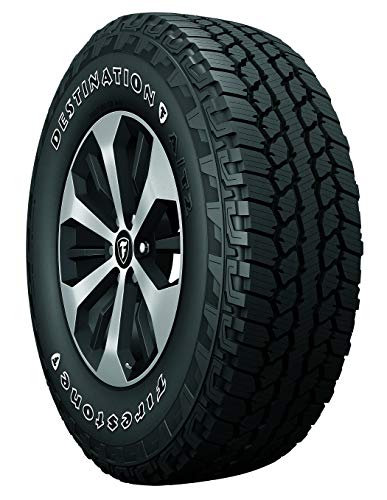
Wet-road control is a key part of the Firestone Destination A/T2’s design. Wide grooves move water away from the contact area, while full-depth interlocking 3D sipes maintain biting edges as the tread wears.
The Firestone Destination A/T2 carries a Three-Peak Mountain Snowflake rating for severe snow service. Its aggressive shoulder tread adds grip on dirt and uneven ground, giving the tire useful off-road handling without losing its focus on everyday roads. The interlocking tread blocks also promote steady wear through the tire’s limited mileage warranty period.
On wet pavement, water evacuation helps the tread hold its path through turns and braking. The Destination A/T2 also gives you a dependable option for packed snow, gravel, and routine truck driving. Firestone’s mix of water-clearing grooves and full-depth sipes keeps the design useful beyond its first stretch of tread life.
Bottom line: Consider the Firestone Destination A/T2 if your truck sees wet roads, winter travel, and occasional off-road use. It suits drivers who want useful snow traction without a specialized mud tire.
Factors to Consider When Choosing All Terrain Tires for Trucks
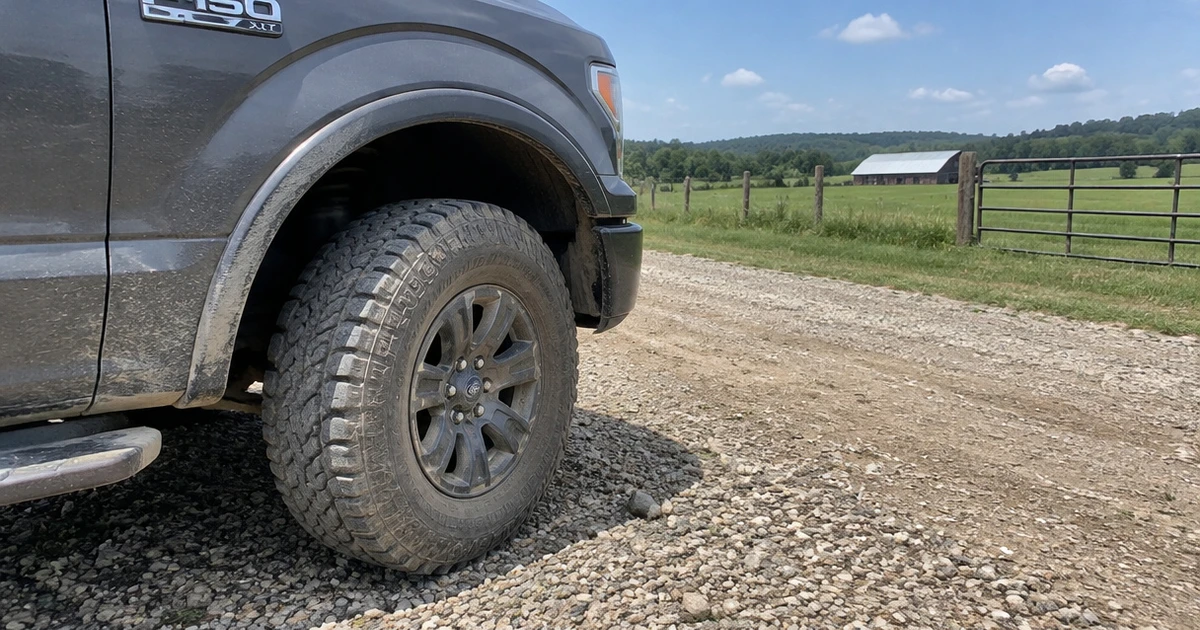
Start with the roads you drive most, then check your truck’s approved tire size and load needs. A good all-terrain tire should match your normal routes, not just the toughest trail you might see once a year.
Fit, Load, and Pressure
Begin with the tire size on the driver-door placard or in the owner’s manual. Keep the original diameter and width unless a tire shop confirms a change will clear the suspension and body through a full turn and under load. A larger tire can alter speed readings, gearing feel, and clearance.
Check load index and load range against how you use the truck. If you tow or carry heavy gear, select a tire that meets the vehicle maker’s load guidance and set pressure for that load. Do not use the maximum pressure molded on the sidewall as your everyday target.
| Use | Check | Why it matters |
|---|---|---|
| Daily driving | Match the door placard | Preserves the intended fit |
| Towing or hauling | Meet load guidance | Supports cargo safely |
Tread for Your Routes
Match the tread to your regular surfaces. For gravel roads and occasional dirt, a moderate tread with closely spaced blocks usually gives steadier pavement manners. Frequent mud or rocky tracks call for wider voids and stronger shoulder lugs that can clear debris and bite at the edges, though those features may add noise.
Before choosing an aggressive pattern, think about how often you face deep mud, loose climbs, or sharp stones. Open shoulder channels help shed muck, while reinforced sidewalls can resist cuts; neither makes a tire immune to damage. Look for a tread design that supports the hardest route you drive often, not a rare outing.
- Gravel and pavement: favor a less open tread.
- Frequent mud or rocks: check shoulder lugs and sidewall protection.
Weather and Seasonal Grip
Check the tire’s winter marking if you drive through regular snow. The three-peak mountain snowflake symbol identifies tires that meet a defined snow-traction standard, while the M+S mark alone does not meet that same test. Even a winter-rated all-terrain tire cannot match a dedicated winter tire on ice.
For wet roads, look for tread grooves that move water away from the contact area and siping that adds biting edges. Your local climate matters: drivers who see frequent rain or freeze-thaw weather should give wet and cold grip more weight than deep-mud traction. Keep tread depth healthy, since worn grooves shed water less effectively.
Road Comfort and Noise
All-terrain tread blocks can create more road sound than highway tires, especially as speed rises. If you spend most days on pavement, look for a design with tightly arranged center blocks and features that limit uneven wear. A smoother pattern can also make steering feel less busy on long drives.
Truck weight, alignment, and pressure affect ride comfort, too. If your truck is a daily commuter, focus on a tire that balances off-road grip with stable tracking and a calm ride. An aggressive tread may suit a work truck that spends more time on rough ground, but it can feel louder on a long highway trip.
Durability and Ongoing Care
Inspect the tread and sidewalls for features that suit your work. Stone ejectors can help clear trapped rocks, while reinforced shoulders and tougher sidewall construction can add protection on rough routes. These features reduce some risks, but sharp debris, underinflation, and overloading can still damage a tire.
Rotate tires at the interval in your vehicle manual to help them wear evenly, and check pressure when the tires sit cold. Look for cuts, bulges, and embedded stones during routine checks. If you tow or carry heavy loads, inspect more often and follow the vehicle maker’s pressure guidance for that load.
Picking All-Terrain Tires for Your Truck
Match your tires to the roads and weather you face most. The BFGoodrich All-Terrain T/A KO3 suits a balanced setup, while the Falken Wildpeak A/T4W puts all-weather grip first.
Choose the Toyo Open Country A/T III for snow-ready balance or the Goodyear Wrangler DuraTrac RT for rough trails. The Michelin LTX A/T2 favors pavement comfort, and the General Grabber A/T X fits drivers who want a quieter trail ride.
The Nitto Ridge Grappler blends trail grip with a hybrid tread, while the Yokohama Geolandar A/T G015 emphasizes winter confidence. The Firestone Destination A/T2 makes sense if wet-road control tops your list. Before buying, confirm the tire size and load rating match your truck and its usual cargo.
Frequently Asked Questions
Are all-terrain tires suitable for daily driving?
Yes, many drivers use them every day, especially when their routes include gravel, dirt, or changing weather. Expect more tread noise and a firmer feel than you would get from a highway tire. Choose a less aggressive tread if you spend most of your time on paved roads.
Do all-terrain tires work well in snow?
Some handle packed snow well, but performance varies by tread design and winter rating. Look for the three-peak mountain snowflake symbol if you regularly drive in severe snow. Use winter tires for frequent ice or deep cold, since all-terrain tread cannot replace dedicated winter compounds.
How often should I rotate all-terrain tires?
Follow the rotation schedule in your truck’s owner’s manual, since the right interval can vary by vehicle and drivetrain. Rotate sooner if you notice uneven wear, and ask a tire shop to check alignment if the tread wears heavily on one edge. Regular rotation helps the set wear more evenly.
Do all-terrain tires reduce fuel economy?
They can. Heavier construction and open tread patterns often create more rolling resistance than highway tires, which may raise fuel use. The effect depends on the tire, truck, pressure, and route. Keep tires properly inflated and choose a tread suited to your usual driving to limit the difference.
What pressure should I use in all-terrain tires?
Use the cold pressure on your truck’s door placard or in its owner’s manual for normal driving. The pressure printed on a tire sidewall shows its maximum, not the target for your vehicle. Add or adjust pressure for towing only by following the truck maker’s load guidance.