
This post may contain affiliate links. As an Amazon Associate I earn from qualifying purchases. If you choose to make a purchase, I may earn a small commission at no extra cost to you.
Choosing tires for an X3 can feel tricky because the right set depends on your model year, wheel package, local weather, and how you drive. A tire that feels quiet and calm on your commute may not give you the steering response or winter traction you want on mountain roads.
The best tires for BMW X3 you can buy in 2026 should match the vehicle’s required size and load rating first. From there, weigh wet braking, snow ability, road noise, tread life, and whether you want all-season convenience or summer grip. The options below cover different needs, from relaxed touring and year-round use to sporty road manners and run-flat convenience, so you can narrow the field around your routine.
Our Top Tires for BMW X3 Picks


More Details on Our Top Picks
Pros
- Severe-snow certification for winter traction
- Confident wet and dry braking
- Temperature-adaptive compound and interlocking sipes
- Even-wear-focused MaxTouch Construction
Cons
- Directional tread limits rotation to front-to-back without remounting
- Not a replacement for a dedicated winter tire in deep snow
The V-shaped directional tread gives the Michelin CrossClimate2 a distinct design and helps it hold traction across changing weather. Its Three-Peak Mountain Snowflake certification confirms that it meets a recognized standard for severe-snow performance.
Michelin uses a tread compound that adapts to temperature changes, while interlocking sipes add biting edges as the tire rolls. MaxTouch Construction spreads the forces from acceleration, braking, and cornering across the contact patch to support even wear.
On wet roads, wide grooves move water away from the tread, and the tire delivers confident braking. Dry pavement brings stable handling and a composed feel, so everyday trips in an X3 need not feel like a compromise between rain and fair weather.
The Michelin CrossClimate2 also gives you useful winter capability without giving up year-round road manners. Its tread-life coverage can reach one year longer than the previous generation, adding appeal for drivers who want one tire for varied conditions.
Bottom line: Choose the Michelin CrossClimate2 for an X3 that needs year-round traction and credible light-to-moderate snow ability. It suits drivers who value wet-road confidence as much as winter grip.
Pros
- Responsive handling for an all-season tire
- Strong wet braking focus
- Useful grip in light snow
- 45,000-mile limited tread-life warranty
Cons
- Light-snow grip cannot match a dedicated winter tire
- Sporty tread may feel firm on rough pavement
If your BMW X3 calls for a performance all-season tire, the Goodyear Eagle F1 All Season brings a sportier feel to daily driving. Its tread pattern balances dry-road response with useful grip in rain and light snow.
Goodyear’s durable tread compound supports wear life, and built-in wear indicators give you a clear view of tread condition. The pattern also puts a focus on wet braking, which matters when you need the tire to stay composed through sudden rain.
On dry pavement, steering feels direct and the tire keeps a steady line through bends. In light snow, its all-season tread offers more grip than a summer design, though it does not deliver the bite of a dedicated winter tire.
A 45,000-mile limited tread-life warranty adds reassurance for drivers who put regular miles on their X3. The Eagle F1 All Season works as a year-round option for people who enjoy responsive handling but still face changing weather.
Bottom line: The Goodyear Eagle F1 All Season suits X3 drivers who want sharper road manners without switching to a summer tire. It works best where winter brings occasional light snow rather than severe conditions.
Michelin Pilot Sport All Season 4

Pros
- Quick steering response
- Strong dry and wet grip
- All-season tread for light snow
- High-silica compound for varied temperatures
Cons
- Not designed for deep snow or severe winter driving
- Firm ride can transmit rough pavement
In everyday driving, the Michelin Pilot Sport All Season 4 gives a performance tire a calmer, more usable year-round role. Michelin developed it for drivers who want quick steering and strong grip without limiting the car to warm-weather use.
Its asymmetric tread uses broad shoulder blocks for cornering support and inner grooves to move water through the footprint. A high-silica compound keeps the tread flexible across a wider range of temperatures than a summer compound.
On dry roads, the tire reacts quickly to steering input and feels planted through sweeping turns. In rain, its tread channels water away from the contact patch, while its all-season design offers some traction in light snow.
Michelin’s performance focus shows in the tire’s firm, connected road feel. Chevrolet selected the Pilot Sport All Season 4 as original equipment for the Corvette, a sign of the line’s sporting intent; the same character can suit an X3 with a performance-oriented setup.
Bottom line: Choose this Michelin for an X3 setup that favors precise handling and year-round road use. Drivers who face deep winter conditions will get more from a dedicated winter tire.
Pros
- Quiet, comfortable road manners
- EcoPlus Technology reduces rolling resistance
- Confident wet braking
- Up to 70,000-mile limited tread-life coverage
Cons
- Limited traction in deep snow
- Road-focused tread lacks bite on rough trails
A quiet, comfortable ride is the main draw of the Continental CrossContact LX25 for an X3 used on commutes and long road trips. Continental designed this SUV touring tire to keep road noise low while delivering steady handling through the year.
EcoPlus Technology combines a tread compound and construction choices that reduce rolling resistance, support tread life, and improve wet braking. The tire’s contact with the road stays composed during ordinary cornering, while its broad tread grooves channel water away in rain.
Wet-road braking feels controlled, and the touring tread keeps the cabin more settled than a performance-focused design. Continental offers limited tread-life coverage of up to 70,000 miles on eligible versions, which adds value for drivers who spend many hours on pavement.
The CrossContact LX25 puts comfort ahead of aggressive cornering response. Its road-focused design suits an X3 that spends most of its time on paved streets, where quiet running and predictable wet-weather behavior matter more than trail traction.
Bottom line: The Continental CrossContact LX25 fits an X3 used mainly for commuting, highway trips, and errands. It is a good fit for drivers who value a calm cabin and long tread-life coverage.
Pros
- SportPlus Technology for responsive handling
- D, W, and S tread wear indicators
- Strong wet and dry grip
- Useful traction in snow and ice
Cons
- Not a substitute for a dedicated winter tire in severe weather
- Firm ride may show on uneven pavement
Continental’s DWS06 Plus line is known for giving performance cars all-season grip, and the Continental ExtremeContact DWS06 Plus carries that focus to sporty SUV driving. SportPlus Technology tunes the tread for responsive handling, wet grip, and long tread life.
The asymmetric pattern combines large shoulder blocks for cornering control with grooves that carry water away. Continental also molds D, W, and S indicators into the tread; as those letters wear away, they show when the tire no longer has its original dry-, wet-, or snow-focused tread depth.
On dry pavement, the tire feels precise through turns and brakes with confidence. Wet roads bring strong traction, while its snow-focused sipes add grip in winter conditions that can challenge a standard performance tire.
A limited tread-life warranty covers up to 50,000 miles. The DWS06 Plus gives an X3 driver a sporty steering feel and a useful spread of seasonal traction, though its performance tread still has a clear limit in severe winter weather.
Bottom line: The Continental ExtremeContact DWS06 Plus suits X3 drivers who want sporty handling through much of the year. Its snow indicators and winter traction add useful guidance for drivers who see occasional snow.
Pros
- Crisp steering response
- Stable high-speed cornering
- Micro-silica compound for wet grip
- Four wide water-evacuating grooves
Cons
- Deep snow is outside its intended role
- Road-focused tread is not suited to rough trails
The asymmetric three-rib tread gives the Yokohama Geolandar X-CV a road-focused design for SUV driving. Its layout supports crisp steering response and stability through faster corners, traits that can make an X3 feel more settled on open roads.
Yokohama uses a micro-silica compound with end-locked polymers to keep the tread flexible and maintain wet grip. Four wide circumferential grooves move water out from beneath the tire, lowering the chance of hydroplaning in heavy rain.
The Geolandar X-CV feels composed during highway driving and responds cleanly when you change direction. Its rolling-resistance-focused compound also suits drivers who want a balance between grip and efficient road travel.
This tire puts paved-road performance first, rather than designing for loose ground or demanding winter conditions. The Yokohama Geolandar X-CV works well in an X3 that spends its days on roads and benefits from stable, predictable handling in wet weather.
Bottom line: Pick the Yokohama Geolandar X-CV for an X3 used mostly on paved roads, especially where rain is common. Its design favors steady SUV handling over off-road traction.
Pros
- Strong dry-road grip
- Precise response through turns
- Wet-road traction from flexible compound
- Lightweight construction and quiet tread design
Cons
- Summer compound does not suit snow or cold weather
- Requires a separate winter tire for winter driving
Drivers who enjoy quick responses on dry roads will appreciate the Goodyear Eagle F1 Asymmetric 6. Its asymmetric tread pattern puts rubber where it can support cornering, while a flexible tread compound maintains contact on wet pavement.
The design aims to keep steering precise through turns and to reduce road noise during normal driving. Goodyear also uses a lightweight construction, which supports a more responsive feel when you change direction.
On dry roads, the tire offers strong grip and stable handling for a performance-oriented X3 setup. In rain, the flexible compound helps maintain traction as the tread follows the road surface.
This is a summer performance tire, so its strengths center on warm-weather grip rather than year-round driving. The Goodyear Eagle F1 Asymmetric 6 can make an X3 feel more alert on paved roads, but it does not suit cold-weather or snowy conditions.
Bottom line: The Goodyear Eagle F1 Asymmetric 6 suits X3 owners who prioritize warm-weather handling and wet-road control. Choose it for a summer setup, not as a year-round tire in a cold climate.
Pros
- Precise steering response
- Strong dry grip and wet braking
- Bi-Compound tread design
- Racing-derived construction
Cons
- Summer-only design is unsuitable for snow
- Cold temperatures reduce its intended performance
Michelin’s endurance-racing influence shapes the Michelin Pilot Sport 4S, a summer tire built for precise handling and high-speed control. Its Bi-Compound tread uses distinct rubber blends across the inner and outer sections to balance wet grip with dry cornering traction.
Michelin also uses Dynamic Response Technology, which transfers steering input through a reinforced belt beneath the tread. That design gives the tire a direct feel when you turn into a corner and helps it hold a steady line under hard driving.
On dry pavement, the Pilot Sport 4S delivers strong grip and a planted feel. Its inner tread compound and grooves maintain wet-road braking performance, so rain does not erase its road confidence.
The tire’s warm-weather focus suits a sporty X3 setup that spends most of its time on pavement. The Michelin Pilot Sport 4S brings serious handling ability, but it does not offer the temperature range of an all-season tire.
Bottom line: Choose the Michelin Pilot Sport 4S for an X3 used in warm weather where sharp handling matters most. Drivers who face winter conditions need a separate seasonal tire.
Pros
- Run-flat sidewalls provide temporary mobility after pressure loss
- Asymmetric tread for stable road handling
- Circumferential grooves channel water
- All-season traction for everyday weather
Cons
- Firmer ride from reinforced sidewalls
- Not designed for deep snow or off-road use
Run-flat construction gives the Pirelli Cinturato P7 All Season Run Flat its clearest advantage for an X3 driver who wants added mobility after a puncture. Reinforced sidewalls let the tire support the vehicle for a limited distance after air pressure drops.
The asymmetric tread combines broad contact areas with circumferential grooves that channel water away. That layout gives the Cinturato P7 All Season a stable touring feel in dry conditions and useful traction on wet roads.
Its all-season tread handles everyday changes in weather, including light snow, while keeping the focus on paved-road comfort. The Pirelli Cinturato P7 All Season Run Flat suits routine commutes and highway travel better than rough trails or severe winter roads.
Run-flat support can reduce the need to stop immediately when a tire loses pressure, but the reinforced sidewalls also create a firmer ride. Its touring character favors predictable road manners over an especially sporty feel.
Bottom line: The Pirelli Cinturato P7 All Season Run Flat suits X3 drivers who value run-flat capability and steady touring manners. It works best for paved-road use in mild winter conditions.
Pros
- 4D Advanced Nano Technology compound
- High-grip chamfer for dry-road handling
- Interlocking sipes support wet and light-snow braking
- Up to 50,000-mile limited tread-life coverage
Cons
- Light-snow traction cannot match a dedicated winter tire
- Performance-focused tread may feel firm on rough roads
Falken gives the Falken Azenis FK460 A/S a mix of performance handling and all-season tread design. Its 4D Advanced Nano Technology keeps the rubber compound flexible across changing temperatures, supporting grip through dry, wet, and light winter conditions.
A high-grip chamfer in the tread improves steering response on dry pavement. Interlocking sipes add biting edges for braking, while grooves that emerge as the tread wears help move water away from the contact patch.
The tire feels responsive through turns and holds useful traction in rain. Its tread design also offers light-snow grip, giving an X3 driver more seasonal range than a summer performance tire.
Falken backs the FK460 A/S with a limited tread-life warranty of up to 50,000 miles. That combination of steering feel, wet-road features, and warranty coverage makes it a practical performance option for paved-road use.
Bottom line: The Falken Azenis FK460 A/S suits X3 drivers who want responsive handling with useful year-round traction. Its tread-life coverage adds appeal for regular paved-road driving.
Factors to Consider When Choosing Tires for BMW X3
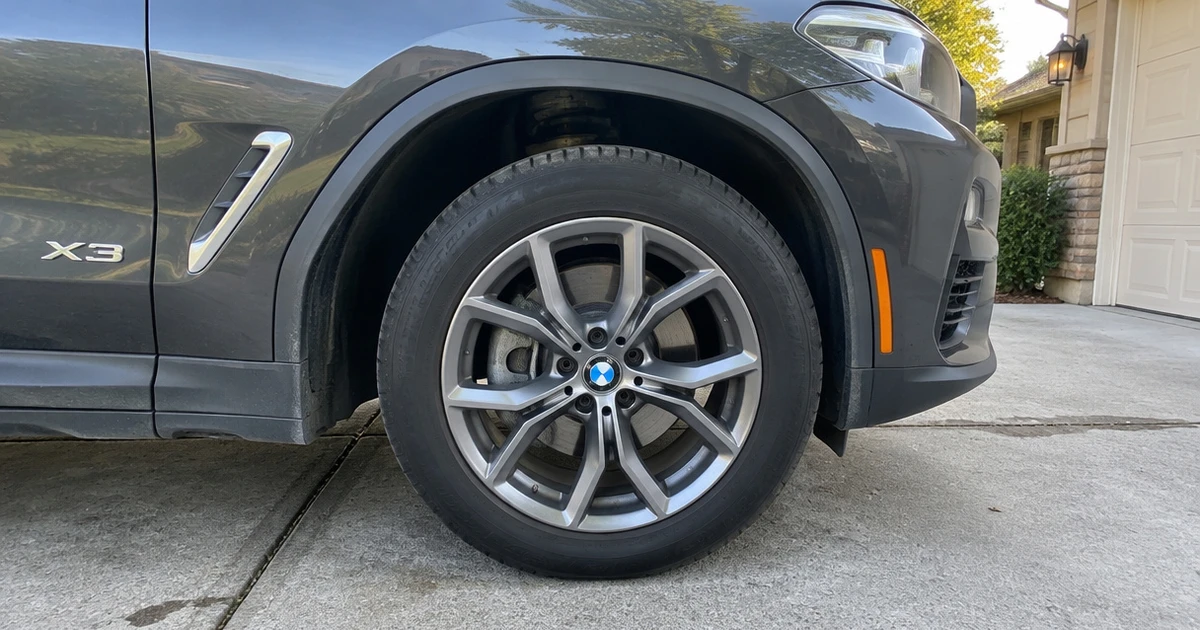
Your tire choice affects how your X3 brakes, rides, and handles in changing weather. Start with fitment, then weigh climate, comfort, tread life, and how you will manage a flat.
Fitment and Ratings
Check the driver-door placard and owner’s manual for approved sizes, then match the load index and speed rating. Fitment can change with model year and wheel package, and some X3 versions use different sizes front and rear. A tire that looks close may still fall short of your vehicle’s weight or handling needs.
Use this quick check before you order. Compare every detail with the placard or manual.
- Approved front and rear tire sizes
- Load index and speed rating
- Run-flat requirements, if your vehicle has them
If your X3 has all-wheel drive, keep all four tires closely matched in size, model, and tread wear to reduce strain on the system. Choose run-flat or reinforced construction only if it suits your vehicle’s setup and roadside plan.
Season and Climate
Match the tire’s season type to your coldest regular driving conditions, not just the weather you see most days. All-season tires suit mild climates and drivers who want one set year-round, but they lose grip as temperatures fall and cannot match a dedicated winter tire on packed snow or ice.
Winter tires use cold-weather compounds and tread patterns that bite into snow, while summer tires favor warm-weather braking and cornering. If your route gets sustained freezing temperatures, steep hills, or frequent snow, choose a winter set for that season and switch back when conditions warm.
| Tire type | Best fit | Main trade-off |
|---|---|---|
| All-season | Mild weather and year-round use | Less grip in harsh winter conditions |
| Winter | Frequent snow, ice, or freezing weather | Requires a seasonal tire change |
| Summer | Warm weather and responsive handling | Not suited to cold conditions |
Wet Grip and Tread
Rain grip deserves priority if your commute includes highways or standing water. Look for clear tread channels that move water away from the contact patch, plus fine sipes that help the tread hold wet pavement. No tread design can prevent hydroplaning if you drive too fast for the conditions.
Compare wet-braking results for the exact tire size when independent tests publish them, since grip can vary across sizes within a tire line. Check tread often as well; many drivers replace tires before 4/32 inch remains because worn grooves shed water less effectively. Slow down in heavy rain and keep tire pressure at the vehicle maker’s recommended level.
Ride Comfort, Handling, and Wear
Think about the roads you use every week. A touring tire with a comfort-focused tread pattern can reduce road noise and soften small bumps, while a performance-oriented tread often gives quicker steering response but may sound louder and wear faster. The X3’s wheel and sidewall setup also affects how sharply you feel broken pavement, so stay with approved sizes rather than changing dimensions for comfort.
Check warranty terms if tread life matters to you. A mileage warranty gives you a target under certain use conditions, not a promise of how long your tires will last. For long commutes, steady wear and low road noise may matter more than the sharpest steering feel.
Run-Flat and Flat-Tire Plans
Decide how you will handle a puncture before choosing between run-flat and conventional tires. Run-flats can let you continue for a limited distance after air loss, within the tire maker’s speed and distance limits, which helps if your SUV has no spare. Their firmer sidewalls can make some roads feel harsher.
Conventional tires often ride more comfortably and give you more replacement choices, but you need a spare, approved inflator, or roadside plan. Check the owner’s manual for repair limits, and do not drive on a damaged tire just because it still holds pressure. Keep a compatible tire pressure monitoring system working with your setup.
Frequently Asked Questions
What tire size should you use on an X3?
Use the size shown on the driver-door placard or in the owner’s manual, including any different front and rear sizes. Then match the load index and speed rating. Wheel packages and model years can change fitment, so do not rely on a generic online size chart alone.
Should you replace all four tires at once?
On an all-wheel-drive SUV, replacing all four with closely matched tires helps keep rolling circumference consistent and reduces strain on the drivetrain. If one tire fails, ask a tire professional to compare its tread depth and specifications with the others before you replace only one.
Are all-season tires enough for winter?
All-season tires work for light, occasional winter conditions, but their grip drops in sustained freezing weather and on packed snow or ice. If you regularly drive through harsh winter conditions, use tires made for winter and change back when the weather warms.
Can you switch from run-flat to conventional tires?
You can make the switch if the new tires match your vehicle’s approved size and ratings. First check whether your SUV has a spare or an approved repair kit, and review the owner’s manual for guidance. Without a backup plan, a puncture could leave you stranded.
How often should you replace SUV tires?
Replace tires when tread reaches the wear bars, or sooner if you see cracks, bulges, repeated pressure loss, or damage. Check pressure monthly and inspect tread across the full width, since uneven wear can point to alignment, rotation, or inflation problems.