
This post may contain affiliate links. As an Amazon Associate I earn from qualifying purchases. If you choose to make a purchase, I may earn a small commission at no extra cost to you.
Choosing tires for a Chevy Malibu can feel harder than it should. The right set needs to fit your model year and trim, grip wet pavement, and keep road noise in check without wearing out too soon.
Your driving matters just as much as the car. Mild-climate commuters may want long tread life, while drivers who face frequent snow need more winter grip than a basic all-season tire can provide. Check the door placard before you buy, then match the tire to your roads and habits.
This guide to the best tires for Chevy Malibu in 2026 covers options for daily comfort, longer service, rough weather, and sharper handling, plus practical steps to help you choose the right fit.
Our Top Tires for Chevy Malibu Picks


More Details on Our Top Picks
Pros
- 3PMSF severe-snow certification
- Directional tread channels water and slush
- Confident wet and dry braking
- Built for year-round use
Cons
- Winter grip cannot match a dedicated winter tire
- Directional tread limits rotation options
The directional, V-shaped tread gives Michelin CrossClimate2 its all-weather character. Its 3PMSF severe-snow certification signals winter traction beyond what you get from a standard all-season tire, while the tread stays suited to year-round use.
Wide grooves channel water and slush away from the contact patch, and angled tread edges bite into snow. On wet pavement, the tire provides reassuring braking and grip; on dry roads, it feels steady through turns and routine lane changes.
Michelin designed the CrossClimate2 to retain useful wet and dry braking as the tread wears. Its road manners stay comfortable for daily Malibu driving, and the tread design gives you a tire built to handle changing seasons without a seasonal swap. The year-round traction and confident braking make it a practical choice for drivers who face rain, cold snaps, and occasional snow.
Bottom line: For a Malibu that sees varied weather through the year, the CrossClimate2 offers capable wet, dry, and light-snow performance. It suits drivers who want one tire for changing seasons.
Pros
- 80,000-mile limited treadwear warranty
- Locking 3-D Sipes add wet-road grip
- Designed for extended tread life
- Stable tread blocks under braking
Cons
- Less suited to severe winter conditions
- Touring focus favors comfort over sporty steering
Long tread life sits at the heart of Michelin Defender2. Its Locking 3-D Sipes add biting edges for wet and dry grip, while their interlocking shape helps keep the tread blocks stable during braking and cornering.
The all-season tread gives a Malibu a composed feel on routine commutes, with dependable stopping on wet pavement. Michelin redesigned the tire to extend its service life, and it backs the Defender2 with an 80,000-mile limited treadwear warranty plus a six-year standard limited warranty.
That long-wear focus does not leave out everyday comfort. The tire keeps road manners calm for regular city and highway use, and its tread design supports predictable handling when rain catches you on the road. Michelin positions the Defender2 as its longest-lasting tire, a useful trait if you put steady miles on your car.
The Defender2 brings together extended tread life and practical all-season braking without making the Malibu feel overly firm. Its long-wear design suits drivers who want fewer tire changes over years of daily driving.
Bottom line: Choose the Defender2 for a Malibu that racks up regular commuter miles. Its long treadwear warranty and wet-road braking fit drivers who value lasting service.
Pros
- EcoPlus Technology targets fuel savings
- Up to 80,000-mile limited tread coverage
- Quiet ride on paved roads
- Capable wet braking and light-snow traction
Cons
- Steering feels less sporty than performance tires
- Light-snow traction does not replace winter tires
Continental’s EcoPlus Technology gives the TrueContact Tour 54 a practical focus: lower fuel use, longer tread life, and confident wet-road braking. That blend fits the steady mix of commutes and highway trips many Malibu drivers make.
The tread channels water to support wet handling, and Continental tuned the tire for light-snow traction as well. In rain, the TrueContact Tour 54 offers composed braking and steering, while its quieter road feel keeps longer drives more relaxed.
Continental backs the tire with up to an 80,000-mile limited tread life warranty. Its touring design favors a comfortable ride over sharp sports-car responses, which suits the Malibu’s everyday role. The tread compound also targets lower rolling resistance, giving you a tire designed to use fuel efficiently without giving up useful all-season grip.
Inside the cabin, road noise stays subdued, and the tire handles ordinary changes in weather with an even, predictable feel. EcoPlus Technology ties those qualities together with a clear emphasis on lasting performance.
Bottom line: The TrueContact Tour 54 suits Malibu drivers who want a quiet touring tire with a long treadwear warranty. It also fits drivers who value fuel-conscious design.
Pros
- Grand-touring ride character
- Responsive handling for daily driving
- Circumferential grooves help move water
- All-season tread for varied conditions
Cons
- Not intended for frequent heavy snow
- Less focused on sharp performance driving
For a Malibu that spends most of its time on pavement, Pirelli P7 AS Plus 3 brings a grand-touring approach to all-season driving. The P7 line focuses on a settled ride and responsive handling, with tread features suited to changing road conditions.
Its circumferential grooves move water away from the contact patch, while tread sipes add edges for grip on wet roads. The result is a composed feel during everyday braking and lane changes, with enough steering response to keep the car from feeling dull.
Pirelli built the P7 AS Plus 3 for passenger cars that need a balance of ride comfort and road control. Its all-season tread handles regular rain and mild cold, and its even road manners suit the Malibu’s sedan character. The grand-touring design favors smooth daily travel rather than aggressive track-style response.
The tire’s design also keeps attention on predictable handling, an asset during long commutes and highway drives. Its strengths come through on paved roads where comfort and all-season grip matter more than deep-snow traction.
Bottom line: Consider the P7 AS Plus 3 for a Malibu used mostly on paved roads. It fits drivers who want a smooth touring feel with everyday all-season grip.
Pros
- Multi-pitch tread reduces road noise
- Compound targets premature wear
- Tread evacuates water and slush
- Comfort-focused touring design
Cons
- Not aimed at sporty handling
- Winter performance suits mild conditions best
Bridgestone uses a multi-pitch tread pattern on the Turanza EverDrive to reduce repeating road sounds and vibration. That quieter character suits the Malibu, especially on commutes where steady cabin comfort matters.
The tread compound targets irregular and premature wear, while the pattern moves water and winter slush away from the tire. Those features give the EverDrive useful wet-weather control and a reassuring feel during routine braking. Its all-season design works best in the ordinary mix of dry roads, rain, and mild winter weather.
Bridgestone’s Turanza line centers on touring comfort, and the EverDrive keeps that focus while adding a wear-conscious compound. On longer drives, the pattern’s varied block spacing helps limit tire noise, and the ride stays composed over common road surfaces. You get a tire built around quiet road manners rather than aggressive cornering response.
The water-clearing tread also gives you added confidence when rain or slush covers the pavement. Its combination of wear protection and comfort makes the daily drive feel less tiring.
Bottom line: The Turanza EverDrive fits a Malibu that spends many hours on commuting routes. Pick it for a quieter touring feel and tread design focused on resisting uneven wear.
Pros
- Severe-snow designation
- AquaTred grooves clear water and slush
- Evolving grooves maintain water pathways
- Comfort inserts reduce bumps and vibration
Cons
- Winter-focused tread favors grip over sporty feedback
- More weather-focused than a mild-climate touring tire
Goodyear’s AquaTred Technology gives the Assurance WeatherReady 2 a clear advantage on wet roads. Sweeping grooves move water and slush out of the tread, while evolving traction grooves keep providing water pathways as the tire wears.
The specialized tread compound stays adaptable across seasons, and the tire carries a severe-snow designation. That winter-ready design makes it a useful fit for a Malibu that faces cold weather as well as rain. In wet conditions, the tread channels help the car feel controlled through braking and everyday turns.
Goodyear adds comfort inserts to reduce bumps and vibration while supporting steering control. Variable tread-block sizes also limit road noise, so the tire balances weather capability with a reasonably calm ride. The all-season traction remains the main draw, but the comfort-focused details matter during long stretches behind the wheel.
The WeatherReady 2 gives you a more weather-focused tread than a mild-climate touring tire. Its design handles rain, slush, and snow while keeping road manners steady for regular driving.
Bottom line: The Assurance WeatherReady 2 suits Malibu drivers who regularly encounter rain, slush, or snow. It brings strong wet-road features and added winter capability.
Pros
- Responsive steering and cornering
- High-performance all-season compound
- Strong wet and dry grip
- Developed for lasting performance
Cons
- Firmer ride than touring tires
- Not a substitute for dedicated winter tires
Drivers who enjoy a more responsive Malibu will appreciate the performance focus of Michelin Pilot Sport All Season 4. Its asymmetric tread design balances cornering response with wet-road grip, while the high-performance compound serves a broad range of temperatures.
Michelin built this tire for drivers who want a sporty feel without switching to a summer-only tire. The tread gives the car crisp steering on dry pavement and confident grip in rain, while its all-season design handles cooler conditions. Chevrolet’s choice of this tire for the Corvette also reflects its performance-oriented role.
The Pilot Sport All Season 4 does not turn the Malibu into a sports car, but it gives the sedan a more direct response through curves and lane changes. The steering feels more engaged than you get from a comfort-first touring design, and Michelin developed the tread for performance that lasts. Its all-season sports grip keeps the focus on road control across changing conditions.
The trade-off comes through on rough pavement, where the firmer ride feels less cushioned than a touring tire. Its winter traction also falls short of a dedicated snow tire.
Bottom line: The Pilot Sport All Season 4 fits a Malibu owner who values sharper steering and cornering. It suits spirited road driving in a range of seasons.
Pros
- SportPlus Technology supports responsive handling
- Tuned indicators track dry, wet, and snow tread
- Strong wet and dry braking
- Up to 50,000-mile limited tread coverage
Cons
- Firmer ride than touring tires
- Less suitable for frequent deep snow
Continental’s Tuned Performance Indicators give the ExtremeContact DWS06 Plus a practical feature: D, W, and S marks in the tread show when the tire has worn past its ideal dry, wet, or snow performance. The indicators make this sporty tire’s changing capabilities easier to read.
SportPlus Technology shapes the tire’s quick steering response and grip on dry and wet pavement. Its tread also supports braking in snow and ice, giving the Malibu added flexibility when the weather turns. On everyday roads, the pattern delivers a more athletic feel than a comfort-first touring tire.
Continental backs the DWS06 Plus with up to a 50,000-mile limited tread life warranty. The tire balances all-season traction with sharper handling, and its bold tread design reflects that performance focus. It feels at home on a Malibu driven through regular commutes as well as winding roads, where responsive steering and secure braking matter.
As the tread wears, the DWS indicators disappear to show when performance changes in different conditions. That feature adds useful information without taking attention away from the tire’s main strengths: road grip and control.
Bottom line: Choose the ExtremeContact DWS06 Plus for a Malibu with a sportier feel and year-round traction. Its tread indicators also help you track changing performance.
Pros
- Visual Alignment Indicators reveal wear patterns
- Replacement Tire Monitor letters fade with tread wear
- Symmetrical all-season tread
- Predictable touring manners
Cons
- Less responsive than performance tires
- Not built for severe winter conditions
Uneven wear can shorten a tire’s useful life, so the Visual Alignment Indicators on General AltiMAX RT45 offer a handy way to spot wear patterns across the tread. Its Replacement Tire Monitor letters also fade as the tread wears, giving you a visible cue about tread depth.
The RT45’s all-season tread and touring design suit the routine work of a Malibu commuter. Its symmetrical pattern supports consistent handling, while the radial construction brings the dependable road manners you want for daily driving. The tire feels composed in ordinary conditions, with a focus on comfort rather than quick, sporty steering.
General built this tire for passenger-car use, and its tread pattern handles a range of common weather. The tread-wear indicators add a useful layer of feedback as the tire ages, while the overall design keeps road behavior predictable. On dry pavement and in routine rain, it delivers the steady performance expected from a touring all-season tire.
The RT45 keeps its design uncomplicated, with a symmetrical pattern and straightforward road manners. It works well for regular city and highway travel without chasing a performance-tire feel.
Bottom line: The AltiMAX RT45 suits Malibu drivers who want an uncomplicated touring tire for regular commutes. Its tread indicators offer useful wear cues over time.
Pros
- Four center grooves channel water
- Tread helps reduce hydroplaning
- Computer-optimized touring pattern
- Comfortable all-season road manners
Cons
- Less responsive than sporty all-season tires
- Not intended for severe winter weather
The four center grooves on Hankook Kinergy PT channel water away from the tread to help reduce hydroplaning. That practical wet-road design pairs with a computer-optimized tread pattern built for a comfortable ride and all-season use.
For daily Malibu driving, the Kinergy PT delivers calm road manners rather than sporty steering. The tread handles routine rain and dry pavement, while the touring design keeps comfort at the center of its character. Its predictable feel suits errands, commutes, and steady highway travel.
Hankook’s computer-optimized tread gives the tire a balanced contact pattern for regular road use. The four grooves provide clear paths for water, and the all-season layout handles the changing conditions most drivers meet through the year. The design focuses on smooth driving and dependable traction rather than sharp cornering or heavy-snow performance.
On long stretches of pavement, the touring character keeps the ride relaxed. The Kinergy PT offers a straightforward mix of comfort and wet-weather control for a Malibu used as a daily car.
Bottom line: The Kinergy PT fits a Malibu used for everyday commuting and highway travel. Choose it for a comfortable touring ride with practical wet-road features.
Factors to Consider When Choosing Tires for Chevy Malibu
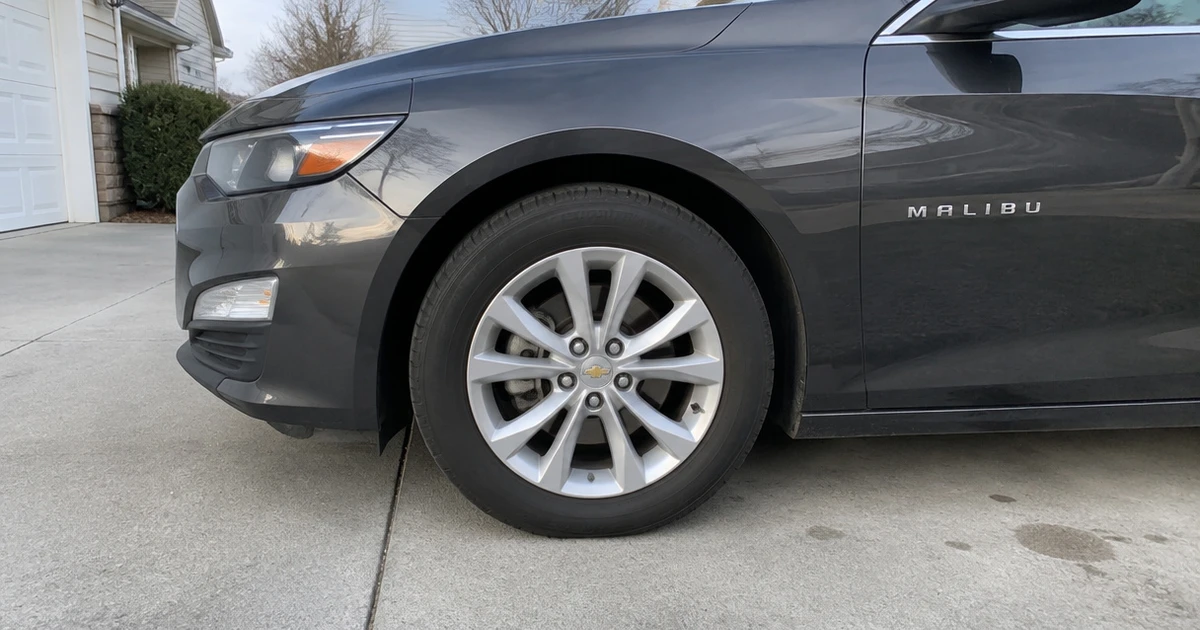
Your Malibu’s tire choice affects braking, steering, cabin noise, and how often you replace the set. Start with the required fitment, then weigh local weather and the roads you drive most.
Confirm the correct size and ratings
Start with the tire size printed on the driver-door placard or in the owner’s manual for your exact model year and trim. Malibu fitments vary, so do not rely on a size from another car or assume every trim uses the same wheel.
Match the load index and speed rating to the vehicle’s requirements, too. The load index tells you how much weight each tire can carry, while the speed rating signals its tested speed capability.
A tire shop can confirm alternate fitments, but keep the overall tire diameter close to stock so the speedometer, clearance, and handling stay consistent. Avoid mixing sizes across axles unless the vehicle maker approves that setup.
Choose for your winter conditions
Think about the coldest and snowiest conditions you regularly face, not just the average day. Standard all-season tires suit mild weather and occasional light snow, while all-weather tires carry the Three-Peak Mountain Snowflake symbol and offer more winter bite. Dedicated winter tires use a cold-weather rubber compound, and their tread grips snow and ice.
Use this as a starting point, then check local winter rules and your own route. If you drive mostly on cleared roads, an all-season set may be enough; steep hills or frequent storms make a winter-focused option easier to justify.
| Tire type | Best suited to | What to expect |
|---|---|---|
| All-season | Mild winters, occasional light snow | Everyday grip, limited snow traction |
| All-weather | Frequent cold weather and snow | Year-round use, stronger snow grip |
| Winter | Regular ice, deep snow, sustained cold | Strong cold-weather grip, seasonal change needed |
Prioritize wet-road control
Rain performance matters in a sedan you use for commuting, since standing water can reduce contact and raise hydroplaning risk. Look for circumferential grooves that move water away and open lateral channels that help clear water from the tread. Tire tests and independent reviews can help compare wet braking and cornering, but compare results within the same size when possible.
Keep in mind that worn tread sheds less water. If you replace only two tires, choose the same size and type as the remaining pair when possible, and have a professional check compatibility.
For better wet stability, tire makers generally recommend putting the newer pair on the rear axle, even on a front-wheel-drive car. Check tread depth before a long rainy-season trip.
Look beyond the mileage warranty
Compare the mileage warranty as a rough point of reference, not a promise of how long your tires will last. Driving style, road surface, pressure, alignment, and rotation habits all affect wear. A longer warranty may suit highway commuters, but it will not help if you often drive on rough streets or skip maintenance.
Check tread across the full width every month and watch for uneven wear, bulges, cuts, or vibration. Rotate tires on the schedule in your owner’s manual, and correct pressure when the tires are cold using the door placard.
Replace tires before wear reaches the bars if wet grip has dropped or the tread looks uneven. A pull while driving can also point to alignment problems that speed up wear.
Balance comfort, noise, and efficiency
For a quiet cabin, look for touring tires with tread patterns that vary block shape and spacing to reduce a steady hum. A soft ride can matter more than quick steering response if your Malibu spends most of its time on highways or patched city pavement. Performance tires often feel more direct, but their firmer response may pass more road texture into the cabin.
Also check the tire’s rolling resistance if fuel use is a concern; lower-resistance designs can reduce energy loss, though grip and ride still matter. Read noise and comfort comparisons for the exact size you plan to buy, since the same tire can behave differently across sizes and vehicles. A correctly sized tire also helps preserve the ride and steering feel the carmaker intended.
Frequently Asked Questions
What tire size does a Chevy Malibu need?
Size varies by model year, trim, and wheel package. Read the tire placard on the driver-side door jamb or check your owner’s manual, then match the listed size and required load and speed ratings. Do not use the maximum pressure printed on a tire as your normal inflation target.
Are all-season tires suitable for a Chevy Malibu?
All-season tires work for many drivers in regions with mild winters and occasional light snow. They cannot match a winter tire’s grip on packed snow or ice in sustained freezing weather. If winter storms shape your daily commute, choose tires rated for severe snow or use dedicated winter tires.
Can I use all-weather tires year-round?
All-weather tires can stay on the car year-round and offer stronger snow traction than standard all-season tires. Their severe-snow marking helps identify them. They still cannot equal a dedicated winter tire in deep snow and severe cold, and they may wear faster in hot weather than a summer-focused option.
When should I replace my tires?
Replace a tire when tread reaches the wear bars, which mark the legal minimum tread depth in many places, or sooner if wet grip has fallen. Also act on bulges, exposed cords, repeated pressure loss, or sidewall damage. Have a shop inspect any impact damage you cannot judge safely.
How often should I rotate my tires?
Follow the rotation interval in your owner’s manual because tire wear depends on fitment and driving conditions. Many cars call for rotation at regular service intervals, but the manual gives the right schedule for your Malibu. Ask for a rotation sooner if the front tires wear faster or you notice uneven tread.