
This post may contain affiliate links. As an Amazon Associate I earn from qualifying purchases. If you choose to make a purchase, I may earn a small commission at no extra cost to you.
Choosing tires for a Q50 can feel simple until you compare sporty summer rubber, all-season options, and winter-focused designs. The wrong match can blunt steering response, add road noise, or leave you short on grip when temperatures drop. Fitment also varies by trim and wheel setup, so a tire that suits one Q50 may not fit yours.
Start with the placard on your driver’s door, which gives the tire size, load index, and speed rating. Then weigh your climate, commute, and appetite for sharper handling. The options below cover the best tires for Infiniti Q50 you can buy in 2026, with choices for wet roads, snow, warm-weather driving, and quieter daily use.
Our Top Tires for Infiniti Q50 Picks


More Details on Our Top Picks
Pros
- Responsive steering for a sporty sedan
- Asymmetric tread balances cornering and wet grip
- High-silica compound supports year-round traction
- Designed to retain performance as it wears
Cons
- Deep-snow grip falls short of a dedicated winter tire
An asymmetric tread gives Michelin Pilot Sport All Season 4 the quick, precise character you want from a Q50 performance tire, with a compound built for year-round use. Michelin designed this line to retain its performance as the tread wears, so its appeal goes beyond a sharp feel when new.
A high-silica compound and distinct tread zones balance dry-road response with wet traction. Large shoulder blocks give you a firm base through corners, while the grooves channel water away from the contact patch.
The steering response feels direct and controlled during brisk driving. On wet roads, the tread design maintains grip under braking, giving you more confidence when rain interrupts a commute.
Michelin developed this tire for drivers who want an engaging ride without switching to a separate tire for every season. Its Corvette selection also reflects the line’s performance focus.
For everyday Q50 use, you get a useful mix of responsive handling and lasting tread life. The asymmetric tread design and all-season performance make the Pilot Sport All Season 4 a versatile fit for changing road conditions.
Bottom line: Choose this Michelin if you want sharp handling through most of the year. It suits Q50 drivers who face changing weather but still enjoy a lively drive.
Pros
- SportPlus Technology targets responsive handling
- DWS indicators track dry, wet, and snow tuning
- Strong wet and dry braking
- Up to 50,000-mile limited tread-life coverage
Cons
- Snow grip cannot match a dedicated winter tire
Drivers who deal with wet commutes and occasional snow can get confident, sporty handling from Continental ExtremeContact DWS06 Plus. Continental’s SportPlus Technology focuses on responsive steering, wet and dry grip, and tread life.
The DWS markings built into the tread act as simple performance cues. The D, W, and S letters fade as the tire wears, showing when it no longer has the same level of tuning for dry, wet, or snowy conditions.
Continental uses an asymmetric tread with traction features that bite into the road. The design gives your Q50 steady braking on wet pavement and a composed feel when you change direction on a dry road.
This tire also carries a limited tread-life warranty of up to 50,000 miles. That coverage gives you a clear measure of its long-wearing intent, while the sporty tread pattern keeps the look in step with a performance sedan.
The DWS tread indicators add a useful visual cue that many all-season tires lack. If your driving includes changing weather, the ExtremeContact DWS06 Plus gives you responsive all-season control without dulling the Q50’s character.
Bottom line: This Continental suits Q50 drivers who want one tire for wet roads, dry stretches, and occasional winter weather. Pick it for its clear tread-wear cues and broad seasonal range.
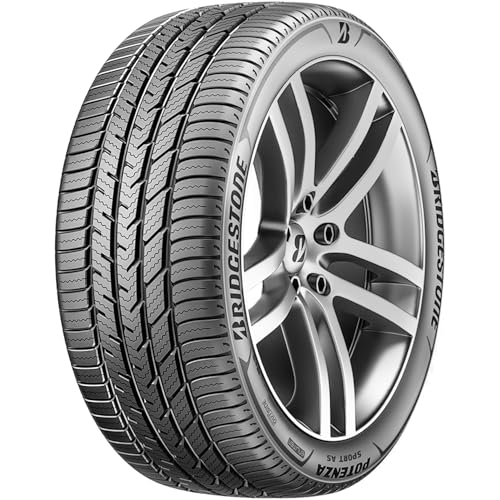
Bridgestone Potenza Sport AS
Pros
- PeakLife compound promotes long tread life
- Circumferential and lateral grooves clear water
- Full-depth 3D sipes add biting edges
- Up to 50,000-mile limited tread-life coverage
Cons
- Steering response feels less immediate than a summer tire
A steady feel through rain and corners is central to Bridgestone Potenza Sport AS. Its circumferential and lateral grooves push water out from beneath the tread, helping your Q50 stay composed on wet pavement.
Bridgestone’s PeakLife compound balances grip with long-term wear. Full-depth 3D sipes add biting edges across the tread, while the open shoulder design gives the tire room to grip through turns.
On dry roads, the Potenza Sport AS delivers the firm response expected from a UHP all-season tire. The tread blocks hold their shape as you steer, so the car feels settled when you take a sweeping ramp or change lanes.
Those same grooves come into play during heavy rain, where water clearance matters for braking and control. Bridgestone backs the tire with a limited tread-life warranty of up to 50,000 miles.
For Q50 drivers, the water-clearing groove layout is a practical feature for wet-season driving. The Potenza Sport AS combines that design with PeakLife compound technology for a balance of grip and wear.
Bottom line: Consider this Bridgestone if rain grip matters as much as dry-road response. It fits Q50 drivers who want a sporty all-season tire with long-wear design features.
Pros
- Tread design targets wet-road braking
- Maintains grip in light snow
- Built-in gauge shows tread wear
- Up to 45,000-mile limited tread-life warranty
Cons
- Light-snow traction does not replace winter-tire grip
Rain can quickly test a sporty sedan’s braking and steering, and Goodyear Eagle F1 All Season puts wet control near the center of its design. Its advanced tread pattern helps the tire maintain grip on slick roads, including in light snow.
The durable tread compound supports longer-lasting all-season performance. Goodyear also builds a wear gauge into the tread, giving you a straightforward way to track how much tread remains.
On dry pavement, the Eagle F1’s sporty pattern suits the Q50’s responsive nature. You get an assured feel through ordinary corners and steady control during routine braking, while the tread channels water during rainy drives.
Goodyear covers the tire with a limited tread-life warranty of up to 45,000 miles. That combination of a wear gauge and warranty makes tread longevity a clear part of the design, rather than an afterthought.
The wet-braking focus gives the Eagle F1 All Season a useful role in a Q50 driven through frequent rain. Its built-in wear gauge also makes tread condition easy to read at a glance.
Bottom line: Go with this Goodyear if rainy roads shape much of your driving. It suits Q50 owners who want sporty road manners and a clear tread-wear gauge.
Pros
- 3PMSF certification for snow performance
- Directional tread moves water and slush
- 3D SipeLock technology adds biting edges
- Designed to retain wet and dry braking as it wears
Cons
- Directional tread limits rotation to specific patterns
Michelin built CrossClimate2 around a directional V-shaped tread that moves water and slush away from the contact patch. Its 3PMSF certification marks it as an all-weather tire with tested snow traction, a useful trait for Q50 drivers facing real winter weather.
The tread uses 3D SipeLock technology to create biting edges for grip in snow and rain. Michelin’s thermal adaptive compound also adjusts to changing temperatures, keeping the tread useful across a wider range of conditions than a summer-focused design.
On dry pavement, CrossClimate2 gives you confident braking and stable handling for everyday driving. Its directional tread and all-weather compound make it more focused on year-round traction than crisp, sporty steering.
Michelin designed the tire to maintain performance as it wears, including its wet and dry braking ability. The line also has a reputation for long tread life, giving you a touring-style option for a Q50 used through every season.
The 3PMSF snow rating and directional V-shaped tread set CrossClimate2 apart from ordinary all-season designs. You get a broad weather range without giving up the calm road manners of a touring tire.
Bottom line: CrossClimate2 suits Q50 drivers who regularly face snow and want year-round traction. Choose it if winter capability matters more than the sharpest summer steering feel.
Pros
- Bi-Compound tread balances dry and wet grip
- Precise steering response
- Strong wet braking performance
- Motorsport-derived design
Cons
- Summer compound loses grip in near-freezing weather
Motorsport know-how shapes Michelin Pilot Sport 4S, a summer tire made for precise handling and strong grip. Michelin’s Bi-Compound tread uses different rubber mixes across the tread to balance dry cornering grip with wet-road braking.
The outer tread compound focuses on grip through fast turns. On the inner side, a silica-rich compound improves wet traction, giving your Q50 a useful blend of control on dry pavement and braking confidence in rain.
Michelin’s Dynamic Response Technology uses a reinforced belt structure to keep steering inputs accurate. That direct response suits a driver who enjoys a connected feel through corners and quick changes in direction.
The Pilot Sport 4S draws on Michelin’s endurance racing experience and appears on high-performance cars from brands such as Mercedes-AMG, Ferrari, and Porsche. Its design brings that performance focus to spirited road driving, where precise feedback and grip matter.
For warm-weather use, the Bi-Compound tread gives the Pilot Sport 4S its distinct mix of dry grip and wet control. The reinforced belt structure helps your Q50 respond cleanly when you turn in.
Bottom line: This Michelin fits Q50 drivers who prioritize precise steering and strong warm-weather grip. Choose it for summer driving and spirited road use.
Pros
- SportPlus Technology targets responsive handling
- Strong dry and wet grip
- Short braking distances in wet and dry conditions
- Up to 30,000-mile limited tread-life coverage
Cons
- Limited tread-life warranty suits fewer miles than touring tires
Continental ExtremeContact Sport 02 gives performance-minded Q50 drivers a summer tire built for confident braking and fast responses. Its SportPlus Technology targets grip on both dry and wet roads, with tread features designed to keep handling composed.
The asymmetric tread has broad shoulder blocks that help the tire hold its line through corners. Continental’s compound also aims to balance strong grip with useful tread life, a practical trait for a tire that invites spirited driving.
On wet pavement, the tread clears water and maintains braking control. On a dry road, its firm response makes steering inputs feel direct, whether you are taking a sweeping bend or joining fast-moving traffic.
Continental offers a limited tread-life warranty of up to 30,000 miles. The tire’s performance credentials have also drawn approval from groups such as the AMG Driving Academy and ROUSH Performance.
The SportPlus Technology and asymmetric shoulder design define the ExtremeContact Sport 02’s road feel. It gives your Q50 the focused response of a summer performance tire while retaining attention to wet-road grip.
Bottom line: Choose this Continental for a Q50 that sees spirited summer drives and occasional track days. Its steering and braking focus suit drivers who value performance feedback.
Pros
- Compound targets quick warm-up and wet grip
- Reinforced belts support steering response
- Rib design aids cornering
- Tread design targets lower road noise
Cons
- Summer tread does not suit freezing or snowy roads
Warm-up response and cornering control shape the Pirelli P Zero PZ4. Its tread compound reaches its working range quickly and targets wet-road performance, giving your Q50 a focused feel in warm, changeable weather.
A ribbed tread layout helps the tire hold its line through turns. Reinforced steel belts add support beneath the tread, so steering inputs feel controlled as you carry speed through a curve.
Pirelli also tunes the PZ4’s tread to reduce rolling resistance and road noise. That focus brings a calmer ride to a performance tire, especially during steady highway driving.
The P Zero PZ4 line offers options such as RunFlat, Pirelli Noise Cancelling System, and SealInside technology on select versions. Those features vary across the line, while the core design centers on warm-weather handling, wet grip, and a refined ride.
The reinforced steel belt and cornering-focused rib design give the PZ4 a responsive character for a Q50. Its balance of grip and reduced road noise makes it comfortable for regular road use.
Bottom line: The PZ4 suits Q50 drivers who want a refined summer tire with confident cornering. Choose it for warm-weather commutes and spirited road driving.
Pros
- 4D Advanced Nano Technology compound
- High-grip chamfer supports dry handling
- Interlocking sipes aid wet and light-winter traction
- Up to 50,000-mile limited tread-life coverage
Cons
- Light-winter grip falls short of a dedicated winter tire
Falken uses 4D Advanced Nano Technology in the Azenis FK460 A/S compound to keep the rubber flexible through changing seasons. That design gives Q50 drivers year-round traction while retaining the sporty feel expected from an all-season performance tire.
A high-grip chamfer in the tread helps the tire respond cleanly on dry pavement. Interlocking sipes create extra biting edges for braking in wet weather and light winter conditions.
Falken’s emerging grooves direct water away from the contact patch. They continue to serve that purpose as the tread wears, adding a useful wet-road feature over the tire’s life.
The Azenis FK460 A/S comes with a limited tread-life warranty of up to 50,000 miles. Its mix of dry handling features, wet-weather channels, and all-season compound gives the Q50 a practical balance for regular driving.
The 4D Advanced Nano Technology compound and emerging water channels are the key design details here. They give the FK460 A/S a steady role for drivers who want performance handling without giving up seasonal range.
Bottom line: This Falken suits Q50 drivers who want a long-wearing all-season tire with a sporty tread design. Pick it for regular use across dry, wet, and light-winter conditions.
Pros
- Tread design targets lower road noise
- Four wide grooves clear water
- All-season compound supports year-round traction
- Reinforced construction supports durability
Cons
- Steering response is less sharp than a summer performance tire
A quieter ride is part of the Hankook Ventus S1 AS design. Its tread layout aims to reduce road noise and vibration, giving you a more relaxed cabin during daily Q50 commutes and longer highway drives.
The all-season rubber compound provides traction across changing road conditions. Four wide grooves move water out from under the tread, supporting wet grip when rain covers the road.
Hankook reinforces the tire’s construction to add strength and support its load capacity. That structure also contributes to durability, while the tread compound keeps the tire suited to year-round passenger-car use.
The Ventus S1 AS favors comfort alongside its performance-tire design. You get a composed ride and practical wet-weather traction without a harsh, noisy feel dominating the drive.
For a Q50 used for commuting, the noise-conscious tread design can make regular road time more comfortable. Its four wide water grooves add a clear wet-weather benefit when conditions turn rainy.
Bottom line: Choose the Hankook if quiet comfort matters on your daily Q50 drive. It suits drivers who want all-season traction with a calm highway ride.
Factors to Consider When Choosing Tires for Infiniti Q50

Before you compare tread patterns, confirm your car’s factory fitment and decide which conditions matter most. A Q50 can reward a responsive tire, but your climate and wheel setup should guide the choice.
Confirm the Exact Fitment
Start with the tire size on the driver-door placard or in the owner’s manual, not a guess based on wheel diameter. The full sidewall code gives the width, aspect ratio, construction, and wheel diameter, while the load index and speed rating show the tire’s capacity and rated speed.
Check all four positions, since some Q50 wheel packages pair different sizes at the front and rear. Compare these details with the placard and manual:
- Tire size and approved wheel diameter
- Load index and speed rating
- Front and rear fitment
Match or exceed the original load and speed ratings. A tire can fit the rim and still be wrong for the car if its rating or position does not match the factory setup.
Match the Tire to Your Climate
Think about the coldest and hottest conditions you drive in, not only the season when you buy tires. All-season designs suit moderate climates and mixed daily use; summer tires favor warm pavement and sharper response, while winter tires use rubber that stays pliable in cold weather and tread built for snow.
If temperatures often fall near freezing or you drive in snow, use winter tires for the cold season rather than expecting summer tires to cope. All-weather tires can handle more winter conditions than standard all-season tires, but match their abilities to your local roads.
| Tire type | Best fit | Main trade-off |
|---|---|---|
| All-season | Mild winters and mixed use | Less snow grip than a winter tire |
| Summer | Warm roads and responsive handling | Poor choice in cold weather |
| Winter | Cold weather and snow | Needs a seasonal change |
| All-weather | Drivers facing varied seasons | Compromise in severe winter conditions |
Choose the Right Balance of Grip and Response
Your Q50’s steering feels more direct with a tire that holds its shape through turns and communicates grip clearly. Look for a performance-oriented tread and a speed rating that meets the car’s factory requirement. A higher speed rating alone does not promise shorter stops or better handling; the compound, tread design, and road temperature all shape grip.
Think about your driving pace and road surface. If you mainly commute, a balanced touring or performance all-season tire usually gives you more useful wet-weather range than an extreme summer design. If you take spirited drives on warm, dry roads, a summer tire can sharpen response but gives up cold-weather flexibility.
Weigh Comfort, Noise, and Tread Life
A Q50’s cabin can make tire roar easy to hear, especially on rough pavement. Tread patterns with a focus on quiet road manners can help, while low-profile tires often send more sharp bumps into the cabin. Your wheel and tire setup also affects ride comfort, so keep the factory size in mind as you compare options.
For many passenger tires, the UTQG treadwear grade offers a rough comparison, but it does not promise a set number of miles. Driving habits, road surfaces, alignment, and inflation all affect wear. If you want the tread to last, check for a clear treadwear warranty and follow the tire maker’s care guidance.
Account for Drivetrain and Tire Care
Q50 models can use rear-wheel drive or all-wheel drive, so check your owner’s manual before choosing a replacement plan. AWD systems can react poorly to tires with very different rolling circumferences. Keep tread depth closely matched across the car, and follow the manual’s guidance if damage forces you to replace fewer than four tires.
Some setups use different tire sizes at the front and rear, which limits rotation options. Follow the rotation pattern in the manual instead of swapping tires between positions by habit. Check tire pressure when the tires sit cold, use the door placard’s pressure target, and schedule an alignment if the tread wears unevenly.
Frequently Asked Questions
What tire size does an Infiniti Q50 use?
Q50 tire size depends on trim, wheel package, and whether the car has a staggered setup. Read the tire-size label on the driver-door placard and confirm it in the owner’s manual. Match the full size, load index, and speed rating rather than choosing by wheel diameter alone.
Can you use all-season tires on a Q50 year-round?
Yes, if your winters stay mild and you choose tires suited to the conditions you face. All-season tires handle varied weather, but they lose grip as temperatures fall and cannot match dedicated winter tires on snow and ice. If you drive through frequent snow or sustained freezing weather, use winter tires for that season.
Can you mix different tires on an Infiniti Q50?
Use the same tire model across all four positions when the car’s setup allows it. Different tread designs can respond unevenly during braking or cornering, and AWD systems need closely matched rolling circumferences. If you replace fewer than four tires, match the remaining tires as closely as possible and follow the owner’s manual.
When should you replace Q50 tires?
Replace a tire when its tread reaches the wear bars, when damage affects the sidewall or tread, or when cracks appear from age. Worn tread has less grip on wet roads, even before it reaches the legal limit. Check all four tires regularly, since alignment or pressure problems can wear one tire faster than the rest.
What tire pressure should you use for an Infiniti Q50?
Use the cold tire pressure listed on the driver-door placard, not the maximum pressure printed on the tire sidewall. Check pressure before driving or after the car has sat for several hours. Cold weather can lower pressure, so check it more often when temperatures change sharply.