
This post may contain affiliate links. As an Amazon Associate I earn from qualifying purchases. If you choose to make a purchase, I may earn a small commission at no extra cost to you.
Your Mazda 6 can feel composed and quiet on the right tires, but a poor match can make rain, cold weather, or rough pavement more tiring. You need to balance grip, ride comfort, tread life, and the conditions you face most.
Check the size and load rating on your driver-door placard, then choose a tire type that fits your climate and driving habits. Sport-focused tires can sharpen steering, while touring tires often favor comfort and longer wear.
The best tires for Mazda 6 you can buy in 2026 serve different needs, from wet roads and snow to quiet commuting, long tread life, and summer grip. Use the guide below to narrow your choice and confirm fitment.
Our Top Tires for Mazda 6 Picks


More Details on Our Top Picks
Pros
- Quick steering response for an all-season tire
- Strong grip on dry and wet roads
- 360-degree variable sipes add extra biting edges
- Sport-focused design works across seasons
Cons
- Less snow and ice grip than a dedicated winter tire
- Sporty tread can feel firm on rough pavement
Michelin Pilot Sport All Season 4 brings a sharp, sporty feel to a tire built for changing weather. Its asymmetric tread and performance-focused compound give your Mazda 6 responsive steering and strong grip on dry pavement, while deep circumferential grooves help clear water.
Michelin uses 360-degree variable sipes to add biting edges across the tread. That design helps the tire hold traction in rain and light snow without dulling its quick response on clear roads. Chevrolet chose it as the first all-season tire for the Corvette, a sign of the performance focus behind the line.
On the highway, the steering feels precise, and the tire settles into a composed ride. It also keeps its sporty character across a range of temperatures, so you can use it beyond warm-weather months. The Pilot Sport All Season 4 balances those traits with year-round versatility and responsive handling.
This tire suits Mazda 6 drivers who enjoy brisk cornering but need one set for varied conditions. It does not replace a dedicated winter tire when snow and ice become severe.
Bottom line: Choose it for a Mazda 6 that sees spirited driving as well as everyday weather. It fits drivers who value sharp handling without switching to a summer tire.
Pros
- SportPlus Technology supports responsive handling
- Tuned indicators track dry, wet, and snow performance
- Strong wet and dry braking
- Tread-life coverage up to 50,000 miles
Cons
- Severe winter weather calls for a dedicated winter tire
- Firm ride may feel less cushioned on broken pavement
Rain can expose the limits of a performance tire, so Continental gives the ExtremeContact DWS06 Plus broad wet-weather ability alongside its sporty road manners. SportPlus Technology pairs responsive handling with grip on wet and dry pavement, while the tread channels water away from the contact area.
Continental’s Tuned Performance Indicators put D, W, and S marks in the tread. As the tread wears, those letters disappear to show when the tire no longer has its original tuning for dry, wet, or snow conditions. The feature gives you a quick visual cue about how its performance changes over time.
The DWS06 Plus also handles light snow and ice better than a summer performance tire. Its tread design and biting edges give it useful winter traction, though it cannot match a dedicated winter tire in harsh conditions. Continental backs it with up to 50,000 miles of tread-life coverage, and the sporty sidewall design keeps its appearance in step with its quick responses.
For a Mazda 6, it blends firm steering with useful wet-weather grip. The steering stays composed through lane changes, and braking feels reassuring on wet pavement.
Bottom line: Consider it for a Mazda 6 you drive year-round in a mix of rain, dry roads, and occasional snow. Its visible tread indicators add a practical touch as the tire wears.
Pros
- Three-Peak Mountain Snowflake certification
- Directional tread moves water away
- Useful traction in moderate to severe winter weather
- Michelin emphasizes performance as the tread wears
Cons
- Directional tread can produce more road noise on some surfaces
- Less sporty steering feel than a performance tire
A directional V-shaped tread gives the Michelin CrossClimate2 a distinctive look and a clear purpose: dependable traction through changing weather. The tread pattern moves water away from the contact patch, while its rubber compound stays adaptable across a range of temperatures.
Michelin gives the tire a Three-Peak Mountain Snowflake certification, which marks it for use in moderate to severe winter conditions. Its tread blocks carry numerous biting edges for snow grip, yet the tire also delivers confident braking on dry roads. That broad ability makes the CrossClimate2 an option for Mazda 6 drivers who face real winter weather but still spend much of the year on pavement.
Michelin focuses on keeping performance steady as the tread wears. The tire’s year-round grip and snow-rated traction make it more capable in winter than a typical touring all-season design. It also aims for long tread life, so you can keep its seasonal flexibility over many miles.
The steering has a stable, composed character during everyday driving. On wet roads, the directional grooves help clear standing water and support confident braking.
Bottom line: This suits Mazda 6 drivers who need a single tire for wet roads and regular winter conditions. Choose it when snow traction matters more than a sharp, sporty feel.
Pros
- AquaTred grooves clear water and slush
- Evolving grooves maintain water channels as tread wears
- Severe-snow designation adds winter capability
- Comfort inserts reduce bumps and vibration
Cons
- Touring-focused steering feels less quick than a performance tire
- Snow traction does not replace a dedicated winter tire in severe conditions
Water and slush can make a familiar road feel unpredictable, and Goodyear builds the Assurance WeatherReady 2 around clearing both from the tread. AquaTred Technology uses sweeping grooves to move water away, while Evolving Traction Grooves keep providing channels as the tread wears.
Goodyear’s specialized tread compound stays flexible through seasonal temperature shifts. The tire also carries a severe-snow designation, giving it added credibility for winter driving beyond light flurries. For a Mazda 6, that combination can help maintain control through wet commutes and occasional snow.
Comfort gets attention too. Goodyear uses inserts to soften bumps and reduce vibration, while a multi-pitch tread sequence varies the block sizes to lower road noise.
Those details give the tire a calmer character on long highway drives, and the steering remains steady when you change lanes. Its water-clearing tread and comfort-focused construction shape the experience more than a sporty, sharp-edged feel.
The WeatherReady 2 focuses on grip and comfort through changing weather. It offers a well-rounded touring feel for drivers who spend plenty of time on wet roads.
Bottom line: Choose it for a Mazda 6 used on rainy roads and winter commutes, especially if you value a quieter ride. It puts wet-weather control ahead of sporty steering response.
Pros
- 80,000-mile treadwear warranty
- Locking 3-D Sipes add wet and dry braking edges
- Redesigned tread focuses on extended wear
- Calm, predictable touring manners
Cons
- Less responsive steering than a performance tire
- Not built for severe winter conditions
Long tread life is the Defender2’s calling card. Michelin redesigned the tire around extended wear, then added Locking 3-D Sipes that create extra biting edges for braking on wet and dry pavement.
Those sipes interlock under pressure instead of letting the tread blocks flex freely. That gives the Defender2 a stable feel during braking and helps it hold its shape as the miles add up. Michelin backs it with an 80,000-mile treadwear warranty and a six-year standard limited warranty.
On a Mazda 6, this touring tire favors calm, predictable road manners over quick cornering response. Its all-season tread suits daily trips and highway miles, while the siping adds useful grip when rain covers the road. Michelin also highlights long tread life as a core strength, so the Defender2 can appeal to drivers who want fewer tire changes over time.
The steering feels measured rather than sporty, and the ride focuses on comfort. Its long-wearing tread and dependable braking make the Defender2 a practical option for drivers who value mileage and everyday control.
Bottom line: The Defender2 fits Mazda 6 drivers who cover many miles and want a long-wearing touring tire. It favors steady comfort and tread life over sporty handling.
Pros
- 70,000-mile limited treadwear warranty
- Touring design balances wet and dry grip
- Comfortable, composed road manners
- Tread pattern helps limit road noise
Cons
- Less sharp cornering response than a performance tire
- Limited snow grip compared with a winter tire
A composed ride and a polished road feel define the Pirelli P7 AS Plus 3. Pirelli built this grand touring all-season line for drivers who want confident pavement grip without a harsh, noisy character.
Its updated tread compound and pattern balance wet and dry traction with long wear. The design gives the tire a stable footprint on the road, while its all-season tread brings useful grip through everyday changes in weather. On a Mazda 6, that balance suits commutes and highway trips where smooth steering matters more than track-day sharpness.
The P7 AS Plus 3 carries a 70,000-mile limited treadwear warranty in covered applications. Pirelli gives the line a measured, comfortable character, and the tread pattern helps keep road sound from dominating the cabin. Its steering response feels controlled, so the tire stays predictable during normal lane changes and bends.
This tire puts touring comfort first, but it still carries the road-focused feel associated with Pirelli. You get balanced all-season grip and a relaxed ride for routine driving.
Bottom line: The P7 AS Plus 3 suits a Mazda 6 used for commuting and long highway drives. Pick it if a comfortable ride and solid tread life matter more than aggressive handling.
Pros
- Bi-Compound Technology balances dry grip and wet traction
- Aramid-and-nylon belt sharpens steering response
- Strong dry cornering and wet braking
- Racing-derived design favors high-speed control
Cons
- Summer tread lacks winter and snow capability
- Cold temperatures reduce its suitability
Michelin’s Bi-Compound Technology gives the Pilot Sport 4S a focused mix of dry cornering grip and wet-road control. The outer tread uses a compound for dry handling, while the inner section targets wet traction.
Dynamic Response Technology pairs an aramid-and-nylon belt with the tread to sharpen steering response. Michelin developed the Pilot Sport 4S from endurance racing experience, and its reputation among high-performance car makers reflects that emphasis on control. For a Mazda 6 driver who enjoys lively summer roads, it delivers a more direct feel than a touring tire.
The tire grips firmly through dry corners and brakes well on wet pavement. Its structure keeps steering input precise at speed, which gives the car a planted feel through fast curves. Dry-road grip and precise steering are the main reasons to choose it.
The Pilot Sport 4S is a summer tire, so it does not suit cold-weather driving or snow. Its specialized tread works best in warm conditions, where its cornering response and braking can shine.
Bottom line: Choose the Pilot Sport 4S for a Mazda 6 driven mainly in warm weather, with handling as the priority. It suits drivers who want crisp steering and strong cornering grip.
Pros
- Multi-pitch tread helps reduce road noise
- Tread design limits vibration
- Compound resists irregular and premature wear
- Pattern evacuates water and winter slush
Cons
- Less suited to aggressive cornering than a performance tire
- Winter traction has limits in severe snow
A quiet cabin can make routine miles easier, and the Bridgestone Turanza EverDrive uses a multi-pitch tread pattern to reduce road noise and vibration. Its touring design aims for comfort without giving up useful control in changing weather.
Bridgestone pairs that pattern with a next-generation compound that resists irregular and premature wear. The tread also moves water and winter slush away from the contact area, giving the tire added confidence on wet roads. For a Mazda 6, that mix suits daily driving where a smooth ride matters as much as dependable traction.
The EverDrive has a comfort-focused tread and wear-conscious compound. Its pattern helps keep the cabin quieter over steady highway stretches, while water channels support control when the pavement turns slick. It takes a measured touring approach rather than chasing a firm, sporty response.
That focus makes the tire well suited to ordinary road use across changing seasons. It brings comfort, noise control, and wet-weather capability together in a straightforward package.
Bottom line: The Turanza EverDrive suits a Mazda 6 driver who values a quieter cabin and a smooth ride. Choose it for routine driving through wet weather and occasional winter slush.
Pros
- Three-Peak Mountain Snowflake certified
- Snow claws add grip on snowy roads
- Dense siping and zigzag blocks add biting edges
- 60,000-mile limited treadwear warranty
Cons
- Steering feels less sporty than a performance tire
- A dedicated winter tire can offer more severe-weather focus
Snow claws built into the Toyo Celsius II tread give it a useful edge on snowy roads. Toyo combines those features with zigzag tread blocks and dense siping to create more biting edges for winter traction.
The Celsius II carries the Three-Peak Mountain Snowflake certification for moderate to severe winter conditions. Its all-weather design suits drivers who want a single tire for year-round use, especially where snow arrives regularly. A 60,000-mile limited treadwear warranty adds a long-use angle to its winter-focused design.
On wet pavement, the tread channels help move water away from the contact area. The Celsius II brings a secure, steady feel in cold weather, though its touring character does not deliver the quick steering response of a performance tire. For Mazda 6 drivers, that trade favors winter grip over sporty handling.
Its snow claws and dense siping make the tire’s purpose clear. It handles everyday roads across the seasons, with its strongest appeal arriving when snow and cold become part of the drive.
Bottom line: Consider the Celsius II for a Mazda 6 that faces regular winter weather. It suits drivers who want snow traction and year-round use from one tire.
Pros
- Strong wet and dry braking
- Engineered for snow traction
- Low road noise for a performance tire
- Tread-life coverage up to 50,000 miles
Cons
- Severe winter weather calls for a dedicated winter tire
- Firmer ride than a comfort-focused touring tire
Strong braking gives the General G-MAX AS-07 its appeal as a high-performance all-season tire. General tunes the tread for wet and dry stopping, then adds snow traction for drivers who want more seasonal range than a summer tire offers.
The G-MAX AS-07 also focuses on quiet road manners. Its tread design limits road noise, which helps keep everyday drives comfortable even with the tire’s sporty intent. General backs it with up to 50,000 miles of limited tread-life coverage, giving it a practical side alongside its performance leanings.
On a Mazda 6, the tire brings a more engaged feel than a comfort-first touring design. It grips well during dry driving and maintains useful control when rain covers the road. Snow traction adds some flexibility for winter trips, though a dedicated winter tire remains better suited to severe snow and ice.
Its blend of wet and dry braking with a quieter ride gives the G-MAX AS-07 a balanced character. The tire suits drivers who want responsive road manners without giving up all-season use.
Bottom line: The G-MAX AS-07 fits Mazda 6 drivers who want sporty road response for daily use. It offers a useful blend of braking, snow traction, and quieter cruising.
Factors to Consider When Choosing Tires for Mazda 6
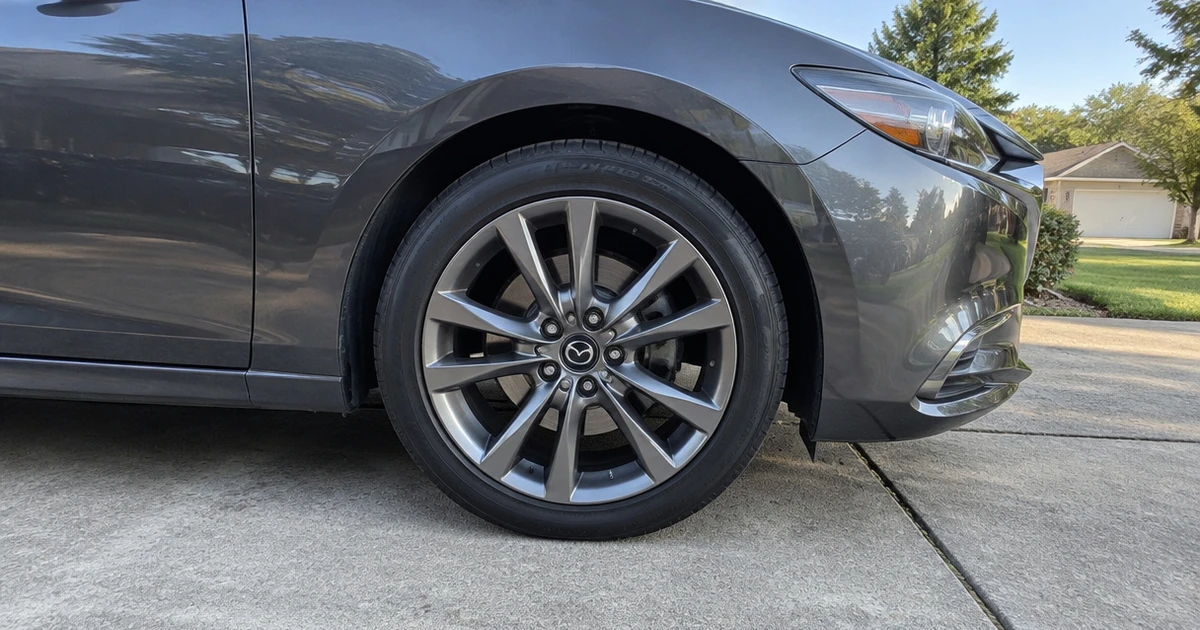
Your tire choice affects how your Mazda 6 handles rain, rough pavement, and daily commutes. Start with fitment, then weigh your climate, comfort needs, and driving habits.
Tire Fitment and Pressure
Check the tire placard on the driver-side door jamb and your owner’s manual before you shop. Mazda 6 fitments vary by model year and trim, so the size on your current tires may not match the approved setup if a previous owner changed the wheels.
Match the listed tire size, load index, and speed rating at minimum. The load index shows how much weight each tire can carry, while the speed rating reflects its tested speed capability. Dropping below the vehicle’s stated ratings can affect safety and handling.
Set pressure from the placard, not the maximum printed on the tire sidewall, and check it when the tires are cold. If you change wheel size, ask a qualified tire shop to confirm clearance, load capacity, and fitment.
Climate and Tire Type
Let your usual weather guide the tire category. All-season tires suit mixed conditions and mild winters, while dedicated winter tires offer more grip in frequent snow and icy weather. Summer tires give responsive steering on warm, dry roads, but their compounds stiffen in cold temperatures and they do not suit snow.
Think about how long cold conditions last, not whether snow falls once or twice. For frequent ice, plan for a winter set and seasonal changes; for mild winters, all-season tires may suit year-round use. Check the severe-snow marking if winter grip matters.
| Tire type | Best fit | Trade-off |
|---|---|---|
| All-season | Mixed, mild conditions | Less grip in deep snow and ice |
| Winter | Frequent snow and cold | Seasonal tire changes |
| Summer | Warm, snow-free months | Reduced grip in cold weather |
Wet-Road Grip
Rain grip depends on the rubber compound and the tread’s ability to move water out of the contact patch. Look for deep circumferential grooves and lateral channels, and read independent wet-braking tests when available. A traction grade alone cannot describe every road or rain condition.
Keep tread depth in mind, since worn grooves clear less water and raise the risk of hydroplaning. If standing water often covers your route, favor strong wet braking over a design aimed mainly at dry-road cornering. Slow down in heavy rain, even with good tires.
Ride Comfort and Cabin Noise
Cabin noise often comes from tread-block impact and road texture, while a stiffer sidewall can pass more bumps into the car. Look for touring-oriented tires with tests that mention low noise and comfort, rather than relying only on a quiet label or marketing term.
Your Mazda 6 may feel firmer with a shorter sidewall, especially on rough city streets, so the tire alone cannot fix every ride issue. Keep pressure at the placard setting, since overinflation can make impacts harsher. For long highway trips, prioritize steady road manners; for broken pavement, value impact comfort and sidewall protection.
Tread Life and Upkeep
Long tread life depends on the tire’s compound and design, but alignment, pressure, and rotation habits matter too. Read the treadwear warranty as a comparison tool, not a promise: driving conditions and maintenance affect actual life, and warranty terms often require records and even wear.
Inspect tread and sidewalls monthly, and act early if you see uneven wear, cracks, bulges, or recurring pressure loss. Follow the car maker’s rotation schedule and check alignment if the car pulls or the steering wheel sits off center.
- Rotate tires on the schedule in the owner’s manual.
- Keep cold pressure at the door-placard level.
- Ask a shop to check alignment after an impact or uneven wear.
Handling and Replacement Choices
Your regular pace and roads shape the handling you need. If you enjoy quick steering response, look for tires with predictable cornering and strong dry braking, then make sure they also suit your wet-weather use. A high speed rating alone does not mean a tire will give better grip or a more comfortable ride.
For balanced behavior, use the same tire model across all four wheels when practical. If only two tires need replacement, match their size and type to the other pair, then mount the new pair on the rear axle to support stability in wet conditions. Have a shop inspect the remaining tires before you decide.
Frequently Asked Questions
What tire size fits a Mazda 6?
Your correct size depends on the car’s model year and trim, so check the tire placard on the driver-side door jamb or the owner’s manual. Match the full size, load index, and speed rating rather than choosing by wheel diameter alone.
Are all-season tires suitable for snow?
All-season tires can handle light, occasional snow, but their grip drops on packed snow and ice compared with a winter tire. If you drive through frequent snow or long periods of freezing weather, a dedicated winter set gives you better cold-weather traction.
How much tread should tires have before replacement?
Replace a tire before its tread reaches 2/32 inch, a common legal minimum in many U.S. states. Wet grip can fade well before that point, so check the wear bars and use a tread-depth gauge; replace tires sooner if rain braking feels less secure or the tread wears unevenly.
Can I replace only two tires on my Mazda 6?
If two tires still have healthy, even tread, replacing a matched pair on the same axle can work for a front-wheel-drive sedan. Install the newer tires on the rear axle for better stability on wet roads, and keep the size and type matched to the remaining set as closely as possible.
What tire pressure should I use?
Use the cold pressure shown on the driver-door placard or in the owner’s manual, not the maximum pressure molded into the tire sidewall. Check all four tires monthly and before a long trip, since pressure falls in colder weather and underinflation can hurt handling, wear, and fuel economy.