
This post may contain affiliate links. As an Amazon Associate I earn from qualifying purchases. If you choose to make a purchase, I may earn a small commission at no extra cost to you.
Choosing tires for a Mazda CX-30 can feel like a compromise. You may want a calm commute and long tread life, but rain, winter slush, or rough pavement can expose the limits of a tire that looked fine in a showroom. The right choice depends on where you drive and what you expect from the crossover.
Start with the size and ratings listed for your vehicle, then weigh climate, road noise, wet grip, and replacement cost. This roundup of the best tires for Mazda CX-30 you can buy in 2026 covers options for different driving needs, from snow-prone routes to quiet everyday travel, so you can narrow the field with practical priorities in mind.
Our Top Tires for Mazda CX-30 Picks


More Details on Our Top Picks
Pros
- Three-Peak Mountain Snowflake certified
- Strong wet and dry braking
- Directional grooves clear water and slush
- Useful traction across changing seasons
Cons
- Directional tread limits cross-rotation without remounting
The V-shaped tread gives the Michelin CrossClimate2 a clear focus on year-round grip. Its directional grooves channel water and slush away from the contact patch, while a thermal-adaptive tread compound adjusts to changing temperatures.
The Three-Peak Mountain Snowflake certification marks it for severe snow conditions, a useful trait for CX-30 drivers who face real winters. Michelin’s 3D SipeLock technology adds biting edges across the tread, and the tire delivers confident braking on wet and dry pavement.
Michelin CrossClimate2 also balances winter traction with long-wearing everyday manners. Its tread design keeps grip as the tire wears, so you can use it through changing seasons without swapping to a separate winter set.
Bottom line: Choose it for year-round driving that includes serious winter weather and wet roads. It suits you if you want one tire for changing seasons.
Pros
- 80,000-mile limited treadwear warranty
- MaxTouch Construction promotes even wear
- Locking 3-D Sipes add wet-road grip
- Steady touring manners for daily driving
Cons
- Long-wear focus gives steering a calm, less sporty feel
Long commutes and frequent family trips put tread life high on the list, and the Michelin Defender2 focuses on lasting mileage. Its MaxTouch Construction spreads acceleration, braking, and cornering forces across the tread to promote even wear.
Locking 3-D Sipes create extra biting edges for wet and dry braking. The tread blocks lock together under load, which helps the Defender2 keep a steady feel as the road changes from dry pavement to rain.
Michelin backs the Defender2 with an 80,000-mile limited treadwear warranty and a six-year limited warranty. That long-mileage focus pairs well with the calm ride and predictable handling you want from a touring tire on a CX-30 used for regular errands and highway trips.
Bottom line: The Defender2 suits high-mileage drivers who value long tread life and dependable road manners. It is a practical pick for mostly paved routes.
Pros
- Three-Peak Mountain Snowflake certified
- AquaTred grooves clear water and slush
- Evolving grooves retain wet traction as tread wears
- Comfort inserts soften road vibration
Cons
- Cannot match a dedicated winter tire on ice
Changing weather is the problem the Goodyear Assurance WeatherReady 2 is built to handle. Its all-weather tread compound stays adaptable across seasons, and its Three-Peak Mountain Snowflake certification marks it for severe snow conditions.
AquaTred Technology uses sweeping grooves to move water and slush out of the tread. Evolving Traction Grooves keep those channels working as the tire wears, so wet-road grip does not rely on fresh tread alone.
Comfort inserts soften bumps and road vibration while preserving steering control during lane changes. Goodyear also varies the size of the tread blocks in a multi-pitch pattern to reduce the repeating sounds that can build up on longer drives.
Bottom line: Pick the WeatherReady 2 for a CX-30 that sees wet roads and regular winter weather. It fits drivers who want year-round use without giving up winter-rated traction.
Pros
- Quiet ride on paved roads
- EcoPlus Technology targets fuel savings and tread life
- Short wet-road braking
- Up to 70,000-mile limited treadwear warranty
Cons
- Not intended for frequent off-pavement driving
A quiet cabin can make daily CX-30 driving feel more relaxed, and the Continental CrossContact LX25 puts comfort near the center of its design. Its tread keeps road noise low while giving the vehicle responsive handling through the year.
Continental’s EcoPlus Technology targets lower rolling resistance, longer tread life, and shorter stops on wet roads. Those features make the LX25 useful for drivers who spend plenty of time on pavement and want a tire that balances everyday comfort with wet-weather control.
Continental backs the tire with a limited treadwear warranty of up to 70,000 miles. On familiar roads, its touring design favors a composed ride and predictable steering over a sporty, firm feel.
Bottom line: The CrossContact LX25 is a good fit for CX-30 drivers who put comfort and wet-road braking first. Choose it for mostly paved daily travel.
Pros
- All-weather touring focus
- Intended for year-round road use
- Suits changing seasonal conditions
Cons
- Warm-weather steering may feel less sharp than a summer tire
The all-weather focus of the Bridgestone UltraWeather suits CX-30 drivers who deal with changing temperatures through the year. All-weather touring tires aim to keep their grip in colder conditions while still handling the warm, wet roads you meet in other seasons.
That year-round approach can save you from switching between separate seasonal tires. The UltraWeather’s passenger-touring role also puts everyday road manners ahead of an aggressive off-road tread, which suits a crossover that spends most of its time on city streets and highways.
For winter driving, the value of an all-weather tire comes from having a tread built for cold-weather use as well as routine pavement travel. The Bridgestone UltraWeather gives you that broad seasonal focus in one tire, with a design aimed at ordinary daily trips rather than specialized driving.
Bottom line: Look to the UltraWeather if your CX-30 faces seasonal weather changes and stays on paved roads. It suits you if you prefer one tire for year-round driving.
Pros
- Asymmetric tread supports steady handling
- Silica-rich compound adds wet-road grip
- Touring design suits long paved drives
- All-season tread for changing conditions
Cons
- Not built for severe winter driving
A road-focused tread gives the Pirelli P7 AS Plus 3 its touring character. Its asymmetric pattern balances steering response with a steady footprint, while a silica-rich compound improves grip on wet pavement.
Wide grooves help clear water from under the tire, and tread sipes add extra edges for traction on damp or chilly roads. The pattern also keeps the P7 AS Plus 3 composed on long paved drives, a useful trait for a CX-30 that handles regular commuting.
Pirelli builds this tire for drivers who want a controlled, refined feel instead of an aggressive tread built for rough ground. The P7 AS Plus 3 brings all-season versatility to everyday road use, with handling that feels at home on urban streets and highways.
Bottom line: The P7 AS Plus 3 suits CX-30 drivers who value road manners and wet-weather grip. Choose it for daily pavement use in a range of seasons.
Pros
- Three-Peak Mountain Snowflake certified
- Deep grooves and dense sipes add snow grip
- Low rolling resistance design
- 60,000-mile limited treadwear warranty
Cons
- Touring tread favors steady handling over sharp cornering
Deep grooves and a dense sipe network give the Nokian Remedy WRG5 a clear winter focus. Its asymmetric tread creates biting edges for grip in snow, slush, and colder conditions.
The Three-Peak Mountain Snowflake certification confirms its severe-snow rating, while the tire’s low rolling resistance design targets better fuel efficiency. Nokian backs the Remedy WRG5 with a 60,000-mile limited treadwear warranty.
For a CX-30 that stays on the road through winter, the Remedy WRG5 offers more seasonal range than a basic all-season touring design. Its tread still serves everyday pavement driving, so it can handle regular commutes as well as winter routes.
Bottom line: The Remedy WRG5 is for CX-30 drivers who face snowy winters but want a year-round tire. It also suits you if fuel efficiency matters on daily drives.
Pros
- Multi-pitch pattern reduces road noise
- Compound targets irregular wear
- Tread moves water and winter slush
- Comfort-minded touring design
Cons
- Touring design gives less sporty steering feedback
A multi-pitch tread pattern gives the Bridgestone Turanza EverDrive a quieter, more settled feel on daily drives. By varying tread-block sizes, Bridgestone breaks up repeating road noise and limits vibration in the cabin.
The tire’s next-generation compound targets irregular and premature wear, which helps it keep a more consistent footprint over time. Its tread pattern also moves water and winter slush away from the contact patch for steadier control on wet or messy roads.
That mix suits CX-30 drivers who spend most of their time commuting or traveling on highways. The Turanza EverDrive keeps its focus on comfort and year-round road use, with tread design that addresses both cabin noise and changing pavement conditions.
Bottom line: Choose the Turanza EverDrive for a quieter daily ride and routine wet-weather control. It fits CX-30 drivers who spend most of their time on paved roads.
Pros
- Micro-silica compound grips wet pavement
- 2D and 3D sipes add cold-weather edges
- Multi-pitch pattern helps reduce road noise
- 65,000-mile limited treadwear warranty
Cons
- No Three-Peak Mountain Snowflake rating
Rain-ready rubber gives the Yokohama Geolandar CV G058 its practical appeal for a CX-30. Its micro-silica compound grips wet pavement, while chamfered ribs keep more of the tread in even contact with the road.
Two-dimensional and three-dimensional sipes add biting edges for traction in cold weather, ice, slush, and snow. Serrated outer grooves build on that grip, while the staggered multi-pitch pattern quiets road noise for a smoother cabin feel.
Yokohama backs the Geolandar CV G058 with a 65,000-mile limited treadwear warranty for standard fitments. The touring tread brings a comfortable road feel and useful wet-weather traction to regular crossover driving.
Bottom line: The Geolandar CV G058 suits CX-30 drivers who want comfortable road manners and strong wet-weather focus. It works best for everyday use outside severe winter conditions.
Pros
- Visual Alignment Indicators reveal uneven tread wear
- Replacement Tire Monitor tracks tread wear
- Symmetrical tread supports consistent handling
- All-season design for daily driving
Cons
- Steering feels less crisp than a performance tire
The General AltiMAX RT45 brings practical touring design to everyday CX-30 driving. Its symmetrical all-season tread supports consistent handling, while the design favors predictable road manners over a sharp, sporty feel.
General’s Visual Alignment Indicators show uneven wear across the tread, which can point to alignment issues. The Replacement Tire Monitor gives you a simple visual cue as the tread wears down, so you can track the tire’s service life at a glance.
The AltiMAX RT45 suits regular paved travel in changing weather, with a tread pattern built for steady contact and even wear. Its focus on useful wear indicators and straightforward handling makes it a sensible option for commuting and errands.
Bottom line: The AltiMAX RT45 fits CX-30 drivers who value practical wear monitoring and steady daily handling. Choose it for ordinary road use through changing seasons.
Factors to Consider When Choosing Tires for Mazda CX-30
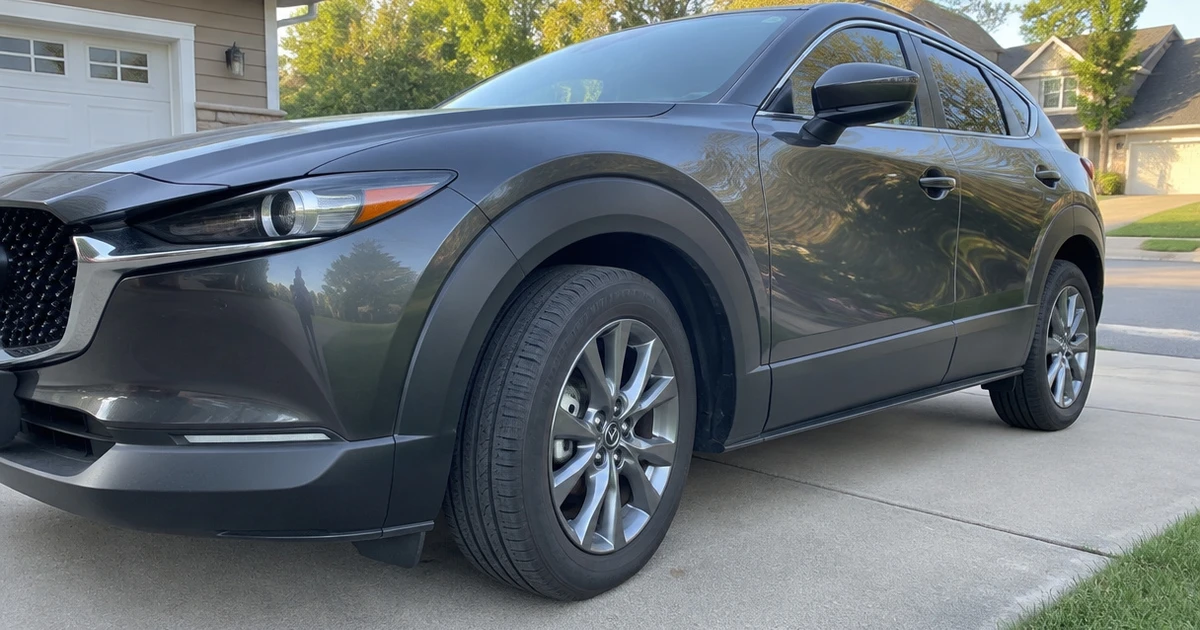
Your CX-30’s tires affect braking, comfort, fuel use, and control in bad weather. Start with the fitment your vehicle requires, then match tire traits to the roads and seasons you face most often.
Size and Ratings
Read the tire size on the driver-door placard or in the owner’s manual. CX-30 fitments can vary by model year and trim, so do not rely on a size you saw on another vehicle. Check the full marking, including width, aspect ratio, wheel diameter, load index, and speed rating.
Match the required load and speed ratings, and use the same tire size on all four wheels unless your manual allows another setup. Before ordering, check these details:
- Tire size and wheel diameter
- Load index and speed rating
- Any fitment notes in your manual
A tire shop can confirm a fitment, but compare its advice with your vehicle’s placard before buying.
Climate and Seasonal Grip
Choose a tire for the weather you face most. All-season tires suit drivers who see mild winters and want one set for year-round use. If your area gets frequent heavy snow or icy roads, check for the three-peak mountain snowflake symbol, which identifies tires that meet a severe-snow traction standard.
Use this simple guide to narrow your choice. Dedicated winter tires suit regular cold-weather driving, while summer tires suit warm conditions and do not work well in winter cold.
| Tire type | Favors | Good fit for |
|---|---|---|
| All-season | Balanced year-round use | Mild climates |
| All-weather | Year-round use with severe-snow rating | Changing seasons |
| Winter | Cold, snow, and ice | Regular winter conditions |
| Summer | Warm-weather grip | Little or no winter driving |
Tread Life and Warranty
Treat treadwear estimates as guides, not promises. Many passenger tires carry Uniform Tire Quality Grading marks for treadwear, traction, and temperature.
Treadwear grades help you compare tires from the same maker, but they do not predict exact mileage across different makers. Winter tires may not carry these grades.
Read the mileage warranty terms closely. Some warranties require rotation records, proper inflation, and even wear before they cover a claim. Your driving habits, road surfaces, alignment, and tire care all affect tread life, so a warranty figure cannot guarantee how long a set will last.
Ride Comfort and Road Noise
The CX-30’s cabin can make tire noise easy to notice on rough pavement. A touring tire with a comfort-focused tread may soften the ride and keep road hum down. Open tread blocks can help a tire grip in loose snow, but they may create more noise on clear roads.
Think about your daily routes before you choose. If you spend hours on the highway, favor a design that balances a steady ride with dependable wet-road grip.
If you drive broken city streets, a more compliant construction can help absorb sharp bumps. Reviews and tire-shop advice can help you compare ride character, but your vehicle’s suspension and road surface also shape what you hear and feel.
Ownership Costs and Maintenance
Compare the full cost of owning a tire, not just its purchase price. A longer-lasting tire can make sense for high-mileage drivers, while a seasonal set may suit someone who faces hard winters. Factor in mounting, balancing, rotation, and storage if you switch between winter and summer tires.
Check pressure when the tires are cold and follow the vehicle placard, not the maximum pressure on the tire sidewall. Rotate the tires on the schedule in your manual, and ask a shop to check alignment if the tread wears unevenly or the vehicle pulls. Replace tires before worn tread leaves you with weak wet-road braking; the legal minimum tread depth is not a good target for snow or heavy rain.
Frequently Asked Questions
What tire size does a Mazda CX-30 use?
The right size depends on your CX-30’s model year and trim. Read the tire placard on the driver’s door frame or the owner’s manual, then match the full size and required load and speed ratings. Do not choose a replacement based on wheel diameter alone.
Are all-season tires suitable for a Mazda CX-30?
For mild climates, a quality all-season tire can handle everyday dry and wet roads. If you face frequent heavy snow or icy streets, choose a tire with the three-peak mountain snowflake symbol or use dedicated winter tires. Your local driving conditions matter more than a broad all-season label.
Do I need winter tires for my Mazda CX-30?
Winter tires make sense if you regularly drive in freezing weather, snow, or ice. They use rubber compounds and tread designs built to grip in cold conditions. If winters stay mild where you live, all-season tires may suit your needs, but they cannot match winter tires on icy roads.
Should I replace all four tires at once?
Replacing all four helps keep traction balanced, especially on an all-wheel-drive vehicle. If you want to replace fewer tires, check your owner’s manual and ask a tire professional to measure tread depth on the remaining tires. Follow the vehicle maker’s limits for differences in tread wear.
How often should I rotate my tires?
Follow the rotation schedule in your owner’s manual, since the interval and pattern can depend on your tire setup. Regular rotation helps the tires wear more evenly. Check pressure monthly and look for uneven tread wear, cuts, or bulges when you inspect them.