
This post may contain affiliate links. As an Amazon Associate I earn from qualifying purchases. If you choose to make a purchase, I may earn a small commission at no extra cost to you.
Choosing tires for your Nissan Ariya can feel harder than buying tires for a gas crossover. The Ariya’s weight, instant electric torque, and quiet cabin put extra focus on load capacity, tread wear, road noise, and rolling resistance. A tire that misses one of those needs can cut range or make the ride harsher.
Start with the size and load rating Nissan approves, then match tread design to your weather and driving. The best tires for Nissan Ariya you can buy in 2026 should balance safe braking with the comfort and efficiency you value. The options below cover different priorities, from winter traction to touring comfort.
Our Top Nissan Ariya Tires Picks


More Details on Our Top Picks
Pros
- Responsive handling for a performance all-season tire
- High-silica tread compound for wet and dry grip
- Sporty cornering feel
- Designed for lasting performance
Cons
- Not a dedicated winter tire for deep snow
- Sport-focused ride can feel firm on rough pavement
An asymmetric performance tread gives the Michelin Pilot Sport All Season 4 its mix of quick steering response and year-round grip. Its high-silica compound works across wet and dry roads, while the tread pattern keeps the tire composed when you ask your Ariya to change direction quickly.
Michelin designed this tire for drivers who want a sporty feel without switching tires for mild winter weather. The wide outer shoulder blocks add support through corners, and the inner tread areas channel water away from the contact patch. That helps you feel more settled on wet roads and during brisk highway driving.
The Pilot Sport All Season 4 also has a notable performance-car connection: Chevrolet selected it as the first all-season tire for the Corvette. That background speaks to its responsive character, though the design still suits a practical crossover like the Ariya when you want more steering feedback.
On your Ariya, its blend of wet-road grip and precise handling can make daily drives feel more controlled. Michelin gives the tire a durable tread design, so you get performance that lasts beyond a short burst of spirited driving.
Bottom line: Choose the Michelin Pilot Sport All Season 4 if you want your Ariya to feel responsive on dry roads and composed in rain. It suits drivers who value steering feel over a softer touring ride.
Pros
- Tread pattern designed to reduce road noise
- Confident wet and dry traction
- Predictable highway handling
- Comfortable touring character
Cons
- Less suited to drivers seeking sharp sport handling
- Not designed for deep-snow conditions
A calm ride is the main appeal of the Continental CrossContact RX. Continental tuned this SUV tire around original-equipment needs, with a tread pattern designed to reduce road noise while keeping the handling consistent on everyday drives.
Its tread blocks and grooves balance dry-road stability with wet-weather traction. You get predictable steering on the highway, and the tire feels composed when rain covers the road. That steady response pairs well with the Ariya’s quiet electric powertrain, where tire noise can be easier to hear.
The CrossContact RX focuses on smooth touring manners rather than a sharp, sporty feel. Its construction supports a comfortable ride over ordinary pavement, while the tread design helps keep the cabin sound level in check. For regular commutes and longer road trips, that blend can make each drive feel less tiring.
Continental’s original-equipment tuning gives the CrossContact RX a measured, well-mannered character. On an Ariya, you get a tire built to balance ride comfort with confident wet and dry road behavior, rather than pushing hard toward one performance trait.
Bottom line: The CrossContact RX fits Ariya drivers who want a quieter, relaxed ride for commuting and highway travel. Choose it for comfort and steady handling, not a sporty response.
Pros
- Three-Peak Mountain Snowflake rating
- Directional tread for snow, slush, and rain
- Strong wet and dry braking
- Designed for year-round use
Cons
- Directional tread limits tire rotation patterns
- Tread design can create more road noise on rough pavement
For Ariya drivers who face snow as well as rain, the Michelin CrossClimate2 brings a rare all-season strength: its Three-Peak Mountain Snowflake rating. The directional, V-shaped tread gives the tire biting edges for winter roads while its broad grooves move water away in wet weather.
Michelin’s tread compound and full-depth tread design work across changing temperatures. That gives you useful grip in cold conditions, along with stable braking on dry pavement. The CrossClimate2 is built for year-round driving, so you can keep one tire set through the seasons instead of treating mild winter weather as a special case.
Its tread pattern has a distinct look, but the shape serves a practical purpose. The sweeping grooves help clear slush and standing water, while the dense tread edges create contact points on snow. On your Ariya, that design can add confidence during messy winter commutes and wet highway trips.
The severe-snow rating sets the CrossClimate2 apart from many touring all-season tires. Michelin also designed it to retain useful wet and dry braking as the tread wears, so its all-weather character lasts through regular use.
Bottom line: Pick the CrossClimate2 if your Ariya regularly sees cold weather, slush, or snow and you want year-round tires. It suits drivers who need more winter traction than a basic all-season tire provides.
Pros
- EV-focused design for range and tread life
- Sound Absorber foam reduces cabin noise
- All-season traction for everyday driving
- Performance-oriented steering response
Cons
- Sport-focused tread may feel firmer than touring tires
- Winter grip does not replace a dedicated snow tire
The Hankook iON evo AS SUV was built for electric vehicles, with a design focused on tread life, range, and cabin noise. Hankook’s iON family uses EV-specific tire engineering to handle the weight and instant torque that can place added demands on your Ariya’s tires.
Its tread and casing aim to limit energy loss as the tire rolls. That focus can help your Ariya use its battery efficiently, while the durable tread design gives you more usable life from each set. You still get an all-season pattern for ordinary wet and dry road conditions.
Noise control matters in an electric crossover because the powertrain does little to mask the sound of the road. Hankook’s Sound Absorber technology uses foam inside the tire to reduce cabin noise. The company also highlights a quieter ride and longer tread life for this SUV version of the iON evo AS.
During daily driving, the EV-focused design gives you a tire made with electric crossovers in mind, rather than a standard SUV tire adapted after the fact. The tread has a performance orientation, so steering feels more direct than it does with a comfort-first touring tire.
Bottom line: Consider the iON evo AS SUV if you want an EV-specific tire for your Ariya and value lower cabin noise. It is a good fit for drivers who also care about tread life and rolling efficiency.
Pros
- Full-depth sipes remain active as the tread wears
- 3D sipe design supports stable handling
- Compound designed for long tread life
- Made for crossover and SUV use
Cons
- Not a Three-Peak Mountain Snowflake tire
- Less focused on sporty steering response
Full-depth tread sipes give the Pirelli Scorpion AS Plus 3 a useful advantage as it wears. These narrow cuts stay active through the tread’s life, adding biting edges for wet roads and light winter conditions on your Ariya.
Pirelli uses a tread compound made for long wear and all-season confidence. Its 3D sipe technology works with the tread blocks to keep the tire steady during braking and cornering. You get a composed feel on dry roads, with extra edges that help the tread hold on when rain makes the pavement slick.
The Scorpion AS Plus 3 was designed for crossovers and SUVs, so its character suits the Ariya’s everyday role. Its tread balances handling and comfort rather than chasing a sharp sports-car response. That makes it a practical choice for commutes, errands, and regular highway travel.
On your Ariya, the full-depth sipes help preserve traction as miles add up. The tread’s layout also supports a consistent contact patch, giving you steady braking and predictable control through changing weather.
Bottom line: The Scorpion AS Plus 3 suits Ariya owners who want a durable all-season tire for regular crossover use. Choose it for steady handling and wet-road confidence, especially if you value tread life.
Pros
- SoundComfort Technology reduces interior road noise
- Wide shoulder blocks add cornering grip
- All-season tread includes light-snow capability
- 40,000-mile limited tread life warranty
Cons
- Light-snow traction is not meant for deep winter
- Performance tread may ride firmer than touring tires
Goodyear built the ElectricDrive GT for battery electric vehicles, pairing an ultra-high-performance tread with technology aimed at a quieter cabin. Its SoundComfort Technology uses a sound-absorbing layer inside the tire to reduce road noise as you drive your Ariya.
The asymmetric tread gives the tire different roles across its surface. Wide, connected shoulder blocks add grip when you corner, while the rest of the pattern handles wet and dry road conditions. Goodyear also designed it for light snow, giving you some seasonal flexibility without losing its performance focus.
You get a more direct feel from the ElectricDrive GT than from a comfort-first touring tire. That sharper response can suit the Ariya’s quick electric acceleration, especially when you take turns or merge onto a busy road. Its tread design also accounts for the demands of an electric vehicle.
Goodyear backs the tire with a 40,000-mile limited tread life warranty. That coverage adds a useful ownership benefit, while SoundComfort technology keeps tire noise from taking over the cabin during longer drives.
Bottom line: The ElectricDrive GT suits Ariya drivers who want an EV-focused tire with a sportier feel. It works well for drivers who value cornering grip and reduced cabin noise.
Pros
- 80,000-mile limited treadwear warranty
- QuietTrack Technology reduces tread noise
- Snow Vices add grip on snowy roads
- High-silica compound supports wet traction
Cons
- Touring tread feels less sporty through corners
- Not intended for severe winter conditions
Bridgestone gives the Alenza AS Ultra a long-wear focus, backed by an 80,000-mile limited treadwear warranty. Its high-silica compound supports wet and winter traction, making this touring tire a practical choice for regular Ariya driving.
The tread includes Snow Vices, which add grip on snowy roads. Bridgestone pairs those features with a tread layout designed for year-round use, so you get useful traction in rain and mild winter weather as well as on dry pavement.
QuietTrack Technology works to reduce tread-pattern noise. That detail matters in the Ariya, where a quiet electric drivetrain can make tire sound more noticeable. On highway trips, the Alenza’s touring design gives you a calm, steady ride instead of a sharp performance feel.
The long treadwear warranty makes the Alenza AS Ultra especially appealing for drivers who cover many miles. You get a tire that favors a comfortable ride and consistent road manners, with extra tread features for colder months.
Bottom line: The Alenza AS Ultra is a good match for Ariya owners who drive often and want a long-wearing touring tire. Choose it for quiet highway comfort and useful traction in mild winter weather.
Pros
- EcoPlus Technology targets lower rolling resistance
- Designed for short wet-road braking
- Quiet touring tread
- Up to 70,000-mile limited tread life coverage
Cons
- Less responsive than a performance-focused tire
- Not built for severe snow
Continental’s EcoPlus Technology gives the CrossContact LX25 a useful focus for an electric crossover: lower rolling resistance. The design aims to preserve driving range while also supporting wet-road braking and longer tread life on your Ariya.
Its tread compound and grooves help clear water from the contact area. That gives you short, controlled stops on wet pavement and steady handling in rain. The CrossContact LX25 also uses a touring tread pattern that keeps road noise low, which helps maintain the Ariya’s quiet cabin.
The LX25 favors comfort and everyday control over sharp sports handling. You get a composed feel on the highway and predictable responses during normal turns. For longer trips, that balance can make the drive feel relaxed without giving up useful wet-weather grip.
Continental backs the tire with limited tread life coverage of up to 70,000 miles. Its blend of wet braking, low noise, and range-minded design makes the CrossContact LX25 a practical option for regular use.
Bottom line: Choose the CrossContact LX25 if you want a comfortable tire with range-minded engineering for your Ariya. It suits drivers who spend plenty of time on wet roads and highways.
Pros
- 2D and 3D sipes add cold-weather biting edges
- Micro-silica compound supports wet traction
- Multi-pitch tread pattern reduces road noise
- 65,000-mile limited tread life warranty
Cons
- Not a dedicated tire for deep snow
- Touring tread gives less cornering bite than a performance tire
Small tread edges give the Yokohama Geolandar CV G058 its all-season grip. Its mix of 2D and 3D sipes works with serrated outer grooves to add traction on cold roads, slush, and light snow.
Yokohama uses a micro-silica rubber compound for wet-road grip and long tread life. Chamfered ribs help the tread stay evenly in contact with the road, supporting consistent wear and predictable handling. That design gives your Ariya a composed feel in ordinary wet and dry conditions.
The Geolandar CV G058 also pays attention to cabin comfort. A staggered multi-pitch tread pattern varies the spacing between tread blocks to reduce repeating road noise. You get a smoother, quieter ride on daily drives and highway trips.
Its winter features add flexibility for changing weather, while the tread remains suited to crossover touring. Yokohama backs the tire with a 65,000-mile limited tread life warranty for standard applications, adding a useful ownership benefit for drivers who cover regular miles.
Bottom line: The Geolandar CV G058 suits Ariya owners who want a quiet touring tire with added traction for light winter weather. It is a sensible fit for year-round commuting in mixed conditions.
Pros
- Variable Pitch Technology reduces tread noise
- Wide grooves help clear water
- Full-depth sipes add slush traction
- Center rib supports steady handling
Cons
- Not designed specifically for electric vehicles
- Touring tread feels less sporty through corners
A quiet ride is a key part of the Kumho Crugen HP71’s touring design. Kumho’s Variable Pitch Technology changes the tread-block spacing to limit repeated noise, which can help keep your Ariya’s cabin more relaxed on the highway.
Wide circumferential grooves move water away from the tread, while micro-serrations add edges that grip wet pavement. Full-depth sipes and lateral voids also help the tire hold traction in slush. Those features give you useful all-season control for everyday driving in changing weather.
A strong center rib and reinforced shoulder blocks help the Crugen HP71 track steadily and respond promptly to steering. The tread design also promotes even wear, which supports a longer service life. Its touring character puts comfort first, so it feels measured rather than sporty through corners.
The Variable Pitch Technology is a defining detail for drivers who spend a lot of time on paved roads. On your Ariya, the Crugen HP71 brings quiet manners, wet-road grip, and practical winter traction in one crossover tire.
Bottom line: The Crugen HP71 fits Ariya owners who put quiet comfort and steady wet-weather handling ahead of sporty response. It works well for regular commuting and highway use.
Factors to Consider When Choosing Tires for Nissan Ariya
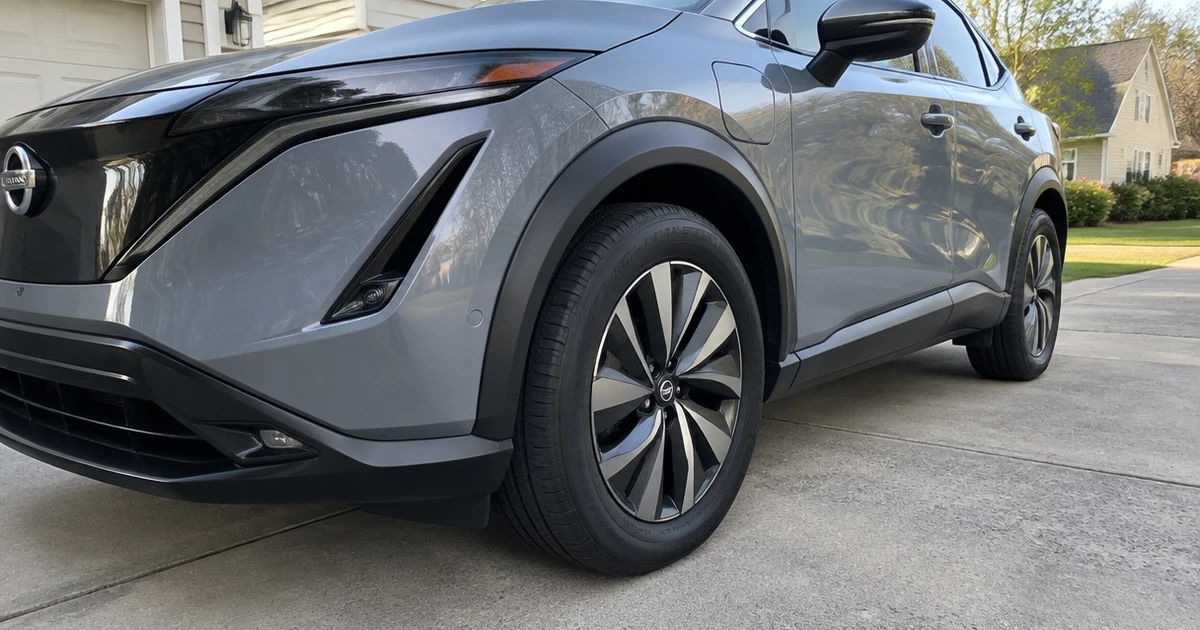
Start with the tire details on the driver-door placard and in the owner’s manual. The Ariya needs a tire that carries its weight and suits your climate, but the best match also depends on how much highway driving, winter travel, and quiet comfort matter in your routine.
Match the Factory Size and Rating
Read the full tire code on the driver-door placard, then match the replacement’s width, aspect ratio, and wheel diameter. The load index and speed symbol matter just as much.
The load index tells you how much weight each tire can carry, while the speed symbol sets its rated speed range. Do not choose a lower rating than Nissan approves.
The Ariya carries a heavy battery, so its tires must meet the vehicle’s load needs even if another option shares the same wheel diameter. Stick to Nissan-approved sizes unless a tire professional checks clearance, wheel fit, and overall diameter. A size change can affect speed readings, handling, and space around the wheel.
Account for EV Weight and Torque
Electric torque reaches the tread as soon as you press the pedal, and the Ariya’s mass adds stress during turns and stops. Look for a tire with a load capacity approved for your trim and a tread compound designed for regular road use. An EV-focused design may use a stronger casing and lower rolling resistance, but correct fit and traction still come first.
To control uneven wear:
- Rotate tires on the schedule in the owner’s manual.
- Check cold pressure monthly and before long trips.
- Ask for an alignment check if the car pulls or the tread wears unevenly.
If a replacement leaves a large difference in tread depth, ask a tire professional whether you should replace tires as a pair.
Prioritize Wet and Winter Grip
Match tread to your usual weather. Touring all-seasons suit mild winters, while all-weather tires with a severe-snow mark add cold-weather grip without a seasonal swap.
If you often drive on packed snow or ice, choose dedicated winter tires. Summer tires work for warm conditions but lose grip as temperatures drop.
| Type | Best suited to | Trade-off |
|---|---|---|
| Touring all-season | Mild winters and daily use | Limited grip in severe snow |
| All-weather | Changing seasons and light snow | Less ice grip than winter tires |
| Winter | Frequent snow, ice, or deep cold | Needs seasonal changeover |
The three-peak mountain snowflake symbol signals tested snow traction, not ice-proof performance. For rain, look for grooves that channel water away from the contact patch. If roads freeze often, choose for winter grip rather than relying on tread depth alone.
Balance Range and Cabin Comfort
Low rolling resistance can help an EV use less energy, which may support longer driving range between charges. Tire makers reach that goal through tread compounds and construction, but efficiency should not outweigh wet braking or the required load rating. Compare a tire’s efficiency focus with its wet-grip performance and choose a balanced design for everyday roads.
Cabin noise also stands out in an electric crossover because the powertrain makes little sound. A closed tread pattern or a sound-absorbing layer can reduce some tire noise, though pavement texture still matters.
If you spend hours on highways, favor a touring design known for a calm ride. Keep pressure at Nissan’s recommended level, since underinflation can raise energy use and heat.
Plan for Wear and Seasonal Use
Think about how long you plan to keep the Ariya and how you use it. A treadwear warranty can help compare similar touring tires, but it does not promise a set lifespan.
Alignment, pressure, climate, and driving style all change wear. Read the warranty rules for rotation records and coverage limits before treating its mileage figure as a guarantee.
Check tread and sidewalls during routine pressure checks. Replace tires when tread reaches the wear bars, or sooner if you spot cracks, bulges, repeated pressure loss, or poor wet braking.
If you use winter tires, plan for a separate set and store the off-season set away from heat and sunlight. A professional can inspect uneven wear and recommend an alignment.
Frequently Asked Questions
Do electric vehicles need special tires?
No. You can use any tire that matches the Ariya’s approved size, load index, and speed rating. EV-focused tires may add a stronger casing, lower rolling resistance, or noise control, which can suit the car well. Treat those features as useful benefits, not a substitute for correct fit and dependable wet grip.
Can you replace only one tire on an Ariya?
It depends on tread wear and whether your Ariya has all-wheel drive. Replacing a single tire can leave uneven tread depth across the axle or drivetrain. Check Nissan’s service guidance and ask a tire professional to measure the remaining tread. If the difference is large, replacing a matched pair or full set may support predictable handling.
How often should you rotate Ariya tires?
Follow the rotation interval in the owner’s manual, since schedules can vary by trim, tire setup, and driving conditions. Ask a technician to inspect all four tires at each rotation for uneven wear or damage. Check pressure monthly, when tires are cold, and use the door placard’s figures rather than the maximum pressure molded on the sidewall.
Should you use winter tires on a Nissan Ariya?
Use dedicated winter tires if you regularly face snow, ice, or long periods of freezing temperatures. All-weather tires can suit milder winter areas, but they do not match a winter tire’s grip on severe snow and ice. Fit a full matching set and return to warm-weather tires as temperatures rise to limit wear.
How can you tell when Ariya tires need replacing?
Check the tread wear bars across the grooves and inspect sidewalls for cracks, bulges, or cuts. Replace a tire when tread reaches the bars, or earlier if it loses pressure or struggles to grip in rain. A technician can check internal damage after a hard impact, even when the outside looks intact.