
This post may contain affiliate links. As an Amazon Associate I earn from qualifying purchases. If you choose to make a purchase, I may earn a small commission at no extra cost to you.
Choosing tires for your Volvo XC90 can feel like a trade-off. You may want a quiet ride for daily trips, secure grip in heavy rain, or winter traction without changing tires each season. The right choice depends on your climate, driving habits, and the tire size and load rating Volvo specifies for your vehicle.
Use this guide to compare the best tires for Volvo XC90 you can buy in 2026, with options for varied driving needs and a buying guide to help you narrow the field. Before you order, check your door placard and owner’s manual, since fitment can differ by model year, trim, and wheel package.
Our Top Tires for Volvo XC90 Picks


More Details on Our Top Picks
Pros
- Three-Peak Mountain Snowflake certified for severe snow
- Directional tread moves water and slush
- Strong wet and dry braking
- Built for traction across changing seasons
Cons
- Winter-focused tread may feel less sporty than a performance tire
A directional V-shaped tread gives Michelin CrossClimate2 a clear all-weather purpose: it channels water and slush away while keeping broad tread blocks on the road. Its Three-Peak Mountain Snowflake certification also marks it for severe snow conditions, a useful distinction for XC90 drivers facing real winter weather.
Michelin pairs that winter focus with confident dry-road braking and wet grip, so you can keep the tire on through changing seasons. The tread compound works across a wide range of temperatures rather than focusing only on warm-weather performance.
The ride stays composed for daily driving, and the tread pattern does not make the XC90 feel like a truck on dry pavement. Michelin also built the tire to retain useful traction as it wears, rather than relying on fresh tread alone.
For an all-season tire, its snow certification gives you more winter confidence than a standard all-season label does. The CrossClimate2 brings together year-round grip, strong braking, and a design meant for varied weather.
Michelin also cites extended tread life as part of the tire’s design, which adds appeal for drivers who rack up miles between seasons. Its snow-rated tread and everyday road manners make it a practical XC90 option in climates with regular rain and snow.
Bottom line: Choose it for your XC90 if you need one tire for rain, dry roads, and frequent snow. It suits drivers who value winter traction without switching to a dedicated snow tire.
Pros
- SUV-focused all-season design
- 70,000-mile treadwear coverage
- Suited to paved-road touring
Cons
- No severe-snow certification noted
If your XC90 spends most of its time on paved roads, the Bridgestone Alenza Prestige brings an SUV-focused all-season design with a long treadwear warranty. Bridgestone places it in the Alenza family, a line built around road use for crossovers and SUVs.
The all-season tread gives you everyday traction through dry conditions and rain, while the performance-tire positioning favors composed road behavior. Its 70,000-mile treadwear coverage gives you a useful benchmark for expected service, though actual tire life depends on how and where you drive.
The Alenza Prestige does not center its appeal on rugged off-road tread or severe-snow certification. Instead, it targets drivers who spend more time commuting and touring than climbing muddy trails, and who want a tire made for SUV duty.
Bridgestone’s all-season SUV design makes it relevant to an XC90 that sees varied weather but stays on pavement. The long treadwear coverage is another practical feature for drivers who cover steady yearly mileage.
Its appeal comes from that clear touring role rather than a long list of special technologies. For daily trips, it offers a straightforward mix of seasonal traction and expected road-focused manners.
Bottom line: The Alenza Prestige fits XC90 owners who want a road-oriented tire for commuting and long drives. Consider it for mild winter conditions rather than frequent deep snow.
Pros
- EcoPlus Technology balances efficiency and traction
- Short wet-road braking
- Quiet touring ride
- Up to 70,000 miles of limited treadwear coverage
Cons
- Touring tread is not intended for serious off-road use
Quiet cabin manners are part of the Continental CrossContact LX25’s appeal, which matters in an XC90 where tire noise can carry through a large cabin. Continental adds EcoPlus Technology to balance wet-road braking, tread life, and fuel-saving rolling resistance.
The tread compound and pattern give you responsive handling through changing conditions, while the tire’s wet-road braking is a key strength. The LX25 is a touring all-season model, so its character favors steady road comfort over aggressive off-road use.
Continental backs the line with up to 70,000 miles of limited treadwear coverage. That warranty pairs with the EcoPlus focus on extending usable tread life, though your results depend on driving conditions and wear patterns.
For everyday XC90 use, the tire keeps road noise restrained and steering response predictable. Its EcoPlus Technology connects efficiency and wet traction in one package, rather than treating them as separate goals.
The CrossContact LX25 suits drivers who want year-round road manners with a strong emphasis on rain performance. Its quiet ride and wet braking make it a sensible option for family trips and regular commutes.
Bottom line: Choose the CrossContact LX25 for an XC90 that spends most of its time on roads and highways. It suits drivers who value wet grip and a quieter cabin.
Pros
- Severe-snow designation
- AquaTred grooves move water and slush
- Evolving grooves maintain water paths as tread wears
- Comfort inserts reduce bumps and vibration
Cons
- Less focused on sporty steering response
Rain and slush can quickly expose the limits of an ordinary all-season tire, so Goodyear gives the Assurance WeatherReady 2 a severe-snow designation and a tread built for changing conditions. Its AquaTred Technology uses sweeping grooves to move water and slush away from the contact area.
Goodyear’s Evolving Traction Grooves continue to open paths for water as the tread wears. That design gives XC90 drivers a feature aimed at keeping wet-road grip useful beyond the tire’s early life.
Comfort inserts absorb some road impacts and help keep steering controlled during lane changes. Goodyear also varies the size of the tread blocks in a multi-pitch sequence to reduce repeating road noise.
The result is an all-weather tire with a useful balance of wet handling, cabin comfort, and winter capability. Its severe-snow rating adds value for drivers who face regular winter conditions, while AquaTred Technology addresses rain and slush.
On an XC90, that blend supports year-round driving without giving up road comfort. The WeatherReady 2 is built for drivers who want a tire that takes wet weather seriously and remains composed on daily routes.
Bottom line: The Assurance WeatherReady 2 suits XC90 drivers in regions with frequent rain, slush, and snow. Pick it for broad weather coverage and a comfortable ride.
Pros
- Computer-tuned symmetric tread
- Pattern designed for even wear
- Noise-conscious tread block sequencing
- 70,000-mile limited treadwear coverage
Cons
- Not aimed at deep snow or off-road driving
Pirelli’s Scorpion family focuses on crossover and SUV use, and the Pirelli Scorpion AS 4 carries that road-centered approach into all-season driving. Its computer-tuned symmetric tread pattern promotes even wear, giving the tire a clear focus on consistent service.
Pirelli reduces open space in the tread and tunes the block sequence to limit noise and vibration. That quieter pattern suits an XC90’s touring role, especially on long paved drives where tire sound can become tiring.
The AS 4 aims for confident handling across the seasons rather than a specialized winter or off-road role. You get a tread designed for everyday traction in changing weather, with a layout that keeps the contact pattern consistent.
Pirelli backs the tire with 70,000 miles of limited treadwear coverage. The warranty supports its long-service intent, while the symmetric tread design focuses on even wear over the tire’s life.
Its noise-conscious tread pattern makes this Scorpion a comfortable touring option for XC90 drivers who mainly use paved roads. The tire’s SUV and crossover focus also fits the weight and day-to-day role of a family vehicle.
Bottom line: The Scorpion AS 4 suits XC90 owners who prioritize a quiet, road-focused ride through varied seasons. It is a good fit for regular commuting and highway travel.
Pros
- Tuned for original-equipment applications
- Wet and dry traction
- Responsive road handling
- Design aims to reduce cabin noise
Cons
- Less suited to rough off-road use
Continental tunes the CrossContact RX for original-equipment applications, giving it a road-focused balance of traction, comfort, and responsive handling. That approach fits XC90 drivers who want predictable behavior on the daily routes they drive most.
The all-season tread targets confident grip on both wet and dry pavement. Continental also shapes the design to reduce road noise, so the cabin stays more relaxed on longer drives.
Instead of chasing an aggressive tread or sharp performance-tire feel, the CrossContact RX keeps its focus on composed touring manners. Its handling remains responsive enough for lane changes and bends without pushing the tire toward a track-oriented role.
Continental offers a 60-day trial with this model. The original-equipment tuning and quiet ride focus give the tire a distinct place for XC90 owners who value familiar road behavior and comfort.
In daily use, this is a straightforward SUV touring tire with all-season traction and a smooth, controlled feel. It favors road travel over rough terrain or severe winter use.
Bottom line: The CrossContact RX suits XC90 drivers who want a comfortable, road-oriented tire with composed handling. Its trial period may also appeal if you want time to evaluate its ride.
Pros
- Responsive high-performance handling
- All-season road traction
- Designed to retain performance over time
- Corvette selection highlights its sporty character
Cons
- Less focused on SUV touring comfort
Drivers who want sharper steering response from an XC90 can look to the Michelin Pilot Sport All Season 4’s high-performance all-season character. Michelin designed this line for drivers who want sporty road handling without giving up all-season traction.
The tire’s performance focus shows in its responsive feel on paved roads and its ability to handle wet conditions. Michelin built it to retain performance over its service life, rather than making fresh-tread grip the only priority.
Chevrolet selected the Pilot Sport All Season 4 as the first all-season tire for the Corvette, which reflects the line’s performance credentials. That background does not make it a specialty SUV tire, but it gives XC90 drivers a clear option when steering feel matters more than a soft touring character.
Its high-performance all-season design suits drivers who enjoy a more connected feel in dry and wet driving. Michelin’s focus on lasting performance gives the tire an appeal beyond quick, short-term response.
Compared with a relaxed touring setup, the Pilot Sport line asks more of the driver in exchange for a sportier road feel. You get a tire built around confident handling rather than off-road traction.
Bottom line: The Pilot Sport All Season 4 suits XC90 owners who prioritize steering response and a sportier feel. Choose it for road use, not for off-road driving or severe winter conditions.
Pros
- Designed for SUV use
- Strong dry grip
- Wet-road braking performance
- Tread aims to reduce noise
Cons
- Summer design is unsuitable for snow and ice
On warm, clear roads, the Michelin Pilot Sport 4 SUV brings a summer tire’s focus on dry grip and precise handling to SUV driving. Michelin built the model for SUVs, with a tread pattern intended to cope with their demands while keeping road noise in check.
The tire grips well on dry pavement and delivers strong wet-road braking. Its summer-oriented compound prioritizes warm-weather performance, so it does not suit snow and ice conditions.
Michelin gives the Pilot Sport 4 SUV a robust tread design for durable road use. The tire also aims to limit noise and preserve ride comfort, keeping its performance focus from overwhelming daily driving.
For an XC90 driver, the summer performance tread offers a more direct road feel than a general touring design. Its SUV-specific construction and dry grip make it a fit for warm-weather driving where responsive handling matters.
This model puts pavement performance first and does not try to cover winter conditions. That focused role makes it best suited to drivers who can use a separate winter tire when cold weather brings snow or ice.
Bottom line: The Pilot Sport 4 SUV fits XC90 owners who want high-performance handling in warm weather. Choose it only if winter driving does not require snow traction from the same tire.
Pros
- TredLife Technology targets long service
- Built-in tread wear gauge
- Quiet, comfortable ride
- All-season control for daily driving
Cons
- Not designed for severe off-road use
Tread life sits at the center of the Goodyear Assurance MaxLife 2’s design, making it a practical touring option for XC90 drivers who cover steady miles. Goodyear’s TredLife Technology focuses on long service, while the built-in wear gauge gives you a visual way to track tread wear.
The all-season tread is made for confident everyday control across common road conditions. Goodyear also focuses on a quiet, comfortable ride, so the tire fits regular commuting and long highway trips.
The molded wear gauge is a useful detail because it gives you a quick view of how the tread has worn. You do not have to judge the tread pattern by feel alone, and the gauge pairs naturally with the tire’s long-life focus.
Its TredLife Technology and built-in gauge make the MaxLife 2 more than a basic touring tire. Goodyear puts wear visibility alongside comfort and all-season control for drivers who value a predictable ownership experience.
The design keeps its attention on pavement and everyday driving, not rugged terrain or specialized winter use. For an XC90, that makes it a straightforward choice for regular road miles.
Bottom line: The Assurance MaxLife 2 suits XC90 owners who want a comfort-focused touring tire with visible tread wear cues. It works best for regular road driving and steady mileage.
Pros
- Full-depth sipes help clear slush
- Wide grooves evacuate water
- Center rib supports quick handling
- Variable Pitch Technology reduces road noise
Cons
- Not a replacement for a dedicated winter tire
Kumho gives the Crugen HP71 full-depth sipes and lateral voids to clear slush from beneath the tread. That layout adds useful cold-weather traction for an XC90, while the tire keeps a road-focused touring character.
Wide circumferential grooves move water out of the tread, and small serrations in the blocks add wet-road grip. These features address hydroplaning risk by giving water more paths to escape from the contact area.
A strong center rib and firmer shoulder blocks support quick handling and more even wear. Kumho also varies the tread block pitch to reduce repeating road noise, helping the HP71 stay comfortable on daily drives.
The full-depth sipes and water-clearing grooves give this model a useful mix for wet roads and slushy conditions. Its Variable Pitch Technology works alongside the tread pattern to keep the ride quieter.
The HP71 serves as an all-season touring tire, not a dedicated winter model. It brings useful slush and rain features to ordinary driving, with a handling design that keeps the XC90 feeling composed on pavement.
Bottom line: The Crugen HP71 suits XC90 drivers who face rain and occasional slush but mostly drive paved roads. Choose a dedicated winter tire for frequent deep snow or ice.
Factors to Consider When Choosing Tires for Volvo XC90
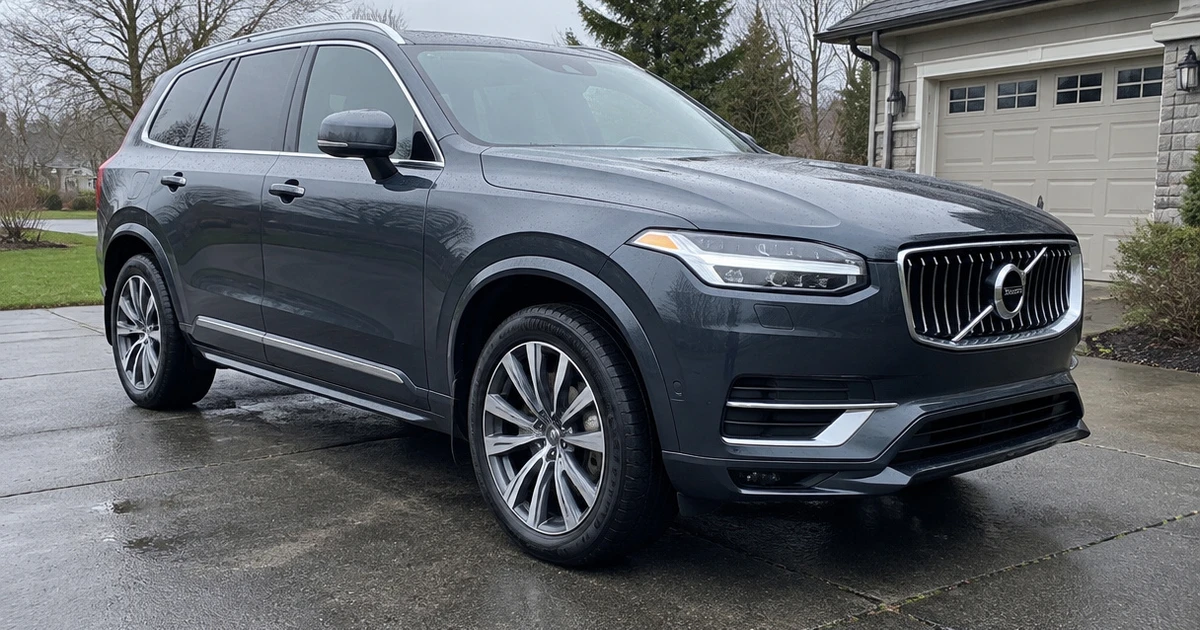
Start with the vehicle’s placard and owner’s manual, then match the tire to your roads and weather. The right size, load rating, and seasonal design help your SUV handle predictably.
Match the Correct Fitment
Use the tire size on the driver-door placard or in the owner’s manual, not one copied from a different XC90. The sidewall code gives width, aspect ratio, and wheel diameter.
Match an approved fitment for your trim and wheels; a close-looking size can still affect clearance, speed readings, and handling. Many model years offer more than one approved wheel setup.
Match the required load index and speed rating as well. The load index shows how much weight each tire can carry, while the speed rating reflects its speed capability. Keep both at or above the vehicle maker’s requirement.
| Marking | What it shows | What to match |
|---|---|---|
| Size code | Width, profile, wheel diameter | An approved fitment |
| Load index | Weight capacity per tire | Required rating or higher |
| Speed rating | Speed capability category | Required rating or higher |
Choose for Your Climate
Choose a tire category based on the coldest and snowiest conditions you regularly face. All-season tires suit mild winters and year-round use, but their rubber can stiffen in deep cold, reducing grip on snow and ice. All-weather tires carry the three-peak mountain snowflake symbol after meeting a defined snow-traction standard, making them useful for frequent winter storms if you prefer one set year-round.
Dedicated winter tires use cold-weather compounds and tread patterns built for snow and ice, with stronger traction in low temperatures. Plan for seasonal installation and storage if you choose them. If you face mixed conditions, check for the winter symbol and compare test results on snow as well as dry pavement.
Prioritize Wet-Road Grip
Rain grip depends on tread design, rubber compound, and remaining tread depth. Wide grooves help move water away from the contact area, while smaller tread cuts can add grip on wet pavement. Wet braking can change as a tire wears, so look beyond claims based only on new tires.
Compare independent wet-braking tests in a size close to yours, ideally from a similar SUV class. If you regularly drive through standing water, choose a tire with strong wet results and slow down in heavy rain; no tire can prevent hydroplaning at every speed. Check tread depth often, since shallow grooves clear less water.
Balance Comfort, Noise, and Efficiency
Cabin noise and ride comfort depend on tread pattern, sidewall design, wheel size, and pavement. A touring-focused tread often makes less road hum than an aggressive pattern, while a taller sidewall can soften sharp bumps. If your XC90 has larger wheels, check approved smaller-wheel fitments before buying; more sidewall can help ride comfort only when the size meets vehicle requirements.
Keep inflation at the cold pressure on the door placard, since overinflation can make impacts feel harsher and underinflation can hurt handling and wear. Compare noise tests on similar pavement if quiet cruising matters. Rolling resistance can affect fuel use, but do not trade away wet grip for a small efficiency gain.
Plan for Wear and Maintenance
Long tire life depends on correct pressure, alignment, load, and driving habits, not just the treadwear grade. A mileage warranty can help you compare a tire’s intended service life, but read its rotation and maintenance terms; it does not promise that every driver will reach the stated distance. All-wheel-drive systems work best with closely matched tires, since differences in rolling circumference can strain drivetrain parts.
Rotate tires at the interval and pattern in your owner’s manual. If damage forces you to replace one tire, check the manual or ask a tire shop how closely it must match the others.
Use this quick monthly check:
- Check pressure when the tires are cold.
- Look for uneven tread wear or cuts.
- Inspect the sidewalls for damage.
Frequently Asked Questions
What tire size does a Volvo XC90 use?
The correct size varies by model year, trim, and wheel package, so read the placard on the driver’s door or check the owner’s manual. Match the full size code, load index, and speed rating, then confirm that the size meets the vehicle maker’s approved fitments.
Are all-season tires enough for winter driving?
All-season tires can work in areas with mild winters, but they lose grip as temperatures drop and roads turn icy. For frequent snow or very cold weather, choose a tire that carries the three-peak mountain snowflake symbol or use dedicated winter tires during the cold season.
Can I replace just one tire on an all-wheel-drive XC90?
A single replacement must match the others closely in size, design, and tread depth. All-wheel-drive systems can react poorly to differences in rolling circumference, so check the owner’s manual or ask a qualified tire shop to measure tread depth before replacing one tire.
How often should I rotate the tires?
Follow the interval and pattern in your owner’s manual, since tire direction and setup affect which positions can swap. Regular rotation helps the tread wear more evenly. Check pressure when the tires are cold and inspect them for uneven wear between rotations.
Should I use dedicated winter tires?
Choose dedicated winter tires if you often drive on snow, ice, or roads that stay very cold. Their rubber compound and tread design maintain grip better in those conditions than a typical all-season tire. If winters stay mild and roads clear quickly, a suitable all-season option may be enough.