
This post may contain affiliate links. As an Amazon Associate I earn from qualifying purchases. If you choose to make a purchase, I may earn a small commission at no extra cost to you.
Choosing tires for off-road travel means balancing grip on loose ground with control on wet roads and comfort on the daily drive. A tread that works well in mud may feel loud on pavement, while a highway-friendly design may struggle on rocky trails. Your truck, usual routes and local weather all shape the right choice.
The best all terrain tires for off road in 2026 should match the ground you drive most, handle the weight of your vehicle and fit your winter needs. This guide covers options for varied priorities, from snow traction to sidewall protection, so you can focus on the features that matter for your own driving.
Our Top All-Terrain Tires Picks




More Details on Our Top Picks
Pros
- CoreGard Technology strengthens the sidewalls
- Mud-phobic bars and serrated shoulders aid traction
- Updated tread compound targets gravel durability
- Includes a 50,000-mile treadwear limited warranty
Cons
- Stiff construction can send sharp bumps into the cabin
Serrated shoulder blocks and mud-phobic bars give BFGoodrich All-Terrain T/A KO3 a clear focus: keep moving when the route turns muddy or snowy. Its updated tread pattern and compound also target long wear on gravel, where sharp stones can chew up less rugged tires.
BFGoodrich carries over CoreGard Technology, which draws on its Baja racing experience to strengthen the sidewalls. Advanced Deflection Design guides sticks and stones away from vulnerable areas, while the shoulder shape adds extra biting edges in loose ground.
On pavement, the KO3 handles daily driving without giving up its off-road character. Its tread and sidewall protection come into their own on rocky trails, and BFGoodrich backs the tire with a 50,000-mile treadwear limited warranty and a six-year standard limited warranty. The BFGoodrich All-Terrain T/A KO3 brings a useful balance of rugged protection and regular road manners.
Bottom line: Choose the BFGoodrich All-Terrain T/A KO3 for a truck or SUV that sees rough trails, gravel roads, and regular pavement. Its sidewall protection and mud traction suit drivers who want one tire for varied terrain.
Pros
- All-weather tread handles changing conditions
- Deep grooves clear loose dirt and gravel
- Durable sidewalls suit rough terrain
- Three-Peak Mountain Snowflake designation
Cons
- Deep tread can feel less settled than a highway tire on wet pavement
For drivers who face changing weather on the same trip, Falken Wildpeak A/T4W combines all-terrain tread with all-weather capability. Its deep grooves clear mud and gravel, while the tread blocks maintain grip on pavement through wet and winter conditions.
Falken uses a tough tread compound and durable sidewall construction to handle rough ground and long stretches of road. Heat-dissipating technology in the lower sidewall manages temperatures under heavy loads, while the tread design gives the tire a sturdy footprint on rocky trails.
The Wildpeak A/T4W carries the Three-Peak Mountain Snowflake designation, so it meets a recognized standard for severe-snow traction. Its balanced tread works for weekday driving as well as trips on muddy tracks or gravel roads, and it stays composed across a wide range of weather. Falken Wildpeak A/T4W has the sort of adaptable design that makes year-round driving less dependent on the forecast.
Bottom line: Go with the Falken Wildpeak A/T4W if your driving includes winter roads along with regular off-road trips. It suits a daily-driven truck or SUV that needs one tire for varied weather.
Pros
- Multi-wave sipes add wet and snow grip
- Stone ejectors help clear embedded gravel
- Three-Peak Mountain Snowflake designation
- Shoulder blocks add traction on loose ground
Cons
- Open tread creates a noticeable hum at highway speed
Daily driving feels steady on the Toyo Open Country A/T III, while its open tread blocks give you grip when pavement ends. Toyo uses multi-wave sipes across the tread to create extra biting edges for wet roads and snow without relying on a mud-terrain pattern.
Stone ejectors in the tread help dislodge gravel before it can lodge between the blocks. The shoulder design also adds traction in loose ground, and the tread compound balances wear with grip across changing road conditions.
The Open Country A/T III carries the Three-Peak Mountain Snowflake symbol, which marks its severe-snow capability. That winter credential pairs well with its all-terrain tread, giving you useful traction on snowy roads as well as dirt and gravel. Toyo Open Country A/T III keeps its road manners practical for everyday use while adding the tread features you need for trail access.
Bottom line: The Toyo Open Country A/T III suits drivers who need winter traction but still spend much of their time on paved roads. Consider it for mixed daily use with regular snow, gravel, or dirt driving.
Pros
- DuPont Kevlar helps protect against tread damage
- Three-ply sidewalls resist cuts and abrasions
- Biting tread edges add snow traction
- 50,000-mile tread life limited warranty
Cons
- Chunky tread produces a steady highway hum
Goodyear Wrangler DuraTrac RT draws on a reinforced build for drivers who take their trucks over cut-up trails. DuPont Kevlar in the tread adds protection against damage, and the three-ply sidewall pairs with Goodyear’s Durawall compound to resist cuts and abrasions.
The tread pattern packs in biting edges for extra traction in snow, while the open spaces between blocks help the tire work through rough ground. That mix lets you move from winter roads to rocky access tracks without switching to a tire focused only on mud.
Goodyear backs the DuraTrac RT with a 50,000-mile tread life limited warranty. Its rugged tread suits off-road use, and the reinforced sidewall offers added confidence around rocks and debris. On paved routes, the tire still works for regular truck driving, though its chunky tread brings a steady hum at cruising speed.
Bottom line: Pick the Goodyear Wrangler DuraTrac RT if your routes include rocky trails and winter weather. Its reinforced sidewalls appeal to drivers who want extra protection from cuts and abrasions.
Pros
- Staggered shoulder lugs add off-road grip
- Reinforced block foundation limits tread flex
- Stone ejectors clear rocks from grooves
- Variable-pitch blocks help reduce road noise
Cons
- Heavy tread can make low-speed steering feel weighty
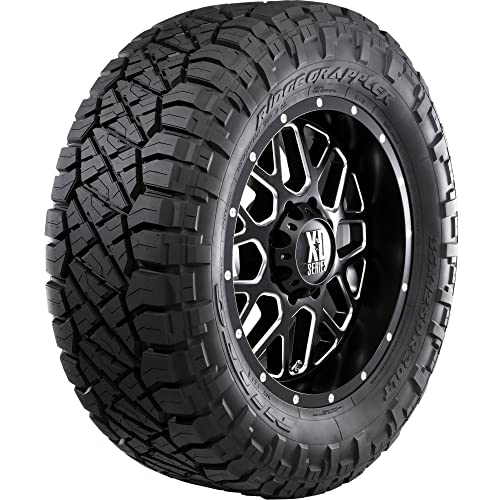
When your route shifts from pavement to rough tracks, Nitto Ridge Grappler bridges all-terrain and mud-terrain tread styles. Its staggered shoulder lugs bite into loose ground, and the tread blocks give the tire a tougher trail stance than a mild all-terrain pattern.
Nitto reinforces the block foundation to limit tread flex under load. Stone ejectors push debris out of the grooves, reducing the chance that sharp rocks will work their way into the tread as you drive over gravel.
The variable-pitch tread blocks help manage road noise, while the broad grooves keep the tread ready for dirt and uneven ground. Nitto Ridge Grappler also offers two sidewall designs, so the visible side can suit a more understated or more rugged look. The result is a tire with real trail-oriented features that still handles regular road miles.
Bottom line: Choose the Nitto Ridge Grappler if you want an aggressive hybrid tread for trail use and daily driving. Its reinforced blocks and stone ejectors suit rocky routes.
Pros
- Open shoulder pattern clears loose material
- Large tread blocks bite into uneven ground
- Rugged-terrain design suits mixed road and trail use
Cons
- Aggressive tread feels less relaxed on pavement than a highway tire
Toyo Open Country R/T Trail brings a rugged-terrain tread to trucks that split time between pavement and rough ground. Its large blocks and open shoulder pattern give you more bite in loose dirt than a road-focused tire, while the tread retains a layout you can use for regular driving.
The broad shoulder lugs add traction when you turn through ruts or climb over uneven ground. Deep grooves create channels for mud and loose material to move through, and the sturdy tread blocks take on the repeated impacts of trail use.
Toyo places this tire in the space between all-terrain and mud-terrain designs, with a look and tread pattern that lean toward off-road use. Open Country R/T Trail gives your truck useful grip on dirt and gravel while keeping the tread versatile enough for paved stretches between trailheads. The rugged shoulders also add protection around the outer tread area during rough driving.
Bottom line: The Toyo Open Country R/T Trail fits drivers who want a rugged tread for frequent dirt-road and trail use. It also works for trucks that need to cover paved miles between off-road sections.
Pros
- Lower road noise than many aggressive tread designs
- DuraGen Technology targets off-road durability
- Three-Peak Mountain Snowflake designation
- Limited tread life coverage up to 60,000 miles
Cons
- Less bite in deep mud than a mud-terrain tire
General Grabber A/T X keeps road noise in check without giving up a rugged tread for off-road driving. Its block layout and tread pattern balance everyday pavement use with grip on dirt, gravel, and other loose surfaces.
General uses DuraGen Technology to build a tire that can handle the cuts and chips of rough terrain. The tread also carries the Three-Peak Mountain Snowflake designation, adding a clear winter-use benefit for drivers who encounter snow on paved roads or trails.
The Grabber A/T X feels at home on a daily route, where its lower road noise makes conversation easier than a more open, aggressive tread might. Its tread blocks still provide useful traction when you leave the pavement, and General offers a limited tread life warranty of up to 60,000 miles. General Grabber A/T X keeps those road manners central while retaining the rugged construction expected of an all-terrain tire.
Bottom line: Choose the General Grabber A/T X if you want quieter daily driving with the option to take gravel roads and light trails. It fits drivers who value road comfort but still need off-pavement traction.
Pros
- T1 compound targets wet braking and cold-weather grip
- Powerply XD adds puncture resistance
- Extreme Sidebiters add off-road grip and protection
- 50,000-mile limited treadwear warranty
Cons
- Large side lugs can add noise on smooth pavement
Mickey Thompson Baja Boss A/T uses an asymmetric tread pattern to balance road handling with off-road traction. Its T1 compound targets wet braking and cold-weather grip, giving the tire useful control when rain or chilly conditions make paved roads slick.
Extreme Sidebiters extend the tread’s rugged character along the sidewall and add protection and grip in rough terrain. Powerply XD places a heavier-denier cord in the angled third ply, which increases puncture resistance and helps the tire respond more steadily to steering inputs.
The Baja Boss A/T also carries the Three-Peak Mountain Snowflake designation in this 12.50-wide version. Its tread design suits trails and gravel roads, while the asymmetric layout aims to keep road handling more controlled than a uniform block pattern. Mickey Thompson backs the line with a 50,000-mile limited treadwear warranty.
Bottom line: The Mickey Thompson Baja Boss A/T suits drivers who want trail-ready sidewall protection with wet-road grip. Its snow designation also makes it a fit for routes that include winter conditions.
Pros
- Deep grooves grip dirt and loose ground
- Heat Diffuser Technology manages lower-sidewall heat
- Broad shoulder lugs add off-road traction
- Rugged-terrain tread suits rough access roads
Cons
- Broad tread blocks can feel less precise during quick pavement turns
Deep grooves and broad shoulder lugs give Falken Wildpeak R/T a pronounced rugged-terrain character. The tread works into dirt and loose ground, while its large blocks give the tire a substantial footprint for trucks that carry gear or spend time on rough access roads.
Falken’s Heat Diffuser Technology manages heat in the lower sidewall, where heavy loads and towing can build temperature. That feature works alongside the tire’s sturdy construction, while the open shoulder pattern adds grip when you leave smooth pavement.
The Wildpeak R/T sits between conventional all-terrain and mud-terrain designs, with a tread built for drivers who want a more aggressive off-road feel. On paved routes, the broad blocks can make steering feel less precise during quick maneuvers than a road-focused tire. Falken Wildpeak R/T brings its strongest qualities to rocky tracks, dirt roads, and other surfaces where its deep tread can work.
Bottom line: Go with the Falken Wildpeak R/T if your truck regularly faces rough trails, rocky tracks, or work roads. Its rugged tread and heat management suit drivers who carry loads or tow on demanding routes.
Factors to Consider When Choosing All Terrain Tires for Off Road
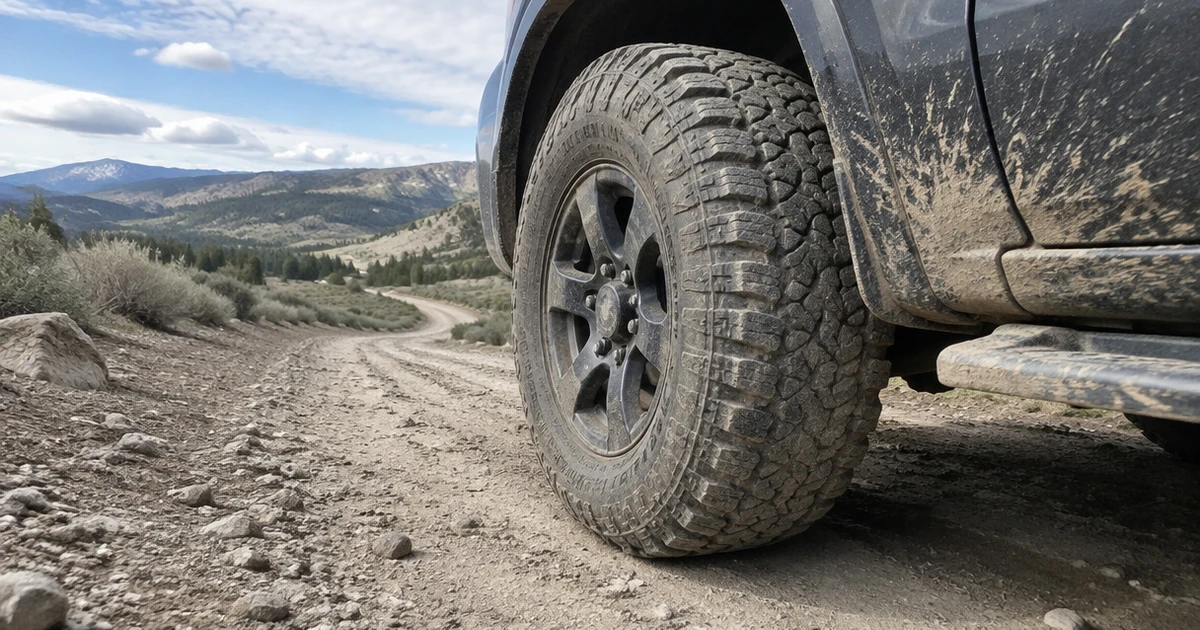
Start with your usual routes, then weigh traction against the road comfort and durability you need. These factors can help you narrow your choices without paying for features your driving rarely calls for.
Match the Tread to Your Terrain
Look at the surfaces you drive most often. Closely spaced tread blocks and wide grooves can help clear water and loose dirt, while larger, more open blocks can bite into rough ground. Shoulder lugs that extend toward the sidewall may add grip when you turn through ruts, but a very open pattern can create more road noise.
Think about your hardest regular route, not an occasional extreme trail. If you mostly drive pavement and gravel roads, a road-friendly all-terrain pattern may suit you better than a more aggressive tread. For frequent mud, rocks or deep ruts, prioritize open channels, sturdy shoulders and a tread design built for those surfaces.
Check Wet and Winter Grip
Rain, packed snow and ice call for different strengths. Deep grooves help move water away from the contact area, while many small tread edges can help the tire grip snow.
If you drive in severe winter conditions, look for the three-peak mountain snowflake symbol, often shortened to 3PMSF. It marks tires that meet a defined snow-traction standard, but it does not mean they match a dedicated winter tire on ice.
Use this comparison as a starting point, not a guarantee of performance. Tire design and the conditions you drive in still matter.
| Tread style | Often suits | Trade-off |
|---|---|---|
| Road-focused all-terrain | Daily driving, rain, gravel | Less bite in deep mud |
| Aggressive all-terrain | Rough trails, loose soil | More noise on pavement |
| Winter-rated all-terrain | Regular snow travel | Snow rating does not replace ice-focused winter tires |
Consider Sidewall Strength
Sharp rocks and trail debris can cut or pinch a tire sidewall. If you spend time on rough tracks, inspect the tire’s sidewall design for added rubber, protective ribs or reinforced construction.
Larger shoulder blocks can also help protect the outer edge and provide grip near ruts. These features help with trail use, but they do not make a tire puncture-proof.
Load range and ply rating can help you compare construction, but they do not tell the whole story. Match the tire’s load capacity to your vehicle and the weight you carry.
A heavier, tougher tire can add durability, yet it may also feel firmer and weigh more than a lighter option. Carrying a full-size spare and a repair kit can help on remote trips.
Balance Trail Grip with Road Comfort
If you drive long distances on pavement, pay attention to tread pattern and road-noise notes. Large tread blocks and wide gaps can add hum, especially as tires wear.
A tighter pattern often feels calmer on the highway, though it may give up some grip in loose soil. Your vehicle’s alignment and tire pressure also affect noise and ride comfort.
Think about how much time you spend on each surface. A quieter design may be the better fit if you commute every day and take occasional dirt roads.
If you frequently travel rough trails, you may accept more road noise for stronger off-road grip. Keep tires rotated on schedule to help them wear evenly and maintain a steady ride.
Get the Fit and Load Rating Right
Start with the tire size and load rating listed on your vehicle’s door placard or in its owner’s manual. A replacement tire should meet or exceed the original load capacity and fit the wheel without rubbing.
If you change tire size, check how it affects clearance, speedometer readings and spare-tire fit. A tire shop can check fitment before you buy.
- Match the recommended tire size or confirm a change with a qualified installer.
- Choose a load index that suits your vehicle and the weight you carry.
- Use the vehicle’s recommended pressure for normal road driving.
Do not use the maximum pressure printed on a tire sidewall as your everyday target. That figure marks a limit, not the pressure your vehicle needs. If you air down for soft terrain, use a pressure gauge, avoid sharp turns at low pressure and reinflate before returning to pavement.
Choose Tires for the Roads You Actually Drive
The BFGoodrich All-Terrain T/A KO3 suits drivers seeking a balanced choice, while the Falken Wildpeak A/T4W focuses on all-weather grip and the Toyo Open Country A/T III on snow traction. For rougher routes, look at the Goodyear Wrangler DuraTrac RT for sidewall protection, the Toyo Open Country R/T Trail for rugged design or the Falken Wildpeak R/T for rugged-terrain grip.
The Nitto Ridge Grappler fits drivers drawn to a hybrid tread, while the General Grabber A/T X targets a quieter ride and the Mickey Thompson Baja Boss A/T emphasizes wet handling. Match your choice to your terrain, winter weather and daily mileage, then confirm fit and load rating before buying.
Frequently Asked Questions
Are all-terrain tires good for everyday driving?
Yes, many all-terrain tires work well for daily driving, especially if you split your time between pavement and gravel or dirt roads. Expect a different ride from a highway tire: an aggressive tread can add noise and feel firmer. Choose a road-focused pattern if you spend most of your time on pavement.
Are all-terrain tires safe in snow?
Some all-terrain tires carry the three-peak mountain snowflake mark, which indicates they meet a defined snow-traction standard. That mark does not guarantee strong grip on ice, and tires vary in winter performance. If you regularly drive on snow or ice, check local conditions and consider whether dedicated winter tires suit your needs better.
Do all-terrain tires use more fuel?
They can. All-terrain tires often weigh more and use tread patterns that create more rolling resistance than highway tires. The effect varies by tire, vehicle and driving conditions. Keeping your tires at the pressure your vehicle maker recommends and maintaining proper alignment can help limit unnecessary fuel use.
How often should I rotate all-terrain tires?
Follow the rotation interval in your vehicle’s owner’s manual or the tire maker’s guidance. Regular rotations help even out wear, which matters because uneven tread can make a tire louder and reduce its useful life. Check tread condition and pressure often, especially after rough trail drives or long trips.
Can I lower tire pressure for off-road driving?
Lower pressure can help a tire spread out on soft ground, but it also increases the risk of sidewall damage or the tire slipping off its wheel. Use a gauge and stay within guidance for your vehicle and tire. Reinflate to the road pressure before driving on pavement.