
This post may contain affiliate links. As an Amazon Associate I earn from qualifying purchases. If you choose to make a purchase, I may earn a small commission at no extra cost to you.
Choosing SUV tires can feel like a compromise. You want a quiet ride, secure wet-road grip, and enough snow traction for an occasional storm. The tire also needs to carry your vehicle’s weight and fit its wheels correctly.
Start with the weather you face most, then check the door placard for approved size, load index, and speed rating. Tread design, winter marking, road noise, and warranty help narrow the field.
Your usual routes matter more than a broad label. This guide to the best all season tires for SUVs you can buy in 2026 covers options for different needs, from quiet commuting to regular snow driving.
Our Top All Season Tires for SUVs Picks


More Details on Our Top Picks
Pros
- Built for the weight and power of modern pickups and full-size SUVs
- Long-wearing tread design
- Comfortable, quiet highway ride
- Reliable all-season road traction
Cons
- Highway tread lacks the bite needed for muddy trails
Long tread life anchors the Michelin Defender LTX M/S2, a highway all-season tire built for the weight and power of modern pickups and full-size SUVs. Michelin balances a durable tread compound with year-round traction for drivers who spend most of their time on pavement.
The tread focuses on steady road contact rather than aggressive off-road bite. That suits the mix of commuting, family trips, and highway miles that many SUV owners put on their vehicles.
You get a quiet, comfortable ride that keeps long drives from feeling tiring. Its grip also suits changing everyday conditions, from wet pavement to cold roads, without turning the ride harsh or loud.
Michelin Defender LTX M/S2 puts endurance and comfort ahead of a rugged, trail-ready feel. It works as an everyday tire for heavier vehicles that need reliable road manners over many miles.
Bottom line: Choose it for a heavier SUV or pickup that spends most of its time on the road. It suits drivers who value long wear and a calm ride.
Pros
- EcoPlus Technology supports fuel efficiency and long tread life
- Short wet-road braking distances
- Quiet tread pattern for comfortable highway travel
- Responsive handling for year-round driving
Cons
- Touring tread lacks the loose-surface bite of an all-terrain tire
For an SUV that covers daily commutes and long highway runs, the Continental CrossContact LX25 puts comfort and wet-road control first. Continental’s EcoPlus Technology tunes the tire for efficient rolling, long tread life, and shorter wet braking distances.
The tread pattern keeps road noise low, so you can hold a conversation without raising your voice. Responsive handling also gives you steady control through everyday turns and lane changes.
Rain is where this touring tire’s strengths matter most. Its wet-focused design gives you confident braking on slick pavement, while the tread handles ordinary year-round driving without the stiff feel of a more aggressive tire.
The CrossContact LX25 is backed by a limited tread life warranty of up to 70,000 miles. Its road-focused tread and EcoPlus Technology make the drive feel composed while helping your vehicle use fuel efficiently.
Bottom line: This tire fits your routine if most of your SUV driving happens on paved roads. Pick it for a quiet ride and confident wet-weather braking.
Pros
- Full-depth sipes retain biting edges as the tread wears
- 3D sipe technology supports stable wet and dry handling
- All-season compound for SUV and crossover use
- Predictable braking on wet roads
Cons
- Mild all-season tread is not intended for deep snow
Full-depth sipes give the Pirelli Scorpion AS Plus 3 traction features that last through the tread’s life, not just its early miles. They add biting edges for grip and braking as the tire wears.
Pirelli’s 3D sipe technology works with the tread pattern to steady handling on both dry and wet roads. The all-season compound also suits the mix of conditions you face in a crossover or SUV, from warm pavement to cooler, damp days.
On the road, the tire feels composed through everyday turns and gives you predictable braking in rain. Its tread design aims for a confident handling feel without taking the vehicle away from its usual road-focused role.
The Pirelli Scorpion AS Plus 3 fits the varied driving needs of SUVs and light trucks. Its focus on lasting sipe depth gives you a useful blend of traction and control over time.
Bottom line: Consider it for your SUV if steady wet and dry handling matters more than deep-snow traction. It suits drivers who want road-focused control through changing seasons.
Pros
- QuietTrack Technology reduces tread noise
- Snow Vices add biting edges for winter grip
- High-silica compound supports wet traction
- 80,000-mile limited warranty
Cons
- Comfort-focused tuning gives up some sharpness in spirited cornering
QuietTrack Technology gives the Bridgestone Alenza AS Ultra a clear focus: a calm ride for SUVs that spend long hours on the highway. Its tread design cuts pattern noise, while Bridgestone’s high-silica compound supports wet and winter traction.
For snowy roads, Snow Vices add extra biting edges to the tread. They give you more grip in winter conditions while the tire keeps its touring feel through the rest of the year.
On paved routes, the Alenza AS Ultra pairs a quiet ride with steady everyday handling. You can cover long distances without the coarse tread sound that often comes with more rugged tire designs.
Bridgestone backs the tire with an 80,000-mile limited warranty. That long coverage fits its emphasis on lasting wear and a refined road feel, while the wet-focused compound adds confidence when rain arrives.
Bottom line: Choose the Alenza AS Ultra for a quiet highway ride and long warranty coverage. It suits SUV drivers who want a refined touring tire with added winter grip.
Pros
- Three-Peak Mountain Snowflake severe-snow certification
- Directional tread channels water away
- Full-depth sipes retain traction as the tread wears
- Strong wet and dry braking
Cons
- Directional tread limits routine rotation to front-to-back
The Michelin CrossClimate2 carries the Three-Peak Mountain Snowflake symbol, which marks it for severe snow service. Its directional V-shaped tread and full-depth sipes give you year-round traction with a stronger winter focus than many touring tires.
Michelin’s thermal-adaptive tread compound adjusts to changing temperatures, while the tread pattern channels water away from the contact area. That design supports braking on wet and dry roads, even as the tread wears.
On daily drives, you get a steady feel in rain and more dependable snow grip than a basic all-season tire can offer. The CrossClimate2 still works as a road tire for normal commuting and highway travel, rather than a dedicated off-road design.
Michelin CrossClimate2 brings together snow certification, wet-road braking, and long-wearing construction. Its directional pattern gives it a distinct look and keeps the tread’s water-clearing grooves pointed in one direction.
Bottom line: Go with the CrossClimate2 if you face real winter weather but still need one tire for year-round driving. It suits SUV owners who want a touring ride with certified snow traction.
Pros
- Micro-silica compound supports wet traction and tread life
- Multi-pitch tread reduces road noise
- Sipes and serrated grooves add cold-weather grip
- Chamfered ribs support even wear
Cons
- Rear staggered-fitment warranty coverage drops to 32,500 miles
Staggered multi-pitch tread blocks keep the Yokohama Geolandar CV G058 quiet on paved roads. Yokohama pairs that pattern with a micro-silica compound for wet traction and long tread life.
For colder conditions, the tire uses a mix of 2D and 3D sipes plus serrated outer grooves. Those edges add grip in slush, ice, and snow, giving you more all-season confidence than a smooth highway pattern.
Chamfered ribs keep the tread in even contact with the road, which supports steady wear and predictable handling. In daily driving, the Geolandar CV G058 aims for a smooth, composed feel rather than a rugged off-road response.
Yokohama backs standard and front staggered fitments with a 65,000-mile limited tread life warranty. Coverage for rear staggered fitments is 32,500 miles, a detail that matters if your SUV uses a staggered setup.
Bottom line: Consider the Geolandar CV G058 for a crossover or SUV that needs a quiet ride and useful winter grip. Its warranty also suits drivers who value long-term tread coverage.
Pros
- AquaTred Technology moves water and slush from the tread
- Evolving grooves maintain water displacement as the tire wears
- Severe-snow designation
- Comfort inserts reduce bumps and vibration
Cons
- Deep snow still calls for a dedicated winter tire
Goodyear’s AquaTred Technology gives the Assurance WeatherReady 2 a wet-weather focus, with sweeping grooves that move water and slush away from the tread. The tire also carries a severe-snow designation for drivers who face winter roads.
Evolving Traction Grooves keep clearing water as the tread wears, so wet grip does not depend only on the tire’s first miles. A specialized tread compound stays adaptable across changing seasons.
Comfort inserts soften bumps and road vibration while maintaining steering control through lane changes. Variable tread block sizes also limit noise, making the ride more settled on long drives.
The Goodyear Assurance WeatherReady 2 combines rain handling with certified winter traction in a road-focused package. Its tread and comfort features suit the everyday mix of weather and pavement that SUV drivers encounter.
Bottom line: This Goodyear suits your SUV if rain and occasional snow both shape your driving year. Choose it for wet-road control and added winter traction without giving up a comfortable ride.
Pros
- Stiff center rib sharpens steering response
- Four straight channels help resist hydroplaning
- Silencer sipes reduce road noise
- Tuned for luxury SUVs and crossovers
Cons
- Highway-focused tread offers limited grip on loose trails
A stiff center rib gives the Hankook Dynapro HP2 Plus a direct steering feel suited to luxury SUVs and crossovers. Four straight grooves move water out from under the tread, adding resistance to hydroplaning on wet roads.
Hankook uses silencer sipes to reduce road noise and keep the ride comfortable. The tread’s road-focused design fits daily driving, where quiet travel and predictable handling matter more than rugged trail traction.
Behind the wheel, the center rib helps the tire respond cleanly to steering inputs on pavement. Its water-clearing channels add a useful layer of confidence in rain, while the quiet tread keeps highway trips from feeling harsh.
The Dynapro HP2 Plus is built around the needs of larger, comfort-oriented SUVs. It brings together precise steering, wet-road control, and a quieter ride in an all-season tire.
Bottom line: Pick the Dynapro HP2 Plus for an SUV that spends most of its time on pavement. It fits drivers who want direct steering and a quiet cabin.
Pros
- Variable Pitch Technology reduces road noise
- Wide grooves help clear water
- Full-depth sipes retain winter traction as the tire wears
- Strong center rib supports stable handling
Cons
- Comfort-led steering lacks the quick feel of a sporty SUV tire
Variable Pitch Technology helps the Kumho Crugen HP71 keep road noise down, a welcome trait on long SUV trips. Kumho pairs that tread pattern with a strong center rib for stable handling and even wear.
Wide circumferential grooves and micro-serrated tread blocks clear water from the contact area. Full-depth sipes and lateral voids also move slush from beneath the tire, giving you winter traction that lasts as the tread wears.
On wet roads, the tire’s grooves support confident traction and help reduce hydroplaning risk. Its center rib and improved shoulder blocks give you quick, predictable handling for everyday driving.
The Crugen HP71 balances a comfortable touring ride with useful wet-weather and winter features. It suits SUVs that need steady road manners across the seasons without an aggressive tread pattern.
Bottom line: Choose the Crugen HP71 for a quieter touring ride with useful wet and slush traction. It suits drivers who value comfort and steady road handling.
Pros
- Precise steering response on wet and dry roads
- Strong wet-road braking
- Quiet ride for highway travel
- Up to 65,000-mile limited tread life warranty
Cons
- Highway tuning gives up some sharpness during hard cornering
Wet-road braking and precise steering are central to the General Grabber HTS60’s highway-focused design. Its tread pattern supports handling on both wet and dry pavement, while its durable construction targets steady wear.
On everyday drives, the tire gives you controlled responses through turns and lane changes. Its low-noise tread also keeps the cabin more comfortable on highway trips in a truck or SUV.
General backs the Grabber HTS60 with a limited tread life warranty of up to 65,000 miles. That coverage pairs with its road-focused design, which favors predictable pavement handling over a rough, aggressive tread feel.
The Grabber HTS60 brings together wet braking, dry-road control, and a comfortable ride for regular highway use. You get a tire built to handle routine driving without a loud tread pattern.
Bottom line: Consider the Grabber HTS60 for a truck or SUV that spends most of its time on paved roads. It suits drivers who want controlled handling and long tread coverage.
Factors to Consider When Choosing All Season Tires for SUVs
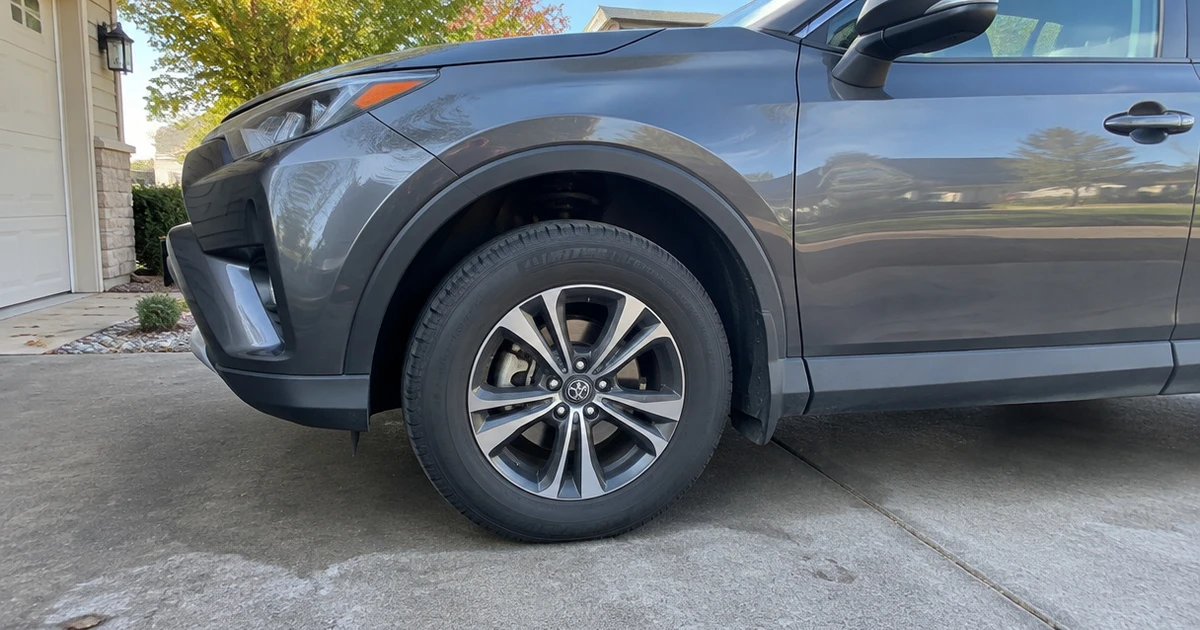
Good SUV tires should match your vehicle first, then suit the roads and weather you drive most. Use the checks below to sort safety needs from comfort preferences before you buy.
Vehicle Fit and Load
Start with the tire size and service description on your driver-door placard or in the owner’s manual. Match the full size, load index, and speed rating, and do not treat a matching diameter as proof of a safe fit. Passengers, cargo, and towing all add load, so choose a tire that meets the vehicle maker’s limits.
Check whether your SUV calls for standard-load, extra-load, or LT tires. A stronger casing may suit frequent heavy loads, but it can make the ride firmer, and LT tires can require different pressure guidance. Do not go below the placard’s load index, and follow its pressure guidance.
- Approved tire size and load index
- Required speed rating and load type
- Any towing or cargo demands
Weather and Snow Needs
Think about your typical winter, not just the tire’s all-season label. Most all-season SUV tires work well in mild cold and occasional light snow, but their grip falls behind a dedicated winter tire on packed snow and ice. If you face regular snow, look for the Three-Peak Mountain Snowflake symbol, which signals a tested level of snow traction; it does not make a tire a winter tire.
Use this quick comparison to prioritize features for your routes.
| Driving pattern | Useful signs |
|---|---|
| Rain and standing water | Water-channeling grooves and strong wet braking in independent tests |
| Light snow | Three-Peak Mountain Snowflake mark |
| Long highway trips | Stable steering and low cabin noise in road tests |
The M+S marking alone does not confirm the same level of snow traction as the Three-Peak Mountain Snowflake symbol. If your winter includes frequent ice or deep snow, plan around a dedicated winter tire instead.
Wet and Dry Grip
Wet grip matters because rain can reduce braking and cornering control quickly, especially on a heavy SUV. Look for independent wet-braking and handling results for the exact tire size when available, then check the tread design: circumferential grooves help move water away, while dense sipes add biting edges on damp roads. A tread pattern alone cannot prove performance, so favor measured results over bold claims.
Dry-road control depends on stable tread blocks and a casing that responds cleanly as you steer. If your SUV carries roof loads or often takes winding roads, prioritize predictable cornering and braking over an aggressive tread look. Wet-condition tests can reveal differences that appearance cannot.
Ride Comfort and Noise
Ride comfort depends on more than the tire’s name. Larger wheels often leave less sidewall to absorb bumps, while a taller sidewall can soften rough pavement if the vehicle allows that fit. Stay within approved sizes, and compare road tests for impact comfort and cabin noise rather than judging tread by looks.
Pattern design also affects sound: tightly spaced blocks and varied block shapes can help reduce a repeating hum, though road surface and vehicle insulation matter too. If you spend long stretches on highways, search for noise reports at your usual speed and ask a tire shop about a test drive or return policy before you commit.
Tread Life and Warranty
Check the treadwear warranty, but treat it as a claim with conditions, not a promise that every tire will reach that mileage. Coverage often requires documented rotations and proper maintenance, and uneven wear from poor alignment or wrong pressure may limit a claim. Read the terms for coverage length, prorating, and what proof you must keep.
Your own upkeep affects service life more than a warranty headline. Check cold pressure monthly and before long trips, rotate on the schedule in your manual, and correct alignment issues early. Replace tires when tread or damage calls for it, and have a shop inspect cracking, bulges, or repeated pressure loss.
Frequently Asked Questions
Do all-season SUV tires work in snow?
They can handle light snow and cold-weather commuting, but their grip varies by tread design and temperature. On packed snow, steep roads, or frequent ice, a winter tire usually gives better braking and control. If you use all-seasons in winter, slow down, leave more space, and check local rules.
What does the Three-Peak Mountain Snowflake symbol mean?
It marks a tire that meets a set snow-traction performance standard, so it gives you a stronger sign of winter capability than an M+S marking alone. It does not mean the tire matches a dedicated winter tire on ice or in severe cold. Match the choice to your local conditions.
How long do all-season SUV tires last?
Service life depends on tire design, alignment, inflation, load, climate, and how you drive. Check tread depth and damage often, rotate on the schedule in your owner’s manual, and replace tires when tread gets low or the rubber shows cracking or bulges. A mileage warranty does not guarantee a fixed lifespan.
Should you replace all four SUV tires at once?
Replacing all four is usually safest on an SUV with all-wheel drive, since tread depth differences can strain its drivetrain. Some vehicles allow a pair replacement within a set tread-depth range, but the owner’s manual sets the limit. On two-wheel-drive SUVs, fit matching tires across each axle and keep the better pair on the rear.
What pressure should you use in SUV tires?
Use the cold tire pressure on the driver-door placard or owner’s manual, not the maximum printed on the sidewall. Check pressure at least monthly and before long drives, since temperature changes can shift it. If you carry heavy cargo or tow, follow the vehicle maker’s load guidance rather than guessing.