
This post may contain affiliate links. As an Amazon Associate I earn from qualifying purchases. If you choose to make a purchase, I may earn a small commission at no extra cost to you.
Choosing tires for an Acura Integra means balancing the car’s responsive handling with the roads and weather you face. The wrong type can feel noisy on your commute, lose grip in rain, or wear faster than you expect. Fit also matters, since the right size and ratings help your car ride and steer as designed.
Think about your climate, driving style, and how long you plan to keep the tires. The best tires for Acura Integra you can buy in 2026 cover different needs, from warm-weather grip to snow traction and quiet daily comfort. The options below help you narrow your choice by what matters most in your routine.
Our Top Tires for Acura Integra Picks




More Details on Our Top Picks
Pros
- Responsive steering for a performance all-season tire
- Designed for changing seasonal conditions
- Corvette selection reflects its sports-car focus
- Balances wet-road grip with dry handling
Cons
- Ride can feel firm on rough pavement
- Snow grip falls short of a dedicated winter tire
The Michelin Pilot Sport All Season 4 brings sports-car handling to a tire you can use through changing seasons. Its asymmetric tread and performance-focused all-season compound give your Integra responsive steering without limiting the tire to warm, dry roads.
Michelin developed the line for drivers who want grip and control across different conditions, and Chevrolet selected it as the first all-season tire for the Corvette. That sports-car connection reflects its focus on precise road feel, not just relaxed commuting.
On wet pavement, the tread channels water away while its closely arranged grooves maintain contact with the road. In cooler weather, the tread keeps more flexibility than a summer-only design, though snow and ice still call for a cautious approach.
The Pilot Sport All Season 4 gives you a useful mix of quick steering response and year-round usability. Its performance character suits an Integra driver who enjoys a lively drive but still needs one tire for varied conditions.
Bottom line: Choose it for your Integra if you want crisp handling and all-season flexibility in one performance tire.
Pros
- SportPlus Technology supports responsive handling
- Strong wet and dry braking focus
- Tread indicators show changing performance tuning
- Offers traction in light snow
Cons
- Steering feels less sharp than a summer performance tire
- Deep snow is outside its strongest range
If your Integra sees rain, cold mornings, and occasional snow, the Continental ExtremeContact DWS06 Plus gives you a broad range of grip. Continental’s SportPlus Technology focuses on responsive handling and traction, while the tread design works to shorten braking distances on wet and dry roads.
Its name also points to the tire’s Tuned Performance Indicators. The D, W, and S marks in the tread wear away as the tire’s tuning for dry, wet, and snow conditions changes, giving you a visible cue about its performance balance.
Wide circumferential grooves move water through the tread, and detailed siping adds edges for traction in light winter conditions. The DWS06 Plus keeps a sporty feel on clear roads, with extra versatility when the weather turns.
Continental backs the line with limited tread-life coverage, adding a practical note to its wet-weather braking and responsive road manners. The result feels well suited to daily Integra driving across a mix of seasons.
Bottom line: Consider this tire for an Integra that needs confident wet-road manners and some light-snow ability.
Pros
- Bi-Compound tread balances dry and wet grip
- Dynamic Response Technology sharpens steering feel
- Strong braking on wet pavement
- Built around summer performance
Cons
- Not intended for snow or icy roads
- Cold temperatures reduce its useful grip
Warm, dry pavement is where the Michelin Pilot Sport 4S feels most at home. Michelin’s Bi-Compound tread uses different rubber blends across the tread, with a focus on dry grip at the outer shoulder and wet traction toward the inner section.
That layout gives your Integra sharp cornering response and strong braking on clear roads. Michelin also uses Dynamic Response Technology, a hybrid belt that helps the tire follow steering inputs with precision at speed.
The Pilot Sport 4S draws on Michelin’s endurance-racing work and has earned factory fitment on performance cars from makers such as Mercedes-AMG, Ferrari, and Porsche. On an Integra, its high-speed control and confident wet braking suit spirited summer drives.
This is a summer tire, so its compound and tread focus on warm-weather performance rather than winter traction. In cold conditions, it cannot offer the flexibility you need for snow or icy roads.
Bottom line: Get the Pilot Sport 4S for your Integra if warm-weather cornering and braking matter more than year-round use.
Pros
- Locking 3-D Sipes add wet and dry grip
- MaxTouch Construction spreads tread forces
- 80,000-mile limited treadwear warranty
- Designed for long daily use
Cons
- Steering response lacks a sporty edge
- Touring focus favors comfort over cornering feel
Long tread life is the main draw of the Michelin Defender2, a touring all-season tire built for steady daily miles. Its Locking 3-D Sipes create extra biting edges across the tread, which help the tire hold grip and stop on wet or dry pavement.
Michelin redesigned the tread for extended wear, and its MaxTouch Construction spreads acceleration, braking, and cornering forces across the contact patch. That design gives your Integra a practical commuter character rather than a sharp, track-focused feel.
The Defender2 carries an 80,000-mile limited treadwear warranty and a six-year standard limited warranty. Those terms pair with its long-wearing tread design for drivers who spend more time on commutes than on spirited back-road runs.
On ordinary roads, you get composed handling and dependable all-season traction. The tire’s touring focus also favors a calm ride over quick steering response, which can change the feel of a sporty Integra.
Bottom line: The Defender2 fits an Integra used mainly for commuting, especially if long tread life matters most to you.
Pros
- Three-Peak Mountain Snowflake certified
- Directional tread channels water and slush
- Built for wet and dry braking
- Designed for year-round use
Cons
- Ride can feel firm on rough roads
- Not a replacement for a dedicated winter tire in severe conditions
The directional V-shaped tread gives the Michelin CrossClimate2 a distinctive design built to manage water and slush. Its Three-Peak Mountain Snowflake certification also marks it for severe snow service, a useful feature if your Integra faces real winter weather.
Michelin designed this all-season tire for year-round use, with braking performance on wet and dry roads as a key focus. Across changing temperatures, the tread pattern keeps plenty of edges in contact with the road.
The CrossClimate2 feels more like a capable touring tire than a sharp summer performance tire, yet it still gives your Integra predictable handling on clear roads. Its snow-rated traction adds a useful layer of confidence when roads turn slushy.
That broad weather range makes the tire appealing for drivers who would rather keep one all-season setup through the year. The tread pattern can create a firmer ride than a comfort-first touring design.
Bottom line: Pick the CrossClimate2 for your Integra if winter traction matters alongside dependable wet- and dry-road braking.
Pros
- PeakLife compound focuses on longer wear
- Grooves channel water from the tread
- Full-depth 3-D sipes add grip
- 50,000-mile limited tread-life warranty
Cons
- Snow grip is limited in deep winter conditions
- Firm response can feel less relaxed on rough pavement
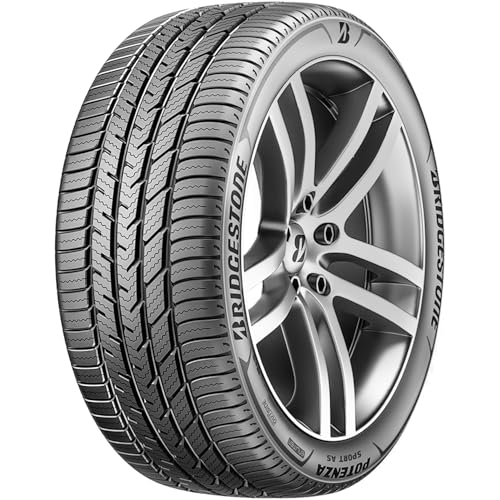
Bridgestone’s PeakLife tread compound gives the Potenza Sport AS a performance focus with a longer-wear design. For your Integra, that means sporty road manners paired with a compound made to handle regular driving through the year.
Circumferential and lateral grooves move water out from under the tire, while the open shoulder pattern leaves channels at the tread edges. Full-depth 3-D sipes add biting edges for traction as the tread wears.
On dry roads, the Potenza Sport AS brings the quick, firm response you expect from a UHP all-season tire. In rain, its groove layout helps resist hydroplaning, and the tread gives you extra grip in light winter conditions.
Bridgestone backs the line with a 50,000-mile limited tread-life warranty. The PeakLife compound and all-season tread make this a sporty option for Integra drivers who want lively handling without a summer-only setup.
Bottom line: The Potenza Sport AS suits an Integra driver who wants a sporty feel and year-round road use.
Pros
- Asymmetric tread supports handling and braking
- Four grooves help move water and slush
- Dense siping cuts noise and vibration
- 50,000-mile limited tread-life warranty
Cons
- Not suited to deep snow or prolonged icy roads
- Steering feel is less sharp than a summer tire
Pirelli uses an asymmetric tread on the P Zero AS Plus 3 to balance handling, traction, and braking. Its dense siping adds grip while also softening some of the road noise and vibration that can intrude during an Integra commute.
Four wide grooves run through the tread to carry water and slush away from the contact area. That layout gives the tire useful hydroplaning resistance in heavy rain, while the tread remains tuned for performance-oriented coupes and sedans.
On dry pavement, the P Zero AS Plus 3 gives your Integra composed handling and a controlled feel through corners. Its quiet, comfortable ride makes it easier to live with during longer trips than a more road-focused performance setup.
Pirelli includes a 50,000-mile limited tread-life warranty with the line. It brings a balanced mix of everyday comfort and sporty response without losing its all-season purpose.
Bottom line: Choose the P Zero AS Plus 3 for an Integra that needs a quiet ride with a performance-oriented feel.
Pros
- ActiveGrip Technology focuses on all-season traction
- ActiveBraking Technology boosts braking contact
- Built-in gauge shows tread wear
- Rim protector helps guard wheel edges
Cons
- Deep-snow traction remains limited
- Ride can feel firm on damaged pavement
ActiveGrip Technology gives the Goodyear Eagle Exhilarate its focus on traction and handling across changing road conditions. For an Integra, that means a high-performance all-season design that aims to keep steering response direct without giving up wet-road control.
Goodyear’s ActiveBraking Technology increases the tread’s contact with the road during braking. The tire also uses a built-in wear gauge, so you can track tread depth and spot uneven wear patterns over time.
Water moves through the tread as the Eagle Exhilarate works to maintain grip in rain, while the performance design keeps it composed through corners. An enhanced rim protector adds a raised barrier near the wheel edge to help guard against curb scrapes.
The line carries a 45,000-mile tread-life limited warranty. Its mix of braking-focused design and visible wear monitoring makes it a feature-rich option for daily Integra use.
Bottom line: The Eagle Exhilarate is a good fit for your Integra if you value crisp handling and useful tread features.
Pros
- EcoPlus Technology focuses on efficiency and tread life
- Quiet ride suits daily commuting
- QuickView Indicators show tread performance changes
- Light-snow traction
Cons
- Steering response feels less immediate than a UHP tire
- Not designed for heavy snow
Quiet road manners give the Continental PureContact LS a relaxed feel for daily Integra commutes. Continental’s EcoPlus Technology focuses on lower rolling resistance, wet-road braking, and tread life, helping the tire balance comfort with practical efficiency.
Its tread supports traction in light snow, while the all-season design keeps the tire useful through changing weather. QuickView Indicators sit in the tread and show how the tire’s performance changes as it wears.
The PureContact LS favors a composed ride over quick, track-like steering. On wet roads, its tread design works to maintain braking grip, and the low-noise ride can make longer drives feel calmer.
Continental backs the line with a 70,000-mile limited tread-life warranty. That combination of comfort, light-snow traction, and wear-focused design gives an Integra a sensible touring character.
Bottom line: Choose the PureContact LS for an Integra you use for commuting and longer, quieter trips.
Pros
- 20 percent more biting edges for snow and slush
- Long-wearing compound resists uneven wear
- 50,000-mile limited tread-life warranty
- Performance handling for coupes and sedans
Cons
- Severe winter grip falls short of a dedicated winter tire
- Ride feels firm on rough surfaces
Extra biting edges help the Firestone Firehawk AS V2 find grip in snow and slush. Firestone adds 20 percent more biting edges to the tread, giving this all-season performance tire a winter-weather focus while keeping it aimed at coupes and sedans.
The long-wearing tread compound helps resist uneven wear, and the tire still brings the handling response expected from the Firehawk name. In everyday driving, it gives your Integra a firmer, more engaged feel than a comfort-focused touring tire.
Firestone backs the line with a 50,000-mile limited tread-life warranty. Its added snow and slush edges make the Firehawk AS V2 a practical option for drivers who want performance handling without giving up all-season use.
On dry pavement, the tire remains composed through ordinary turns and lane changes. In winter, its extra tread edges add useful bite, though they cannot match a dedicated winter tire in severe conditions.
Bottom line: The Firehawk AS V2 suits your Integra if you want sporty handling with extra bite for slushy roads.
Factors to Consider When Choosing Tires for Acura Integra
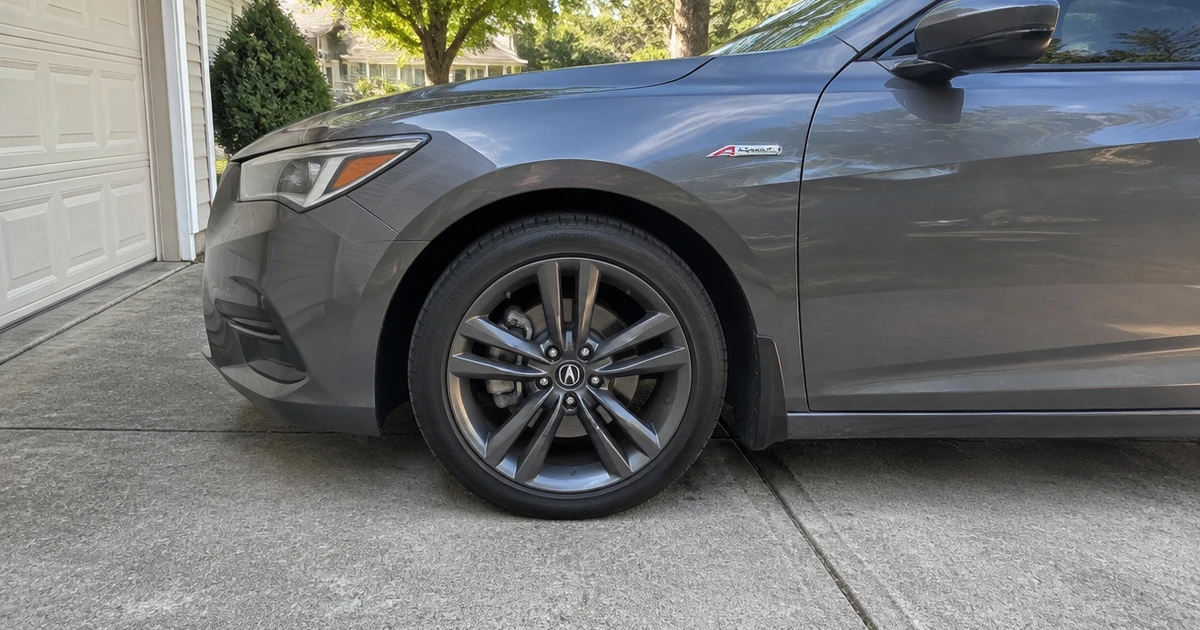
The right tire helps your Integra feel steady and comfortable without giving up the grip you need. Start with correct fit, then weigh your usual roads, weather, and driving habits.
Fitment and Ratings
Check the tire size on the driver-door placard or in your owner’s manual, and match it to your exact trim and model year. The size code sets width, sidewall height, and wheel diameter.
A different size can change steering feel, ride comfort, and speedometer readings. Keep the load index and speed rating at or above the vehicle maker’s recommendation.
Also confirm that the tire fits your wheel width and has room around the suspension and body. Larger wheels often use shorter sidewalls, which can sharpen steering but make potholes feel harsher. If you change wheel size, ask a tire professional to check overall diameter, load capacity, and clearance before you buy.
Driving Style and Tire Type
Match the tire category to the way you drive most often. Touring tires suit steady commuting and a calm ride.
Performance tires focus more on steering response and cornering grip, while winter tires help you handle frequent snow and freezing roads. All-season tires cover a broad range of everyday conditions, but they cannot match a dedicated winter tire in deep snow or a summer tire in warm-weather grip.
Use this comparison as a starting point, then weigh your local weather and comfort needs. If you face several seasons, an all-season option may suit your routine. If one season brings regular snow or heat, a specialized tire can offer a better match.
| Tire type | Good fit for | Main trade-off |
|---|---|---|
| Touring | Daily driving and comfort | Less steering sharpness |
| Summer | Warm roads and responsive handling | Weak choice for cold or snow |
| Winter | Snow and freezing conditions | Faster wear in warm weather |
Weather and Road Conditions
Think about the hardest conditions you drive through, not just the average forecast. Frequent rain calls for dependable wet grip and tread channels that move water away from the contact patch.
If your area gets occasional light snow, an all-season tire may work for careful driving. Regular snow, steep hills, or icy mornings call for a winter tire with a cold-weather tread compound.
Summer tires suit warm climates, but cold temperatures can reduce their grip, even on dry pavement. If winter weather varies from year to year, plan around the roads you actually travel. A tire’s sidewall markings can help identify its intended use, but they do not replace safe speeds and extra following distance.
Ride Comfort and Handling
Decide whether you prefer a quiet, smooth commute or a more direct steering feel. Touring-focused tires often soften small bumps and limit road noise, which helps on rough pavement and long drives. Performance-focused tires can respond faster when you turn, but their firmer construction may send more road texture into the cabin.
Sidewall height also affects comfort. A shorter sidewall usually gives the tire less room to absorb sharp impacts, while a taller one can feel more forgiving.
Your wheel size, alignment, and tire pressure also shape the ride. Keep pressure at the vehicle maker’s recommended level, since overinflation or underinflation can harm comfort and handling.
Tread Life and Care
Look at the treadwear warranty as one clue about expected service life, not a promise of how long your tires will last. Your driving style, road surface, alignment, and tire pressure all affect wear.
Softer performance-focused compounds often trade some tread life for grip. A commuter who drives many highway miles may value long wear more than maximum cornering response.
Build a simple routine to help your tires wear evenly:
- Check pressure when the tires are cold, using the vehicle maker’s recommended setting.
- Rotate tires on the schedule in your owner’s manual.
- Check tread and look for uneven wear or damage.
Ask a shop to check alignment if the car pulls to one side or the tread wears unevenly. Replace tires before worn tread weakens wet-road traction.
Frequently Asked Questions
What tire size does an Acura Integra use?
Check the tire placard inside the driver’s door or your owner’s manual for the size that suits your exact model year and trim. The placard also gives the recommended pressure. If you choose a different wheel size, have a tire professional confirm the new tire’s fit, load capacity, and overall diameter.
Are all-season tires a good choice for an Acura Integra?
All-season tires suit many drivers who commute in changing weather and want one set for most of the year. They can handle rain and some light snow, but they do not provide the same cold-weather grip as winter tires. Match your choice to the winter conditions and roads you regularly face.
Should you use winter tires on an Acura Integra?
Winter tires can help if you regularly drive on snow, ice, or cold roads. Their tread and rubber compound work better in low temperatures than summer-focused designs. You may want a separate set for winter and warmer months, since winter tires can wear faster when you use them in warm weather.
Can you replace only two tires on an Acura Integra?
You can replace two tires if the other pair still has safe tread and all four tires match the vehicle’s requirements. Put the newer pair on the rear axle to help maintain stability on wet roads. If the remaining tires show uneven wear or damage, ask a tire professional to check them before you decide.
How often should you rotate Acura Integra tires?
Follow the rotation schedule in your owner’s manual, since the right interval can vary by tire and driving conditions. Regular rotation helps each tire wear more evenly. Check pressure often, too, and inspect the tread for uneven wear. If you notice pulling or vibration, arrange an alignment and tire inspection.