
This post may contain affiliate links. As an Amazon Associate I earn from qualifying purchases. If you choose to make a purchase, I may earn a small commission at no extra cost to you.
A Dodge Charger can be a comfortable commuter, a quick family sedan, or a powerful performance car, and each role puts different demands on its tires. Picking the wrong type can dull steering, add road noise, or leave you short on grip when rain or cold weather arrives.
Start with the tire size and ratings on your car, then match tread design and compound to your climate and driving habits. The best tires for Dodge Charger you can buy in 2026 should fit your exact setup and balance traction, ride comfort, and wear. The list below covers choices for daily driving, changing seasons, spirited roads, and track use.
Our Top Tires for Dodge Charger Picks




More Details on Our Top Picks
Pros
- Responsive steering for an all-season tire
- Asymmetric tread supports cornering grip
- Wide grooves clear water from the tread
- Designed to retain performance over time
Cons
- Steering feel is less sharp than a summer-only tire
Michelin Pilot Sport All Season 4 pairs sports-car handling with year-round tread design, which gives you a useful balance for a powerful Charger. Its asymmetric tread and high-silica compound put grip and steering response ahead of the relaxed feel of a touring tire.
Wide grooves move water away from the contact patch, while full-depth sipes add biting edges for cooler, wet conditions. The tread also carries Michelin’s performance-focused design approach, built to retain its character over time rather than deliver a brief burst of sharp handling.
On dry pavement, the tire responds quickly as you turn in and stays composed through corners. In rain, its channels and sipes help maintain grip and braking control, so changing weather does not erase its sporty feel.
Chevrolet chose this all-season tire for the Corvette, a useful sign of the line’s performance focus. The Michelin Pilot Sport All Season 4 brings that character to daily driving with strong wet-road control and lasting performance.
Bottom line: Pick it for a Charger you drive year-round, especially if you value crisp handling in both dry and wet weather.
Pros
- SportPlus Technology supports responsive handling
- Tread indicators show dry, wet, and snow wear
- Strong wet-road and light-snow grip
- Up to 50,000-mile limited tread-life coverage
Cons
- Deep snow still favors a dedicated winter tire
If your Charger sees changing weather through the year, the Continental ExtremeContact DWS06 Plus gives you performance-focused handling with useful wet and light-snow traction. Continental’s SportPlus Technology shapes the tire’s grip and steering response while supporting longer tread life.
Its tread uses wide grooves to move water away and carefully shaped blocks to keep the contact patch stable. The molded D, W, and S indicators offer a practical feature: each letter wears away when the tread no longer suits its dry, wet, or snow performance level.
On dry roads, the tire feels composed through quick lane changes and corners. In rain, the tread channels and siping support braking and grip, while its winter-oriented details give you added control in snow and ice compared with a summer tire.
Continental backs the DWS06 Plus with a limited tread-life warranty of up to 50,000 miles. You get a tire built around responsive handling and season-aware tread cues, with a cabin-friendly tread pattern that keeps road sound in check.
Bottom line: Choose this Continental if your Charger needs sporty road manners and dependable traction through rain and occasional snow.
Pros
- PeakLife compound targets longer tread life
- Open shoulders support cornering grip
- Full-depth 3D sipes aid wet traction
- Up to 50,000-mile limited tread-life coverage
Cons
- Ride comfort can suffer on rough pavement
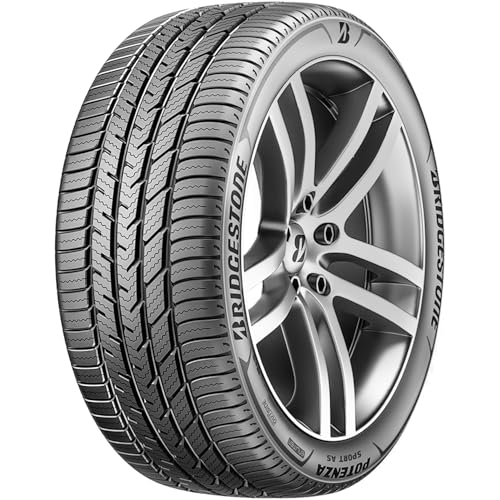
Hard cornering feels more controlled with the Bridgestone Potenza Sport AS, a tire built to bring ultra-high-performance handling into an all-season design. Its PeakLife tread compound targets long wear, while the open shoulders give the tread room to grip through turns.
Circumferential grooves and lateral channels carry water away from the contact patch to reduce hydroplaning risk. Full-depth 3D sipes add extra edges for wet and light winter traction, and their molded depth keeps those biting edges present as the tire wears.
On dry pavement, the Potenza Sport AS gives your Charger direct steering response and a planted feel through sweeping corners. In rain, the tread channels water away, and the sipes add grip as you brake or turn on slick roads.
Bridgestone includes a limited tread-life warranty of up to 50,000 miles. The Bridgestone Potenza Sport AS balances cornering stability with year-round road grip, so its sporting character stays useful beyond warm, dry days.
Bottom line: Give it a look if you want a Charger tire that puts cornering response near the top of your list.
Pros
- 3PMSF certification for severe-snow traction
- Directional tread moves water and slush
- Thermal Adaptive Tread Compound suits changing temperatures
- Full-depth sipes add wet and snow grip
Cons
- Touring tread feels less direct in hard cornering
Wet-weather confidence is a defining trait of the Michelin CrossClimate2, whose directional V-shaped tread moves water and slush away from the contact patch. Its 3PMSF certification marks it as a severe-snow-rated tire, giving you a stronger winter footing than a standard all-season design.
The tread uses Michelin’s Thermal Adaptive Tread Compound, which adjusts its grip across changing temperatures. Its sweeping tread blocks and full-depth sipes provide biting edges on wet pavement and packed snow, while the broad channels help control water flow.
In everyday driving, the CrossClimate2 gives you a stable ride and confident braking in rain. Its winter grip also makes it useful when a Charger faces occasional snow, and the directional pattern keeps its contact with the road consistent through changing conditions.
Michelin built the CrossClimate2 for year-round use, including cold weather that can challenge a performance tire. The Michelin CrossClimate2 brings together severe-snow traction and wet-road braking in a tread design made for changing seasons.
Bottom line: Consider it for a Charger that sees real winter weather and needs confident braking through rain and snow.
Pros
- Asymmetric tread supports handling and braking
- Four grooves channel water and slush
- Dense siping helps reduce road noise
- Up to 50,000-mile limited tread-life coverage
Cons
- Sporty response can feel firm on broken pavement
Four wide grooves give the Pirelli P Zero AS Plus 3 a clear job in wet weather: move water and slush out from beneath the tread. Its asymmetric pattern balances handling and braking, giving a performance-oriented Charger tire a steadier feel as conditions change.
Dense siping adds extra edges for wet grip while softening road noise and vibration. The tread design keeps the ride more settled than you might expect from a tire built for sporty sedans and coupes.
On dry pavement, the P Zero AS Plus 3 responds neatly to steering inputs and feels composed through everyday turns. In rain, its channels and sipes help keep the contact patch connected to the road, while the tread pattern supports predictable braking.
Pirelli backs the tire with a limited tread-life warranty of up to 50,000 miles. The Pirelli P Zero AS Plus 3 blends quiet road manners with sporty all-season grip, so you can enjoy its performance focus without a constant rumble in the cabin.
Bottom line: Choose this Pirelli if you want a performance tire that keeps cabin noise and ride comfort in the picture.
Pros
- Bi-Compound Technology balances dry and wet grip
- Hybrid aramid and nylon belt supports steering precision
- Strong wet braking for a summer tire
- Responsive cornering at speed
Cons
- Summer compound is not suited to snow or freezing temperatures
Born from endurance racing, the Michelin Pilot Sport 4S gives a performance-focused Charger driver sharp response on warm roads. Michelin’s Bi-Compound Technology places different rubber compounds across the tread: the outer portion focuses on dry grip, while the inner portion uses silica for wet traction.
Dynamic Response Technology uses a hybrid belt of aramid and nylon to keep the tread stable under steering load. That support gives you precise control at speed, while the tread pattern channels water to maintain strong wet braking.
On dry pavement, the Pilot Sport 4S feels quick to respond and holds a steady line through corners. The two-compound tread also gives it a useful wet-weather edge for a summer tire, with braking and steering that remain predictable when the road turns damp.
Michelin developed the line from its Pilot Super Sport and racing experience, and carmakers such as Mercedes-AMG, Ferrari, and Porsche have used it on performance vehicles. The Michelin Pilot Sport 4S centers its design on high-speed control and dry-road grip.
Bottom line: Choose it for a Charger you drive for spirited summer runs, with sharp steering and dry grip as priorities.
Pros
- Combination Grip Technology supports cornering
- Lightweight construction sharpens steering response
- Special compound maintains grip as temperatures rise
- Provides grip on dry and wet roads
Cons
- Cold and snowy conditions fall outside its intended use
Temperature stability plays a central role in the Goodyear Eagle F1 SuperCar 3, whose special rubber compound keeps its grip consistent as driving loads rise. Combination Grip Technology shapes the tread to support strong cornering and control on both dry and wet pavement.
Its lightweight, racing-style construction sharpens steering response, giving your Charger a more immediate feel as you turn in. The tire’s broad contact area and tread blocks work together to maintain grip through hard corners rather than letting the car feel vague.
On dry roads, the Eagle F1 SuperCar 3 delivers the focused response expected from an ultra-high-performance tire. Its wet-road grip gives you added confidence when pavement turns damp, though the tire keeps its emphasis on performance driving rather than winter use.
Goodyear designed this line for drivers who want a direct link between steering input and tire response. The Goodyear Eagle F1 SuperCar 3 offers precise steering and temperature-stable grip for a Charger that spends its time on warm roads.
Bottom line: Go with this Goodyear for warm-weather driving where crisp steering and confident cornering matter most.
Pros
- Reinforced shoulders support cornering grip
- Silica compound adds tread stiffness
- Circumferential grooves channel water
- Stable feel through wet and dry corners
Cons
- Road noise can rise on coarse pavement
Firm shoulder blocks give the Nitto NT555 G2 a planted feel when you push your Charger through a turn. Nitto reinforces those tread shoulders for durability and cornering grip, then pairs them with a high-stiffness silica compound for stable handling.
Circumferential grooves move water out of the contact patch to support wet traction. The tread design also uses broad blocks to put more rubber on the road, which helps the tire feel steady under acceleration and through quick steering inputs.
On dry pavement, the NT555 G2 responds with a firm, performance-minded feel. Its silica compound keeps the tread rigid through wet and dry corners, while the water channels give you added control when rain coats the road.
The Nitto NT555 G2 focuses on street performance rather than a soft touring ride. Its reinforced shoulders and water-channeling grooves give the tire a useful mix of cornering stability and wet-road traction for a sporty sedan.
Bottom line: Consider the NT555 G2 if your Charger needs a firm street tire with confident cornering response.
Pros
- 4D Advanced Nano Technology keeps compound flexible
- Interlocking sipes support braking grip
- Emerging grooves preserve wet traction as tread wears
- Up to 50,000-mile limited tread-life coverage
Cons
- Light-snow grip does not match a winter tire
Changing weather is the setting the Falken Azenis FK460 A/S handles best, thanks to Falken’s 4D Advanced Nano Technology. The compound stays flexible across a range of temperatures, giving your Charger useful grip in dry, wet, and light winter conditions.
Interlocking sipes add biting edges for braking, while a high-grip chamfer in the tread supports dry-road steering response. Falken’s emerging grooves open up as the tire wears, creating fresh channels that carry water away and help preserve wet grip.
In daily use, the FK460 A/S feels composed in rain and responds neatly to steering on dry pavement. Its tread design also gives you added traction in light winter weather, so a cold snap does not immediately take away its all-season usefulness.
Falken backs the line with a limited tread-life warranty of up to 50,000 miles. The Falken Azenis FK460 A/S combines flexible all-season compound with wear-responsive water channels for performance that carries across changing road conditions.
Bottom line: Choose this Falken if your Charger needs sporty handling across dry roads, rain, and occasional light snow.
Pros
- SmartGrip Technology supports year-round traction
- Full-depth sipes add wet and snow grip
- Quiet ride for a performance tire
- Up to 50,000-mile limited tread-life coverage
Cons
- Steering response trails dedicated summer tires
Road comfort shapes the appeal of the General G-MAX AS-07, which pairs a quiet ride with performance-focused handling. General’s SmartGrip Technology combines an all-season tread compound and a traction-minded pattern to keep the tire useful through dry, wet, and snowy conditions.
Wide circumferential grooves clear water from the tread, while full-depth sipes add grip on wet pavement and snow. The tread pattern also supports braking in dry and rainy conditions, giving your Charger a composed feel during everyday stops and turns.
The G-MAX AS-07 keeps road noise low for a tire with a sporty character. Its design balances wet and dry braking with snow traction, so you can use it for year-round driving without giving up the responsive feel expected from a performance all-season tire.
General backs the tire with a limited tread-life warranty of up to 50,000 miles. The General G-MAX AS-07 brings together quiet road manners and all-season braking for daily Charger miles.
Bottom line: Pick the G-MAX AS-07 if you want year-round Charger traction with a quieter, more relaxed ride.
Factors to Consider When Choosing Tires for Dodge Charger
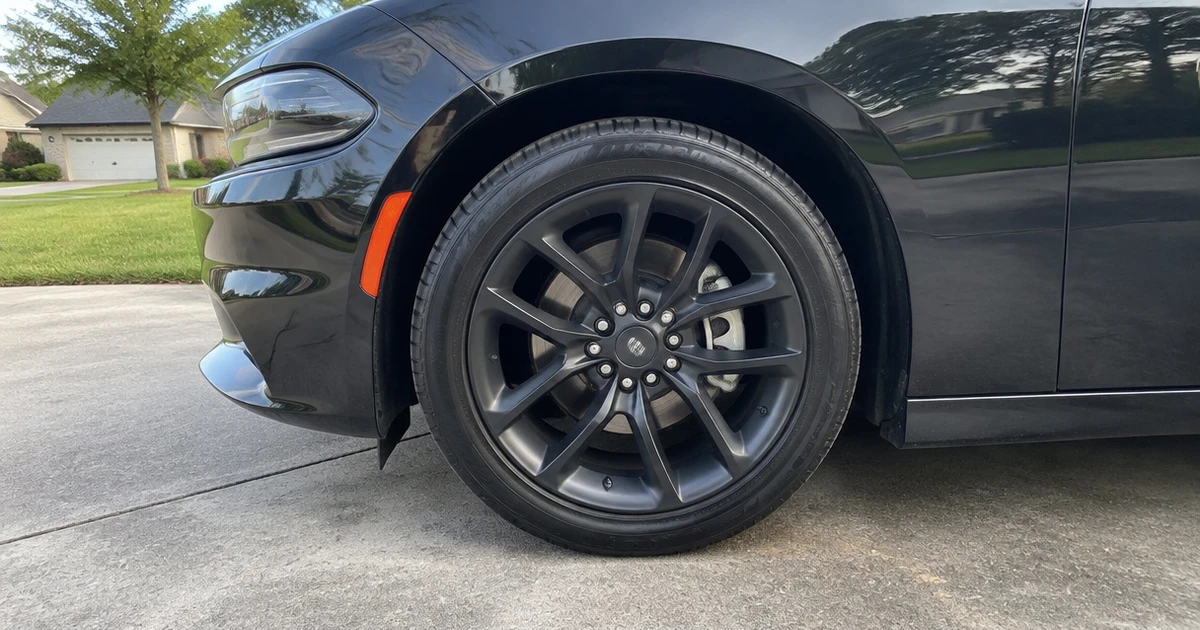
Start with the way you use your Charger, then check the car’s fitment and the weather you drive through. A tire that suits one trim or climate may not fit another setup or meet your needs. These checks help you narrow the field before you compare tread, comfort, and long-term care.
Confirm Fitment and Ratings
Read the tire placard on the driver-side door jamb and your owner’s manual before you compare tires. Chargers vary by model year, trim, wheel package, and brake setup, so the same nameplate does not point to one fit. Match the full size code, load index, and speed rating.
A tire may fit the wheel yet fall short of the car’s required ratings. Keep front and rear sizes in line with the factory setup, especially on versions with a staggered fit.
Use these markings as a checklist, and replace a full set with matching sizes and ratings unless your vehicle maker specifies another setup.
| Check | What to match |
|---|---|
| Size code | Width, aspect ratio, and wheel diameter |
| Load index | The tire’s load capacity for your car |
| Speed rating | The rating required for your vehicle |
Match the Tire to Your Climate
Choose a tire category for the coldest and wettest conditions you face, not just a clear commute. All-season tires suit mild climates and year-round use. Summer tires favor warm roads and responsive steering, but their compounds can lose grip in near-freezing weather.
All-weather tires use winter-minded tread, and the severe-snow symbol identifies tires that meet a defined snow-traction standard. Dedicated winter tires use rubber that stays flexible in the cold and tread that bites into snow.
If your area sees regular ice or deep snow, a seasonal winter set gives you more dependable cold-weather traction. Check local rules if your area requires winter tires during certain months.
Choose Grip for Your Driving
Think about how often you use the Charger’s power. A high-output trim can spin a low-grip tire during hard launches, while a commuter may care more about wet braking and stable steering. Look for tread patterns with strong center ribs and sturdy outer blocks if you want a direct feel, then compare independent wet-braking and hydroplaning results when reliable tests exist.
Tread depth and rubber compound affect grip as the tire wears, so check how a candidate performs beyond new-tire condition. Keep these checks in view:
- Grip in rain at highway speed
- Steering response in warm, dry weather
- Snow traction if you drive through winter
Balance Comfort and Tread Life
Ride quality depends on more than the car’s suspension. A stiff performance tire can sharpen steering but send more bumps and road noise into the cabin. A touring-focused all-season design often favors a calmer ride and longer wear.
Check treadwear warranty language as a comparison tool, not a promise: driving style, heat, alignment, pressure, and road surface all affect mileage. If you spend long hours on rough pavement, prioritize comfort-focused construction and low road noise.
If you drive hard, accept faster wear in exchange for grip, but budget for earlier replacement. Check whether the tire has a comfort or touring focus, and compare noise tests that use the size you need.
Plan for Upkeep and Rotation
Plan how you’ll maintain the tires before you buy. Check pressure monthly when the tires are cold, and use the door placard value rather than the maximum printed on the sidewall. Correct pressure helps the tread meet the road evenly and supports predictable handling.
Follow the owner’s manual for rotation intervals and patterns. A staggered setup may limit front-to-rear rotation, while a square setup usually allows more rotation choices. Ask a tire shop to check alignment if the steering wheel pulls or the tread wears unevenly.
Replace tires when tread or damage makes them unsafe. After a puncture, ask a qualified shop if the location and damage allow a safe repair. Sidewall damage usually rules one out.
Frequently Asked Questions
What type of tire works best for a Dodge Charger?
That depends on your climate and driving style. All-season tires work for many drivers in mild weather, while summer tires suit warm conditions and sharper response. If you face regular snow or ice, use dedicated winter tires. In places with occasional snow, an all-weather tire with the severe-snow symbol can offer a year-round option.
Can you use different tire sizes on the front and rear?
Use different front and rear sizes only when the car’s placard or manual calls for them. A staggered setup may pair a wider rear tire with a narrower front tire, but you still need the correct size, load index, and speed rating at each axle. Do not mix sizes just to change handling; mismatched rolling diameters can affect stability systems.
Should you replace all four tires at once?
Replacing all four at once gives the car matching tread depth and handling at each corner. If only one or two tires need replacement, follow the vehicle maker’s guidance for matching size, type, and tread depth. On an all-wheel-drive Charger, tread differences can strain the drivetrain, so check the manual before replacing fewer than four.
What tire pressure should you use?
Use the pressure listed on the driver-side door placard, measured when the tires are cold. Do not use the maximum pressure molded into the sidewall as your target. Check monthly and before long trips, since pressure drops in cold weather and can change handling, braking, and wear.
How often should you rotate your tires?
Follow the rotation schedule and pattern in your owner’s manual. Many drivers rotate tires during regular service, but staggered front and rear sizes may restrict rotation choices. Ask a tire shop to inspect alignment and balance if you feel vibration or see uneven tread wear. Correct pressure also helps tires wear evenly.