
This post may contain affiliate links. As an Amazon Associate I earn from qualifying purchases. If you choose to make a purchase, I may earn a small commission at no extra cost to you.
Choosing tires for a Chevy Silverado means matching the tread to your daily roads, weather, and truck workload. A highway tire can keep commuting calm, while towing, gravel roads, deep snow, or mud call for different strengths. The wrong choice can add noise or wear quickly, even if it fits the wheel.
Start with the tire size and load rating on the driver-door placard, then compare traction, ride comfort, and expected mileage. Your Silverado’s trim and use matter as much as the tread pattern. This guide to the best tires for Chevy Silverado in 2026 covers eight options including picks for trails, wet roads, mud, and long highway miles.
Our Top Chevy Silverado Tire Picks




More Details on Our Top Picks
Pros
- Long-wearing tread suits daily truck use
- Quiet ride for highway trips
- Reliable wet-road and light-snow traction
- Built for modern pickups and SUVs
Cons
- Limited grip in deep mud and rough terrain
- Not a substitute for dedicated winter tires
Michelin Defender LTX M/S2 takes the top spot for a Silverado used mostly on paved roads. It earns its place with long-wearing tread, a comfortable ride, and dependable all-season traction.
Michelin pairs a highway-focused tread pattern with a durable compound built for the weight and power of modern trucks. That design helps the tire handle daily driving and longer trips without giving up a quiet cabin.
On wet roads, the tread gives you steady grip, while its all-season design suits occasional light snow. Owners often praise the tire’s smooth ride and long service life, especially on trucks that see regular highway miles.
Its road-focused tread gives up some grip in deep mud and on rough trails compared with an all-terrain tire.
Routine rotations and proper alignment help you get the most from its long-wearing design.
Bottom line: Choose it for a Silverado that spends most of its time on roads and highways. It suits you if ride comfort and long tread life matter more than off-road grip.
Pros
- Tough sidewall design helps resist trail damage
- Strong traction on gravel and loose ground
- Tread pattern helps clear mud
- 50,000-mile limited treadwear warranty
Cons
- Louder than a highway tire
- Less suited to ice than a winter tire
BFGoodrich All-Terrain T/A KO3 earns a high place for Silverado drivers who split their time between pavement and rough ground. Its tough build and confident all-terrain traction suit work sites, gravel roads, and weekend trails.
BFGoodrich builds on its CoreGard sidewall design, which helps resist damage from rocks and other trail hazards. The tread compound and pattern also target longer wear on gravel, while the shoulder blocks and mud-clearing bars help the tire bite in loose ground.
On pavement, the KO3 handles everyday driving, though its rugged tread can sound louder than a highway tire. Its tread pattern also supports traction in mud and snow, but icy roads still call for caution.
Owners often value the tire’s sturdy feel and its ability to take regular off-road use. The BFGoodrich All-Terrain T/A KO3 also comes with a 50,000-mile limited treadwear warranty, though actual wear depends on care and driving conditions.
That toughness brings a trade-off: the aggressive tread can add noise and rolling resistance.
Bottom line: Pick it if your Silverado regularly sees gravel, work sites, or trails. You’ll get a more rugged tire than a highway model, with extra road noise as the trade-off.
Pros
- Handles gravel, mud, and highway driving
- Durable sidewalls suit rough terrain
- All-weather design supports winter use
- Deep tread resists wear on loose surfaces
Cons
- More road noise than a highway tire
- Aggressive tread can increase rolling resistance
Falken Wildpeak A/T4W is a strong choice for Silverado owners who need one tire for highways and changing terrain. Its all-terrain tread and all-weather design help it handle gravel, mud, and seasonal weather.
Falken uses deep tread and durable sidewalls to support wear resistance on rough surfaces. The tread pattern gives the tire useful grip on loose ground, while its all-weather design helps it stay capable through hot conditions and snowy winters.
On paved roads, the A/T4W remains usable for daily driving and longer trips. Owners often praise its confident feel on gravel and in snow, though the chunky tread can make more noise than a highway tire.
The Falken Wildpeak A/T4W gives you a wider range of use than a road-focused tire. Its aggressive tread can also raise rolling resistance, so it may not feel as quiet or efficient as a highway model.
Regular rotations help keep wear even, especially if you switch between pavement and trails.
Bottom line: Choose it if your Silverado sees mixed driving and you want all-weather ability with off-road grip. It fits drivers who accept some extra tread noise for that added range.
Pros
- Strong traction in deep mud
- Wraparound shoulders add grip in loose snow
- Tread pattern helps control road noise
- Built for demanding off-road use
Cons
- Louder than highway-focused tires
- Less suited to packed snow and slick roads
Goodyear Wrangler Territory MT suits Silverado owners who put deep mud and rough trails ahead of highway comfort. Its aggressive tread and wraparound shoulder blocks give it a clear role among the more road-focused tires in this roundup.
Goodyear designed the Territory MT as a maximum-traction tire for original equipment use. The shoulder blocks add biting edges in deep mud and snow, while a sequenced tread pattern helps keep road noise more controlled than the tire’s rugged look might suggest.
On loose ground, the open tread can clear mud and hold traction in ruts. Owners who use their trucks off-road often value that grip, but the tire’s design favors rough surfaces over quiet, smooth pavement.
The Goodyear Wrangler Territory MT still makes ordinary road trips possible, though its tread can create more hum than an all-season highway tire. Its off-road focus also makes it less suited to slick pavement and packed snow than a dedicated winter tire.
Keep up with rotations and alignment to support even wear.
Bottom line: Pick it if your Silverado regularly works through mud or rough trails. It makes less sense for you if highway comfort matters more than maximum off-road traction.
Pros
- Quiet ride for highway driving
- Up-to-80,000-mile limited treadwear warranty
- All-season performance for daily use
- Recycled rubber in the tread compound
Cons
- Limited grip on rough trails
- Not suited to frequent heavy snow
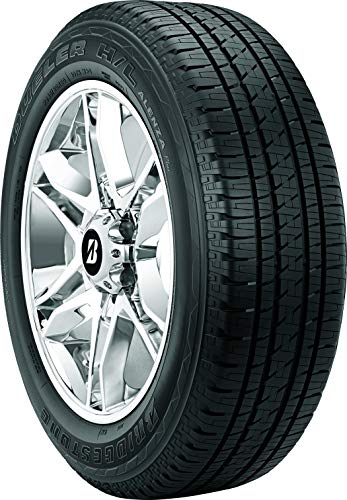
Bridgestone Dueler H/L Alenza Plus is a good fit for a Silverado that spends most of its time on paved roads. Its highway tread focuses on a quiet ride, all-season use, and long tread life.
Bridgestone shaped the casing and tire footprint to reduce road noise and support a comfortable ride. The tread compound includes recycled rubber, and the EverBlack sidewall treatment helps resist fading while keeping the tire’s appearance tidy.
On dry and wet roads, the Alenza Plus delivers the calm handling most drivers want for daily trips. Owners often appreciate its quiet ride and long wear, and Bridgestone backs it with an up-to-80,000-mile limited treadwear warranty.
The Bridgestone Dueler H/L Alenza Plus also aims to improve fuel efficiency compared with its predecessor. Its road-focused tread suits light snow better than deep snow or regular winter driving, and it cannot match an all-terrain tire on trails.
Bottom line: Choose it if you use your Silverado mainly for commuting and highway trips. It suits you if comfort and long tread life matter more than off-road traction.
Pros
- Strong wet-road grip
- Quiet highway tread
- Up-to-70,000-mile limited tread life coverage
- Balanced all-season road performance
Cons
- Limited traction in deep mud
- Less suited to rocky trails
Continental TerrainContact H/T earns a place here as a road-focused tire for Silverado owners who want all-season grip without an aggressive tread. Its strengths include wet-road control, quiet driving, and balanced highway manners.
Continental uses its TractionPlus technology to support grip and durability on pavement. The tread design also helps shorten braking distances on wet roads, while its highway pattern keeps road noise in check.
For everyday driving, the TerrainContact H/T offers steady handling in changing weather. Owners often praise its calm ride and wet-road confidence, and the tire carries up to 70,000 miles of limited tread life coverage.
Its tread cannot match a dedicated all-terrain tire in deep mud or on rocky trails.
Proper rotation and alignment help support even tread wear over time.
Bottom line: Pick it if your Silverado mostly stays on roads and you want reliable wet-weather handling. It works best for you if quiet comfort matters more than serious off-road ability.
Pros
- Balances road comfort with off-road traction
- Rugged tread handles gravel and trails
- Designed to keep road noise manageable
- Up-to-60,000-mile limited tread life coverage
Cons
- Louder than a highway tire
- Less suited to slick pavement than a road tire
General Grabber ATX gives Silverado drivers a useful balance of off-road traction and on-road comfort. Its rugged tread makes it a strong choice for gravel and trail use without the full focus on mud found in a mud-terrain tire.
General uses a durable construction and an aggressive tread pattern to help the tire handle rough ground. The design aims to keep road noise manageable, so you can use it for daily driving as well as weekend trips.
On pavement, the Grabber ATX feels more road-friendly than its chunky tread suggests. Owners often report confident traction on gravel and a comfortable ride for an all-terrain tire, while the tire carries up to 60,000 miles of limited tread life coverage.
The General Grabber ATX still produces more tread noise than a highway tire, especially as the tread wears. Its open pattern also cannot match a highway model for quietness or grip on slick pavement.
Regular rotation helps keep wear even during mixed driving.
Bottom line: Choose it if you want your Silverado to handle both daily roads and regular gravel or trail use. It suits you better than a highway tire if off-pavement traction matters.
Pros
- 70,000-mile limited warranty
- Dependable wet and dry road traction
- Handles light snow
- Built for steady performance as tread wears
Cons
- Limited grip in deep mud
- Not intended for rough trails
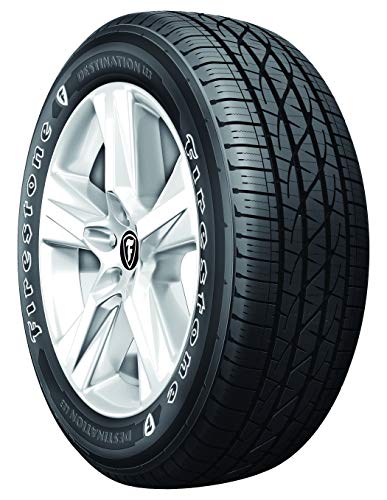
Firestone Destination LE3 is a practical highway tire for Silverado drivers who want dependable all-season road manners. Its place in this roundup comes from a long treadwear warranty and steady wet, dry, and light-snow performance.
Firestone uses its Hydro-Grip Technology package to support wet-road traction. The tread also works to keep performance steady as it wears, so the tire can serve for daily driving beyond its first stretch of use.
On paved roads, the Destination LE3 gives you predictable handling and a comfortable ride. Owners often value its wet-weather confidence and even wear, and Firestone backs it with a 70,000-mile limited warranty.
Its highway tread does not offer the loose-ground grip you get from an all-terrain tire, especially in deep mud.
Keep rotations current to help the tread wear evenly over time.
Bottom line: Choose it if your Silverado spends most of its time on paved roads and you want dependable all-season handling. It suits you if a long treadwear warranty matters more than trail traction.
Factors to Consider When Choosing Tires for Chevy Silverado
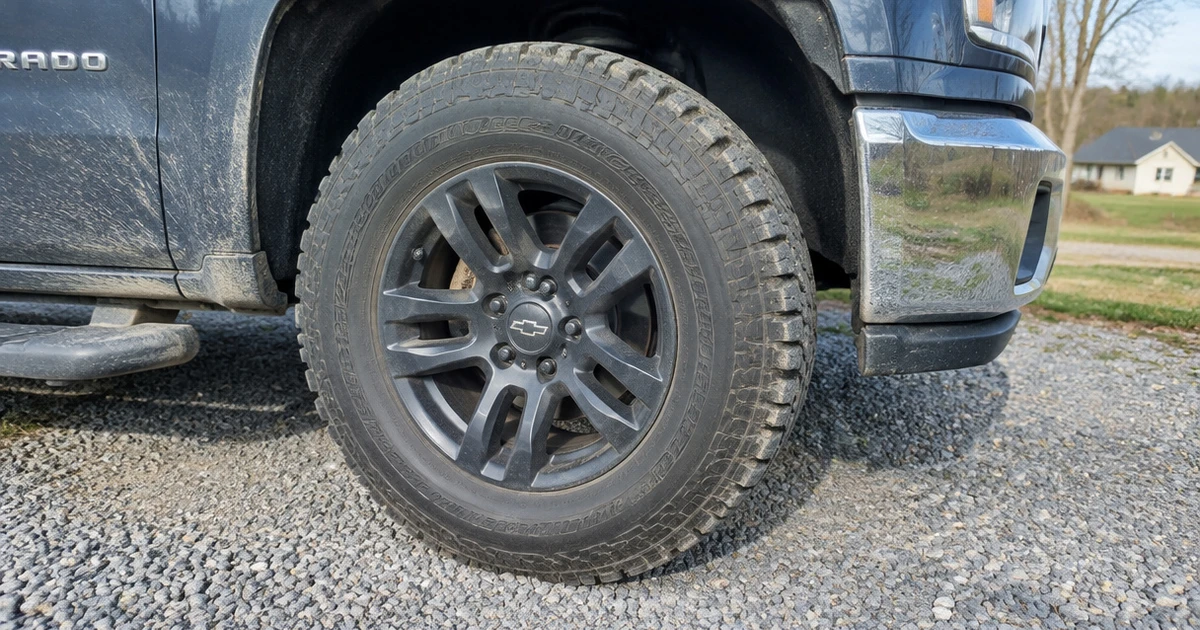
Start with your truck’s required tire size and load rating, then match the tread to the roads you drive. Your daily commute, towing needs, and local weather all affect which features will serve you best.
Fitment and Tire Size
Start with the exact tire size on the driver-door placard or in your owner’s manual. A Silverado’s cab, trim, drivetrain, and wheel package can change approved fitment.
Match the overall diameter and width unless a tire shop confirms that a change clears the brakes, suspension, fenders, and spare. Larger tires can rub at full steering lock and change speedometer readings.
Read the sidewall code, too. In a code such as P265/70R17, 265 gives the section width in millimeters, 70 gives the sidewall height as a share of the width, and 17 is the wheel diameter in inches.
The P marks a passenger-type tire, while LT marks a light-truck tire. Keep the required load and speed ratings or choose an approved equivalent.
- Match the full size code on the placard.
- Check the load index and speed rating.
- Confirm clearance before changing tire height or width.
Load Rating and Towing
Choose a tire that can carry the weight your Silverado handles, including passengers, cargo, and trailer tongue weight. The load index on the sidewall gives a capacity rating for each tire, but you still need to stay within the truck’s payload and axle limits. A tire’s capacity does not raise the vehicle’s own limits.
For frequent towing or heavy loads, check whether the truck calls for LT tires and which load range it accepts. A higher load rating can suit hard work, but it may bring a firmer ride and more tire weight. Follow the door placard for cold inflation pressure, and check the manual for pressure guidance when you tow or carry a heavy load.
Tread for Your Roads
Tread pattern affects grip, noise, and how a tire handles loose ground. Highway tread suits drivers who spend most of their time on pavement.
All-terrain tread adds grip on dirt and gravel, while mud-terrain tread uses larger, open blocks to clear soft ground. Those open blocks can add road noise and feel less settled on pavement.
Use this quick guide to weigh the main trade-offs. If your routes change often, think about how many miles you drive on each surface rather than choosing for an occasional trip.
| Tire type | Best fit | Common trade-off |
|---|---|---|
| Highway | Mostly paved roads | Less grip on loose trails |
| All-terrain | Pavement and dirt roads | More noise than highway tread |
| Mud-terrain | Frequent mud and soft ground | More road noise and wear on pavement |
Weather and Seasonal Grip
Think about the conditions you face through the year. All-season tires suit many mild climates, but they cannot match a dedicated winter tire on icy roads.
If you see frequent snow, look for the three-peak mountain snowflake symbol on the sidewall. It identifies tires that meet a set snow-traction standard, though it does not mean they perform like a winter tire on ice.
Wet-road grip also matters, especially if your truck carries a load or pulls a trailer in rain. Check the tread design and look for a tire intended for regular wet-road use. If your area gets deep snow or long periods of freezing weather, a separate winter set can give you more dependable cold-weather traction than one tire used year-round.
Ride Comfort, Wear, and Care
Pay attention to comfort if you drive long distances or use your Silverado for daily errands. Tread pattern, tire weight, and sidewall stiffness all affect road noise and ride feel.
A more aggressive tread can hum on smooth pavement, while a highway-focused tire often makes daily travel quieter. If possible, compare tires built for the same use and load needs.
Check warranty terms as a rough guide to expected tread life, not a promise of how long the tire will last. Your alignment, inflation, load, and driving habits also affect wear.
Follow your owner’s manual for rotation intervals, check pressure when the tires are cold, and fix uneven wear early. Those habits can help the set wear more evenly.
Choosing the Right Silverado Tire for Your Roads
Choose the Michelin Defender LTX M/S2 if your Silverado spends most of its time on pavement and you want an all-season touring tire. The BFGoodrich All-Terrain T/A KO3 and Falken Wildpeak A/T4W suit drivers who split time between pavement and rougher routes, while the General Grabber ATX offers another balanced all-terrain approach. For frequent mud, the Goodyear Wrangler Territory MT fits that job.
For road-focused driving, the Bridgestone Dueler H/L Alenza Plus favors quiet highway comfort, the Continental TerrainContact H/T suits wet-road highway use, and the Firestone Destination LE3 targets long-wearing everyday driving. Match any choice to your Silverado’s required size and load rating, then keep pressure and rotations on schedule.
Frequently Asked Questions
What tire size does a Chevy Silverado use?
Silverado trims, model years, and wheel packages use different fitments, so check the tire placard on the driver’s door or your owner’s manual. Match the full size code, load index, and speed rating. If you change wheel diameter or tire height, ask a tire professional to confirm clearance and speedometer effects.
Should I choose LT tires or passenger-type tires?
Passenger-type tires often give an unladen truck a softer ride, while LT tires suit heavier loads and regular towing. LT tires can feel firmer and add weight. Follow the vehicle maker’s required tire type and load rating, then choose based on how often you carry cargo or pull a trailer.
Are all-terrain tires suitable for daily driving?
Yes, if you want a tire that can handle pavement and occasional dirt or gravel. Expect more tread noise than a highway tire, especially with a more aggressive pattern. For mostly paved commutes, choose an all-terrain design with a road-focused tread and check that its load rating fits your truck.
How often should I rotate my Silverado’s tires?
Follow the rotation schedule in your owner’s manual, since the right interval can depend on your truck and tire setup. Many drivers rotate about every 5,000 to 7,500 miles. Check pressure regularly, too, and ask a tire shop to inspect alignment if the tread wears unevenly.
Do I need winter tires for my Silverado?
If you regularly drive on snow or ice, winter tires can improve cold-weather grip over all-season tires. They use rubber and tread designed for low temperatures. You may need a separate set for the colder months, and you should check that the tire size and load rating suit your Silverado.