
This post may contain affiliate links. As an Amazon Associate I earn from qualifying purchases. If you choose to make a purchase, I may earn a small commission at no extra cost to you.
A GMC Sierra 2500 HD may haul a trailer all week, carry tools across a job site, then cover long highway miles on the weekend. One tire cannot excel at every task. A highway tread can feel calm on pavement, while an all-terrain pattern adds grip on gravel and dirt but often brings more noise.
Start with the truck’s approved tire size and load rating, then weigh your regular cargo, towing, weather and road surfaces. The best tires for GMC Sierra 2500 HD you can buy in 2026 span work-focused highway designs, all-terrain options and mud-ready treads. The sections below help you match those trade-offs to how you use your truck.
Our Top Tires for GMC Sierra 2500 HD Picks



More Details on Our Top Picks
Pros
- TractionPlus Technology targets wet grip and durability
- Short wet-road braking performance
- Quiet, road-focused tread
- Up to 70,000-mile limited tread-life coverage
Cons
- Limited traction in deep mud
- Not a dedicated tire for severe winter conditions
Continental TerrainContact H/T brings a road-focused tread and Continental’s TractionPlus Technology to a heavy-duty truck. That mix gives your Sierra 2500 HD steady grip on wet pavement and a calmer ride for daily driving or long highway runs.
The tread design balances water evacuation with a broad contact area. On wet roads, that helps the tire hold its line and brake with control, while the road-oriented pattern keeps tire noise in check.
You also get a tire built for regular work use, not just empty-bed commuting. Its durable construction suits the changing loads of a truck that carries tools or tows, and its all-season design handles routine driving through the year.
Continental TerrainContact H/T is backed by limited tread-life coverage of up to 70,000 miles. That is a useful benefit if you spend most of your time on pavement and want a highway tire with a clear focus on lasting wear.
The main strength here is its quiet highway manners, paired with wet-road traction and a sturdy feel under load. Its balanced tread works well on paved routes, but it does not have the open pattern you need for regular mud or rough trails.
Bottom line: Choose this tire for a Sierra 2500 HD that spends most of its time on roads, with occasional towing or hauling. It suits drivers who value wet-road control and a quieter highway ride.
Pros
- Commercial construction for repeated heavy use
- CurbGard sidewall protection
- Three-peak mountain snowflake rating
- Full-depth sipes for wet and snow grip
Cons
- Firm ride when the truck runs empty
- Work-focused tread is less quiet than a highway pattern
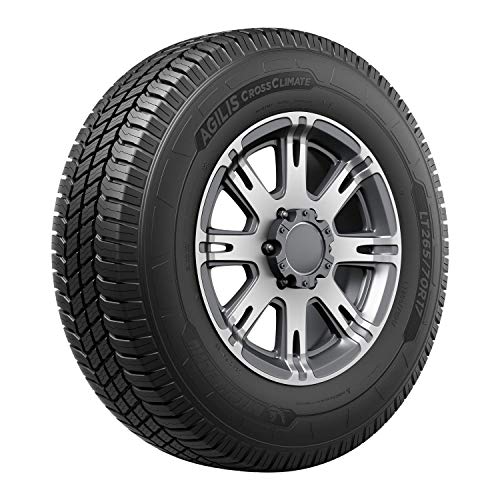
If your Sierra 2500 HD spends long days carrying equipment or making work calls, Michelin Agilis CrossClimate brings commercial-truck durability with all-weather traction. Its tread is built for steady use under heavier loads, rather than occasional weekend trips.
The V-shaped tread channels water away from the contact area, and its full-depth sipes create extra biting edges for wet and snowy pavement. The tire carries the three-peak mountain snowflake marking, which identifies it as suitable for severe snow service under the industry test standard.
Michelin adds CurbGard sidewall protection to help shield the tire from scrapes near curbs and jobsite obstacles. That feature is useful on a truck that spends time in tight yards or city streets, where the sidewall can take more abuse than the tread.
The Agilis CrossClimate uses a reinforced commercial construction to handle repeated loading. You get a work-ready casing and all-weather tread, along with a reputation for durable performance in light commercial service.
Its firm build can feel less compliant when you drive the truck empty, especially over broken pavement. The tread pattern is also more work-focused than a quiet highway tire, though it remains suitable for routine road travel.
Bottom line: The Agilis CrossClimate suits your Sierra if it earns its keep on work routes and sees winter weather. Consider it for frequent hauling where commercial durability matters.
Pros
- Three-peak mountain snowflake rating
- Heat diffuser technology in the lower sidewall
- Deep tread for gravel and dirt
- Reinforced sidewall design
Cons
- More tread hum than a highway tire
- Aggressive tread is unnecessary for pavement-only use
Falken Wildpeak A/T4W uses a deep, rugged tread to move between paved highways and loose ground. Its all-weather design gives your Sierra 2500 HD useful traction on gravel, dirt, and snowy roads without giving up its ability to cover highway miles.
The tire’s heat diffuser technology manages heat in the lower sidewall, a helpful detail during long drives or demanding use. Falken also uses a durable tread compound and reinforced sidewall design to handle wear and rougher surfaces.
Open shoulder blocks and strong tread edges bite into loose material, while the full tread pattern provides traction across changing conditions. The A/T4W carries a three-peak mountain snowflake rating, so it meets the industry standard for severe snow service.
On pavement, the tread feels composed for an all-terrain tire, and the deep grooves clear loose debris as you leave the road. Falken Wildpeak A/T4W gives you a durable all-terrain build with snow-rated traction, making it useful for mixed driving rather than only highway work.
The aggressive tread can produce more hum than a highway tire, especially at speed. Its open pattern also makes the most sense when you actually use the truck on gravel, dirt, or snow.
Bottom line: Pick the Wildpeak A/T4W if your Sierra sees regular gravel roads, trails, or snowy routes. It fits drivers who want a single tire for mixed pavement and off-road use.
Pros
- Heavy-duty steel belts
- Two-ply polyester construction
- Wide grooves for wet-road traction
- Tread design promotes even wear under changing loads
Cons
- Limited grip in deep mud
- Not intended for frequent rocky trail use
Heavy-duty steel belts and a two-ply polyester construction give Bridgestone Dueler H/T 685 a firm foundation for hauling. Its highway-terrain tread suits a Sierra 2500 HD that spends workdays on pavement and needs dependable support under a load.
Wide grooves move water out from beneath the tread, which helps the tire maintain grip on wet roads. The tread blocks also use a contact design that adapts to changing loads and promotes even wear across the tire.
Bridgestone shaped the tread to retain traction in snowy conditions, giving you added control during ordinary winter travel. This is a highway tire, so its tread favors road contact and steady handling over the open voids needed for deep mud.
Dueler H/T 685 keeps its focus on carrying and towing without giving up everyday road manners. You get load-minded construction, water-clearing grooves, and a tread pattern meant to wear evenly through regular use.
The highway pattern works best on paved routes, where the steel belts and broad tread contact can do their job. On rough trails, the less open tread has fewer edges to dig into loose ground.
Bottom line: The Dueler H/T 685 suits a Sierra used for towing and highway travel. Choose it for a road-oriented tire with a sturdy build for regular loads.
Pros
- CoreGard sidewall protection
- Advanced Deflection Design
- Serrated shoulders and mud-phobic bars
- 50,000-mile limited treadwear warranty
Cons
- More road noise than a highway tire
- Firm ride on smooth pavement
The sidewall protection on BFGoodrich All-Terrain T/A KO3 is a major part of its appeal for rough use. CoreGard Technology came from Baja racing, and its reinforced sidewall design helps guard against cuts and bruises from rocks and trail debris.
A new all-terrain tread compound and pattern give the KO3 added durability on gravel. The Advanced Deflection Design directs sticks and stones away from vulnerable sidewall areas, while the tread’s serrated shoulders and mud-phobic bars add grip in snow and muck.
That rugged construction also works for a Sierra 2500 HD that moves between work sites and paved roads. The KO3 keeps an assertive tread feel without limiting you to trail use, and its three-peak mountain snowflake rating marks it for severe snow service.
BFGoodrich backs the tire with a 50,000-mile limited treadwear warranty and a six-year standard limited warranty. The CoreGard sidewall and mud-phobic bars make it a purposeful option when cuts, gravel, or winter traction matter in your regular driving.
Its blocky tread creates more road noise than a highway tire, and the ride can feel firm on smooth pavement. That trade-off comes with the reinforced, trail-ready design.
Bottom line: Choose the KO3 if your Sierra regularly faces gravel, rocky ground, or snow. It suits drivers who want a tough all-terrain tire with added sidewall protection.
Pros
- Three-peak mountain snowflake rating
- 3D multi-wave sipes
- Stone ejectors clear trapped rocks
- Scalloped shoulder blocks add loose-surface grip
Cons
- More highway noise than a highway-terrain tire
Toyo Open Country A/T III balances an open all-terrain tread with a design made for regular road use. It gives your Sierra 2500 HD traction for gravel and dirt roads while staying composed on the highway.
Toyo uses a silica-enhanced tread compound to support grip on wet pavement, and the tread includes 3D multi-wave sipes for extra edges in wet or snowy conditions. The tire carries a three-peak mountain snowflake rating for severe snow service.
Stone ejectors in the tread help clear trapped rocks, while the scalloped shoulder blocks add bite on loose surfaces. Those details give you a capable tread for changing terrain without relying on a dedicated mud tire.
The Open Country A/T III is a practical fit for drivers who split time between paved routes and less predictable roads. Its silica-enhanced compound and 3D multi-wave sipes focus on keeping grip useful across changing weather.
The open tread can make more noise on the highway than a highway-terrain tire. Its broad abilities pay off most when your driving includes dirt, gravel, or snow rather than pavement alone.
Bottom line: The Open Country A/T III fits a Sierra that travels on both pavement and rough access roads. Get it if you want all-terrain traction with a clear focus on wet and snowy conditions.
Pros
- Wraparound shoulders add mud and snow traction
- Open tread clears loose mud
- Sequenced pitch pattern reduces tread noise
- Built for original equipment applications
Cons
- Loud on extended highway drives
- Less suited to pavement-only use
The wraparound shoulder blocks on Goodyear Wrangler Territory MT reach beyond the main tread to add bite in deep mud and snow. That aggressive design suits a Sierra 2500 HD that leaves pavement for muddy worksites or rough access roads.
Goodyear uses a sequenced pitch pattern to vary the tread noise as the tire rolls. It helps manage the hum from the large, open tread blocks, though this remains a mud-terrain tire with a more pronounced road sound than a highway pattern.
The Territory MT is engineered for original equipment fitments and focuses on maximum traction. Its open channels clear loose mud, while the broad shoulder lugs add grip when the tire needs to claw through ruts or soft ground.
You get wraparound shoulder traction and a tread built for demanding off-road conditions. The design favors loose surfaces over smooth pavement, where its large tread blocks do not have the same quiet, settled feel as a road-focused tire.
This tire works best when mud and rough ground are regular parts of your route. On mostly paved drives, its aggressive tread offers little benefit and brings extra noise.
Bottom line: The Wrangler Territory MT is for a Sierra that regularly works in mud or on soft ground. Choose it when off-road traction matters more than a quiet highway ride.
Pros
- DuPont Kevlar helps resist tread damage
- Three-ply sidewall with Durawall compound
- Three-peak mountain snowflake rating
- 50,000-mile limited tread life warranty
Cons
- Tread noise is noticeable on highways
- Less road-focused than a highway tire
Goodyear Wrangler DuraTrac RT combines a rugged tread with added reinforcement for off-road use. DuPont Kevlar in the tread helps resist damage, while a three-ply sidewall and Durawall compound guard against cuts and abrasions.
The tread’s biting edges provide grip in snow, and the tire carries a three-peak mountain snowflake rating for severe snow service. Its open pattern also clears loose material as your Sierra 2500 HD moves across rutted roads or rough trails.
That reinforcement makes the DuraTrac RT useful beyond occasional gravel drives. The tread has a confident feel on mixed terrain, and Goodyear backs it with a 50,000-mile limited tread life warranty.
You get Kevlar tread reinforcement and a three-ply sidewall for demanding work away from pavement. The blocky tread is more audible on the highway, where its off-road design produces a stronger hum than a highway tire.
Bottom line: Get the DuraTrac RT if your Sierra tackles snowy trails, rough worksites, or mixed off-road routes. It suits drivers who want added sidewall protection and snow traction.
Pros
- Wear-resistant compound for loaded use
- Sturdy sidewall construction
- Tread pattern evacuates water
- Built for demanding truck service
Cons
- Limited traction in deep mud
- Highway tread is not suited to rough trails
Firestone Transforce HT3 is built around the demands of loaded work trucks. Its wear-resistant tread compound handles repeated heavy use, while the sturdy sidewall adds protection during daily hauling in your Sierra 2500 HD.
The tread pattern moves water away from the contact area to maintain wet-road grip. That matters on a truck that covers long work routes in changing weather, where stable handling and braking count as much as carrying ability.
Firestone reinforces the tire for demanding service and designs its tread to resist irregular wear under load. The highway pattern also keeps the tire suited to paved routes, from jobsite trips to longer drives between work locations.
With its load-ready construction and water-clearing tread, the Transforce HT3 focuses on durability and predictable road use. Its closed highway pattern does not offer the digging edges you need for regular mud or rough trail driving.
Bottom line: The Transforce HT3 suits a Sierra that carries heavy gear and spends most of its time on paved roads. Consider it for daily work use where durability and wet traction matter.
Pros
- Comfort Balance Technology helps reduce road noise
- DuraGen Technology supports durability
- Precise steering on wet and dry roads
- Up to 65,000-mile limited tread-life coverage
Cons
- Limited grip in deep mud
- Not designed for regular off-road use
General Grabber HTS60 uses a road-focused tread to keep daily driving in a Sierra 2500 HD calm and controlled. Its Comfort Balance Technology places a cushioning layer beneath the tread to absorb road impacts and reduce cabin noise.
DuraGen Technology combines a durable tread design with reinforced construction for long-term use. The tire also provides precise steering response on wet and dry roads, giving you stable handling during commutes and highway travel.
Wide tread grooves help move water away from the contact patch, while the road-oriented pattern supports braking on wet pavement. General offers limited tread-life coverage of up to 65,000 miles, which adds value for drivers who rack up regular highway miles.
The Grabber HTS60 has a quiet ride design and durable construction that suit everyday paved driving. Its tread is less open than an all-terrain pattern, so it does not offer the same grip in deep mud or on rough trails.
Bottom line: Choose the Grabber HTS60 for a Sierra that mostly travels on pavement and sees routine highway miles. It suits drivers who value a quieter cabin and steady road handling.
Factors to Consider When Choosing Tires for GMC Sierra 2500 HD
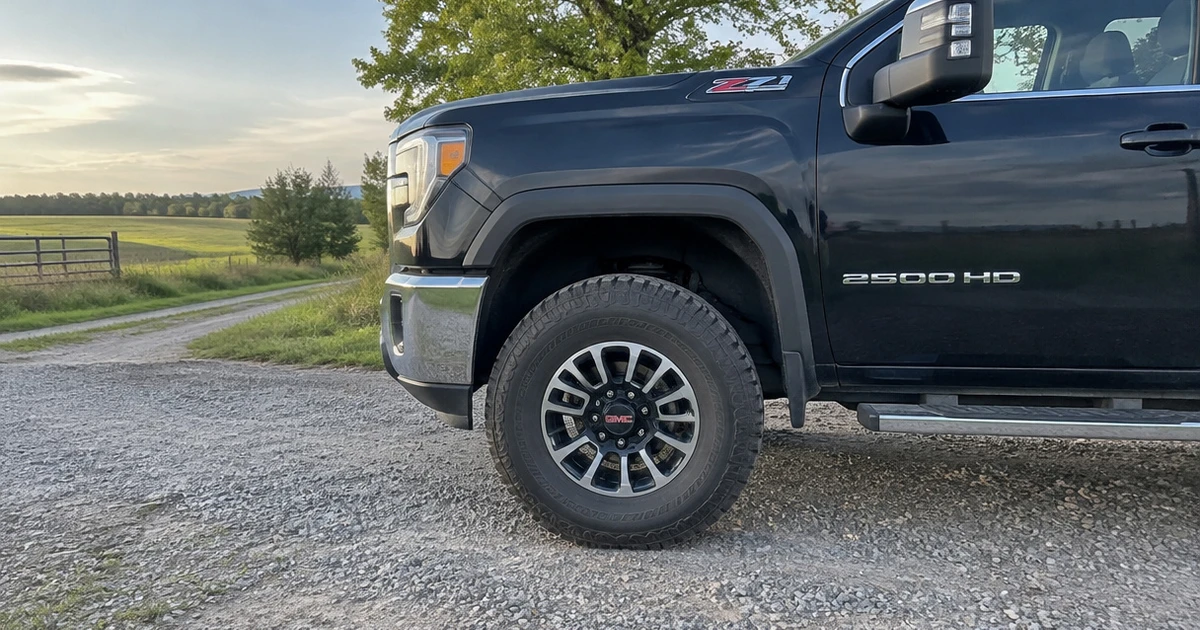
Your Sierra’s weight and workload make fit, load capacity and pressure more important than tread style alone. Start with the door placard and owner’s manual, then choose a tire that fits your roads and driving habits.
Size and Fit
Start with the tire size on the driver-door placard or in the owner’s manual, then match the full marking on the replacement. It includes width, aspect ratio, construction, wheel diameter, load index and speed rating. Keep the original overall diameter unless a qualified shop confirms a change will clear suspension parts and keep the speedometer close to accurate.
A larger or wider tire can rub, change gearing and affect braking. Match the required load index and use a tire type the truck maker approves. Check that all four tires match unless the manual allows a different setup.
Load Capacity and Pressure
Load index tells you the maximum load a tire can carry under stated conditions, and load range describes its construction and pressure capacity. Neither replaces the truck’s payload and axle limits.
If you carry tools or tow often, confirm each tire’s capacity at the pressure your manual specifies. A higher load rating can add useful margin, but it does not raise the truck’s legal or mechanical limits.
- Check the placard and manual for the correct size and cold pressure.
- Count trailer tongue weight as part of the truck’s payload.
- Keep the tire load rating at or above the original requirement.
Do not treat the sidewall maximum as your everyday pressure. Follow the vehicle guidance and check pressure cold before a loaded trip.
Tread for Your Roads
Choose tread around the surfaces you drive most. Highway patterns often use closely spaced blocks and continuous ribs for steady tracking, lower road noise and even wear on pavement. All-terrain tread uses larger, more open blocks for better bite on gravel, dirt and snow, though it can add noise and rolling resistance.
Mud tires use wide gaps to clear soft soil, but those gaps give less rubber contact on pavement. For a truck that sees mixed routes, judge how much off-road grip you need before accepting the highway trade-off. A little gravel now and then rarely justifies a very open tread.
| Driving pattern | Tread style to compare |
|---|---|
| Mostly paved roads | Highway |
| Regular gravel or dirt | All-terrain |
| Frequent soft ground | Mud-terrain |
Weather and Winter Grip
Think about the coldest and wettest conditions you face, not just your usual commute. Deep channels help move water from under the tread, while sipes create extra biting edges on wet roads and packed snow. If you drive often in severe winter weather, look for the three-peak mountain snowflake symbol and consider a dedicated winter tire for the cold season.
That symbol indicates the tire met a defined snow-traction test, but it does not make every all-season tire equal on ice. Check local rules and choose a design that suits your actual winter roads.
Ride Comfort and Tread Life
Think about the hours you spend in the cab. A highway tread with closely arranged blocks often runs quieter and tracks smoothly, while open tread patterns tend to make more hum on asphalt. Tread weight and rolling resistance can also affect fuel use, though load, speed and alignment matter too.
Check the tire maker’s treadwear warranty and coverage terms, but treat them as a guide rather than a promise. Towing, aggressive starts, rough roads and poor alignment can shorten tread life, so accept added noise only when extra grip serves a real need.
Pressure Monitoring and Maintenance
Check wheel fit, load rating, speed rating and pressure needs as one package. A size change can affect clearance at full steering lock, fender space, gearing and speedometer accuracy. Confirm the truck’s tire-pressure monitoring system can work with the new setup, especially if you change wheel type or use a second seasonal set.
After installation, ask the shop to check alignment and balance, then follow the rotation schedule in your manual. Uneven wear can point to alignment or inflation trouble. Include the spare in your fit plan so it can safely serve the truck if needed.
Frequently Asked Questions
What type of tire works best for a Sierra 2500 HD?
For a truck that spends most of its time on pavement, a highway tire usually offers a quieter ride and steady handling. Choose an all-terrain tread if you regularly drive on gravel, dirt or snow-covered roads. Reserve a mud tire for frequent soft-ground use, since its open tread can feel louder and less settled on pavement.
Can I change the tire size on my Sierra 2500 HD?
Keep the size on the door placard unless you have a clear reason to change it. A different diameter or width can affect clearance, speedometer readings, gearing and braking. Ask a qualified tire professional to confirm fit at full steering lock and under load, then check that the new tire meets the truck’s load and speed requirements.
How do I choose the right load rating?
Compare the load index on a replacement tire with the original tire and the vehicle’s required rating. Then check the tire maker’s load table for capacity at the inflation pressure your truck calls for. Do not judge capacity from load range alone, and never exceed the truck’s payload or axle limits.
Can I tow with all-terrain tires?
Yes, if the tire carries the required load and pressure for your truck and trailer. Use the truck’s placard and manual as your guide, then adjust for the load only as the vehicle maker directs. Towing adds heat and weight, so check cold pressure before each trip and inspect tread and sidewalls often.
How often should I rotate my tires?
Follow the rotation interval in your owner’s manual, since the right schedule can vary with tire type and use. Rotate sooner if you spot uneven wear or notice a handling change, and ask a shop to inspect alignment and pressure. Regular rotation helps spread wear across all four tires, but it cannot fix a worn suspension part or poor alignment.