
This post may contain affiliate links. As an Amazon Associate I earn from qualifying purchases. If you choose to make a purchase, I may earn a small commission at no extra cost to you.
Choosing tires for your Honda Prologue affects more than grip. The right set can help the electric SUV stay composed in rain, limit road noise in the cabin and handle its weight and quick torque. The wrong match can add harshness or wear sooner than you expect.
Start with the tire size, load rating and cold pressure on the driver-door placard, then think about the roads and weather you face most. Tire designs trade range, comfort, wet traction and winter ability, so your best fit depends on how you drive.
This guide covers the best tires for Honda Prologue you can buy in 2026, with options for touring, performance, changing weather and EV driving. Use the advice below to narrow the field and pick a set that suits your routine.
Our Top Honda Prologue Tires Picks


More Details on Our Top Picks
Pros
- Precise steering response from Dynamic Response Technology
- Extreme Silica+ compound delivers wet-road grip
- Sporty handling for an all-season tire
- Chevrolet selected it for the Corvette
Cons
- Snow and ice grip trails dedicated winter tires
Michelin Pilot Sport All Season 4 brings sports-car grip to an all-season tire, with an asymmetric tread and Michelin’s Dynamic Response Technology. Its Extreme Silica+ compound gives the tread strong wet-road traction, while the design keeps steering precise in dry weather.
For a Honda Prologue, that performance focus suits drivers who enjoy quick, direct responses from the wheel. The tire handles everyday turns with a planted feel, and its all-season tread works across changing temperatures.
Chevrolet chose the Pilot Sport All Season 4 as the first all-season tire for the Corvette, a sign of its performance roots. Michelin also designed it for durable performance, rather than a short burst of grip that fades quickly.
In rain, the tread channels water away while its grip helps the vehicle feel composed through turns. Michelin Pilot Sport All Season 4 gives the Prologue a sportier road feel without giving up year-round use in mild conditions.
Snow traction is part of the all-season design, but this is still a performance tire rather than a dedicated winter option. Its main appeal lies in responsive handling and strong wet grip.
Bottom line: Choose this tire for your Prologue if you value sharp handling and confident wet-road grip. It suits drivers who want a sportier feel through daily drives.
Pros
- Quiet tread design for a calmer cabin
- Predictable handling in dry and wet conditions
- Touring-focused ride comfort
- Backed by a 60-day trial
Cons
- Touring tuning feels less sporty in quick turns
A calm commute is the focus of Continental CrossContact RX, an all-season touring tire tuned for original-equipment use. Its tread design balances wet and dry traction with a quieter ride, which can make a difference in the Prologue’s relatively hushed cabin.
Steering feels steady and predictable rather than aggressively sharp. The tread’s contact with the road gives you a composed feel in regular traffic, while its wet-weather traction adds confidence on rainy days.
Continental CrossContact RX suits drivers who value comfort over a sporty response. That tuning also fits the Prologue’s role as a family SUV, where a smooth ride can matter more than quick cornering.
Continental backs the tire with a 60-day trial. Its blend of low road noise and consistent handling makes it a practical touring option for everyday use.
Bottom line: This is a good fit for Prologue drivers who favor a quiet, steady ride. Pick it for daily commuting and family trips over a sharper performance feel.
Pros
- Three-Peak Mountain Snowflake certification
- V-shaped tread channels water and slush
- Designed to retain performance as it wears
- Strong wet and dry braking
Cons
- Tread noise can rise on coarse pavement
The V-shaped tread on Michelin CrossClimate2 gives this all-season tire a clear focus on wet roads and wintry weather. Its Three-Peak Mountain Snowflake certification marks it for stronger snow performance than a typical all-season tire.
That extra winter grip can help a Prologue feel more composed when cold weather brings slush or light snow. The tread also delivers wet and dry braking, so the tire remains useful through warmer months.
Michelin CrossClimate2 uses a thermal-adaptive tread compound that changes its grip with road conditions. Michelin also designed the tread to maintain its performance as it wears, giving it a longer-lasting feel across the seasons.
The directional tread pattern channels water and snow away from the contact area. Its winter-rated traction and year-round braking make it a capable option for drivers who see varied weather.
On coarse pavement, the tread can create more road hum than a comfort-first touring design. The added winter ability makes that trade worthwhile for drivers who need more than mild-weather traction.
Bottom line: Choose Michelin CrossClimate2 if your Prologue sees regular cold weather, slush, or light snow. It gives you added winter grip without switching to a dedicated winter tire.
Pros
- i Sound Absorber foam reduces tire cavity noise
- Designed for electric vehicle demands
- Focuses on longer tread life
- All-season tread for varied conditions
Cons
- Performance focus can feel firm on broken pavement
Quiet cabin manners matter in an electric SUV, and Hankook iON evo AS SUV builds noise control into its design. Hankook’s i Sound Absorber foam helps reduce the tire cavity noise that can stand out when the Prologue’s electric motor stays quiet.
The iON line also targets the weight and torque demands of electric vehicles. Its tread design aims for longer wear and lower rolling resistance, two useful traits for a vehicle that delivers power as soon as you press the accelerator.
Hankook iON evo AS SUV brings a focused balance of grip and comfort to daily driving. Its all-season tread works for regular road use in changing temperatures, while its EV-specific design puts cabin noise and tread life near the center of the experience.
For Prologue drivers, the sound-absorbing foam gives this tire a clear comfort benefit. The model’s EV-focused construction also addresses the demands of electric power delivery.
Bottom line: Hankook iON evo AS SUV suits Prologue drivers who want an EV-focused tire with a quieter ride. It is a good fit if cabin noise and tread life matter more to you than sporty handling.
Pros
- Full-depth sipes retain biting edges as tread wears
- 3D sipe design aids wet and dry handling
- Tread compound targets long-lasting performance
- Built for SUVs and crossovers
Cons
- Not designed for severe winter conditions
Pirelli’s Scorpion line focuses on SUVs and crossovers, and Pirelli Scorpion AS Plus 3 brings that approach to all-season road use. Full-depth sipes add biting edges across the tread, so traction does not depend on shallow grooves near the surface.
Its 3D sipe technology works with the tread pattern to keep handling steady in dry weather and rain. The tread compound also aims for lasting performance, a useful trait for a Prologue that sees regular commuting and longer road trips.
Pirelli Scorpion AS Plus 3 balances wet grip with a composed feel through turns. Its tread channels water while the sipes add grip on slick pavement, giving the driver a stable response in changing weather.
The design targets crossovers, SUVs, and light trucks, so its road manners suit the Prologue’s SUV shape. You get full-depth traction sipes and 3D sipe technology in one all-season package.
Bottom line: Consider this Pirelli for a Prologue used mostly on paved roads in rain and mild weather. It gives you a reassuring mix of wet grip and everyday SUV handling.
Pros
- SoundComfort Technology reduces cabin noise
- Designed for battery-electric vehicles
- Wide shoulder blocks add cornering grip
- 40,000-mile limited tread life warranty
Cons
- Hard acceleration can shorten tread life
Instant electric torque can put extra demands on a tire, and Goodyear ElectricDrive GT was designed for battery-electric vehicles. Its asymmetric tread and wide outer shoulder blocks give it grip through corners on dry, wet, and lightly snowy roads.
Goodyear’s SoundComfort Technology uses a sound-absorbing layer inside the tire to reduce noise that reaches the cabin. That feature suits the quiet Prologue, where tire noise can become more noticeable on regular roads.
The ultra-high-performance all-season tread gives the ElectricDrive GT a more responsive feel than a comfort-first touring design. Its 40,000-mile limited tread life warranty adds a clear wear-coverage benefit for regular use.
Goodyear ElectricDrive GT combines EV-focused design with year-round road traction. Its tread pattern and SoundComfort Technology make it a useful fit for Prologue drivers who value grip and a quieter cabin.
Bottom line: Goodyear ElectricDrive GT suits Prologue drivers who want responsive handling and noise control. Its EV-specific design works well for drivers who value a sporty road feel.
Pros
- 80,000-mile limited warranty
- QuietTrack Technology reduces tread noise
- High-silica compound improves wet and winter grip
- Snow Vices add grip on snowy roads
Cons
- Touring design feels less sharp in corners
An 80,000-mile limited warranty sets the tone for Bridgestone Alenza AS Ultra, a touring tire built for long service. Its high-silica compound improves wet and winter grip, while the tread design focuses on a quiet ride.
QuietTrack Technology reduces tread-pattern noise, a benefit you can appreciate in the Prologue’s quiet cabin. The tire’s even, steady road manners suit long commutes and highway travel better than sharp, sports-car handling.
Bridgestone Alenza AS Ultra adds Snow Vices to the tread to create extra biting edges on snowy roads. Those features make it more prepared for winter weather than a basic all-season tire, though it remains a touring model.
For a Prologue used mainly on paved roads, the blend of long treadwear coverage and quiet touring comfort is the main draw. Its design favors a calm ride and steady traction through ordinary weather changes.
Bottom line: Bridgestone Alenza AS Ultra is well suited to Prologue drivers who log many highway miles. Choose it for a quiet ride and long treadwear coverage.
Pros
- SportPlus Technology delivers responsive handling
- Strong grip on wet and dry roads
- D, W, and S tread indicators show wear
- Up to 50,000 miles of limited coverage
Cons
- Firm performance tuning sends more road texture into the cabin
Continental ExtremeContact DWS06 Plus puts dry, wet, and snow performance indicators right in the tread. The D, W, and S marks wear away as the tire loses its best performance in each condition, giving you a simple visual guide to tread capability.
Continental’s SportPlus Technology gives this ultra-high-performance tire responsive handling and strong grip on wet or dry roads. Its tread also delivers traction in snow and ice, which adds year-round range for a Prologue driven in changing weather.
The tire’s braking and cornering focus suits drivers who want a livelier feel from the Prologue. Continental ExtremeContact DWS06 Plus also carries up to 50,000 miles of limited tread life coverage.
Continental pairs its performance design with a distinctive tread pattern. The tuned performance indicators and SportPlus Technology make this a practical choice for drivers who want clear tread feedback along with sharp handling.
Bottom line: Pick this tire for a Prologue that sees spirited driving along with everyday use. It gives you a sharper response while retaining all-season traction.
Pros
- Four grooves channel water from the tread
- Asymmetric layout aids steering response
- Micro-silica compound improves wet grip
- Low rolling resistance compound
Cons
- Highway tread is not suited to loose terrain
Water management is a key strength of Yokohama Geolandar X-CV, which uses four wide circumferential grooves to channel water away from the tread. That layout helps the Prologue stay composed on wet pavement and lowers the risk of losing contact on standing water.
An asymmetric three-rib tread layout gives the tire crisp steering response and stable cornering at highway speeds. Its advanced micro-silica compound and end-locked polymers add wet grip while keeping rolling resistance low.
Yokohama Geolandar X-CV has a touring all-season design for SUVs and crossovers. It focuses on steady road manners rather than loose-terrain driving, making it a sensible road tire for regular Prologue commutes.
The four-groove water channeling and low rolling resistance compound give this model a practical balance for wet-weather use. Its tread design helps maintain predictable steering when rain coats the road.
Bottom line: Yokohama Geolandar X-CV suits Prologue drivers who spend most of their time on paved roads. Its wet-weather design is especially useful in regions with frequent rain.
Pros
- Variable Pitch Technology reduces tread noise
- Wide grooves help move water away
- Full-depth sipes add slush traction
- Strong center rib promotes even wear
Cons
- Comfort tuning feels less sporty in corners
Kumho Crugen HP71 uses Variable Pitch Technology to limit tread-pattern noise, giving this touring tire a comfort-first character. Its design suits the Prologue’s quiet cabin and helps keep everyday drives relaxed.
Wide circumferential grooves and micro-serrated tread blocks move water away from the contact area. Full-depth sipes and lateral voids also clear slush, so the tire keeps useful traction through wet and wintry conditions.
A strong center rib and reinforced shoulder blocks promote even wear and quick handling. Kumho Crugen HP71 still favors smooth road manners over a sporty response, which fits drivers who spend more time commuting than carving through turns.
The mix of Variable Pitch Technology and full-depth sipes gives the tire comfort in mild weather and traction when roads turn slick. For the Prologue, that adds year-round usefulness without giving up a quiet touring feel.
Bottom line: Choose Kumho Crugen HP71 for a Prologue used mainly for commuting and family travel. Its quiet touring design suits drivers who value comfort over sharp handling.
Factors to Consider When Choosing Tires for Honda Prologue
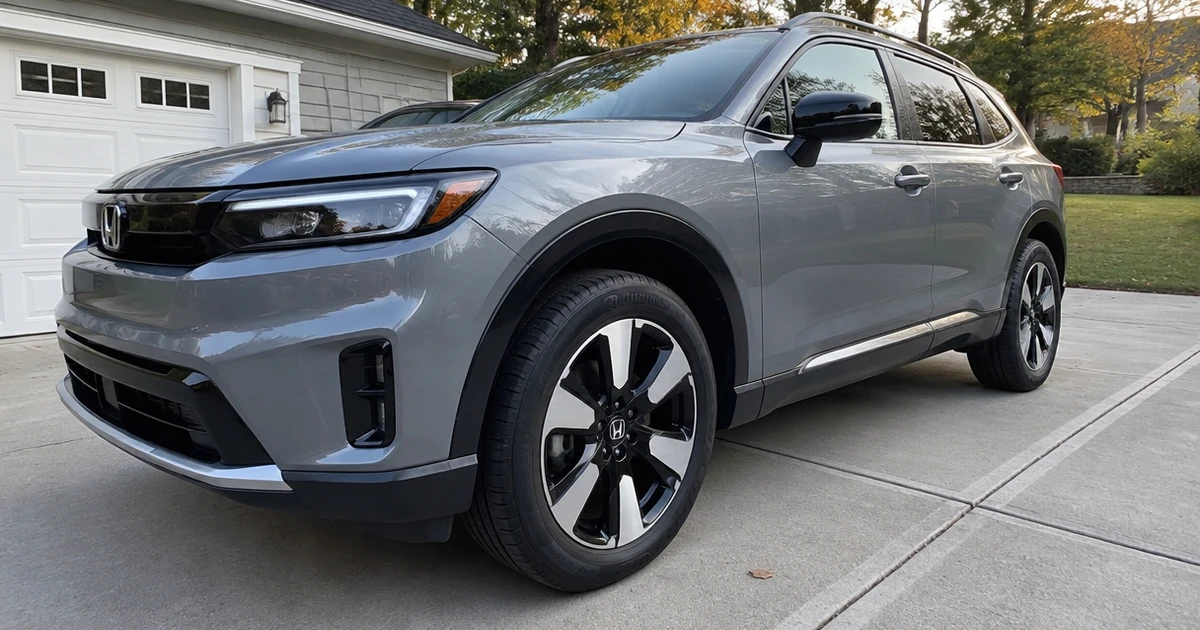
Your tire choice affects grip, range, comfort and replacement timing. Start with the vehicle’s approved fitment, then match the tire’s strengths to your climate, roads and driving habits.
Size and Load Rating
Read the tire size on the driver-door placard and in the owner’s manual before you shop. Different trims or model years can use different approved fitments, so match the full size code rather than choosing a tire that only looks close.
Match the load index and speed rating to the vehicle’s requirements. The load index shows how much weight each tire can carry, and you should not choose a lower rating to get a softer ride or a lower price.
Keep the wheel diameter within an approved fitment, especially if you replace only two tires. Follow the manual’s rules for replacing tires in pairs or all four, and ask a tire shop to check clearance and speed readings before changing sizes.
Grip for Your Local Weather
Match tire type to local winters. All-season tires suit mild climates, while all-weather tires carry the three-peak mountain snowflake mark and pass a snow-traction test. Dedicated winter tires offer stronger grip in frequent ice and deep snow, but require seasonal changes.
Use this table as a starting point. Your local winter pattern matters more than the label alone.
| Tire type | Best fit | Main trade-off |
|---|---|---|
| All-season | Mild winters and light snow | Less grip in severe winter weather |
| All-weather | Cold weather and regular snow | Less specialized than winter tires |
| Winter | Frequent snow and ice | Seasonal changes and storage |
Think about temperature as well as snowfall. Winter-rated tires use compounds that stay more flexible in cold weather, and local rules may require them during certain months.
Efficiency and Tread Life
An electric SUV’s weight and instant torque put added demands on tire tread. Choose the required load rating and a design known for even wear; hard acceleration, heavy cargo and underinflation can shorten tread life. These effects build over daily driving, not just long trips.
Low-rolling-resistance tires limit energy lost as the tire flexes and rolls, which can help protect driving range. Real gains change with temperature, speed, pressure and pavement, so treat efficiency as one factor rather than a promise of a fixed range increase.
Keep pressure at the cold level on the door placard, since underinflation raises rolling resistance and heat. Check pressure monthly and before long trips, after the vehicle has sat for several hours.
Ride Comfort and Cabin Noise
An EV’s quiet cabin can make tire noise easy to hear, especially on coarse pavement. Some touring designs vary tread-block spacing to soften repeating sounds, and some tires add an inner foam layer to reduce noise that reaches the cabin.
Ride comfort also depends on sidewall construction, pressure and road surface. A taller sidewall within an approved fitment can absorb bumps better, while a sport-focused tire may feel firmer and respond more sharply to steering.
If cabin noise bothers you, compare independent noise information where available and ask a tire shop about the exact tire. Tread appearance alone cannot predict cabin sound, since similar patterns can behave differently on rough pavement. Pay attention to the surface you drive most.
Driving Habits and Maintenance
Think about your normal route and driving pace before weighing treadwear claims. Highway commuters may value long wear, while frequent hard cornering or rough roads call for a design suited to those demands. A long mileage claim means little if it does not match your conditions.
- Inspect tread depth and sidewalls monthly for uneven wear or damage.
- Rotate tires on the schedule in the owner’s manual.
- Keep service records if the tire warranty requires them.
A mileage warranty can help you compare expected wear, but no warranty guarantees a set lifespan. Driving style, alignment, pressure and road surfaces affect wear, so prioritize regular checks and rotations over a high mileage claim alone.
Frequently Asked Questions
What tire size does a Honda Prologue need?
Read the driver-door placard and owner’s manual for the approved tire size, load index and speed rating. Match the full size code, not just the wheel diameter, and ask a tire shop to check fit and clearance before choosing a different setup.
Does an electric SUV need EV-specific tires?
An EV-specific tire can focus on load capacity, lower rolling resistance and cabin noise, but the label alone does not make a tire suitable. A conventional tire can work if it meets the vehicle’s size, load and speed requirements. Compare tread life and wet grip as well as efficiency.
How often should I rotate the tires?
Follow the rotation schedule in your owner’s manual, since the right pattern depends on the tire setup and drivetrain. Check pressure and tread regularly between rotations. If one tire wears faster or the vehicle starts to pull, ask a tire shop to inspect the alignment and suspension.
Are all-season tires enough for winter driving?
All-season tires can handle light snow and cold weather, but their grip falls on packed snow and ice compared with winter tires. If you drive through frequent snow or prolonged freezing conditions, choose a winter-rated set and switch when seasons change. Check local requirements before winter travel.
What tire pressure should I use?
Use the cold tire pressure on the driver-door placard, not the maximum number on the tire sidewall. Check all four tires before driving or after the vehicle sits for several hours, since heat raises pressure. Correct pressure supports handling, tread life and energy use.