
This post may contain affiliate links. As an Amazon Associate I earn from qualifying purchases. If you choose to make a purchase, I may earn a small commission at no extra cost to you.
Choosing all-season performance tires can feel like a compromise. You want sharp steering and dependable grip, but your tires also need to handle rain, cold mornings, and an occasional dusting of snow. A tire that feels lively on dry pavement may not give you the same confidence when temperatures drop.
Start with your climate and driving habits. Tread design, wet braking, snow traction, road noise, warranty coverage, and your vehicle’s approved size all shape daily performance. No all-season tire replaces a dedicated winter set in severe snow or ice, so match its limits to your regular roads.
The guide below covers the best all season performance tires you can buy in 2026, with options for different needs and driving styles.
Our Top All Season Performance Tires Picks




More Details on Our Top Picks
Pros
- Responsive steering and cornering feel
- Asymmetric tread balances dry and wet grip
- Chosen for the Chevrolet Corvette
- Designed for lasting performance
Cons
- Deep snow and ice call for a winter tire
Sharp steering response is a defining trait of the Michelin Pilot Sport All Season 4. Its asymmetric tread pattern balances dry-road cornering with grip on wet pavement, while the compound keeps the tire ready for changing seasons.
Michelin built this tire for drivers who want a sporty feel without giving up everyday year-round use. The tread channels water away from the contact area, and its design favors stable handling when you turn or brake on wet roads.
Chevrolet chose the Pilot Sport All Season 4 as the first all-season tire for the Corvette, a clear sign of its performance focus. The year-round grip and responsive feel make it enjoyable on a spirited drive, while its long-wearing design adds useful everyday appeal.
It delivers the precise road feel expected from the Pilot Sport line, with a broader range of weather use. You still need a dedicated winter tire for frequent driving on deep snow or ice.
Bottom line: Choose this Michelin for a performance car you drive year-round and want to feel connected to the road. It suits drivers who value steering response as much as all-season traction.
Pros
- Tuned Performance Indicators show changing tread capability
- Strong wet braking and handling
- Capable snow and ice traction
- 50,000-mile limited tread life warranty
Cons
- The tread indicators can be hard to read at a glance
Continental’s Tuned Performance Indicators give the ExtremeContact DWS06 Plus an unusually practical feature: the D, W, and S marks fade as the tread wears and the tire loses its best dry, wet, or snow performance. That gives you a quick visual cue about how the tire’s capabilities change over time.
SportPlus Technology shapes its responsive handling and grip on both dry and wet pavement. The tread design also supports short braking distances, and the tire earns a reputation for capable snow and ice traction for an ultra-high-performance all-season model.
On wet roads, the DWS06 Plus feels composed and gives you reassuring braking response. Its tread pattern has a bold, sporty look, but its appeal goes beyond appearance: a 50,000-mile limited tread life warranty backs its long-use focus.
Continental gives this tire a useful mix of control and seasonal range. The wear indicators make it easier to track when its dry, wet, and snow tuning has changed.
Bottom line: Consider the DWS06 Plus if you want a sporty tire with clear wear cues and useful winter traction. It fits drivers who face changing weather but still enjoy responsive road handling.
Pros
- Circumferential and lateral grooves channel water
- Full-depth 3D sipes retain biting edges
- Open shoulders support wet-road traction
- 50,000-mile limited tread life warranty
Cons
- Deep snow performance falls short of a winter tire
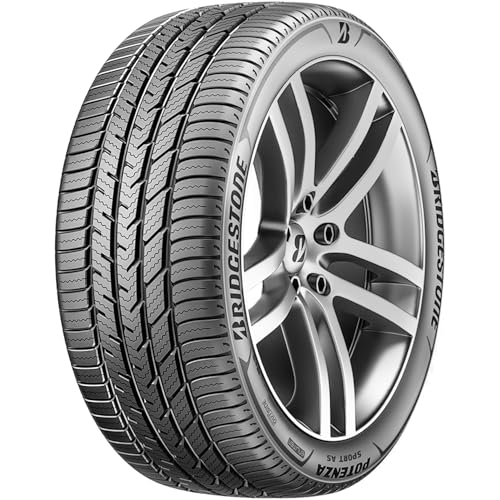
Water control is central to the Bridgestone Potenza Sport AS design. Its circumferential grooves carry water along the tread, while lateral grooves help move it out toward the shoulders to reduce hydroplaning risk on wet roads.
For dry-road driving, the tread layout and high-performance compound give the tire a quick, controlled feel. Open shoulders add room for water to escape, and full-depth 3D sipes create extra biting edges that maintain grip as the tread wears.
The Potenza Sport AS brings year-round traction to a performance-focused tire, with a 50,000-mile limited tread life warranty for added longevity. Its wet-road design is especially useful during heavy rain, when stable braking and predictable handling matter.
Bridgestone also uses its PeakLife tread compound to support long wear. The full-depth sipes keep their biting edges through the tread, giving the design a practical role beyond its sporty look.
Bottom line: The Potenza Sport AS suits performance-car drivers who often deal with wet pavement and want confident handling. Pick it for year-round use where rain matters more than severe winter weather.
Pros
- Raised rim protector helps guard wheels from curb contact
- ActiveGrip Technology supports all-season handling
- ActiveBraking Technology focuses on braking response
- Built-in tread wear gauge
Cons
- Rim protector cannot prevent damage from hard curb impacts
Goodyear adds a useful wheel-protection detail to the Eagle Exhilarate: a raised rim protector that can help shield the wheel from minor curb contact. It pairs that feature with ActiveGrip Technology, which gives the tire its all-season traction and responsive handling character.
ActiveBraking Technology focuses on braking response, with a tread design made to maintain contact and control when you slow down. In everyday driving, the Eagle Exhilarate brings a sporty feel to dry and wet roads without giving up its all-season role.
A built-in wear gauge lets you track tread depth and spot uneven wear patterns that can point to alignment issues. The 45,000-mile limited tread life warranty adds a defined wear expectation, though warranty terms and exclusions apply.
The Eagle Exhilarate is part of Goodyear’s performance tire range, and its rim protector is a practical bonus for city driving near curbs. The tire balances handling features with details aimed at preserving the wheel and monitoring tread wear.
Bottom line: Choose the Eagle Exhilarate if you want a performance tire with added wheel protection and a visible wear gauge. It suits drivers who mix spirited road use with frequent city parking.
Pros
- Dense siping balances grip and cabin comfort
- Four wide grooves move water and slush
- Asymmetric tread supports handling and braking
- 50,000-mile limited tread life warranty
Cons
- Deep snow and icy roads favor dedicated winter tires
Quiet comfort is a welcome part of the Pirelli P Zero AS Plus 3’s design. Dense siping creates extra grip edges while also softening road noise and vibration, so the tire keeps a calmer cabin feel during regular driving.
Pirelli uses an asymmetric tread pattern to balance handling, traction, and braking. Four wide grooves move water and slush out of the tread, giving the P Zero AS Plus 3 added resistance to hydroplaning when roads turn wet.
Designed for performance-oriented coupes and sedans, this tire pairs a sporty road feel with year-round traction. Its tread pattern responds well on dry pavement, while the water channels give you more confidence in rain and slushy conditions.
The 50,000-mile limited tread life warranty supports its long-use appeal. Pirelli’s blend of asymmetric tread control and noise-conscious siping makes the tire comfortable without dropping its performance focus.
Bottom line: The P Zero AS Plus 3 fits coupe and sedan drivers who want a sporty feel without much road noise. It is a good match for wet-weather commutes and year-round driving in mild winters.
Pros
- 20 percent more biting edges for snow and slush
- Long-wearing compound resists uneven wear
- High-performance handling for coupes and sedans
- 50,000-mile limited tread life warranty
Cons
- Not a substitute for winter tires in severe snow
More biting edges give the Firestone Firehawk AS V2 its winter-minded character. Firestone designed the tread with 20 percent more biting edges for snow and slush traction, while keeping the tire focused on high-performance handling for coupes and sedans.
The long-wearing tread compound helps resist uneven wear, so the tire can retain a more consistent footprint through regular use. On clear roads, it brings the direct handling expected from a performance all-season tire, with year-round capability built into the tread design.
Firestone backs the Firehawk AS V2 with a 50,000-mile limited tread life warranty. Its extra tread edges add useful grip on light winter roads, and the wear-focused compound rounds out a design made for extended use.
That snow-and-slush focus makes the Firehawk AS V2 more than a fair-weather performance tire. It still suits drivers who value steering response and dry-road control through the rest of the year.
Bottom line: Pick the Firehawk AS V2 if light snow and slush are part of your driving year. It suits coupe and sedan owners who want a performance feel with extra winter traction.
Pros
- Large shoulder blocks support cornering
- Responsive sidewall construction
- Z grooves and wavy sipes add biting edges
- Four-pitch tread pattern reduces road noise
Cons
- No stated tread life warranty
Large shoulder blocks give the Yokohama Advan Sport A/S+ a planted feel through corners. Yokohama pairs them with an optimized sidewall construction for crisp steering response, so the tire feels direct when you change direction on dry pavement.
Wet and winter traction come from Z grooves and wavy sipes that form extra biting edges. The tread also uses a four-pitch pattern, which varies the block layout to reduce repeating road noise and keep the cabin quieter.
A flatter tread contour spreads pressure more evenly across the contact area, while the advanced rubber compound helps resist uneven wear. Together, those details give the Advan Sport A/S+ a useful balance of handling, comfort, and long-term tread performance.
Yokohama built this tire for drivers who want a sporty response across changing road conditions. Its cornering-focused shoulder blocks give it a clear performance character, while the noise-conscious tread design adds comfort on longer drives.
Bottom line: The Advan Sport A/S+ suits drivers who value crisp turn-in and steady cornering in an all-season tire. It also fits drivers who want a quieter ride without giving up a sporty feel.
Pros
- 4D Advanced Nano Technology compound
- Emerging grooves channel water as tread wears
- Interlocking sipes add traction in light winter weather
- 50,000-mile limited tread life warranty
Cons
- Winter traction suits light conditions, not deep snow
Falken’s 4D Advanced Nano Technology gives the Azenis FK460 A/S a rubber compound that stays flexible across changing temperatures. That compound forms the base for year-round grip, while a high-grip chamfer in the tread supports steering and handling on dry roads.
Interlocking sipes add biting edges for braking and traction on dry pavement, wet roads, and light winter surfaces. Falken also designed emerging grooves to keep channeling water as the tread wears, helping the tire retain wet-road grip over time.
In real use, those features make the FK460 A/S a performance tire with a clear focus on wet control and long-term traction. Its emerging grooves give the water-management design a role beyond the tire’s early tread life.
Falken backs the tire with a 50,000-mile limited tread life warranty. Its mix of dry-road steering response and wet braking traction keeps the tire engaging without losing sight of daily road use.
Bottom line: Consider the FK460 A/S if wet-road confidence and lasting water control matter to you. It suits drivers who want a sporty all-season tire for changing weather and light winter conditions.
Pros
- Four wide grooves support wet traction
- Noise-conscious tread design
- Reinforced construction supports higher load capacity
- All-season compound for year-round use
Cons
- No stated tread life warranty
A quieter ride is a key part of the Hankook Ventus S1 AS design. Its tread layout aims to reduce road noise and vibration, making daily driving more comfortable while retaining the response expected from an ultra-high-performance all-season tire.
Four wide grooves channel water away from the contact area to support wet traction. Hankook also uses an all-season rubber compound for year-round grip, so the tire can handle changing road conditions without giving up its performance focus.
Reinforced construction adds strength and supports a higher load capacity, while also contributing to long tread life. The reinforced build pairs with the noise-conscious tread to give the Ventus S1 AS a balanced feel on passenger cars.
On wet pavement, its broad water channels help the tire maintain traction under braking and through turns. The quiet tread design gives it a calmer character on longer drives than its sporty handling focus might suggest.
Bottom line: The Ventus S1 AS is a fit for passenger-car drivers who want sporty handling with a quieter cabin. Choose it for everyday roads where wet grip and ride comfort both matter.
Pros
- Designed for snow traction
- Strong wet and dry braking
- Low road noise
- Up to 50,000 miles of limited tread life coverage
Cons
- Deep snow and ice still call for a winter tire
Snow traction gives the General G-MAX AS-07 a useful edge for a performance all-season tire. General designed it to keep its grip through changing weather, with tread features that support snow traction as well as confident braking on wet and dry roads.
The G-MAX AS-07 also puts some thought into cabin comfort. Its low-noise design helps quiet the ride, while a long-wearing tread supports more miles of use for drivers who want a performance tire they can run year-round.
General backs the tire with up to 50,000 miles of limited tread life coverage. The wet and dry braking focus gives you steady road control, while its snow-oriented design adds useful traction when winter weather arrives.
For daily driving, the G-MAX AS-07 balances comfort and performance instead of leaning entirely toward track-like response. Its quiet ride and long-wearing tread make it practical for regular use through the seasons.
Bottom line: The G-MAX AS-07 suits drivers who want year-round performance with added snow traction and a quiet ride. It is a practical pick for daily use in areas with occasional winter weather.
Factors to Consider When Choosing All Season Performance Tires
Start with the roads you drive most, then confirm fit and safety before comparing comfort or warranty. These checks help you match a tire’s strengths to your climate, vehicle, and routine. You’ll also learn where all-season performance tires reach their limits.
Fit, Load, and Speed Ratings
Check your vehicle placard or manual for the approved tire size, load index, and speed rating. The size controls fit and clearance, while the load index shows how much weight each tire can carry. The speed rating marks a tested speed category, but it does not tell you how quiet or comfortable the tire will feel.
Check whether your car uses different tire sizes front and rear, or has a tire-pressure monitoring system that needs compatible sensors. Keep similar tread depth across an axle. On all-wheel-drive vehicles, mismatched rolling diameters can strain the driveline, so follow your vehicle maker’s guidance before replacing just one tire.
Climate and Snow Traction
Performance all-season tires suit warm roads, rain, and occasional light snow. Their compounds and tread aim to hold grip across a wide temperature range, but packed snow and ice call for winter tires. Match your usual routes to these cues before you shop:
- Rare, light snow: all-season traction may fit your routine.
- Frequent snow: look for the three-peak mountain snowflake symbol.
- Regular ice: choose dedicated winter tires.
The three-peak mountain snowflake symbol marks severe-snow service; M+S alone does not follow the same test standard. Route conditions matter more than yearly snowfall totals, since plowed highways differ from untreated hills and rural roads.
Wet Grip and Hydroplaning
Rain grip deserves close attention because standing water can overwhelm a tire, even with sporty tread. Circumferential grooves move water from the contact patch, while angled channels and open shoulder slots support traction. Compare independent wet-braking and handling results from the same test.
Hydroplaning also depends on tread depth, speed, water depth, pressure, and vehicle weight. A new tire cannot make fast driving through pooled water safe. Replace worn tires and check pressure monthly, since underinflation can hurt response and add heat.
| Road condition | Feature to check | What it helps with |
|---|---|---|
| Rainy commutes | Grooves | Move water from the tread |
| Standing water | Open channels | Resist hydroplaning |
| Mixed conditions | Wet test results | Compare traction fairly |
Steering, Ride, and Noise
Performance-oriented tread often uses a firm center rib and reinforced shoulder blocks to sharpen steering through corners. Check test results or reviews for steering response, dry braking, and stability at highway speed. A higher speed rating marks a tested speed category, but it does not predict how the tire will feel on your usual roads.
Low-profile tires can make steering feel quicker, but their shorter sidewalls often pass more bumps into the cabin and face greater risk from potholes. If comfort matters, choose a sidewall height within the sizes approved for your car. A test drive can reveal harshness that a spec sheet cannot.
Tread Life and Warranty
Use the treadwear grade as a rough comparison within the same testing system, not as a promise of exact mileage. Driving style, alignment, inflation, and road surface all affect tread life. A longer mileage warranty can add confidence, but read its conditions before you choose.
Coverage may depend on proper maintenance, proof of rotations, even wear, and reaching a stated remaining tread depth. Check whether the warranty covers workmanship or road hazards, since those protections differ. If you drive hard or carry heavy loads, expect faster wear than a gentle commuter may see.
Pressure, Rotation, and Inspections
Check tire pressure monthly and before long trips, using the pressure on your vehicle placard rather than the number molded into the tire sidewall. Correct pressure supports handling and helps limit uneven wear. Check all four tires when they feel cool, since recent driving can raise the reading.
Rotate tires on the schedule in your vehicle manual, and inspect the tread for cuts, cracks, bulges, or uneven wear. Ask a tire professional to check alignment if the car pulls or the tread wears more on one edge. Fixing these problems early can help your tires perform as designed.
Picking the Tire That Fits Your Roads
Your choice depends on the roads you drive and the feel you want. Michelin Pilot Sport All Season 4 suits a balanced performance focus, while Continental ExtremeContact DWS06 Plus puts wet and snow grip first.
Bridgestone Potenza Sport AS fits rainy routes, and Goodyear Eagle Exhilarate adds rim protection. Pirelli P Zero AS Plus 3 and Hankook Ventus S1 AS favor quieter rides; Firestone Firehawk AS V2 targets snow-biting tread, while Yokohama Advan Sport A/S+ suits cornering control.
Falken Azenis FK460 A/S pairs wet grip with wear resistance, and General G-MAX AS-07 suits snow-ready value shoppers. Check fit and climate before you decide.
Frequently Asked Questions
Are all-season performance tires good in snow?
They handle light snow and cold commutes better than summer tires, but they do not match a dedicated winter tire on packed snow or ice. Check for the three-peak mountain snowflake symbol if winter traction matters, and choose winter tires if your roads stay icy or snow-covered.
How long do all-season performance tires last?
Service life varies with tread compound, alignment, inflation, road surfaces, and driving style. Hard cornering and frequent fast starts wear tread faster. Check the grooves often, rotate tires on your vehicle maker’s schedule, and replace a tire when its tread or damage reaches the limit in your area.
Can you use all-season performance tires year-round?
Many drivers use them all year in mild climates because they balance dry-road handling with rain traction and some cold-weather grip. If you face regular deep snow, freezing rain, or long stretches of ice, winter tires give you safer traction. Check local conditions before each cold season.
How can you tell when your tires need replacing?
Check tread across the full width and look for uneven wear, cracks, bulges, or cuts. Built-in wear bars show when grooves have reached a low point, and a tire professional can check damage you cannot judge safely. Replace tires sooner if wet grip drops or the car pulls after a pressure check.
Are performance tires noisier than touring tires?
Often, yes. Performance tires may use firmer tread compounds and stiffer tread blocks to sharpen steering, while touring tires often focus more on quiet comfort and longer wear. Actual noise depends on the tread pattern, road surface, pressure, and vehicle. Read test notes on cabin noise for your type of driving.