
This post may contain affiliate links. As an Amazon Associate I earn from qualifying purchases. If you choose to make a purchase, I may earn a small commission at no extra cost to you.
Choosing tires for a Toyota Prius means balancing fuel economy with confident braking, wet-road grip and a comfortable ride. The wrong tread or size can add road noise, wear unevenly, or reduce the car’s efficiency, so start with the fit listed on your door placard and match tires to your usual roads.
Prius drivers also face different needs: a quiet commute, frequent rain, winter snow, or long highway miles. The best tires for Toyota Prius you can buy in 2026 should fit your model year and trim, suit your climate, and balance rolling resistance with traction rather than chasing one feature alone.
Our Top Tires for Toyota Prius Picks


More Details on Our Top Picks
Pros
- 80,000-mile treadwear limited warranty
- Locking 3-D Sipes add wet and dry grip
- Designed for long tread life
- Comfortable touring manners
Cons
- Not built for sporty steering response
- No 3PMSF severe-snow rating
Long tread life and dependable wet-road braking define the Michelin Defender2. Its Locking 3-D Sipes create many biting edges that help the tread hold the road and stop confidently on wet or dry pavement.
For a Prius used for daily commuting, the Defender2’s all-season design offers a practical mix of grip and longevity. Michelin backs it with an 80,000-mile treadwear limited warranty, a useful feature if you cover a lot of miles each year.
The tread is fully redesigned for longer wear, and the tire suits drivers who want steady handling rather than a sporty feel. On wet roads, its siping gives the tread extra edges to work with as you brake and turn.
Michelin Defender2 also keeps its focus on familiar touring-tire manners, with a calm ride for routine trips. Its long-wear construction and wet-pavement stopping grip make it a well-rounded option for Prius drivers who value predictable performance.
Bottom line: Choose the Michelin Defender2 for a Prius that racks up daily miles and needs reliable all-season grip. It is especially appealing if long tread life matters to you.
Pros
- Low rolling resistance suits hybrid driving
- Designed for gas, hybrid, and electric vehicles
- Quiet, comfortable ride
- Built with extended tread life in mind
Cons
- Not intended for sporty handling
- No 3PMSF severe-snow rating
Low rolling resistance is central to the Michelin e.Primacy’s design. That focus suits a Prius, where an efficient tire can complement the car’s fuel-saving character without giving up the quiet comfort you want on a commute.
Michelin designed the e.Primacy for gas, hybrid, and electric vehicles. Its tread and compound are tuned to reduce energy loss as the tire rolls, which can help preserve fuel economy in a gas-powered car and driving range in an electric one.
On the road, the e.Primacy favors a composed ride over sharp, sporty responses. Its all-season tread provides everyday traction, while the quiet construction keeps road sound from taking over the cabin during longer drives.
The Michelin e.Primacy also emphasizes extended tread life, giving you a tire built for regular use rather than occasional performance driving. Its efficiency-focused design and comfort-minded character make it a thoughtful fit for a Prius used mostly on paved roads.
Bottom line: The e.Primacy suits Prius owners who want an efficient, quiet touring tire for everyday paved-road driving. Consider it if comfort and low rolling resistance top your list.
Pros
- EcoPlus Technology supports fuel savings and tread life
- Quiet ride for highway travel
- Traction in light snow
- QuickView tread indicators show wear
Cons
- Not designed for deep-snow conditions
- Touring-focused steering lacks a sporty feel
Continental’s EcoPlus Technology gives the PureContact LS a clear touring focus: fuel savings, longer tread life, and wet-road braking. That balance suits Prius driving, where you may spend most days commuting but still need steady control when rain arrives.
The tire’s tread channels water away from the contact area, while its design also provides traction in light snow. It is an all-season option for drivers who encounter changing weather but do not need a dedicated winter tire for deep snow.
Continental also pays attention to cabin comfort. The PureContact LS keeps road noise low, a welcome trait on long stretches of pavement, and its 70,000-mile treadwear limited coverage adds reassurance for high-mileage use.
QuickView Indicators built into the tread show its performance level as the tire wears. The Continental PureContact LS brings that practical feature together with quiet touring manners and wet-road stopping performance for a composed daily drive.
Bottom line: Pick the PureContact LS for a Prius that needs a quiet all-season tire with wet-road confidence. It fits drivers who also value a long treadwear warranty.
Pros
- Compound resists irregular and premature wear
- Multi-pitch tread pattern reduces road noise
- Tread moves water and slush away
- Comfort-focused touring design
Cons
- Not intended for deep snow
- Less suited to sporty handling
Irregular wear is a key concern the Bridgestone Turanza EverDrive addresses. Its next-generation tread compound is designed to resist premature and uneven wear, giving you a touring tire built for steady use on a Prius commute.
The multi-pitch tread pattern varies the size and spacing of its tread blocks. That design reduces noise and vibration as the tire rolls, keeping the ride more settled on pavement and at highway speeds.
Bridgestone shaped the tread to move water and winter slush away from the contact area. That drainage gives you more confident control when wet weather or light winter conditions change the road surface.
In everyday use, the Turanza EverDrive puts comfort and even wear ahead of sharp cornering. The Bridgestone Turanza EverDrive brings together noise-conscious tread design and all-season water evacuation for a calm, predictable drive.
Bottom line: The Turanza EverDrive fits Prius drivers who value a quiet ride and steady all-season control. It is a good match for routine commuting in varied weather.
Pros
- Three-Peak Mountain Snowflake certified
- Directional tread suits wet and snowy roads
- Confident dry and wet braking
- Designed to retain performance as it wears
Cons
- Tread can produce noticeable road hum
- Not a dedicated winter tire
The Michelin CrossClimate2 has a distinctive directional tread with a V-shaped pattern, built to handle changing weather throughout the year. Its Three-Peak Mountain Snowflake certification marks it for severe-snow service, a useful distinction for Prius drivers who face real winter conditions.
Michelin’s tread design combines angled grooves with biting edges to maintain grip in rain and snow. The tire also delivers confident dry-road braking, so you do not have to treat it as a winter-only option when warmer weather returns.
The CrossClimate2 is designed to retain all-season performance as the tread wears. Its 3PMSF rating and year-round construction suit drivers who want one set of tires through changing seasons rather than a separate winter set.
On a Prius, the tire’s touring character keeps everyday trips comfortable while its directional design works across wet and cold roads. The Michelin CrossClimate2 stands out for severe-snow traction in a tire that remains ready for dry pavement.
Bottom line: The CrossClimate2 is for Prius drivers who face snow and want a year-round tire with a severe-snow rating. It also suits you if seasonal tire changes are inconvenient.
Pros
- All-season touring design
- Balanced wet- and dry-road handling
- Comfortable character for daily driving
- Tread grooves channel water
Cons
- Not designed for deep snow
- Less responsive than a sport-focused tire
Pirelli designed the P7 AS Plus 3 as an all-season touring tire, with a tread pattern that balances everyday road grip and a calm ride. That approach makes it a natural consideration for a Prius used for commuting and longer paved-road trips.
Its tread has grooves to move water away, along with blocks and sipes that maintain grip in changing conditions. The overall design favors predictable handling rather than the quick, firm response of a performance-focused tire.
The Pirelli P7 AS Plus 3 is built to deliver comfort over routine miles, with an emphasis on steady performance in wet and dry weather. Its all-season touring tread gives Prius drivers a practical option for regular use through much of the year.
Pirelli’s P7 line has a long touring heritage, and this version carries that focus into an updated all-season design. It pairs composed road manners with everyday traction for drivers who spend most of their time on paved roads.
Bottom line: Consider the P7 AS Plus 3 for a Prius used mainly on paved roads, with comfort and steady handling as priorities. It is best suited to drivers who do not need a severe-snow tire.
Pros
- AquaChannel grooves evacuate water
- Noise-reducing tread pattern
- Wear Gauge shows tread wear
- 65,000-mile tread life limited warranty
Cons
- Not designed for deep snow
- Touring handling is not especially sporty
Rain control and cabin comfort guide the Goodyear Assurance ComfortDrive’s design. Its AquaChannel grooves move water out from under the tread, helping the tire maintain contact on wet pavement and reduce the risk of hydroplaning.
Goodyear tuned the tread pattern to cut road noise, while the tire’s handling design absorbs impacts for a smoother ride. Those traits work well in a Prius, where road sound and bumps can stand out during a quiet commute.
The Assurance ComfortDrive also maintains traction in wet and cold conditions. A built-in Wear Gauge gives you a visual way to track tread wear, and Goodyear backs the tire with a 65,000-mile tread life limited warranty.
Goodyear Assurance ComfortDrive has an all-season touring feel rather than a sharp performance character. Its water-clearing AquaChannel grooves and noise-conscious tread bring useful wet-weather control to regular driving.
Bottom line: The Assurance ComfortDrive suits Prius drivers who want a quiet cabin and added confidence in rain. It is a practical pick for regular commuting in wet or cold weather.
Pros
- TriBLEND compound for all-season touring
- Sipes add tread biting edges
- Circumferential grooves move water away
- Comfort-focused highway character
Cons
- Not a severe-snow tire
- Not tuned for sporty cornering
Yokohama’s TriBLEND compound gives the Avid Ascend GT its all-season touring character. The tire pairs that compound with a tread pattern designed for consistent road contact, so your Prius gets steady handling during everyday highway and city driving.
Three-dimensional sipes add biting edges across the tread, while circumferential grooves move water away on wet roads. This combination provides practical all-season traction without shifting the tire toward a loud, aggressive tread style.
The Avid Ascend GT focuses on a smooth ride and controlled steering. Its touring design works well for drivers who cover regular miles and want quiet highway manners alongside useful wet-weather grip.
Yokohama gives this line a balanced approach to comfort and traction, rather than tuning it for sharp cornering. The Yokohama Avid Ascend GT brings TriBLEND compound technology and an all-season tread to daily Prius driving.
Bottom line: The Avid Ascend GT suits Prius drivers who spend plenty of time on highways and value a composed ride. Choose it for everyday touring in mild to moderate weather.
Pros
- Computer-optimized tread for a comfortable ride
- Four center grooves channel water
- All-season touring design
- Suits regular highway driving
Cons
- Not intended for deep snow
- Steering response is comfort-focused
A highway-oriented tread gives the Hankook Kinergy PT a comfortable, steady character for everyday driving. Its computer-optimized pattern aims to balance ride comfort with all-season traction, making it a practical fit for a Prius that spends most of its time on paved roads.
Four center grooves run around the tread to channel water away and reduce hydroplaning risk. That simple, functional layout gives the Kinergy PT useful wet-road manners without relying on an aggressive tread design.
Hankook designed this tire for touring use, so it favors predictable handling over sporty cornering response. The four-groove water-channeling design adds confidence in rain, while the tread pattern keeps the ride suited to routine commutes.
The Hankook Kinergy PT brings together comfortable highway performance and all-season road grip in a straightforward package. It can handle the varied conditions that come with regular driving while keeping its focus on a calm ride.
Bottom line: The Kinergy PT is a sensible option for Prius drivers who want an easygoing touring tire for commuting and highway miles. It fits best in areas with mild winter weather.
Pros
- Symmetrical tread supports consistent handling
- Replacement Tire Monitor tracks tread wear
- Visual Alignment Indicators show uneven wear
- Silica-based compound supports wet grip
Cons
- Not built for deep-snow traction
- Not designed for sporty handling
The General AltiMAX RT45 uses a symmetrical all-season tread for consistent handling and even wear. Its touring design fits the routine demands of Prius driving, from city trips to longer highway runs.
General Tire builds the RT45 around a silica-based tread compound and adds visual indicators that track tread wear. Its Replacement Tire Monitor shows when the tire approaches replacement, while Visual Alignment Indicators can reveal uneven wear patterns across the tread.
The RT45 delivers a calm, predictable ride rather than a sharp performance feel. Its tread design provides everyday traction across changing conditions, and the silica-based compound supports grip on wet pavement.
For a Prius owner, the General AltiMAX RT45 offers practical features that make tread wear easier to read over time. The General AltiMAX RT45 combines all-season touring manners with a design made for consistent road contact.
Bottom line: The AltiMAX RT45 is for Prius drivers who want a straightforward touring tire with useful tread-wear indicators. It suits daily commuting in areas with moderate seasonal weather.
Factors to Consider When Choosing Tires for Toyota Prius
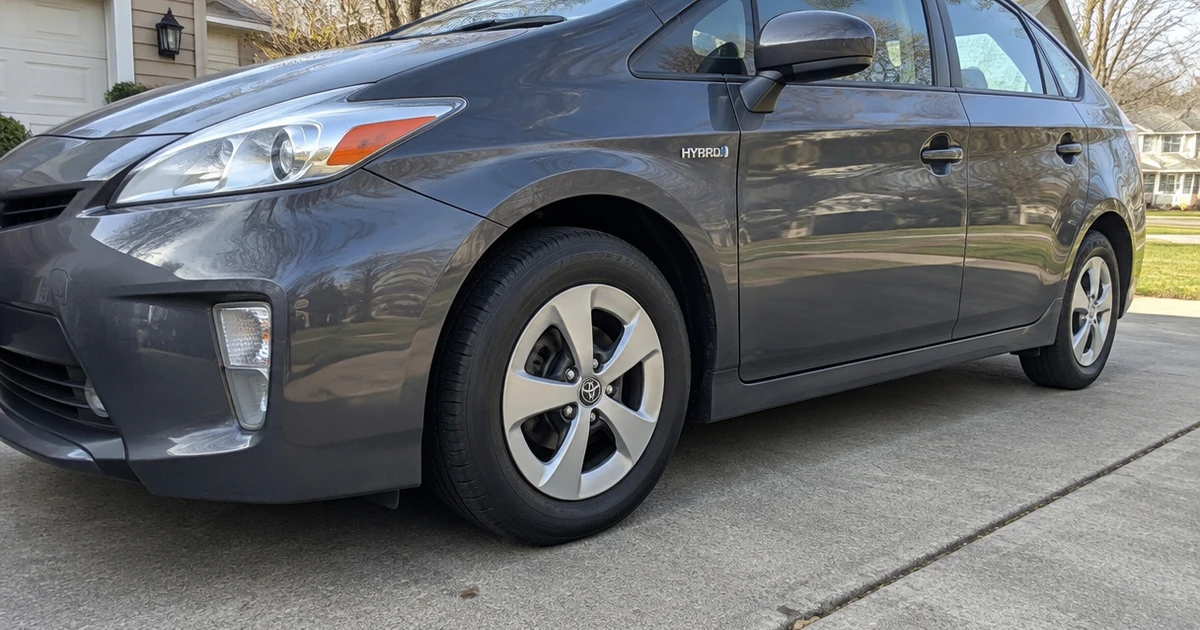
Start with the tire information Toyota assigns to your exact Prius year and trim, then weigh the conditions you face most often. The right choice should protect safe handling while keeping road noise, energy use and replacement needs in line with your priorities.
Start With the Exact Fit
Read the tire placard inside the driver’s door and the owner’s manual before you shop. Toyota lists the approved size and minimum load and speed ratings for your exact year and trim; wheel packages can vary even within one model year.
Match the full sidewall code, including section width, aspect ratio and wheel diameter. A different size can affect speedometer accuracy, clearance and handling, even if the tire fits the rim. Use these markings to compare candidates:
| Marking | What it tells you | What to check |
|---|---|---|
| Size code | Tire width, profile and wheel diameter | Match every part to the placard |
| Load index | Load capacity code for each tire | Meet or exceed the listed value |
| Speed rating | Speed capability category | Follow Toyota’s listed rating |
Match the Tread to Your Climate
Choose a tread for the weather you face most, not for a rare trip. All-season tires suit many mild climates, while winter tires provide better traction in sustained cold, packed snow and ice. If your area has hot summers and severe winters, plan for seasonal changes rather than expecting one tire to excel all year.
Look for the three-peak mountain snowflake mark if winter performance matters. That symbol means the tire passed a recognized snow-traction test, but it does not make it a dedicated winter tire. Use this quick guide:
- Mild weather with occasional flurries: start with all-season traction.
- Frequent snow or ice: use winter tires during the cold season.
Check Wet-Road Grip
Rain grip deserves close attention because water can build between tread and road, especially on worn tires. Look for open grooves that move water outward, plus fine cuts in the tread blocks that help maintain contact on slick pavement.
Compare wet-braking information from tire makers when they publish it, and read independent test results for the same tire size when available. A strong treadwear focus can leave less wet grip in some designs, so match the tire to your climate and driving pace. Replace tires before shallow tread harms water evacuation, and leave extra space behind traffic in heavy rain.
Balance Efficiency and Traction
Rolling resistance describes energy a tire uses as it flexes and rolls. A lower-resistance design can help your Prius use less fuel or battery energy, especially across daily trips, but gains depend on driving habits, weather and tire pressure.
Look for tire maker data that compares rolling resistance or fuel-saving design, and keep the approved size. Avoid assuming that the lightest tire or the lowest-resistance claim fits your needs; wet braking and steering response matter every day.
Check pressure monthly and before long trips, since underinflated tires flex more and waste energy. Use Toyota’s cold-pressure target, not the maximum printed on the sidewall.
Weigh Comfort Against Tread Life
Cabin noise depends on tread pattern, road surface and the Prius’s own sound insulation. If you spend hours on highways, read test notes about road noise and ride comfort, then look for touring tires with tread patterns that limit hum without giving up wet control.
Use the treadwear grade and mileage warranty as comparison points, not promises of a fixed lifespan. Driving style, alignment and inflation affect wear just as much. A longer-wearing tire may suit commuters with high annual mileage, while a comfort-focused driver may accept faster wear for a quieter ride.
Keep Up With Tire Care
Good tires can wear early if you ignore pressure, rotation or alignment. Check pressure when tires sit cold, use the figure on the door placard, and follow the manual’s rotation schedule; rotations help share wear among positions, though the correct pattern depends on tire type and drivetrain.
Inspect tread and sidewalls every month for uneven wear, cuts, bulges or objects lodged in grooves. Ask a tire shop to check alignment if the car pulls, the steering wheel sits crooked or one shoulder wears faster. Replace a damaged tire promptly, and replace tires in matched pairs or a full set when tread differences affect handling.
Frequently Asked Questions
What tire size does a Toyota Prius use?
Your Prius tire size depends on its model year, trim and wheel package. Read the placard on the driver’s door jamb and confirm it in the owner’s manual. Match the full size, load index and speed rating, and replace tires in a set that follows Toyota’s guidance.
Do I need special tires for a Prius hybrid?
Your Prius does not require a tire labeled specifically for hybrids, but you should match its approved size and load rating. Low rolling resistance can help limit energy loss, while wet grip, braking and comfort still matter. Compare the tire’s intended use rather than choosing by a hybrid label alone.
Can tires affect Prius fuel economy?
Yes. Tire rolling resistance changes how much energy the car uses to keep moving, so a lower-resistance design can support efficiency. Keep every tire at the pressure Toyota recommends, too; underinflation can raise energy use and wear. Do not trade away safe wet traction just to pursue a small efficiency gain.
Can I use all-season tires in snow?
All-season tires can handle light, occasional snow, but they lose grip as temperatures stay low and roads turn icy. If you drive through frequent snow or mountain routes, winter tires offer a stronger cold-weather option. Check local winter-tire rules and plan for seasonal tire changes and storage.
When should I replace tires on a Prius?
Check tread depth, cracks, bulges and uneven wear often, especially before long drives. Replace a tire when tread reaches the legal limit or when damage appears; a professional can inspect a tire with cuts or sidewall bulges. Follow the vehicle manual for rotation intervals and alignment checks.